
Vaughn Gittin Jr. is a name synonymous with tyre-shredding precision and high-octane automotive culture. As a world champion drifter and the founder of RTR Vehicles, Gittin has spent his career translating track-bred aggression into accessible performance packages for Ford enthusiasts. While his reputation was forged sideways on tarmac in the Mustang, his recent ventures have seen him conquer the brutal terrain of the Ultra4 Racing series and King of the Hammers. This diverse motorsport background shapes the philosophy of his company—”Ready to Rock” —which aims to inject factory-backed vehicles with a distinct blend of aesthetic bravado and functional capability.
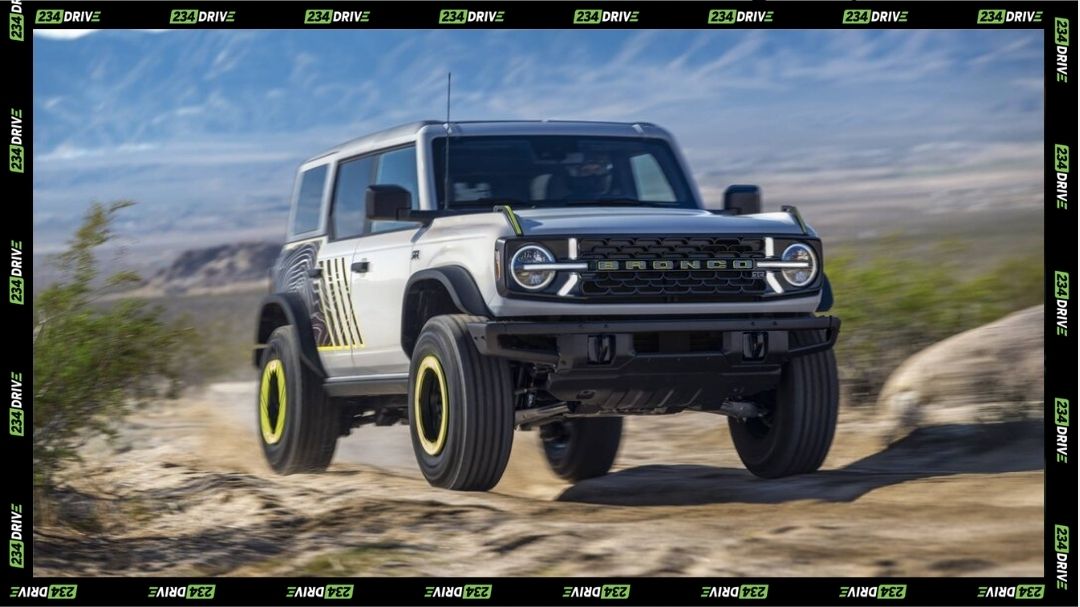
The arrival of the 2027 Ford Bronco RTR marks a significant evolution in this narrative, moving from aftermarket enhancement to a cohesive, factory-supported offering. Designed to sit strategically between the standard Bronco Badlands and the ultra-premium Bronco Raptor, this vehicle reflects Gittin’s vision of making high-speed desert running approachable for a wider demographic. By leveraging his team’s experience in the gruelling Johnson Valley, the Bronco RTR is positioned not just as a cosmetic package, but as a serious entry-level pre-runner. It targets a younger generation of enthusiasts who crave the capability of a trophy truck without the prohibitive six-figure price tag, embodying a shift towards experiential driving that resonates deeply with modern automotive culture.
Exterior Design and Road Presence
The visual identity of the 2027 Ford Bronco RTR is unmistakably assertive, crafted to command attention on both the high street and the trail. The front end is dominated by a signature RTR grille that seamlessly integrates LED lighting with the vehicle’s daytime running lights, creating a wide, continuous horizon line that accentuates the truck’s stance. This is complemented by Heritage-style squared-off fenders, which replace the rounded factory arches to provide a sharper, more angular silhouette. These fenders are not merely aesthetic; they frame the aggressive wheel and tyre package perfectly, housing 17-inch RTR Evo 6 beadlock-capable wheels wrapped in 33-inch all-terrain tyres as standard. The resulting stance is purposeful and planted, aided by a suspension lift that widens the track by approximately two inches.
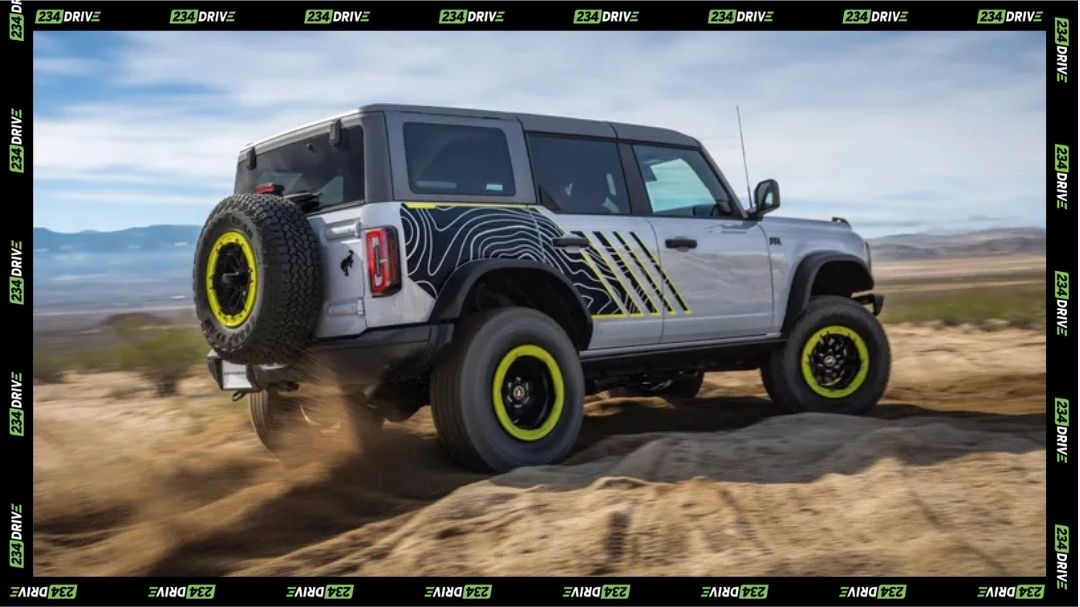
For those seeking to make an even louder statement, the exterior offers a canvas for personalisation, a key pillar of the RTR ethos. Owners can opt for topography-inspired graphics that pay homage to the terrain of Johnson Valley, available in tonal grey or a vibrant “Hyper Lime” that has become a brand signature. This bold colour extends to the badges, trail sights, and wheel rings, creating a striking contrast against factory paints like the new Avalanche Gray. Whether equipped with the standard setup or the beefier Sasquatch package, which fills the arches with 35-inch Goodyear Wrangler Territory tyres, the Bronco RTR projects a “ready for anything” attitude that distinguishes it from the sea of standard SUVs. It balances the rugged utility required for off-roading with a modern, custom-tuner aesthetic that appeals directly to the Instagram generation.
Interior Comfort, Technology, and Performance
Beneath the bonnet, the Bronco RTR is powered by Ford’s proven 2.3-litre turbocharged inline-four engine, mated to a 10-speed automatic transmission. While the base output hovers between 275 and 300 horsepower, the engineering focus here is on responsiveness and durability rather than outright dyno numbers. A standout feature is the inclusion of anti-lag technology in the Baja drive mode, a system typically reserved for high-end performance cars. This system keeps the turbocharger spooled even when the driver lifts off the throttle, ensuring instantaneous power delivery the moment the pedal is pressed again, crucial for maintaining momentum in deep sand or during technical desert manoeuvres. To manage the thermal stress of such spirited driving, the RTR inherits the 1,000-watt cooling fan directly from the Bronco Raptor, ensuring the engine remains cool even under extreme duress.
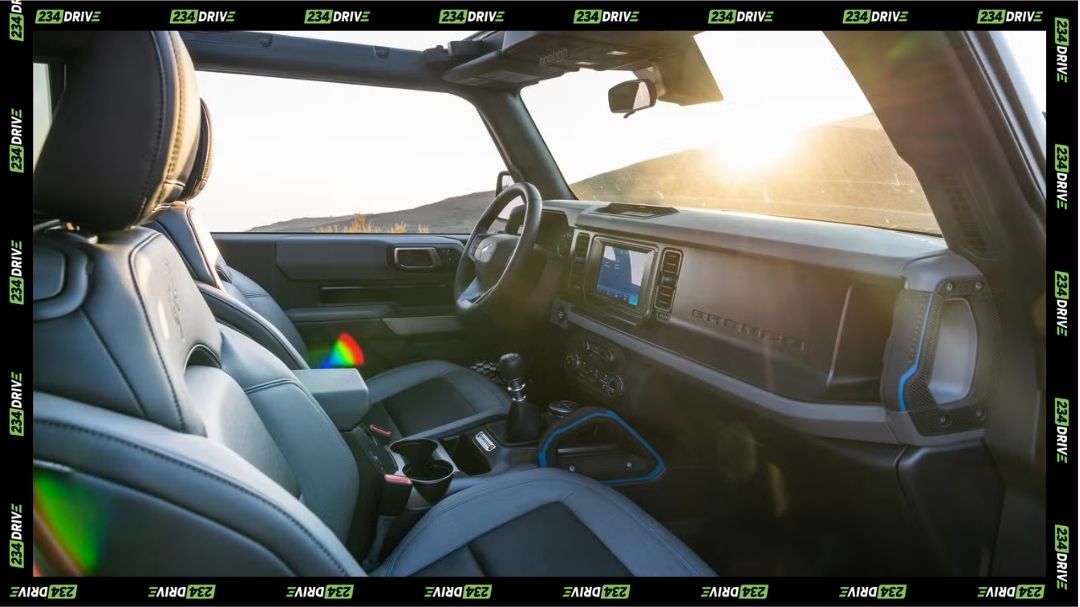
The driving dynamics are further refined by a carefully tuned suspension system. The standard model utilises Bilstein shocks that provide a compliant ride for daily driving while offering the travel needed for moderate off-roading. However, the optional Sasquatch package elevates the experience significantly, introducing the High-Performance Off-Road Stability Suspension (HOSS) 3.0 system with Fox internal-bypass dampers. This setup allows the vehicle to absorb high-speed impacts with composure, mimicking the “magic carpet” ride of trophy trucks over washboard terrain. Inside, the cabin retains the Bronco’s utilitarian, wash-out practicality but adds RTR-specific touches such as branded floor liners, a unique dash plaque, and potential customisation options for upholstery. With a starting price under $52,000 (£39,500 approx.), it delivers a package that feels mechanically sophisticated and technologically advanced, bridging the gap between a daily commuter and a weekend warrior.
Relevance to the Driving Environment and Lifestyle
The introduction of the Bronco RTR comes at a pivotal moment when the demographics of off-road enthusiasts are shifting dramatically. Industry data indicates that overlanding participation has surged, particularly among younger drivers who view their vehicles as gateways to adventure rather than status symbols for the country club. For this demographic, particularly Gen Z and Millennials, the driving environment often alternates between urban commuting during the week and remote exploration on the weekend. The Bronco RTR is engineered precisely for this dual-purpose lifestyle. Its relatively compact footprint (compared to full-size trucks) and reinforced steering components make it manageable in city traffic and tight car parks, yet durable enough to tackle rocky trails without requiring aftermarket modifications that might void the warranty.
Furthermore, the vehicle’s design addresses the practical realities of owning a dedicated off-roader in diverse climates. The inclusion of heavy-duty cooling systems ensures reliability in hot, arid environments like the American Southwest or Australian Outback, while the available Sasquatch package with its locking front differential provides the traction necessary for wet, muddy, or snowy conditions found in Northern Europe and North America. The factory-backed nature of the RTR upgrade is a critical factor for younger buyers who may lack the mechanical expertise or budget to maintain a heavily modified project car. By offering a “turn-key” solution that is serviceable at any standard Ford dealership, the Bronco RTR lowers the barrier to entry for high-performance off-roading. It democratises the experience of desert running, making the thrill of Raptor-like performance accessible to those who might otherwise be priced out of the segment.
Competitive Analysis and Market Positioning
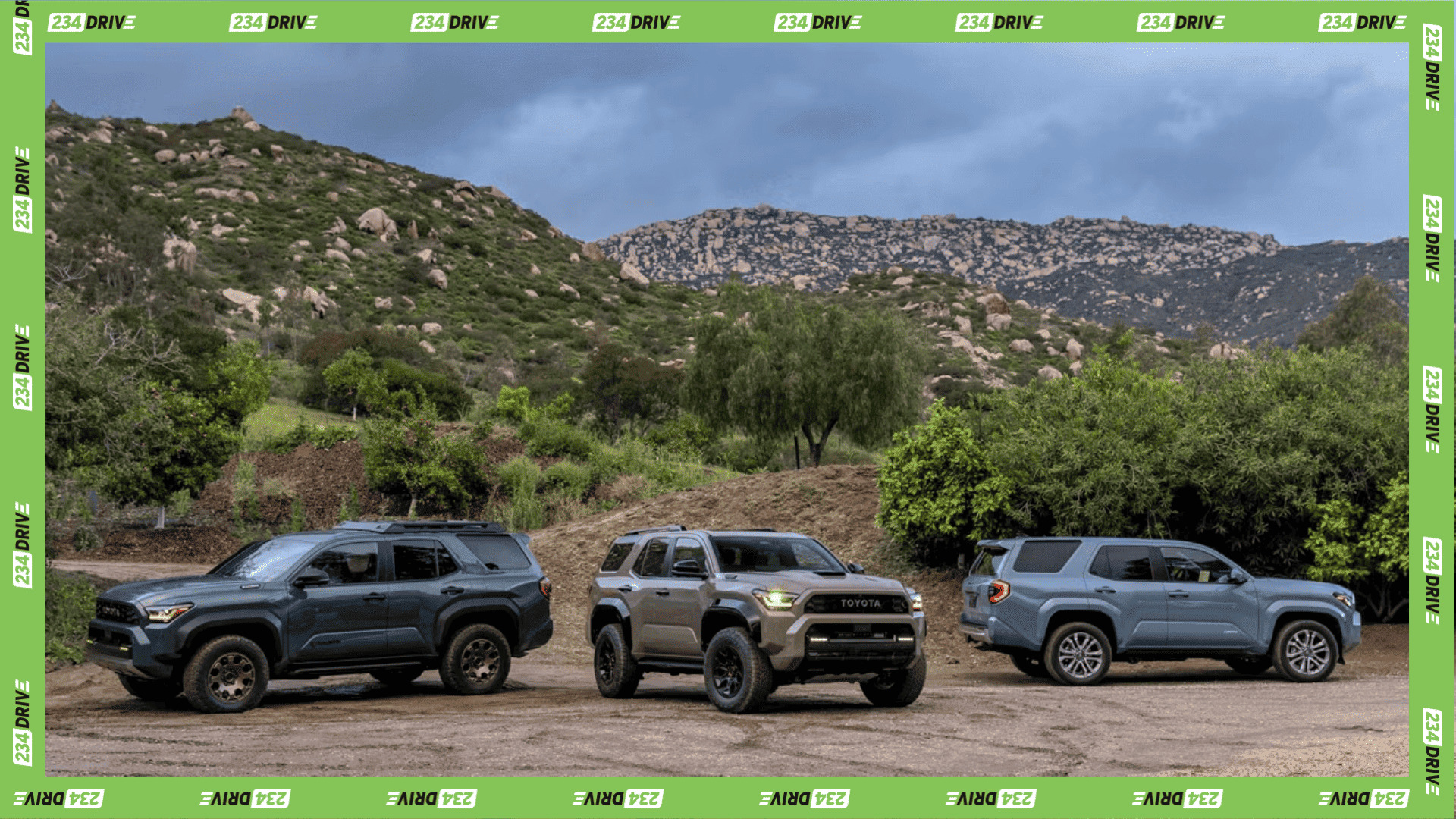
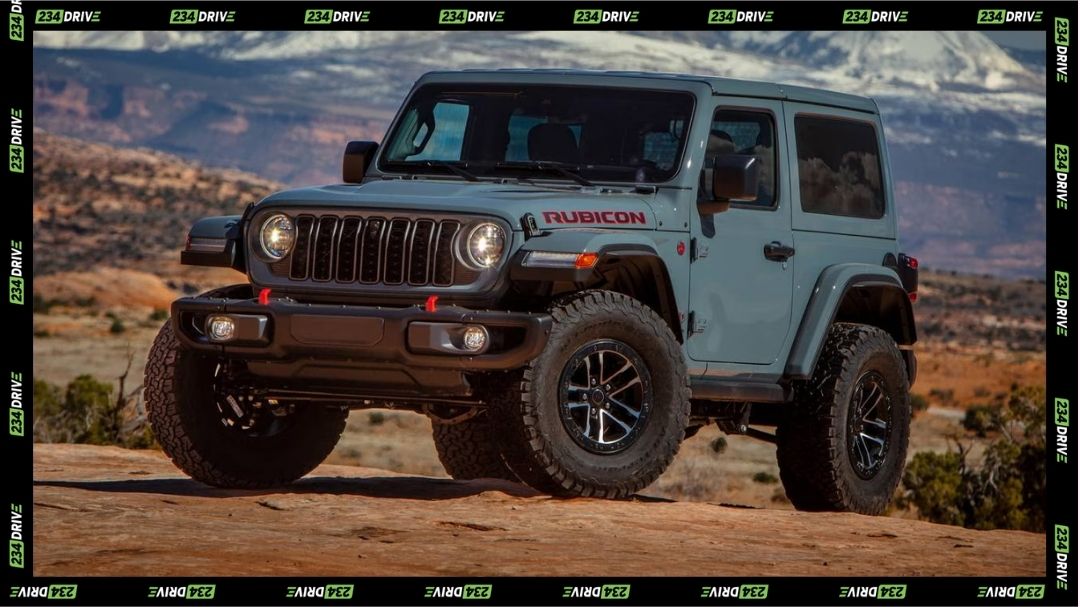
When placed against its primary segment rivals, such as the Jeep Wrangler Willys or the Toyota 4Runner TRD Pro, the Bronco RTR carves out a unique niche. The Jeep Wrangler remains the benchmark for rock crawling with its solid axle design, offering superior articulation in low-speed technical sections. However, the Bronco RTR’s independent front suspension (IFS) gives it a decisive advantage in high-speed desert running and on-road handling, offering a level of refinement and stability that the solid-axle Jeep struggles to match at pace. In terms of cost, the RTR’s sub-$52,000 price point makes it highly competitive, undercutting the more expensive Wrangler Rubicon variants while offering similar, if not superior, high-speed damping capabilities when equipped with the Fox shocks.
Perhaps the most interesting comparison is within the Ford family itself, specifically against the Bronco Raptor. The Raptor is an engineering marvel, boasting a 3.0-litre V6 and massive 37-inch tyres, but it commands a price tag exceeding $82,000. The RTR offers a compelling alternative for buyers who want the aesthetic and 80% of the capability for 60% of the cost. While it lacks the sheer brute force of the Raptor’s engine, the 2.3-litre unit in the RTR is cheaper to maintain and more fuel-efficient, leading to lower long-term ownership costs. Resale value for limited-run or tuner-branded vehicles like the RTR tends to be robust, often outperforming standard trim levels due to their desirability among enthusiasts. This factory-built off-road SUV manages to offer the exclusivity of a custom build with the sensible financial proposition of a mass-market vehicle.
Summary
The 2027 Ford Bronco RTR is a masterclass in targeted automotive engineering, successfully distilling the essence of RTR Vehicles into a package that is attainable, capable, and undeniably cool. By focusing on the specific desires of the Gen Z demographic affordability, personalisation, and genuine adventure readinessFord and Vaughn Gittin Jr. have created a vehicle that feels tailored to the moment. It may not have the headline-grabbing horsepower of the Raptor, but its smart use of technology like anti-lag and race-proven suspension components makes it a formidable machine in the right hands.
Ultimately, the Bronco RTR proves that you do not need to spend a fortune to access the upper echelons of off-road performance. It is a vehicle that invites you to drive it hard, get it dirty, and make it your own, perfectly bridging the gap between a daily driver and a desert toy. Whether you are a seasoned off-roader looking for a reliable rig or a newcomer seeking your first taste of dust and adrenaline, the RTR offers a compelling argument to take the path less travelled. Does the RTR hit the sweet spot, or would you still hold out for the Raptor?