
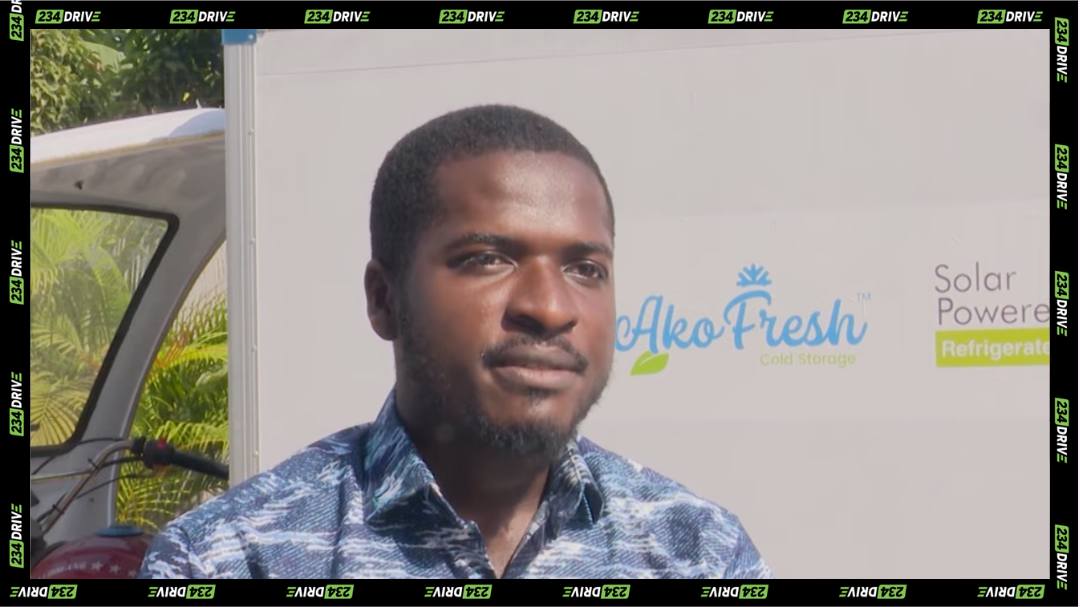
Mathias Charles Yabe, the founder of AkoFresh, driving solar-powered cold-chain solutions for Ghana’s farmers. | Source: YouTube
Ghana is trying out a new mobility solution to reduce the huge amount of food lost after harvest. The idea is quite simple: the use of both solar-powered cold rooms and refrigerated tricycles to keep vegetables fresh from the farm all the way to the market. The system was created by Ghanaian entrepreneur Mathias Charles Yabe and his startup AkoFresh, and it gives smallholder farmers a reliable way to move perishable crops without losing most of their value on the road.
Akofresh workers setting up a solar-powered cold room that help farmers keep vegetables fresh for weeks. | Source: AkoFresh
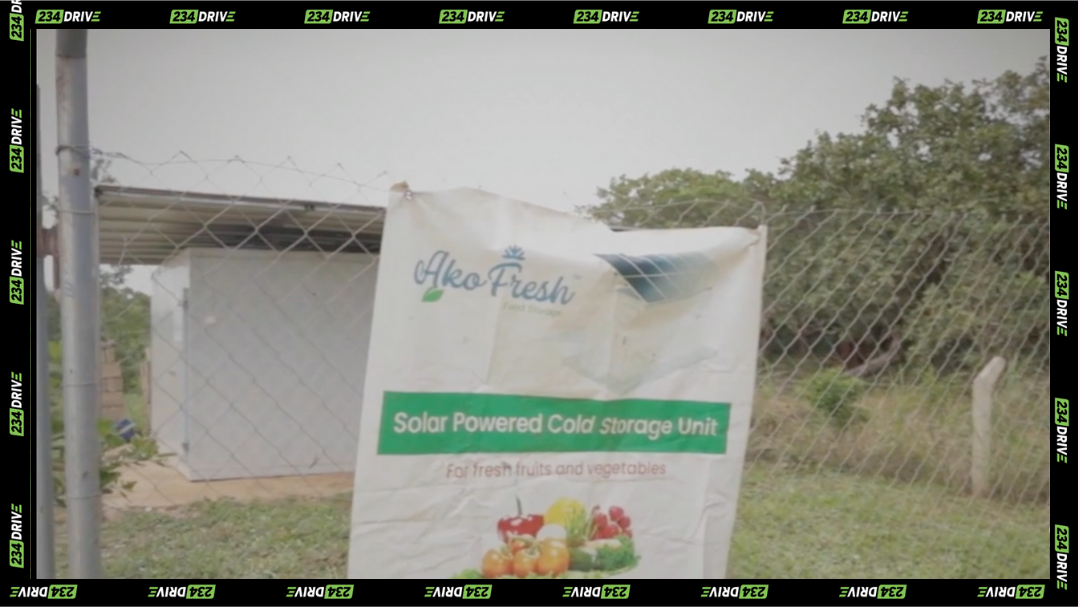
The first test site is Akumadan, a major tomato-farming community. AkoFresh set up a modular solar cold room there. Farmers bring in their vegetables, store them safely under cool temperatures, and sell when they are ready—not when the crops are about to spoil. Previously, many farmers lost nearly half of their harvests before they could meet any buyers. With the introduction of the cold room in the community, tomatoes and other vegetables last up to an additional 21 days, and more than 3,000 farmers have already benefited from the system.
But Yabe soon realised that storage alone wasn’t enough. Many farmers still lost produce while travelling long hours to bigger markets. To solve that, AkoFresh built a solar-powered refrigerated tricycle. It fully charges in about seven hours and keeps vegetables cold for five to six hours while on the move. This helps farmers maintain freshness all the way to the market, rather than losing money during transport.
Could Cold-Chain Mobility Be the Breakthrough That Cuts Food Loss Across Africa?
This system is one solution that Ghana has urgently been in need of as the country loses about US$1.9 billion every year to post-harvest losses, according to the Head of Food Systems at the World Food Programme (WFP), Steven Odarteifio. Reports on agricultural mobility across sub-Saharan Africa show that transport and handling issues alone account for a loss of 30% or more of fresh produce before it reaches consumers. When farmers lack refrigeration in transit, spoilage accelerates during long, hot journeys—especially for vegetables like tomatoes, leafy greens, and peppers.
Research shows that cold rooms can reduce losses by over 13%, and mobile cold-chain solutions can cut spoilage across developing regions by 25–50%. For farmers, that means better earnings, a steadier supply, and far less waste.
Is Africa Seeing Its First Real Wave of Solar-Powered Mobility?
This innovation shows a major opportunity for investment in cold-chain mobility—not only in Ghana, but across sub-Saharan Africa, where long-running energy gaps and rising electricity costs make solar solutions increasingly essential. Government officials acknowledge the need for more support, but integration into national commercial systems remains slow.

One of AkoFresh’s solar-powered refrigerated tricycles, keeping produce cool on the way to market. | Source: AkoFresh Instagram
Yabe’s idea matches a similar theme of solar-powered mobility innovations happening across the continent. Bako Motors, a Tunisian-German startup, is expanding through Africa with solar-powered vehicles like the “Bee” and “B-Van”, offering affordable transport that works without relying on the grid. At the same time, BYD plans to install 200–300 solar-supported charging stations across South Africa by 2026, helping more communities access clean and reliable mobility.
All these efforts point to one trend: African innovators and global partners are working to build solutions that address the continent’s real energy and infrastructure challenges.
Yabe believes that with more investment, AkoFresh can roll out its cold rooms and refrigerated tricycles across all major farming regions. If that happens, farmers will lose less food, earn better prices, and strengthen the agricultural chain from the ground up.
Africa is creating its own answers to long-standing mobility and storage problems—and now the real opportunity lies in scaling them.