
The emergence of Stelato represents a significant pivot in the global automotive landscape, marking a sophisticated collaboration between the Chinese technology giant Huawei and the established manufacturer BAIC BluePark. Launched in 2024 under the Harmony Intelligent Mobility Alliance, Stelato is positioned as a premium electric vehicle (EV) marque designed to compete directly with the historical hegemony of European luxury brands. By integrating Huawei’s industry-leading software ecosystem including the HarmonyOS and advanced autonomous driving suites with BAIC’s large-scale manufacturing capabilities, the brand has quickly garnered attention for offering executive-level refinement coupled with futuristic technology.
For the Nigerian market, Stelato arrives at a time of growing interest in sustainable mobility, albeit primarily through private importation by affluent early adopters. While the brand was originally conceived for the competitive Chinese domestic market, its flagship models are now appearing in showrooms across Lagos and Abuja. This entry signals a shift in consumer appetite, where the traditional prestige of internal combustion engines is being challenged by the high-tech allure of “smart” mobility. As Nigeria looks toward an evolving energy landscape, Stelato’s presence offers a glimpse into a future where software-defined vehicles become the new standard for the country’s business and political elite.
The Stelato S9: The Executive Flagship
The exterior design of the flagship Stelato S9 is a masterclass in aerodynamic efficiency and minimalist luxury, boasting a remarkably low drag coefficient of just 0.193 Cd. Its silhouette is defined by fluid, sweeping lines that prioritise both aesthetic elegance and range optimisation. A standout feature is the “Universe Star” lighting signature, which includes Huawei’s xPixel adaptive headlights capable of projecting customisable LED motifs and safety symbols onto the road. The vehicle’s road presence is further enhanced by its substantial dimensions—stretching over 5.1 metres in length—and the inclusion of digital side mirrors which replace traditional glass with sleek camera stalks, lending the car a distinctly futuristic profile that commands attention in any urban setting.
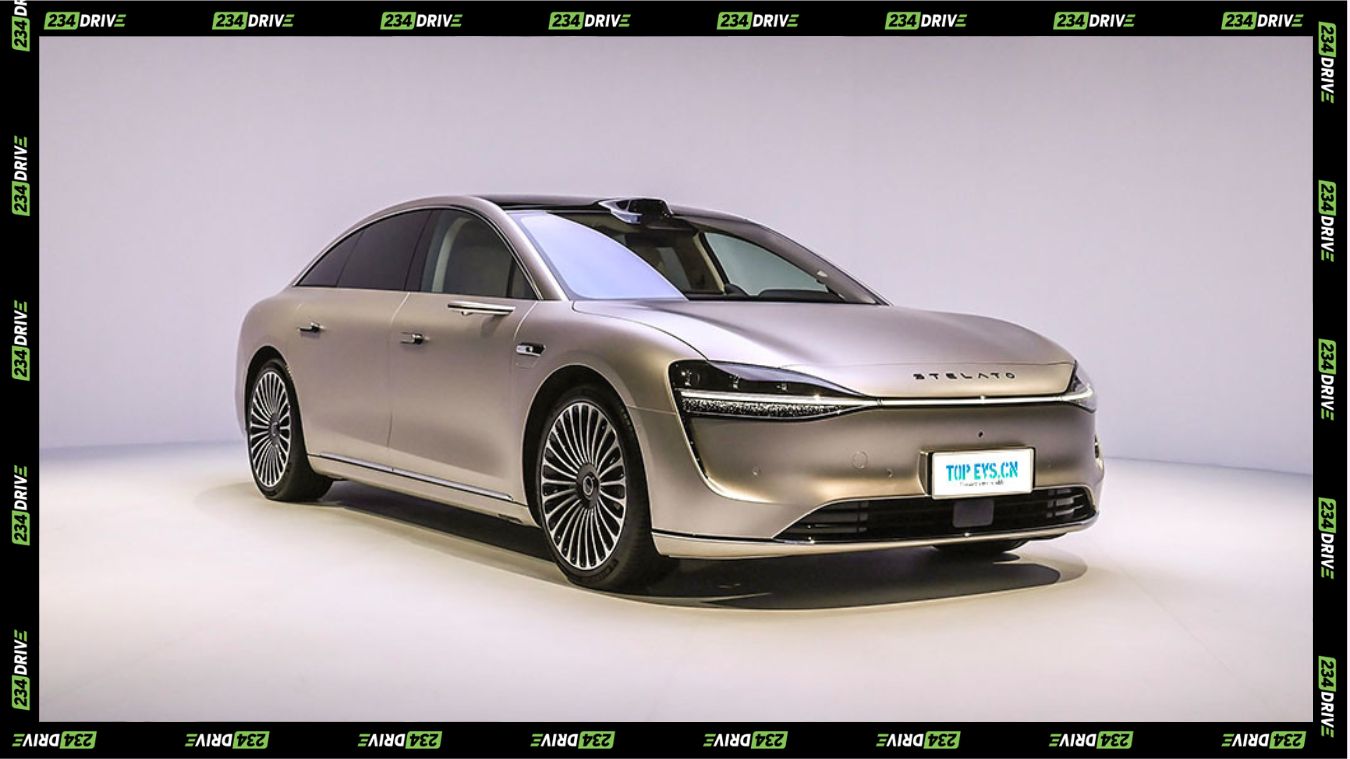
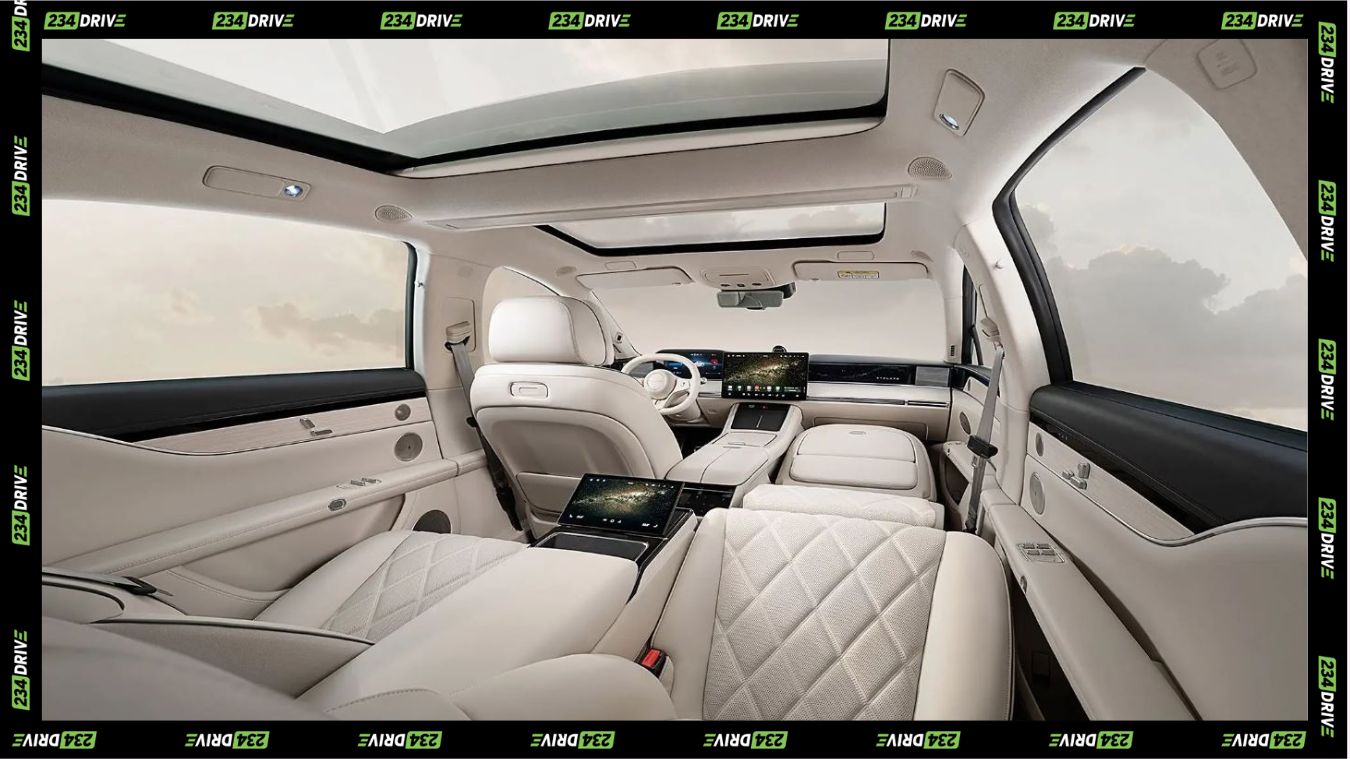
Inside, the Stelato S9 transforms into a “mobile luxury office” centered around Huawei’s HarmonyOS 4 infotainment system. The cabin is draped in premium Nappa leather and features a massive 15.6-inch central touchscreen complemented by a 12.3-inch digital instrument cluster. For rear-seat passengers, a 32-inch projector screen turns the cabin into a private cinema, while “Ultra” variants offer a zero-gravity reclining seat equipped with heating, ventilation, and an eight-point massage function. Under the skin, the S9 is powered by a dual-motor all-wheel-drive system delivering a combined 516 horsepower (385 kW), allowing this heavy luxury sedan to sprint from 0 to 100 km/h in a staggering 3.9 seconds. Its 100 kWh battery pack provides a range of up to 816 kilometres (CLTC), ensuring that long-distance travel is well within its capabilities.
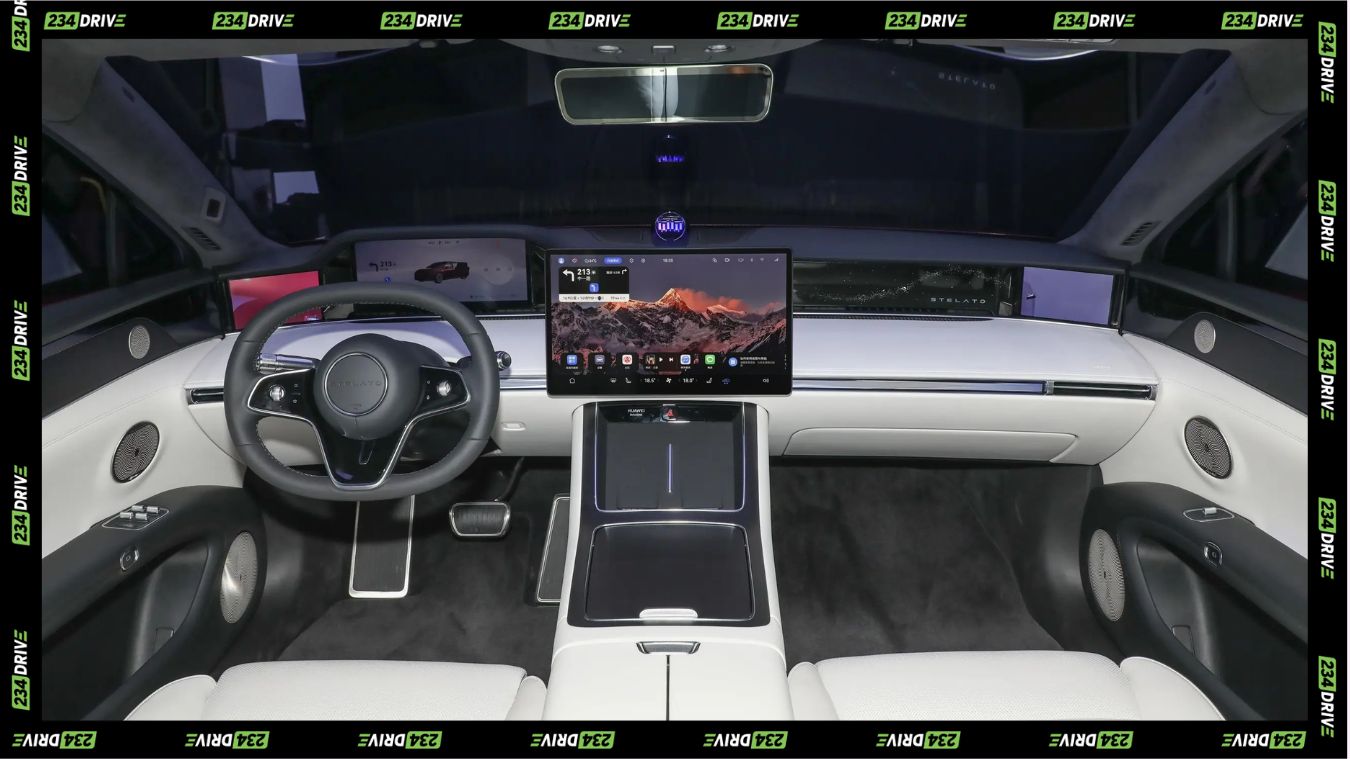
In Nigeria, imported units of the Stelato S9 Ultra 4WD are currently listed between ₦214 million and ₦222 million, reflecting the high costs of shipping, clearing, and premium dealer margins.
The Stelato S9T: The Versatile Estate
The Stelato S9T expands the brand’s portfolio by introducing an “estate” (station wagon) body style, a configuration that blends the sleekness of the S9 sedan with significantly enhanced practicality. The Stelato S9T estate maintains the “stellar” design language but extends the roofline to create a more voluminous rear profile, suitable for those who require additional cargo space without sacrificing the brand’s aerodynamic integrity. It features integrated roof racks and a streamlined tail design that rivals the aesthetic appeal of European luxury wagons like the Mercedes-Benz E-Class Estate. The S9T’s presence on the road is one of sophisticated utility, appealing to a niche demographic of buyers who value a unique silhouette that differs from the ubiquitous SUV.

The interior of the S9T mirrors the high-tech luxury of the sedan but offers superior vertical space in the rear and a more flexible boot configuration. Technological parity is maintained with the inclusion of the Huawei ADS 4.0 suite, an upgrade that features high-definition LiDAR sensors for advanced autonomous driving capabilities. Performance-wise, the S9T is available in both pure electric (BEV) and Extended-Range Electric Vehicle (EREV) formats. The EREV variant is particularly noteworthy as it utilises a 1.5-litre turbocharged petrol engine solely as a generator to charge the batteries, eliminating range anxiety by providing a total combined range of up to 1,170 kilometres. This powertrain flexibility makes the S9T a highly adaptable choice for diverse driving requirements, from school runs to interstate travel.
While pricing for the S9T is slightly higher than the sedan in international markets, Nigerian imports are expected to follow the ₦220 million+ trajectory established by the S9 Ultra.
How it Stacks Up for Nigerian Roads
In the context of the Nigerian driving environment, the Stelato collection presents a fascinating dichotomy of extreme luxury and practical challenge. The primary consideration for any EV owner in Nigeria remains the infrastructure; with a national grid that faces frequent instability, the pure BEV versions of the S9 and S9T require a dedicated home charging setup, preferably integrated with solar power or high-capacity inverters. However, the EREV (Extended-Range) variants are exceptionally relevant to this region. By using a petrol-powered range extender, these models bypass the immediate need for a robust public charging network, allowing Nigerian owners to enjoy the smooth, quiet drive of an electric motor while relying on the country’s existing petrol station infrastructure for long-distance security.
Beyond energy, the physical road conditions in major hubs like Lagos and Port Harcourt demand a vehicle with superior suspension. Both the S9 and S9T are equipped with advanced air suspension systems featuring continuous damping control, which is vital for navigating the uneven surfaces and occasional potholes characteristic of regional roads. Furthermore, the high-performance climate control systems and ventilated Nappa leather seats are essential for the tropical Nigerian climate, ensuring passenger comfort even in intense heat. The Nigerian EV market is poised for growth, and the Stelato’s Huawei-backed technology and “zero-gravity” seating provide a level of exclusivity and “wow factor” that rivals the most established luxury marques in Victoria Island or Maitama.
Competitive Positioning and Market Rivalry
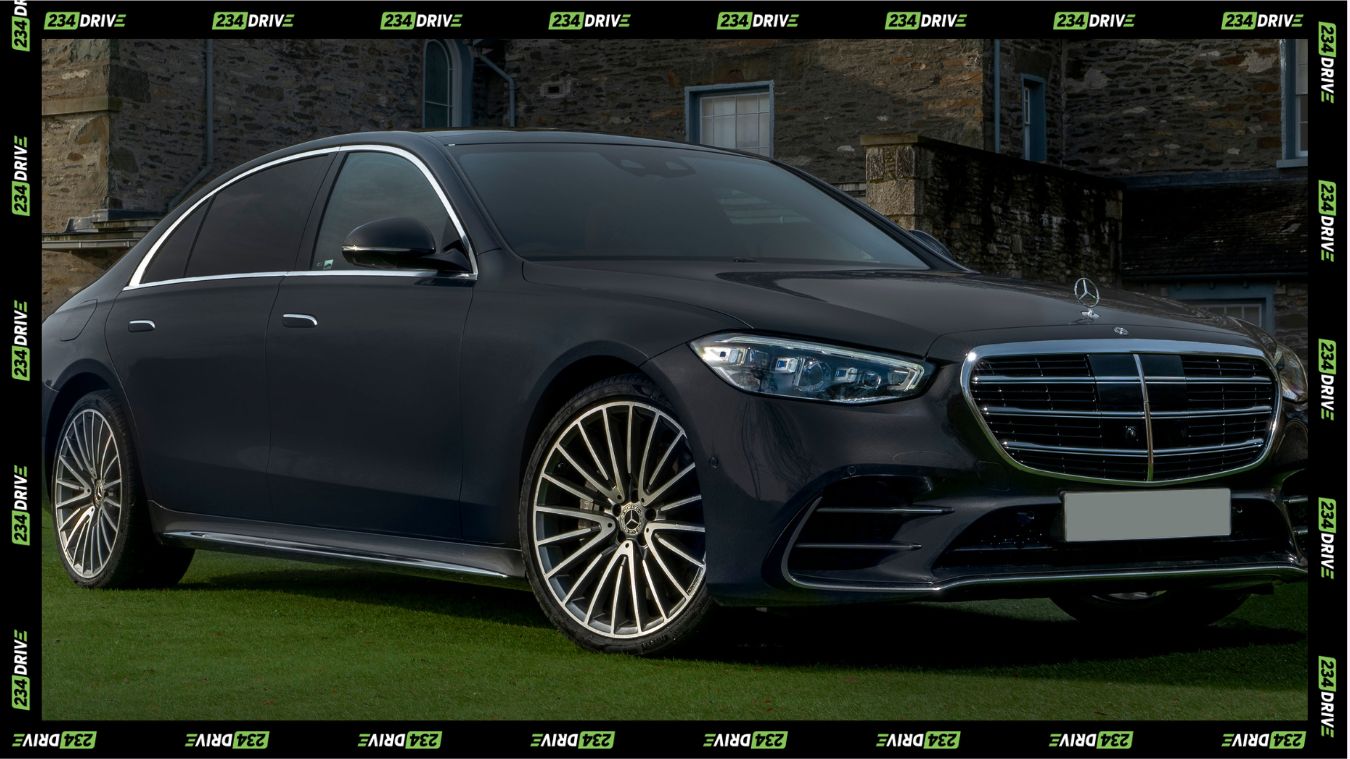
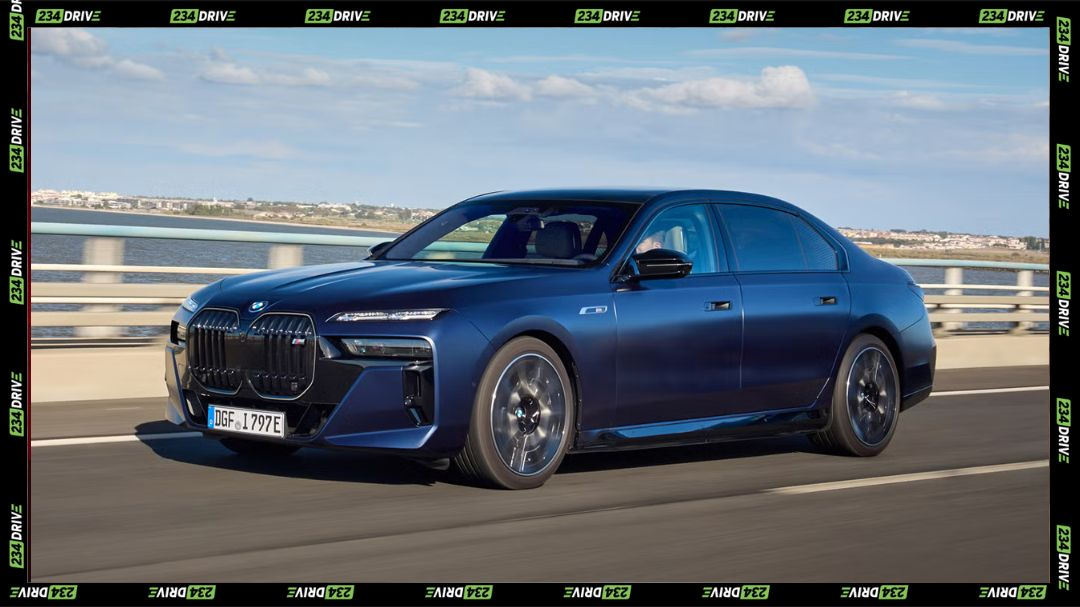
When compared to its primary segment rivals, such as the Mercedes-Benz S-Class or the BMW i7, the Stelato S9 offers a disruptive value proposition in terms of integrated technology. While a Mercedes-Benz S-Class may carry more historical brand equity and a more established service network in Nigeria, the Stelato provides a significantly more advanced software experience via HarmonyOS and superior autonomous hardware at a lower base price point before duties. In terms of cost, the Stelato’s entry price in China is roughly half that of its German competitors, though the ₦214 million Nigerian price tag levels the playing field significantly due to the luxury taxes applied to imports. The durability of the Huawei-sourced electronics is expected to be high, though the long-term resilience of the air suspension on Nigerian roads remains a point of observation for early adopters.
From a maintenance and resale perspective, the Stelato faces the challenges typical of a niche, high-tech newcomer. Unlike Toyota or Mercedes, for which parts and expertise are widely available in Nigeria, Stelato owners will likely depend on specialized importers like Hybrid Motors Africa for servicing and technical support. This “pioneer’s tax” may affect initial resale values, as the secondary market for luxury Chinese EVs is still maturing. However, for the buyer who prioritises being at the absolute cutting edge of automotive innovation and who values the “mobile office” capabilities provided by Huawei’s ecosystem, the Stelato offers a competitive edge in prestige and performance that traditional internal combustion rivals struggle to match in the digital age.
Conclusion
The arrival of Stelato in the Nigerian market marks a pivotal moment for the luxury automotive sector, proving that the shift toward electric mobility is no longer a distant prospect but a current reality for the premium segment. With the S9 sedan offering unmatched executive refinement and the S9T estate providing a unique blend of utility and tech-forward design, these vehicles cater to a new generation of consumers who value software intelligence as much as mechanical horsepower. While infrastructure and long-term maintenance remain valid considerations, the innovative EREV options and the sheer brilliance of Huawei’s cabin technology make a compelling case for the brand.
Stelato’s collection successfully bridges the gap between high-end luxury and sustainable innovation. As Nigeria continues to explore its e-mobility roadmap toward 2040, these cars serve as a benchmark for what is possible when technology and transport converge. We invite you to share your thoughts on this new entrant—would you consider trading a traditional luxury sedan for a Huawei-powered EV?