
American automotive engineering has just delivered a thunderous rebuttal to the electric hypercar elite, with the 2026 Chevrolet Corvette ZR1X shattering expectations to become the quickest production car in the nation’s history. General Motors has confirmed that its new halo model, which enters production this December at the Bowling Green Assembly Plant, has recorded a blisteringly fast quarter-mile time of 8.675 seconds. With a starting price of $209,700, the ZR1X is not merely a new model; it is a disruptive force that effectively democratises performance levels previously reserved for multi-million dollar exotics, bridging the gap between traditional combustion heritage and an electrified future.
Under the bonnet lies a masterpiece of mechanical integration: a twin-turbocharged 5.5-litre LT7 V8 engine generating 1,064 horsepower, augmented by a front-axle electric motor that adds another 186 horsepower. This combined output of 1,250 horsepower is managed by an electrified all-wheel-drive (eAWD) system, which provides the instantaneous traction required to launch the vehicle from 0 to 60 mph in a startling 1.68 seconds. This hybrid architecture allows the ZR1X to deliver insane times on the track while retaining the visceral engagement of a combustion engine, a balance that pure EVs often struggle to replicate.
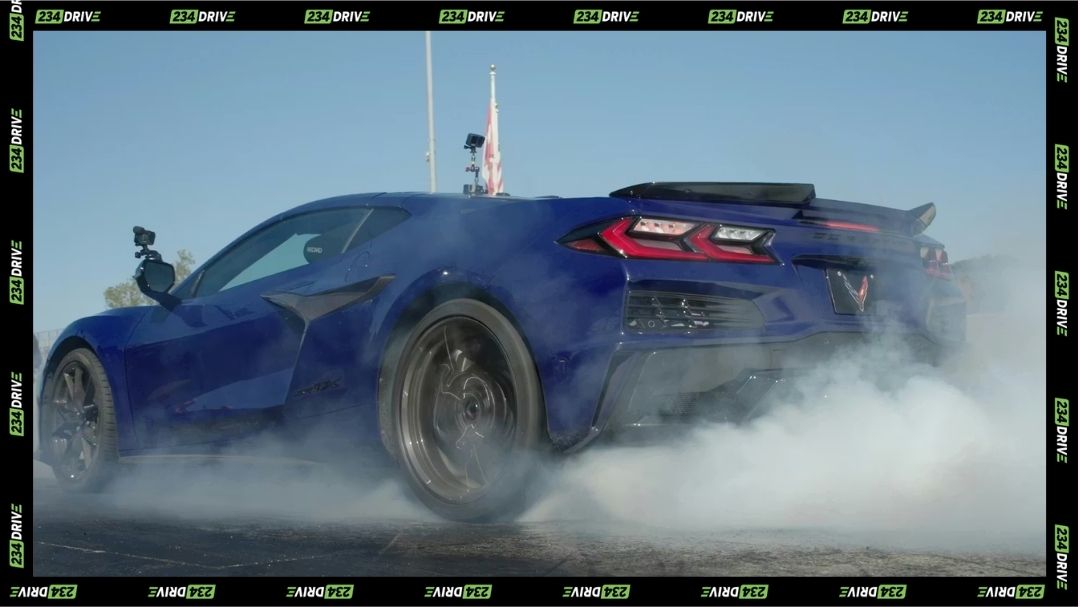
The validation of these figures took place under the cool autumn skies of Michigan at US 131 Motorsports Park, where GM engineers pushed the platform to its absolute limit. Piloted by development engineer Stefan Frick, the car pushed to its limits on a prepared surface, generating peak acceleration forces of 1.75G comparable to a fighter jet launch. Crucially, these runs were achieved using pump petrol and standard Michelin Pilot Sport 4S tyres, proving that the ZR1X’s performance is accessible and repeatable without the need for specialised racing fuel or slick tyres. Even on unprepped surfaces, the vehicle demonstrated remarkable consistency, dipping below the 9-second barrier with an 8.99-second run.
From a strategic perspective, the ZR1X represents a significant pivot for Chevrolet, moving the Corvette brand from a sports car icon to a legitimate hypercar predator. By utilising a hybrid system primarily for performance rather than just efficiency, GM has claimed records that challenge the hierarchy of the global automotive elite. In direct comparisons, the ZR1X edges out the Bugatti Tourbillon and Pininfarina Battista in elapsed quarter-mile times, showcasing a level of engineering efficiency that defies its price tag. While the Rimac Nevera R retains the absolute crown for speed, the Corvette’s ability to compete at a fraction of the cost has undeniable market implications.
The arrival of the ZR1X has effectively humbled hypercars costing ten times as much, sparking intense debate regarding the future of high-performance vehicles. It stands as a testament to the potential of hybrid powertrains to offer the “best of both worlds”—the soul of a V8 with the immediate torque of an electric motor. As America’s quickest production car prepares to hit public roads, it leaves the industry facing a new reality: extreme speed is no longer the exclusive domain of the ultra-wealthy, and the transition to electrification may have just found its most exciting bridge technology yet.