
The new Ferrari ev and the iPhone have a major thing in common.
By Babamileko
For decades, the world of luxury has been anchored by two cathedrals of design. One sits in Maranello, Italy, crafting internal combustion engines that sing like Pavarotti; the other sits in Cupertino, California, milling aluminum into devices that have become extensions of our very hands.
Historically, these two worlds — Ferrari and Apple—operated on parallel tracks of perfection. But with the official announcement of the Ferrari Luce, those tracks have finally converged at one point – design and a person named Jony Ive .
The Jony Ive Factor: More Than a Name
The Luce (Italian for “Light”) is the first fruit of a five-year clandestine collaboration between Ferrari and LoveFrom, the creative collective led by Sir Jony Ive and Marc Newson. Ferrari has effectively hired the architects of the modern world to design the future of the cockpit.
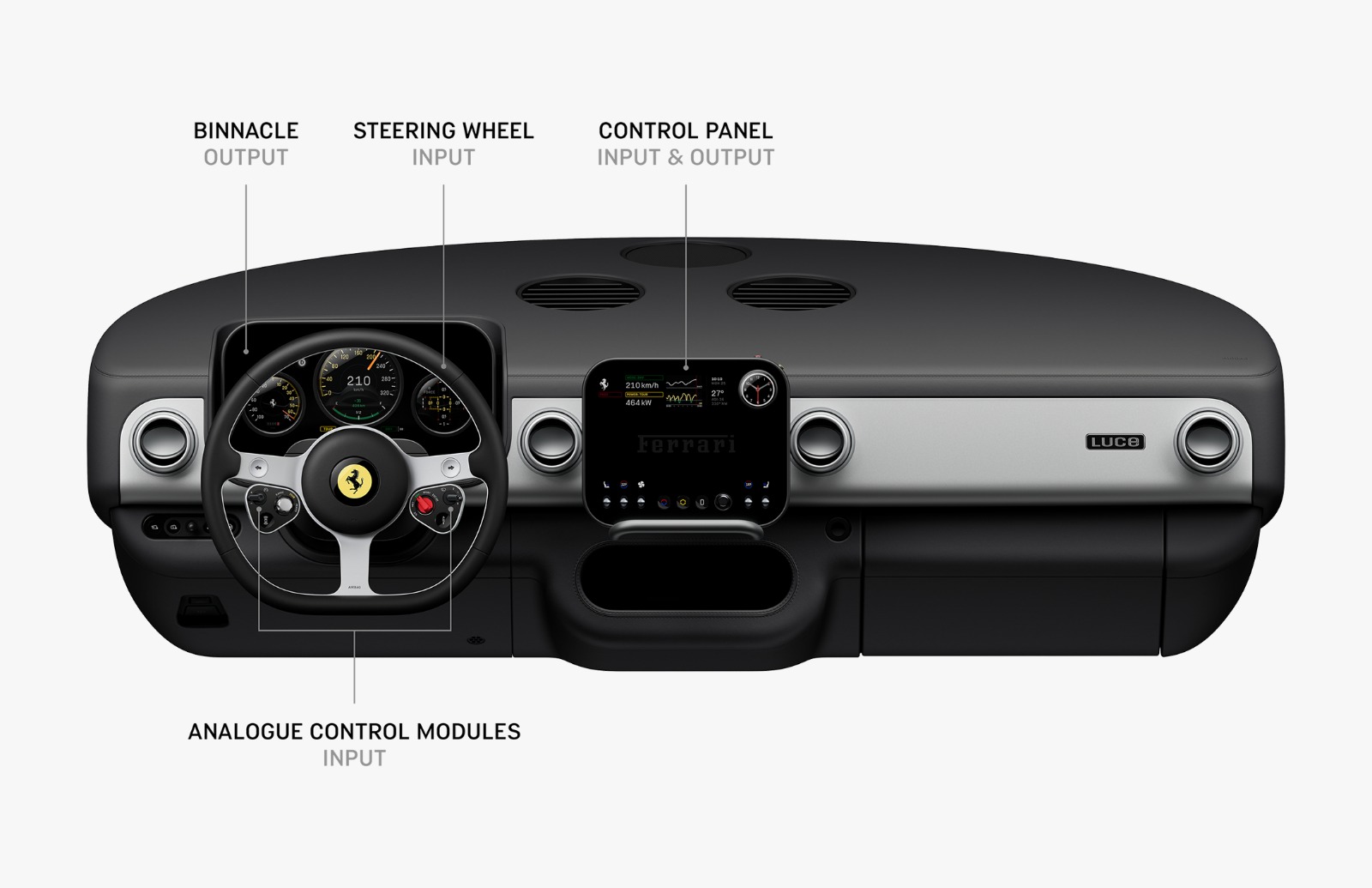
In the 234Drive community, we often discuss the “soul” of a car. Usually, when a car company goes electric, that soul is traded for a giant tablet glued to the dashboard. But Ive, the man who gave us the unibody MacBook and the original iPhone, has brought a specific brand of Apple-standard minimalism to Maranello.
The Cult of the Material
If you look at an iPhone 15 Pro and the interior of the Luce, the DNA is unmistakable. It’s an obsession with the nobility of materials.
Recycled Aluminum: The Luce’s steering wheel isn’t cast; it’s CNC-machined from solid billets of 100% recycled aluminum weighing 400 grams less than a standard Ferrari wheel and feels like a piece of cold, surgical art.
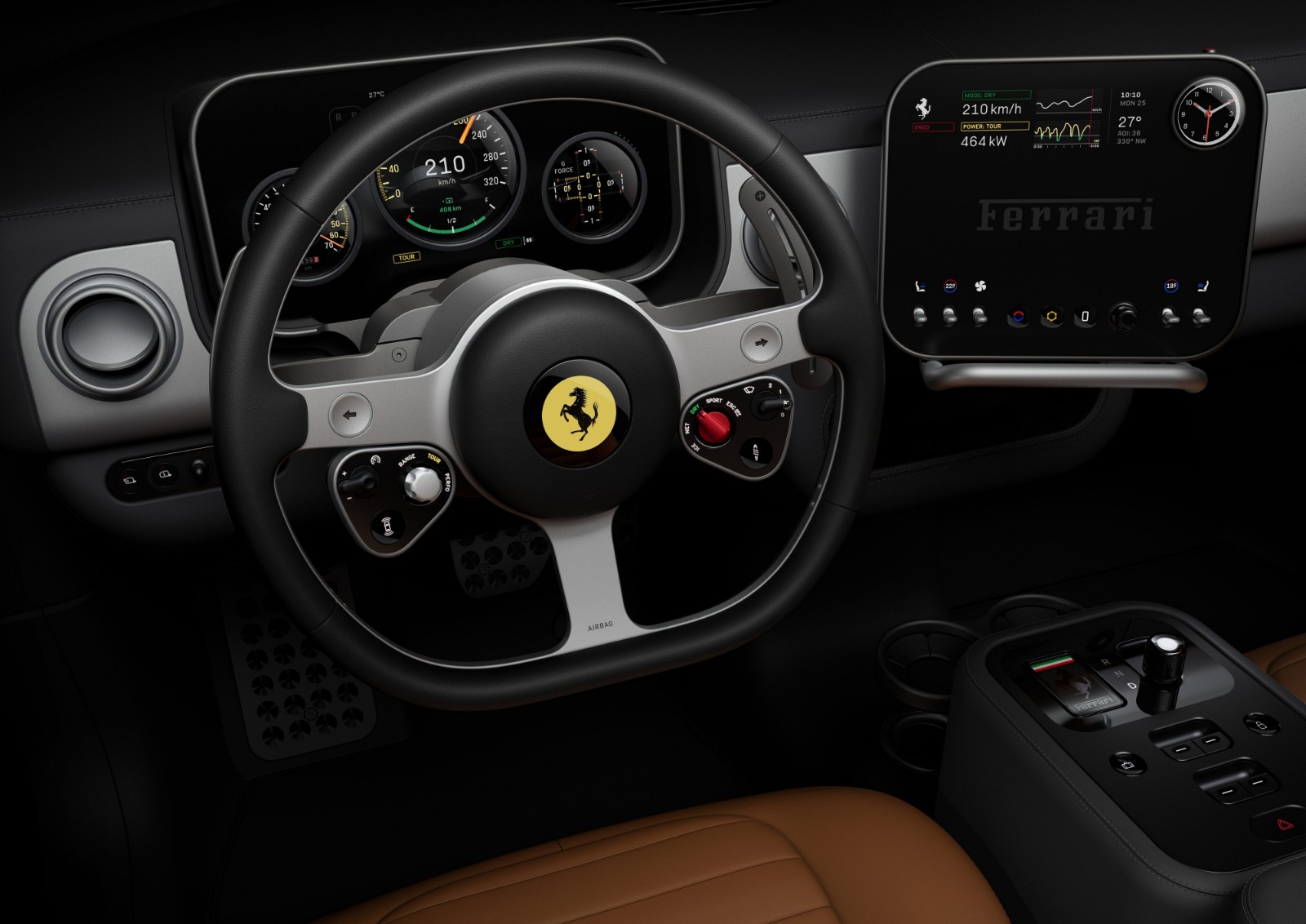
Gorilla Glass: In a nod to the screens we carry in our pockets, Ferrari and LoveFrom have utilised Corning Gorilla Glass for the central console and even the gear shifters. It’s scratch-resistant, ultra-clear, and feels infinitely more premium than the piano black plastic we see in lesser EVs.
Defying the Tesla-fication of Cars
My takeaway from this announcement is thatFerrari has officially rejected the touchscreen era. While every other manufacturer is trying to out-screen Tesla, the Luce is proudly analogue-centric.
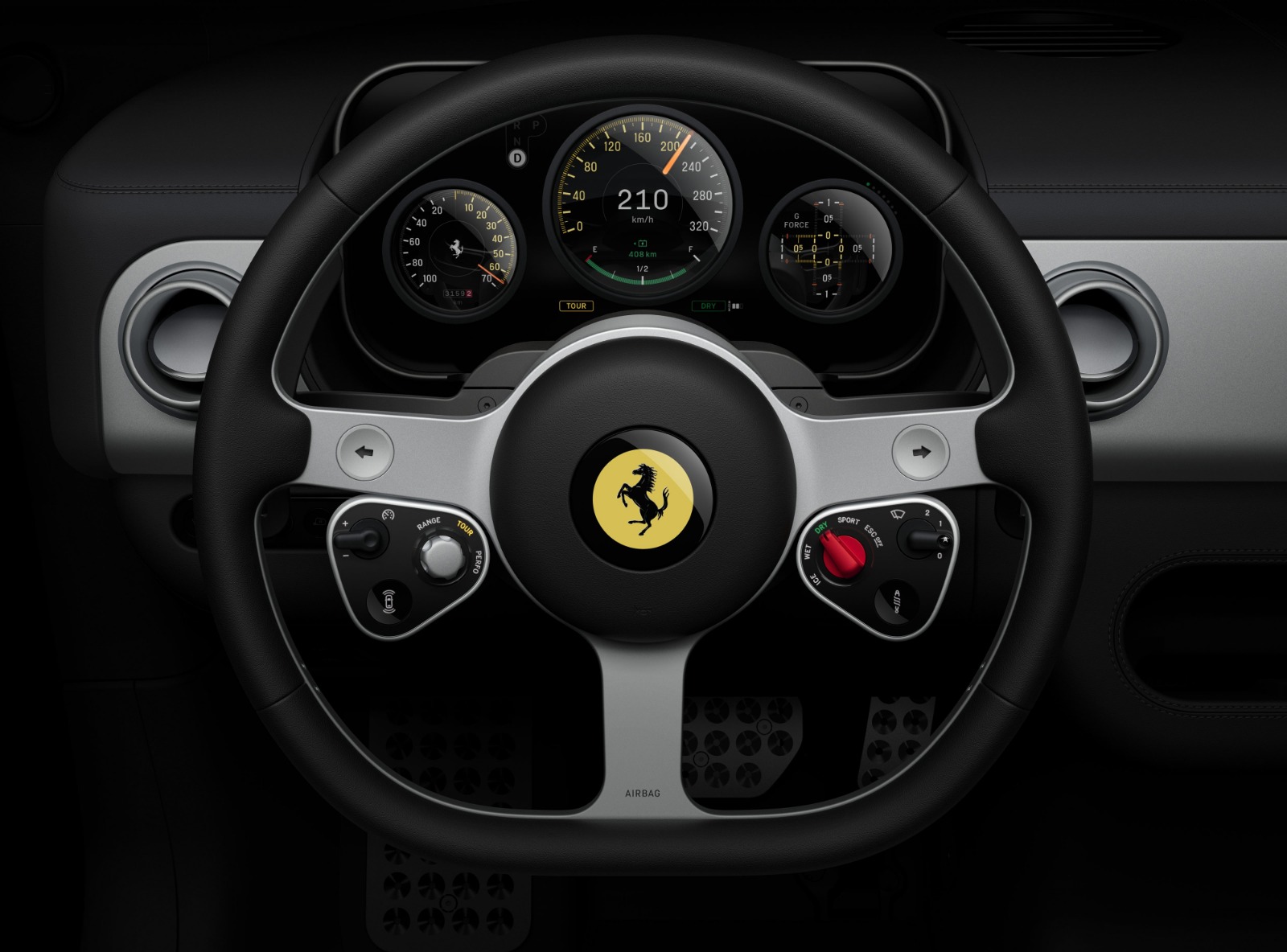
There are physical toggles. There are weighted switches. There is a multigraph on the dash—a mechanical module with three independent motors that can switch between a clock, a chronograph, and a compass. It feels like a Swiss watch met a spaceship. Ferrari understands what Apple learned long ago: true luxury isn’t a digital menu but a physical sensation.
The Verdict
The Ferrari Luce is a reminder that the best way to predict the future is to design it. By merging the mechanical heritage of Italy with the minimalist precision of Cupertino, they have built a masterpiece that feels as inevitable and “right” as the first time you held an iPod.
While the Luce is powered by an advanced electric powertrain, its interface is proudly tactile. In a move that feels like a direct page from the Apple playbook, Ferrari has prioritiszed the ritual. Just as the click of a MagSafe connector or the haptic feedback of a MacBook trackpad provides a sense of certainty, the Luce features weighted mechanical modules. It is a car that acknowledges the electric future while remaining, as Vigna says, profoundly rooted in the “power and wonder” of Ferrari’s history.
The Ferrari Luce will have its full exterior reveal in Italy this May. But for now, the message is clear: Ferrari is forging its own path in the EV race.
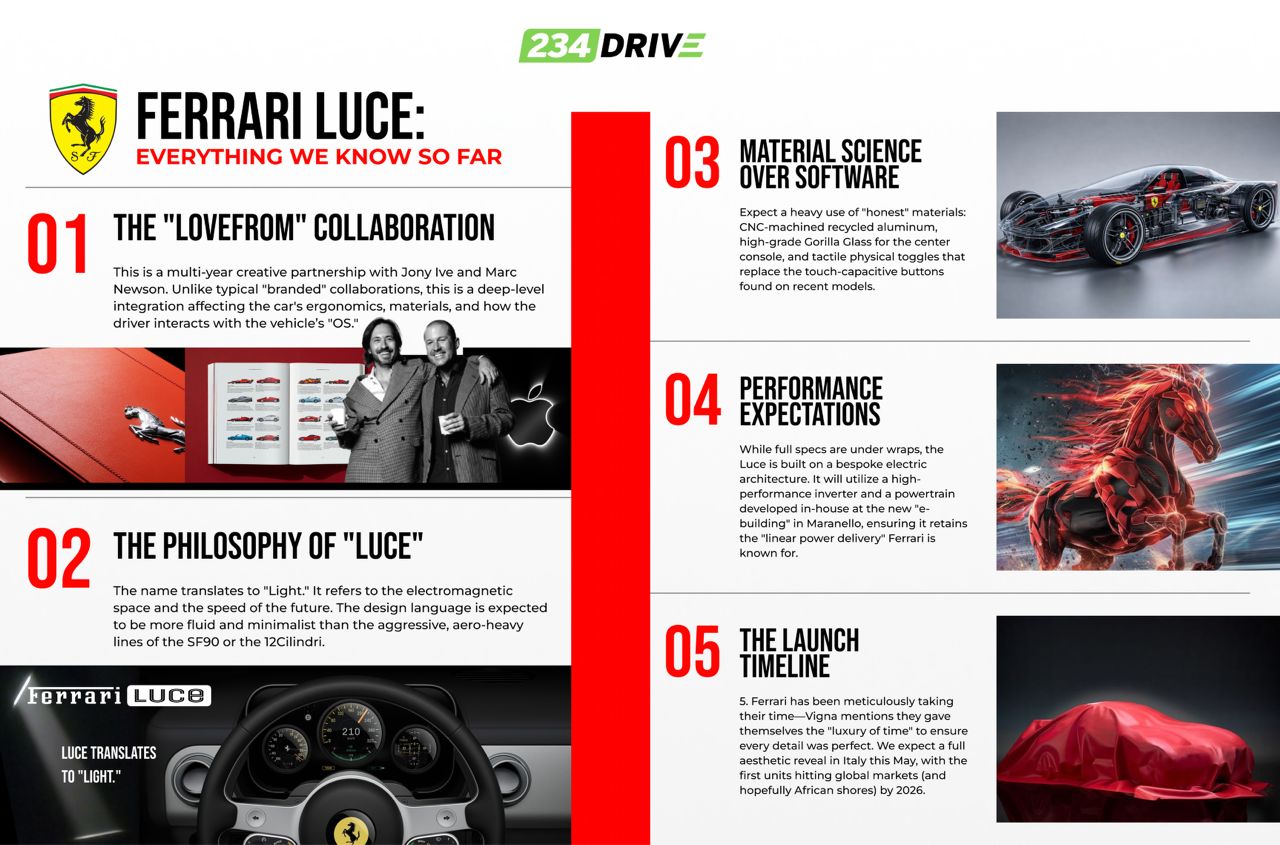
Ferrari Luce: Everything We Know So Far
here is the definitive dossier on the Luce as of today.
1. The “LoveFrom” Collaboration This is a multi-year creative partnership with Jony Ive and Marc Newson. Unlike typical “branded” collaborations, this is a deep-level integration affecting the car’s ergonomics, materials, and how the driver interacts with the vehicle’s “OS.”
2. The Philosophy of “Luce” The name translates to “Light.” It refers to the electromagnetic space and the speed of the future. The design language is expected to be more fluid and minimalist than the aggressive, aero-heavy lines of the SF90 or the 12Cilindri.
3. Material Science over Software Expect a heavy use of “honest” materials: CNC-machined recycled aluminum, high-grade Gorilla Glass for the center console, and tactile physical toggles that replace the touch-capacitive buttons found on recent models.
4. Performance Expectations While full specs are under wraps, the Luce is built on a bespoke electric architecture. It will utilize a high-performance inverter and a powertrain developed in-house at the new “e-building” in Maranello, ensuring it retains the “linear power delivery” Ferrari is known for.
5. The Launch Timeline Ferrari has been meticulously taking their time—Vigna mentions they gave themselves the “luxury of time” to ensure every detail was perfect. We expect a full aesthetic reveal in Italy this May, with the first units hitting global markets (and hopefully African shores) by 2026.
What do you think? Does the Jony Ive influence make this the most exciting Ferrari in years, or do you miss the scream of the V12? Let’s talk in the comments.