
Bajaj Auto, the Indian manufacturing giant, boasts a “career” in South Africa defined by utilitarian dominance. Best known for filling the streets of Delhi and Johannesburg alike with three-wheeled “tuk-tuks,” the brand’s public image is one of unyielding pragmatism and budget-conscious mobility. Unlike luxury manufacturers who trade in prestige and speed, Bajaj’s reputation is built on the bedrock of “last-mile” connectivity—getting people and goods from point A to point B for the lowest possible cost. Their entry into the four-wheeled passenger market was not a shift towards luxury, but a doubling down on this philosophy, challenging the very definition of what constitutes a car in the modern era.
The introduction of the Bajaj Qute to the South African market created a firestorm of public opinion, effectively splitting the motoring world into two distinct camps: the pragmatists and the petrolheads. To the former, Bajaj is a saviour, offering brand-new mobility at a price point previously reserved for battered second-hand vehicles. To the latter, the brand represents a “hazard,” introducing a vehicle class, the quadricycle that eschews modern automotive safety standards in favour of affordability. This unique market position has made the Qute not just a vehicle, but a statement piece, signalling an owner who values extreme economy and urban manoeuvrability over status or speed.
Exterior Design, Styling, and Road Presence
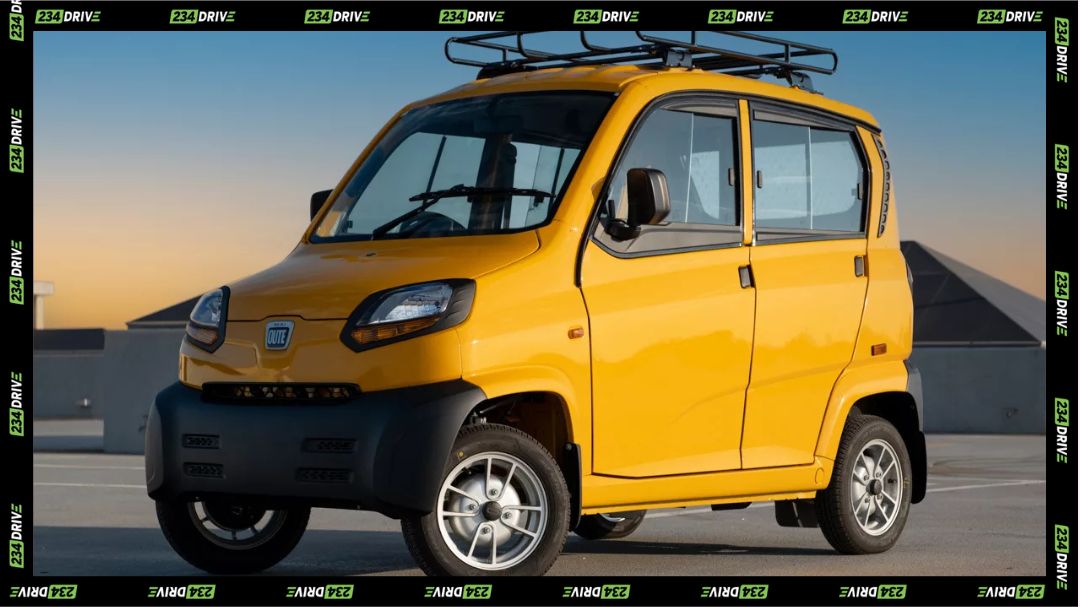
The Bajaj Qute’s exterior is an exercise in “form follows function,” resulting in a silhouette that is undeniably polarising yet strangely charismatic. Standing at just 2.75 metres long and 1.3 metres wide, its footprint is miniscule, allowing it to slip through gaps in traffic that would trap a standard hatchback. The design language features a tall-boy stance, large windows, and a snub-nosed front bonnet that actually serves as a 20kg storage compartment. Its body, constructed largely from impact-resistant plastic, lends it a toy-like aesthetic, often accented by bright, primary colours like “Sizzle Orange” or “Lime Green” that attempt to inject a sense of fun into its strictly utilitarian purpose.
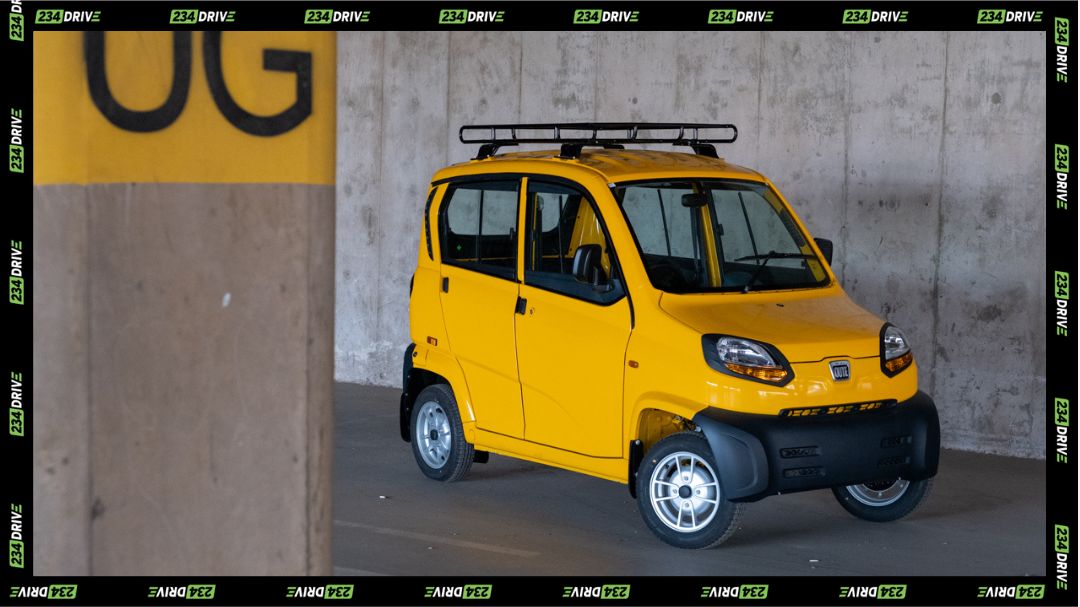
Despite its diminutive size, the Qute commands a significant amount of attention on the road, though not always for the right reasons. Its road presence is defined by its oddity; it looks less like a car and more like a covered quad bike, which is technically its classification. The 12-inch wheels and narrow track width give it a somewhat precarious appearance, especially when cornering. While it lacks the aggression or sleek lines of traditional vehicles, it possesses a certain “plucky” determination. However, this distinct look also marks it out as a slow-moving vehicle, often drawing the ire of faster traffic on arterial roads.
Interior Comfort, Technology, and Performance
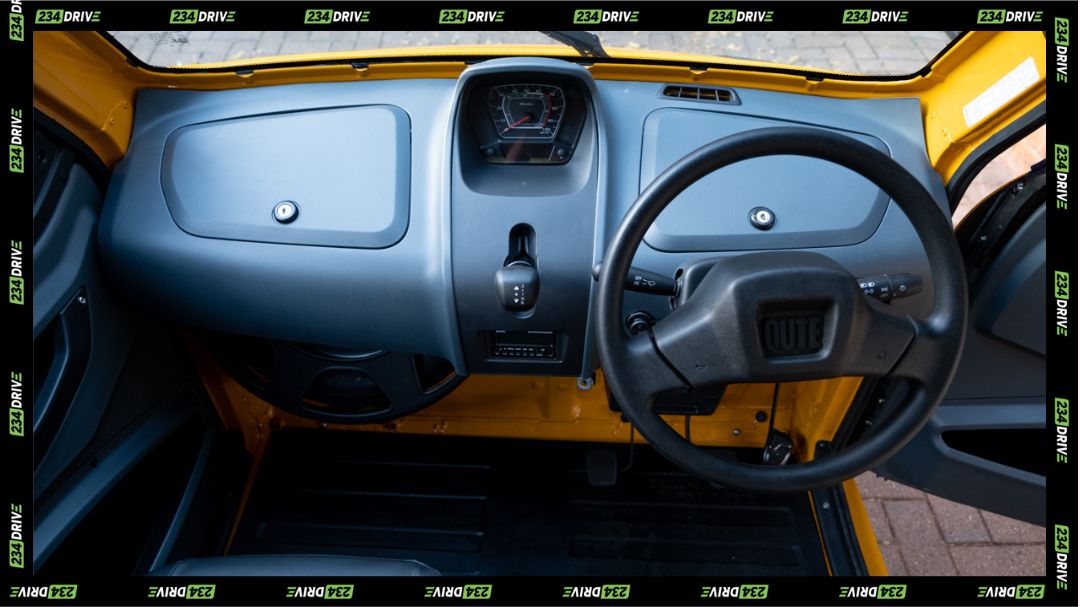
Stepping inside the Qute reveals a cabin that prioritises space maximisation over creature comforts. The interior is spartan, featuring a dashboard that houses a sequential gear lever mounted on the dash itself, freeing up floor space. The seating arrangement allows for four occupants, though comfort is basic, with thin cushioning better suited for short hops than long commutes. Technology is virtually non-existent by modern standards; there is no infotainment screen, climate control, or power steering. Instead, drivers get a basic USB radio and a speedometer. Storage, however, is surprisingly clever, with a total of 191 litres of space available through various cubbies and the front bonnet, expandable to 850 litres with the rear seats folded.
Under the rear seat lies the heart of the Qute: a 216.6cc, liquid-cooled, single-cylinder DTS-i engine. Producing a modest 9.9 kW of power and 19.6 Nm of torque, it propels the vehicle to a capped top speed of 70 km/h. Driving dynamics are raw and mechanical; the sequential 5-speed manual gearbox requires no clutch for shifts once moving (though it has a clutch pedal for starting), mimicking a motorcycle’s operation. The ride is firm, and engine noise permeates the cabin, reminding the driver of the engine’s close proximity. With a turning radius of just 3.5 metres, it is exceptionally agile in tight spaces, but the lack of weight (tipping the scales at around 450kg) means it can feel unsettled by crosswinds or the wake of passing trucks.
Price: New 2026 models retail for approximately R104,899.
Relevance to the South African Driving Environment
In the context of South Africa’s unique driving landscape, the Bajaj Qute occupies a precarious niche. The country’s infrastructure is a mix of well-maintained highways and deteriorating urban roads, often plagued by potholes and aggressive minibus taxis. For the urban commuter strictly navigating city centres or suburbs, the Qute offers an unbeatable value proposition. Its fuel efficiency of roughly 36 km/l means it effectively sips petrol, shielding owners from volatile fuel prices. For delivery drivers and small business owners, it acts as a weather-proof alternative to a motorcycle, offering greater security for goods and shelter from the Highveld thunderstorms or Cape winds.
However, its suitability diminishes rapidly outside of dense urban clusters. The Qute is legally and practically barred from South Africa’s extensive highway network due to its low top speed and safety classification. On faster arterial roads (M-roads), maintaining 70 km/h can be a struggle on inclines, turning the vehicle into a mobile chicane. Furthermore, the lack of safety features—specifically the absence of airbags and ABS, combined with a 1-star Euro NCAP rating—makes it a risky choice for families. It is a vehicle designed for a specific lifestyle: the hyper-local commuter or the entrepreneur, rather than the generalist car owner who needs a vehicle for all occasions.
Comparison with Segment Rivals
Bajaj Qute vs. Suzuki S-Presso (New)
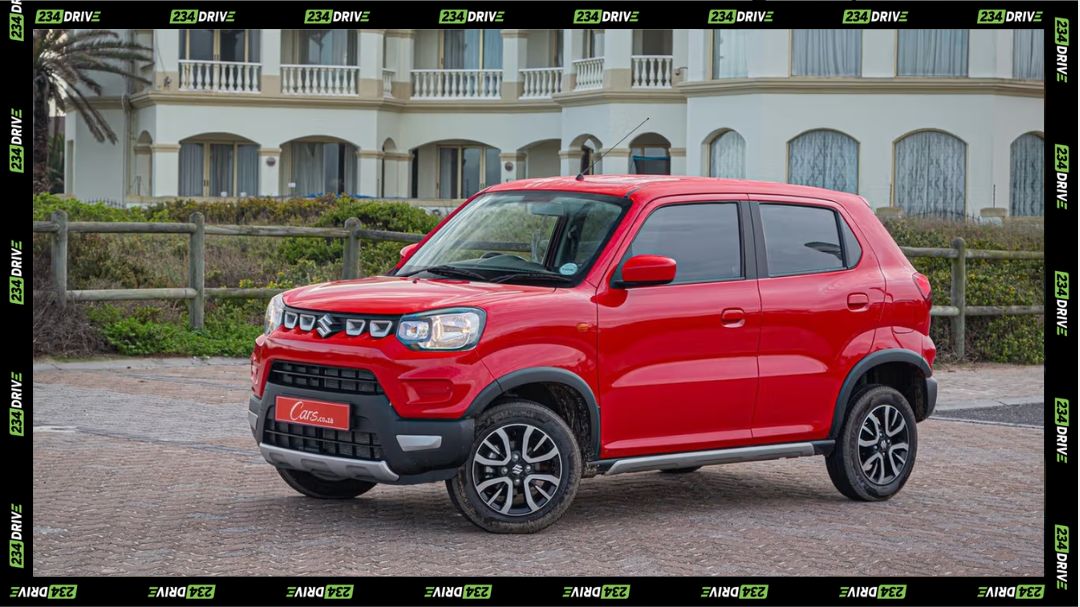
The Qute’s closest new competitor is the Suzuki S-Presso, often cited as South Africa’s cheapest ‘proper’ car. While the Qute undercuts the S-Presso significantly in price—R104,899 versus approximately R179,000 for a base S-Presso—the gap in capability is vast. The S-Presso offers a 1.0-litre engine with nearly five times the power (50 kW), highway capability (148 km/h top speed), and critical safety features like dual airbags and ABS. In terms of competitive positioning, the S-Presso is a fully fledged automobile suitable for mixed driving, whereas the Qute is a niche quadricycle. The S-Presso holds its value better due to broader market appeal, though the Qute’s simpler mechanicals may offer marginally lower maintenance costs for fleet operators.
Bajaj Qute vs. Used Volkswagen Polo Vivo (2016)
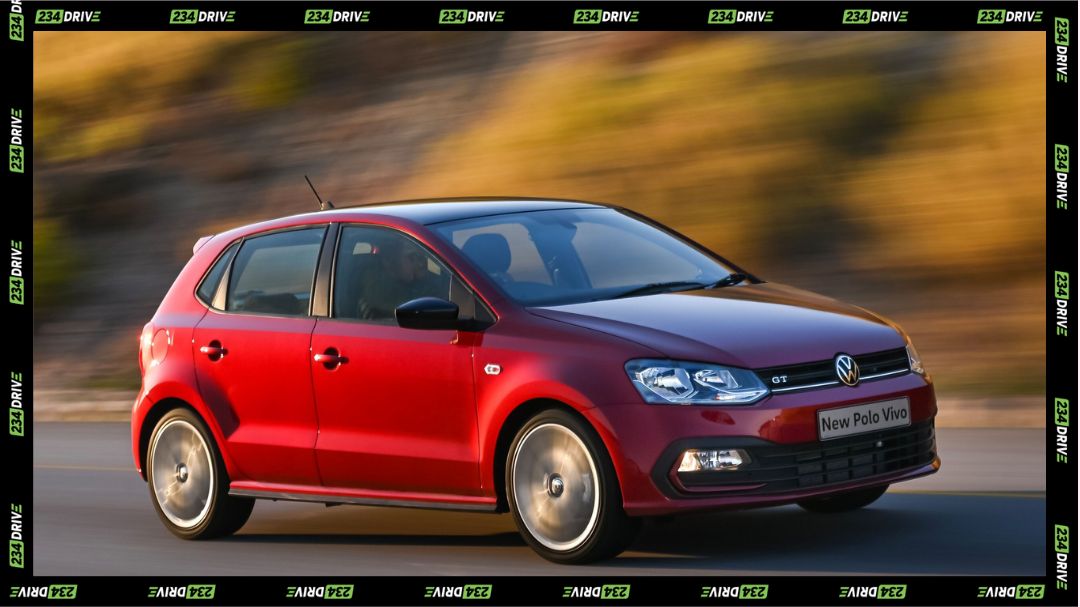
For the private buyer, the real competition lies in the used market. For the same price as a new Qute (approx. R105,000), a savvy buyer can browse listings to find a 2015/2016 VW Polo Vivo with around 80,000–100,000 km on the clock. The Polo Vivo is an icon of reliability and retains immense resale value in South Africa. It offers a substantial leap in build quality, safety (4-star ratings), and versatility, comfortably handling highway speeds and family duties. While the Qute wins on fuel economy and new-vehicle warranty (2 years/20,000km), the used Polo offers a far superior ownership experience in terms of comfort, road respect, and durability, making it the preferred choice for anyone not strictly bound by the need for a “new” number plate or ultra-low running costs.
Summary
The Bajaj Qute “collection” is a testament to extreme functionalism. Its key strengths lie in its unbeatable fuel economy, low running costs, and unmatched manoeuvrability in congested city centres. It democratises four-wheeled transport for those who might otherwise be relegated to public transport or motorcycles. However, these strengths come with significant compromises in safety, speed, and comfort. It is not a car in the traditional sense, but a specialised tool for urban mobility.
For the entrepreneur or the inner-city dweller, it is a stroke of genius; for the highway commuter, it is a non-starter. What do you think—is the Qute a revolution in affordable mobility, or a risk too far? Share your thoughts in the comments below.