
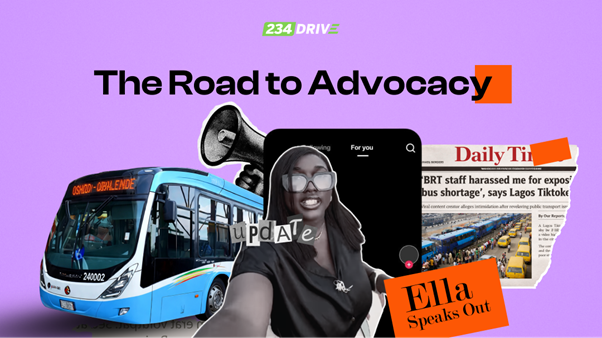
How one young woman’s daily commute diary became Lagos’s most uncomfortable mirror
It is 4am in Lagos. The city is still asleep, Daniella — known to her Instagram as @darkskinned.ella — is awake, already dressed, on her feet heading out the door because in Ikorodu, an area in Lagos where she resides, 4am is not early. 4am, as her videos will tell you with deadpan precision, is already late.
For months, Daniella has been pointing her phone at the reality that millions of Lagos workers live every single day but rarely see reflected back at them — not in newspapers, not on television, not in the press releases from the Lagos State Ministry of Transportation. She has been documenting, with wit and unflinching consistency, what it truly means to be a working-class commuter in Africa’s largest city. Her series, cheekily titled A Day in the Life of a 5-to-9 Worker, has been building quietly, episode by episode, a self-imposed archive of everyday suffering dressed up in humour because that is the only way Lagos lets you carry it.
Then, this week on episode 25 of 100, a staff member attached to the buses tried to fight her. And you know if there’s one thing strangers on the internet hate, it’s injustice.
A Hundred Days of Truth
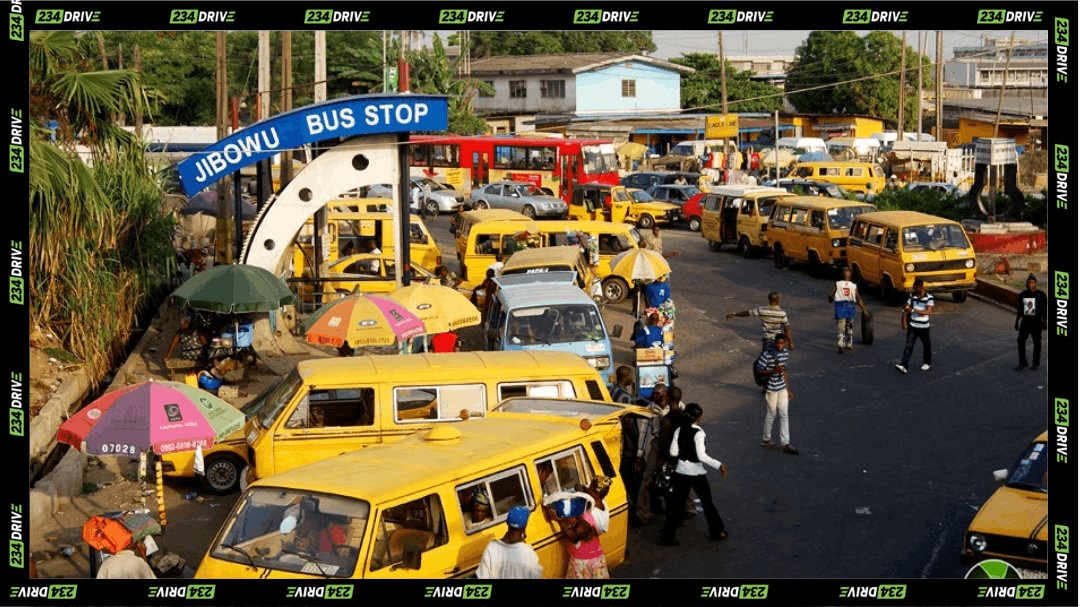
The premise of Daniella’s content is deceptively simple. She films herself commuting—the queues, the danfo buses, the BRT terminals, the waiting, the crowds, the chaos and timestamps everything. The result is less a social media series and more a live audit of Lagos’s transport infrastructure, delivered in short reels with captions that cut straight to the bone.
“POV: Waking up by 5am is late in Lagos”, “POV: Waking up by 4am and still no bus in Lagos”, “Rushing to join the queue”, “You spent only 5 minutes in a queue in Lagos” —the last one delivered with the kind of expression that says the miracle is real but the miracle is also insulting.
The timestamps are the real indictment. Daniella is not exaggerating for content. She is at bus stops before dawn. She is sweating in BRT queues by 6am. She is crammed against strangers on a moving bus by 8:30am. Yet, somehow, impossibly, work resumes at 9am, with one colleague already seated by 8:30, a quiet joke about the absurdity of it all. The commute eats the day. For many Lagos workers, it eats life.
What makes Daniella’s series remarkable is not just the consistency — though committing to 100 episodes of pre-dawn documentation requires a specific kind of stubborn — it is the reframing. She has quietly replaced the familiar “9-to-5” shorthand for working life with something far more honest: the “5-to-9 worker.” The person who leaves home at 5am and returns after 9pm, for whom the official working hours are almost beside the point, because the commute surrounds and swallows them. It is a phrase that will be instantly recognisable to anyone who has ever stood at Oshodi in the dark, or watched danfos sail past a bus stop already full.
The Moment it Stopped Being Funny
Citizen journalism has always carried a risk that professional journalism often does not: you are out there alone, without institutional backing, without press credentials, often without any protection at all—just a phone, sometimes a face and the hope that the public record you are building matters to someone, hopefully more than one.
On Wednesday, 10 March, that vulnerability became visible. A member of staff of the BRT operator company took exception to her filming and confronted her. One wonders what is the rationale behind that, perhaps the guilt from what is an unpleasant representation of your work , an opportunity to show loyalty to a job in good and bad times, or trying to prevent what might seem like a microscope into the ugly side of work . In a wonderful act of bravado, Daniella kept recording, later posting the footage on her TikTok and Instagram, where the reception was swift and furious.
The irony was not lost on anyone. Here was a representative of the system Daniella had spent months documenting attempting to silence the person documenting it. Instead, the confrontation became the story—a question about who gets to film public infrastructure, who gets to tell stories about failing services and what happens when the people running those services decide they do not like the answer. There was kick back from opposition on social media about Daniella showing the faces of the occupants in the bus which then proceeded to another conversation about the privacy rights of people in public spaces.
The New Face of Advocacy
Advocacy in Nigeria has historically looked a certain way: organised civil society groups, NGOs with acronyms, policy papers, town halls, press conferences. What Daniella represents is something different and, in its own way, more democratically powerful: the smartphone as an instrument of accountability.
She did not set out, as far as we know, to become an activist. She just wanted to get to work. But the act of pointing a camera at the conditions of that journey—consistently, over time, with timestamps and humour and the specific weariness of someone who has done this a hundred mornings in a row—has produced something that no policy brief has quite managed to replicate: an emotional record. A felt account of what it costs, in time and dignity and physical endurance, to simply hold down a job in this city.
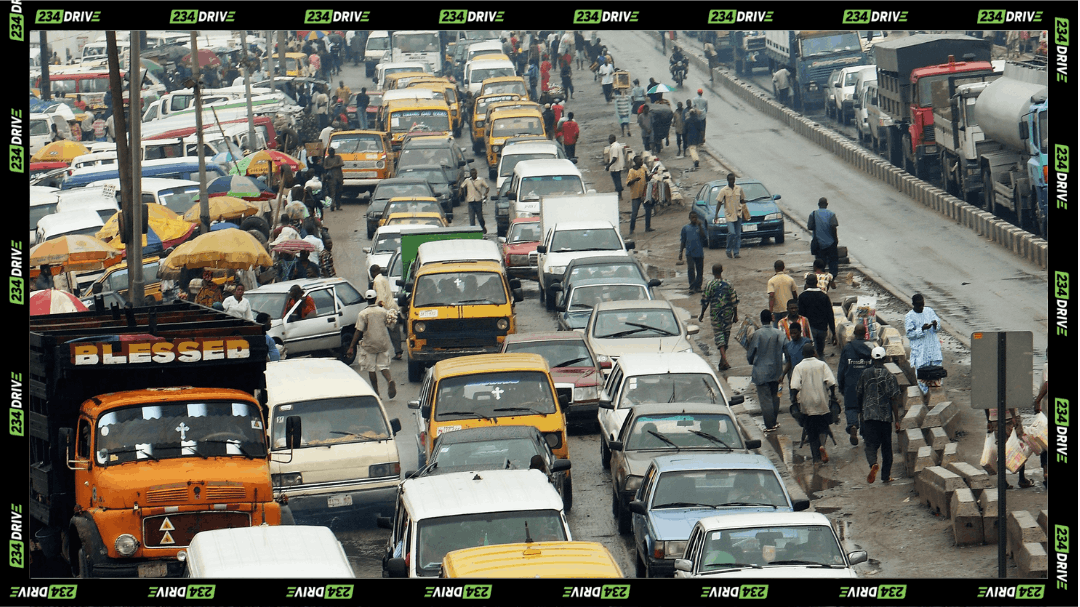
Lagos has over 21 million people. Between 60 and 80 percent of its residents rely on informal and semi-formal public transport to move through the city every day. The BRT system, introduced to great fanfare and genuine early success, carries hundreds of thousands of commuters but has struggled with fare hikes, overcrowding and a fundamental mismatch between the hours the system operates and the hours the city actually needs it.
Transport advocacy groups, urban planners and civil society organisations have spent years trying to get that evidence into rooms where decisions are made. Daniella has put it in front of hundreds of thousands of people on their phones, in a format they will actually watch, using the language of the commute itself: the timestamp, the resigned smile, the caption that says everything without saying anything at all.
Still in the Queue
That hostility from staff of the Brt Company tells something about the culture of a public service that should, by definition, answer to the public it serves. And it makes what Daniella is doing not just relatable content, but something closer to necessary work. Lagos state mass transit authority (LAMATA) the parastatal responsible for moving people around responded with a commendable statement denouncing the staff as a contractor and increasing the fleets that operate in Ikorodu.
The next day Daniella, however, was at the bus stop at 5am. She decided to take the day off BRT by Ubering to work, thanks to a crowdfunded donation for Uber as well as 74,000 new followers on Instagram. However, commuters and witnesses at that bus stop said 15 extra buses were sent to that route and so the wait time was under an hour as opposed to three. A quick lesson in the power of amplification when it comes to advocacy. As for Daniella, she promised to be back on the bus. When, we don’t know.
She is on episode 12 of 100. She has 88 more mornings to go.
Nigerians are watching.
Update: Monday, 16 March – Daniella just posted an update and it seems to be back to regular programming with the shortage of buses and the long wait time. The more things change the more they stay the same.