
A Stellantis-backed digital marketplace just went live in Kenya, and it’s betting big on electric motorcycles, not saloons. EV24.africa, the EV-focused arm of Auto24.africa, officially launched operations in Kenya in October 2025, positioning itself as the entry point for East Africa’s electric vehicle transition—a market projected to balloon from $50 million in 2025 to $250 million by 2030 at a blistering 38% compound annual growth rate. But this isn’t a Tesla showroom. The platform is laser-focused on two- and three-wheelers, the workhorses of Kenya’s boda-boda taxi industry, where over 1.5 million motorcycle operators are staring down fuel costs that electric alternatives can slash by $4 to $10 daily.
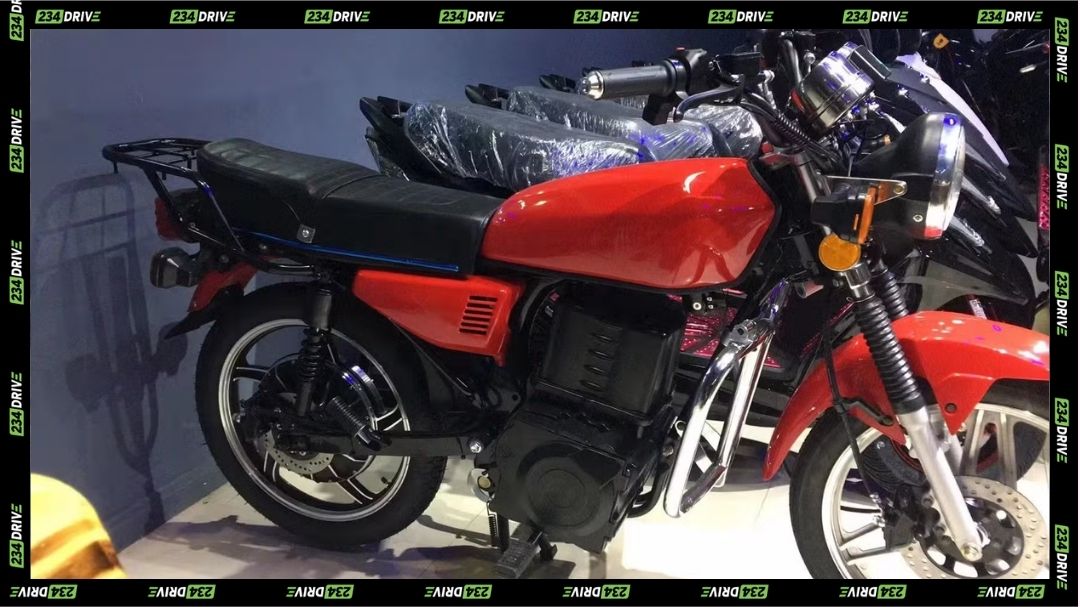
The announcement marks a strategic pivot for Stellantis, which rarely gets mentioned in the same breath as African mobility but has been quietly building out Auto24.africa’s footprint across the continent. EV24.africa extends that reach by creating a pan-African digital storefront for over 200 EV models—new and used—managing everything from importation and duty clearance to registration and last-mile delivery. Kenya was chosen as the regional hub not out of sentiment but cold calculation: the country’s electricity grid runs on over 90% renewable energy, its government has rolled out EV-friendly tax incentives, and its two-wheeler market is already electrifying faster than almost anywhere else on the continent. Roughly 90% of Kenya’s current EV registrations are motorcycles, and the segment has exploded from a few hundred units a few years back to over 4,000 vehicles sold in 2023 alone, with projections hitting 60,000 electric motorcycles on the road by 2030.
EV24.africa’s core proposition is brutally simple: eliminate the friction that has kept EVs out of reach for mass-market buyers. Traditional dealerships are scarce, import logistics are a nightmare, and financing remains a puzzle for most operators. The platform collapses those barriers by offering online purchasing, transparent pricing, and partnerships that bundle in solar charging kits—critical for boda-boda riders operating in peri-urban or rural areas where grid access is patchy. These aren’t basic plug-and-play chargers; some kits come app-enabled for real-time monitoring and payment tracking, a feature explicitly marketed in Uganda’s rollout and available in Kenya. For a rider covering 100-plus kilometres daily, the ability to charge off-grid using solar panels turns range anxiety into a non-issue, especially when public infrastructure is still catching up.
And that infrastructure is catching up fast. Nairobi now boasts 80-kilowatt DC fast chargers, installed by Chinese firms in 2025, capable of topping up batteries in under an hour. Over 200 public charging stations are operational nationwide, with government and private sector plans targeting 10,000 stations by 2030. EV24.africa doesn’t build chargers—it sells vehicles—but the platform’s timing coincides with this infrastructure wave, creating a feedback loop where more chargers make EVs more attractive, and more EVs justify more chargers. The broader ecosystem includes companies like Spiro, Ampersand, Roam, and BasiGo, which have already deployed thousands of electric motorcycles and battery-swap networks across Kenya and neighbouring markets. EV24.africa positions itself as the retail layer atop this foundation, aggregating supply and simplifying access for operators who want in but don’t know where to start.
The business model hinges on volume, not margins. Electric motorcycles for boda-boda operators represent the lowest-hanging fruit in Africa’s EV transition because the economics are undeniable. A petrol-powered motorcycle costs roughly $2,000 to $3,000 upfront, with daily fuel and maintenance expenses chewing through operator earnings. An electric equivalent costs slightly more upfront but saves $120 to $300 monthly in operating costs, paying for itself in under two years. For riders operating on razor-thin margins, that’s the difference between subsistence and stability. EV24.africa’s financing partnerships are designed to flatten that upfront cost hurdle, offering instalment plans that align with daily earnings—a model already proven by competitors like Ampersand, which has financed thousands of units through pay-as-you-go schemes.
Stellantis’ involvement adds weight. The French-Italian-American automaker isn’t a household name in African mobility, but its Dare Forward 2030 strategy explicitly targets emerging markets, and Auto24.africa’s existing service network across the continent gives EV24.africa a ready-made after-sales infrastructure. That’s critical in a region where post-purchase support has historically been the Achilles’ heel of EV adoption. If a battery fails or a motor glitches, riders need local technicians, not a phone number in Europe. Stellantis’ presence—however indirect—signals that this isn’t a one-off experiment but part of a longer-term play to capture Africa’s mobility transition before Chinese or Indian competitors lock up the market.
Kenya’s 38% CAGR through 2030 isn’t happening in isolation. Rwanda and Uganda are watching closely, and EV24.africa has already expanded into both markets, leveraging Kenya’s regulatory head start and infrastructure maturity as a proving ground. The Democratic Republic of Congo, with its vast geography and resource wealth, is next on the list. But the playbook remains the same: target commercial operators first, where the unit economics are clearest, then expand into private consumer sales as infrastructure matures and prices drop. This is the inverse of how EVs rolled out in the U.S. or Europe, where luxury saloons led and two-wheelers lagged. In Africa, motorcycles are leading because they’re the vehicles that matter most to the most people.
The launch also highlights a broader question about Africa’s energy transition. Kenya’s renewable-heavy grid makes EVs a genuine climate play, not just an economic one. Every electric motorcycle replaces a petrol bike that was burning imported fuel, improving trade balances and cutting emissions. But as EV adoption scales, will grids keep pace? And if solar home charging becomes the norm, does that undermine utility revenue models or accelerate decentralised energy adoption? These aren’t hypothetical questions—they’re live debates in Nairobi’s policy circles, and EV24.africa’s rollout will stress-test the answers.
This marks the shift from hype to fleet-scale operations. Kenya’s boda-boda sector is electrifying whether legacy automakers participate or not. EV24.africa’s bet is that there’s a fortune to be made in making it easier.