
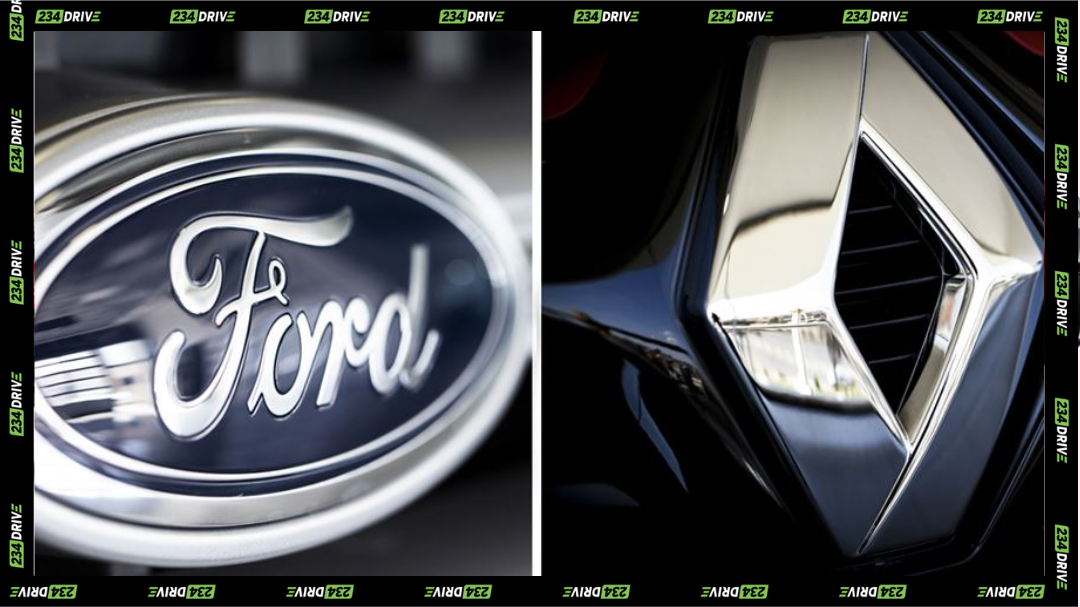
Ford and Renault’s icons shown together, hinting at a new phase of collaboration as both companies adapt to Europe’s changing rules and rising EV demands. | Source: AA
Ford and Renault have taken a step toward shaping Europe’s electric-vehicle market. The American and French carmakers announced a strategic partnership that will see Ford launch two affordable EVs built on Renault Group’s Ampere platform starting in early 2028. Renault will design, engineer, and manufacture the models at its ElectriCity hub in northern France, while Ford will apply its brand identity, driving characteristics, and user-experience design.
The collaboration gives Ford immediate access to a cost-efficient, proven EV platform at a time when meeting European emissions rules and competing with lower-priced rivals requires scale and tighter industrial efficiency. Renault, in turn, secures higher factory utilization for Ampere and strengthens its position as a supplier of EV technology to other major automakers. Both companies frame the agreement as a way to accelerate competitiveness while reducing development costs in a tightening market.
Beyond passenger cars, the companies signed a Letter of Intent to explore jointly developing and manufacturing selected light commercial vehicles for Europe. If finalized, the LCV program would combine Renault’s long-standing leadership in vans with Ford’s strong commercial-vehicle portfolio, expanding offerings for fleets undergoing electrification.
Executives from both firms emphasized that the partnership is strategic rather than structural: each company maintains full independence but aligns around shared industrial and technological goals. François Provost, CEO of Renault Group, said the cooperation reflects Renault’s ability to “innovate and stay competitive in Europe’s fast-changing market,” while Ford CEO Jim Farley framed the move as a pillar of Ford’s plan to build a “fit-for-the-future” European business.
Ford and Renault’s partnership in Europe also connects naturally to the work both brands already do in Africa. Ford now builds the global Ranger Plug-in Hybrid at its upgraded Silverton plant in South Africa, a key hub for hybrid exports and sustainable manufacturing. Renault operates North Africa’s largest car plant in Tangier, Morocco, running a zero-carbon, high-capacity facility. With both companies strengthening their presence on the continent, Africa’s growing manufacturing base could quietly support even Europe’s demands in the future.
Could Joint EV Platforms and Shared Production Be How Carmakers Meet Europe’s Tougher Rules?
Automakers are increasingly teaming up to cut the cost and risk of building new electric cars. Partnerships like Ford and Volkswagen on the MEB platform, Toyota and Subaru’s shared EV projects, and Stellantis working with LG Energy Solution on batteries all show how companies now share factories, technology, and supply chains to manage rising costs and tougher regulations.
If Ford and Renault succeed, their partnership could become another strong example of how cross-border collaboration helps companies compete in Europe’s fast-growing market for affordable electric vehicles.