
The landscape of automotive luxury in Kenya has shifted dramatically over the last decade, transforming from a market dominated by utilitarian premium SUVs to a playground for some of the world’s most exclusive hypercars. As of 2026, the nation’s luxury car sector serves as a potent symbol of growing wealth among the elite—business tycoons, political heavyweights, and high-net-worth individuals who view these machines not merely as transport, but as investments and status symbols. With the market projected to generate approximately US$5 million in revenue this year, the appetite for high-performance engineering is undeniable, despite the hurdle of rigorous import duties.
Navigating this market requires a deep understanding of the unique financial ecosystem that governs it. In Kenya, the barrier to entry is exceptionally high; import duties, excise taxes, and VAT can cumulatively add between 60% to 100% to a vehicle’s base price. This is further complicated by strict regulations enforced by the Kenya Revenue Authority (KRA), which now restricts imports to right-hand-drive vehicles manufactured from 2019 onwards. Consequently, the presence of a multi-million dollar hypercar on Nairobi’s roads represents a feat of both financial muscle and logistical determination. The following list details the five most expensive vehicles currently gracing Kenyan soil, ranking them by their estimated local value.
1. Ferrari Daytona SP3
Estimated Price: KSH 312 Million ($ 2.4 Million )
The Ferrari Daytona SP3 is arguably the most visually arresting vehicle to ever enter the Kenyan market. As a limited-edition model with only 599 units produced globally, its design is a homage to the golden era of 1960s sports prototypes like the 330 P4. The exterior features a dramatic “targa” top with a removable roof and spectacular butterfly doors that hinge upward, creating a silhouette that looks fast even when stationary. Passive aerodynamics play a crucial role here; unlike many modern supercars that rely on active wings, the SP3 uses complex underbody airflow and “chimneys” in the rear wings to generate downforce, giving it a pure, sculptural aesthetic that commands absolute attention on the streets of Nairobi.
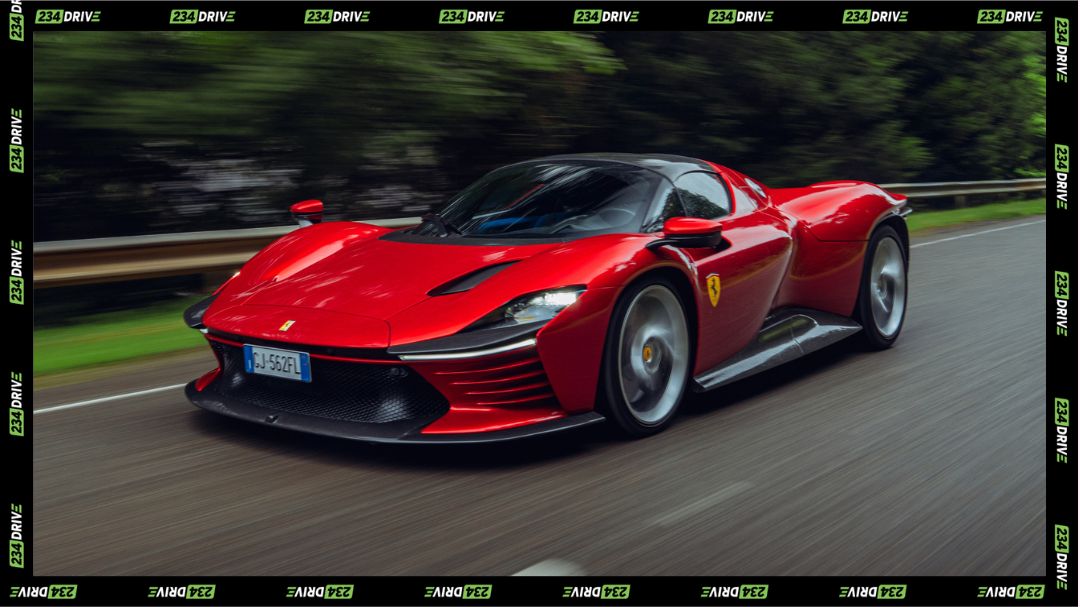
Inside, the Daytona SP3 is a masterclass in focused minimalism and heritage-inspired luxury. The seats are integrated directly into the carbon fibre chassis, wrapping around the driver to provide a seating position identical to a Formula 1 car. A 16-inch curved HD display handles all instrumentation, ensuring the driver remains focused on the road. Mechanically, it is powered by a 6.5-litre naturally aspirated V12 engine—the most powerful internal combustion engine Ferrari has ever built for a road car—delivering 840 hp and 697 Nm of torque. It sprints from 0-100 km/h in just 2.85 seconds, offering a visceral, analogue driving experience that justifies its astronomical price tag.
2. Bugatti Veyron Grand Sport Vitesse
Estimated Price: KSH 300 Million ($ 2.3 Million )
Spotting a Bugatti Veyron Grand Sport Vitesse in Kenya is an event in itself. This open-top hypercar is defined by its muscular, rounded proportions and the iconic horseshoe grille that announces its lineage. The body is crafted almost entirely from carbon fibre, often finished in dual-tone colour schemes that highlight its engineering complexity. As the fastest open-top production car in the world, its design is dictated by the need to remain stable at speeds exceeding 400 km/h. The sheer width of the vehicle and its massive air intakes give it a road presence that borders on the intimidation, marking it out clearly as a machine of superior capability.
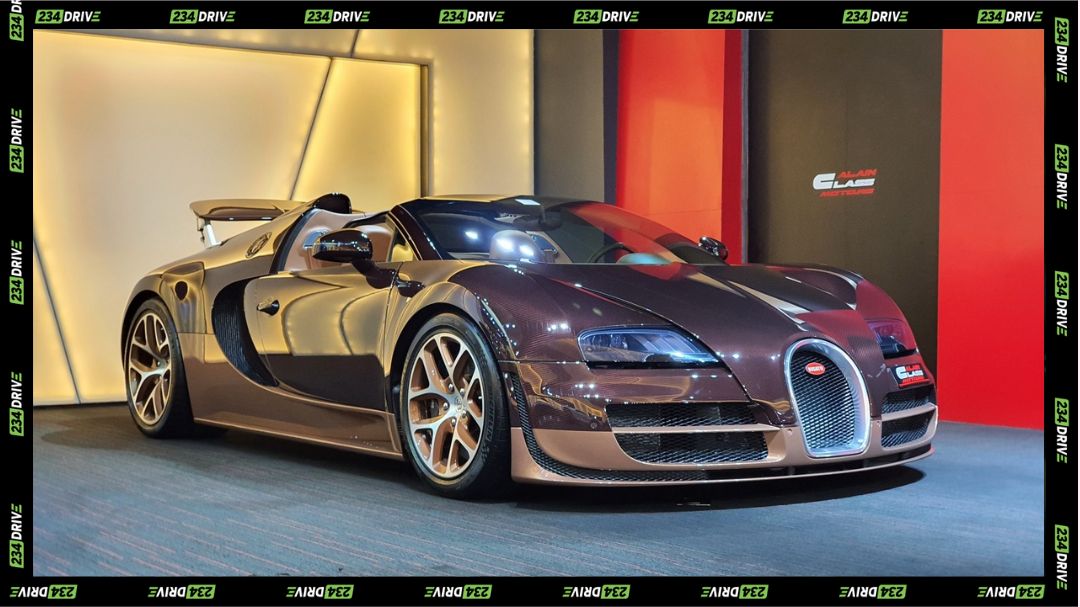
The cabin of the Veyron is a blend of unparalleled luxury and mechanical precision. It features high-grade leather, polished aluminium, and a level of craftsmanship akin to a Swiss watch. The centerpiece, however, is the engineering marvel behind the driver: an 8.0-litre quad-turbocharged W16 engine producing a staggering 1,200 hp and 1,500 Nm of torque. Capable of 0-100 km/h in 2.6 seconds, the Vitesse is a record-breaker. However, ownership requires deep pockets beyond the purchase price; a set of tyres alone can cost upwards of $25,000, and specialised maintenance often requires technicians to fly in from Europe, making it a true collector’s item for the ultra-wealthy.
3. Mercedes-Benz S600 Pullman Guard
Estimated Price: KSH 140 Million+ ($ 1.1 Million)
Unlike the flamboyant supercars on this list, the Mercedes-Benz S600 Pullman Guard is designed for discretion and dominance. It is a massive, extended-wheelbase limousine that exudes state authority. Visually, it retains the classic elegance of the S-Class but is significantly longer, with a wheelbase of over 4.3 metres. The exterior panels are discreetly thickened to accommodate B6/B7 level armour, capable of withstanding assault rifle fire and grenade blasts. Its presence on the road is usually accompanied by a motorcade, signalling that the occupant is a person of immense significance. Historically, this vehicle has been the choice of Kenyan heads of state, including former President Uhuru Kenyatta.

The interior of the Pullman Guard is a fortress of solitude and safety. The rear cabin is configured with face-to-face seating for four, separated from the driver by a partition, and features every conceivable luxury amenity from massage seats to blackout curtains. Under the bonnet lies a 5.5-litre V12 BiTurbo engine generating 510 hp. While not built for speed (top speed is electronically limited to 210 km/h due to the vehicle’s 4.2-tonne weight), the engine provides the immense torque needed to move the armoured chassis swiftly in emergency situations. It also includes life-saving tech such as self-sealing fuel tanks, run-flat tyres, and an emergency fresh air system to counter gas attacks.
4. Rolls-Royce Wraith Coupe (2023)
Estimated Price: KSH 90 Million ($698,000)
The Rolls-Royce Wraith is the ultimate gentleman’s gran turismo. Its fastback profile sets it apart from the more formal Phantom, giving it a dynamic, sweeping line that hints at speed without sacrificing elegance. The defining feature is the rear-hinged “suicide doors,” which allow for a graceful entry and exit. Owners often opt for two-tone paint finishes that accentuate the car’s bold shoulder lines. In Kenya, a Wraith is a definitive statement of success, often associated with prominent business figures like Raju Sangal. It doesn’t just occupy a lane; it glides through traffic with an imperious nature that demands right of way.
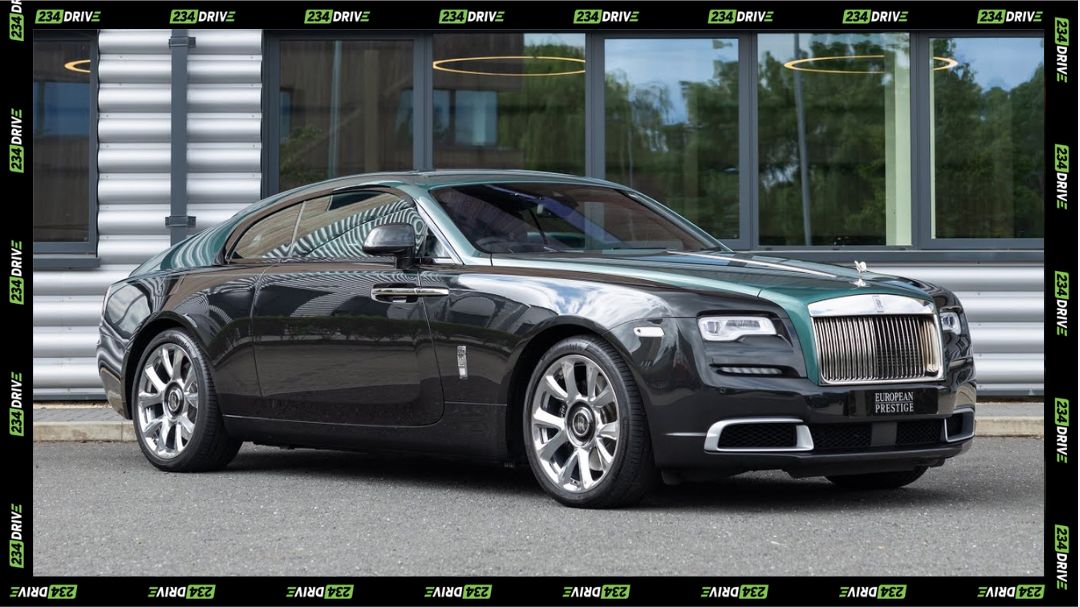
Stepping into a Wraith is akin to entering a private jet. The cabin is adorned with the finest hand-stitched leathers and book-matched wood veneers. The signature “Starlight Headliner,” comprising hundreds of fibre-optic lights, mimics the night sky, adding a touch of bespoke magic. Power is provided by a 6.6-litre twin-turbo V12 engine delivering 623 hp, allowing this 2.4-tonne vehicle to surge from 0-100 km/h in 4.4 seconds. The ride quality is described as a “magic carpet ride,” thanks to an air suspension system that uses GPS data to read the road ahead and adjust the dampers accordingly, ensuring absolute comfort regardless of road surface imperfections.
5. Ferrari F8 Tributo
Estimated Price: KSH 80 Million ($620,000)
The Ferrari F8 Tributo serves as a bridge between Ferrari’s combustion past and its hybrid future. Its design is a celebration of aerodynamics, featuring the “S-Duct” at the front which increases downforce by 15% compared to its predecessor, the 488 GTB. The rear sports a Lexan engine cover with louvres, a nod to the legendary F40 showcasing the engine beneath. Quad tail lamps and aggressive sculpting make it instantly recognisable. Owned by a prominent Mombasa businessman, the F8 Tributo is often seen along the coast, its low, wide stance contrasting sharply with the standard traffic.
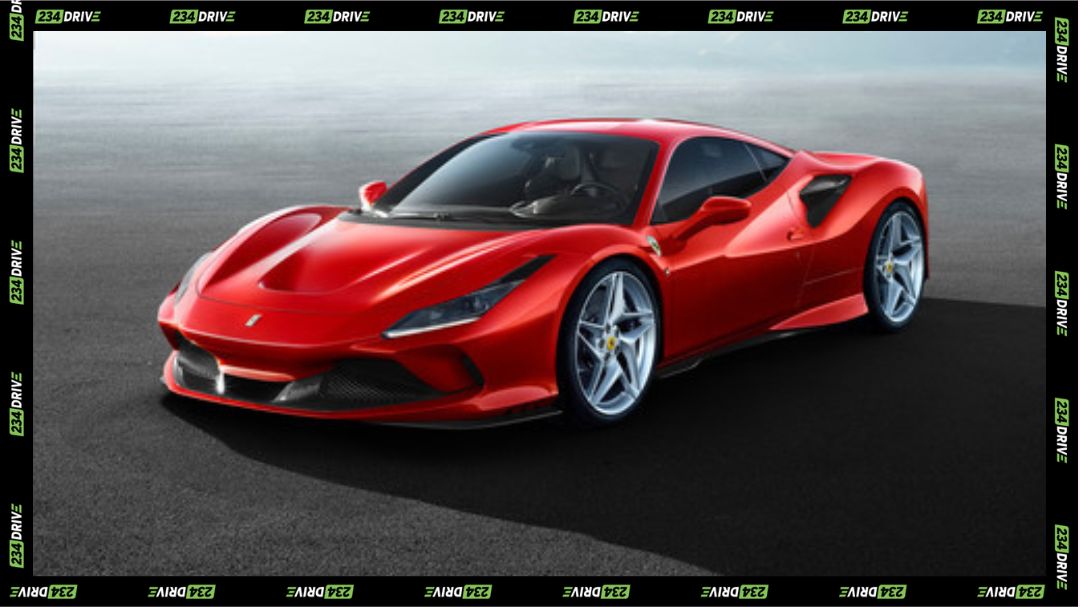
The F8 Tributo’s interior is a cockpit designed for the driver. It features a smaller diameter steering wheel for better tactile feedback and an optional 7-inch touchscreen display for the passenger. The car is equipped with Ferrari’s latest dynamic control systems, including the “Ferrari Dynamic Enhancer” which makes driving at the limit more accessible. At its heart is a 3.9-litre twin-turbo V8, voted the best engine of the last two decades, producing 710 hp. It matches the SP3’s acceleration prowess, hitting 0-100 km/h in 2.9 seconds, making it the most powerful V8 non-special series car Ferrari has produced to date.
Owning Supercars in Kenya
Owning such machinery in Kenya presents a unique set of logistical and practical challenges that go far beyond the initial purchase price. The primary hurdle is the infrastructure; while major highways like the Nairobi Expressway offer smooth tarmac suitable for low-clearance vehicles, the vast majority of secondary roads are riddled with speed bumps and potholes that can be catastrophic for a car with only inches of ground clearance. Consequently, vehicles like the Bugatti Veyron and Ferrari Daytona SP3 often spend most of their lives as “garage queens,” driven only on specific routes or transported on flatbeds to events, rather than being used for grand touring as they were designed.
Furthermore, the ownership experience is heavily influenced by the lack of authorised service centres for brands like Bugatti and Ferrari within the region. Routine maintenance often involves flying in specialised mechanics from Europe or South Africa, or in extreme cases, shipping the car out of the country for major repairs. This adds a layer of complexity and cost that deters all but the most dedicated enthusiasts. Additionally, the security risk for such high-profile assets is significant, necessitating secure storage and often, armed escorts for vehicles like the Presidential Pullman Guard. Despite these challenges, the allure of ownership remains strong, driven by the prestige and the sheer joy of possessing a pinnacle of automotive engineering.
Competitive Positioning and Investment Value
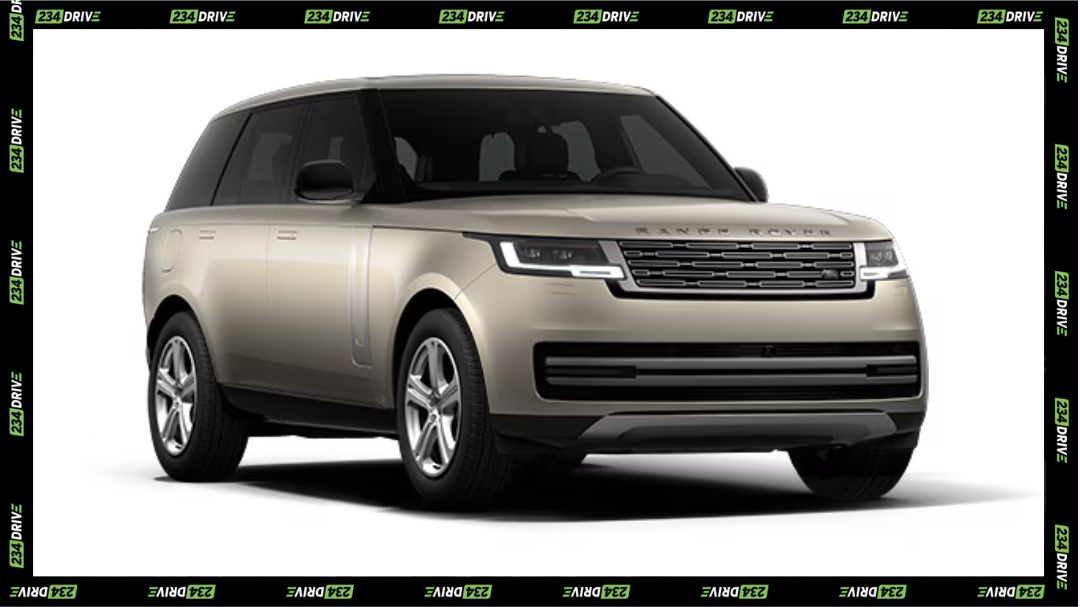
When compared to “standard” luxury vehicles popular in Kenya, such as the Toyota Land Cruiser 300 or the Range Rover Autobiography, these top-tier exotics exist in a completely different asset class. A Land Cruiser is bought for its durability, resale value, and ability to conquer any terrain; it is a functional luxury tool. In contrast, a Ferrari or Bugatti is a depreciating asset in terms of local utility but potentially an appreciating asset globally. While a Range Rover might lose value due to wear and tear from Kenyan roads, limited-run models like the Daytona SP3 or the Veyron often appreciate in value over time due to their global rarity, provided they are kept in pristine condition.
Toyota Land Cruiser (LC300). Source: Toyota Nigeria
However, in terms of local resale liquidity, the hypercar market is incredibly illiquid compared to the SUV segment. Finding a buyer for a KSH 300 million Bugatti within Kenya is significantly harder than selling a KSH 25 million Mercedes S-Class. The pool of potential buyers is microscopic, and the high maintenance costs scare off second-hand buyers. Therefore, these cars are competitively positioned not as vehicles to be traded or upgraded frequently, but as permanent fixtures in a collector’s portfolio, offering intangible returns in the form of status and exclusivity that no mass-produced luxury SUV can match.
Summary
The presence of the Ferrari Daytona SP3, Bugatti Veyron, and Rolls-Royce Wraith on Kenyan roads is a testament to the country’s evolving economic stature and the refined tastes of its elite. These vehicles are marvels of human engineering, offering performance figures that defy physics and luxury that rivals five-star hotels. While the practicalities of driving them in Kenya remain challenging, their existence highlights a growing culture of automotive appreciation.
What are your thoughts on this list? Do you believe the infrastructure in Kenya will ever evolve enough to allow these machines to be enjoyed to their full potential? Share your thoughts in the comments below.