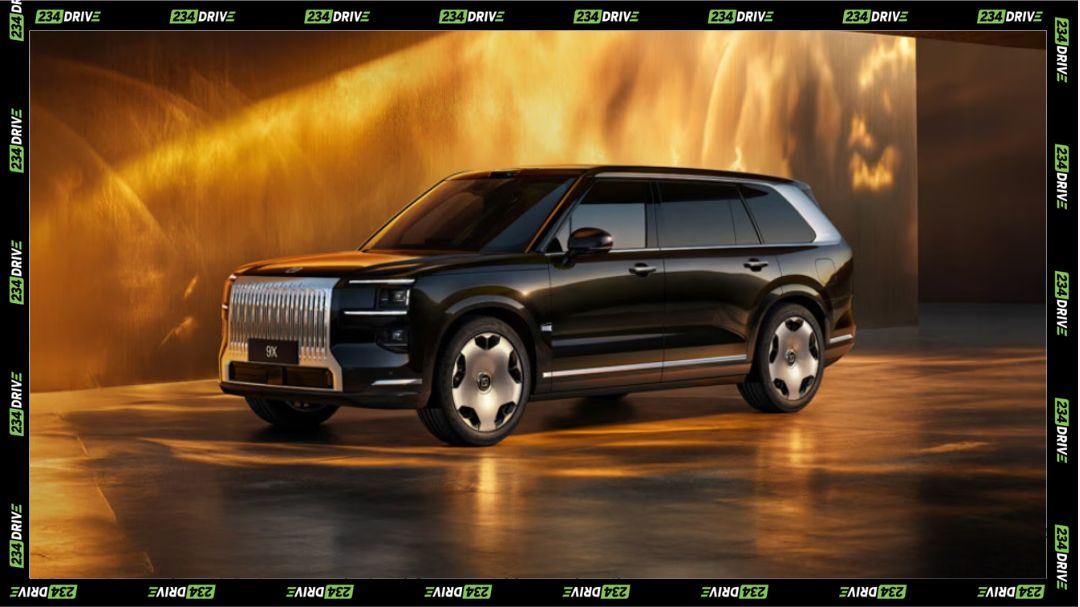

Christian von Koenigsegg stands as a singular figure in the automotive world, a visionary whose career has been defined not by corporate ladders but by a relentless, almost obsessive pursuit of perfection. Founded in 1994 when he was just 22 years old, his eponymous company has grown from a courageous Swedish startup into the foremost authority on hypercar innovation. Unlike traditional executives who manage brands, von Koenigsegg is an inventor at heart, deeply involved in the mechanical and aerodynamic minutiae of every vehicle that bears his family crest. His public image is that of a calm, articulate engineer who speaks in the language of physics rather than marketing, earning him a reverence among enthusiasts that borders on the religious. His taste in automobiles favours the extreme machines that do not compromise between art and science but rather fuse them into functional sculptures of carbon fibre and aluminium.
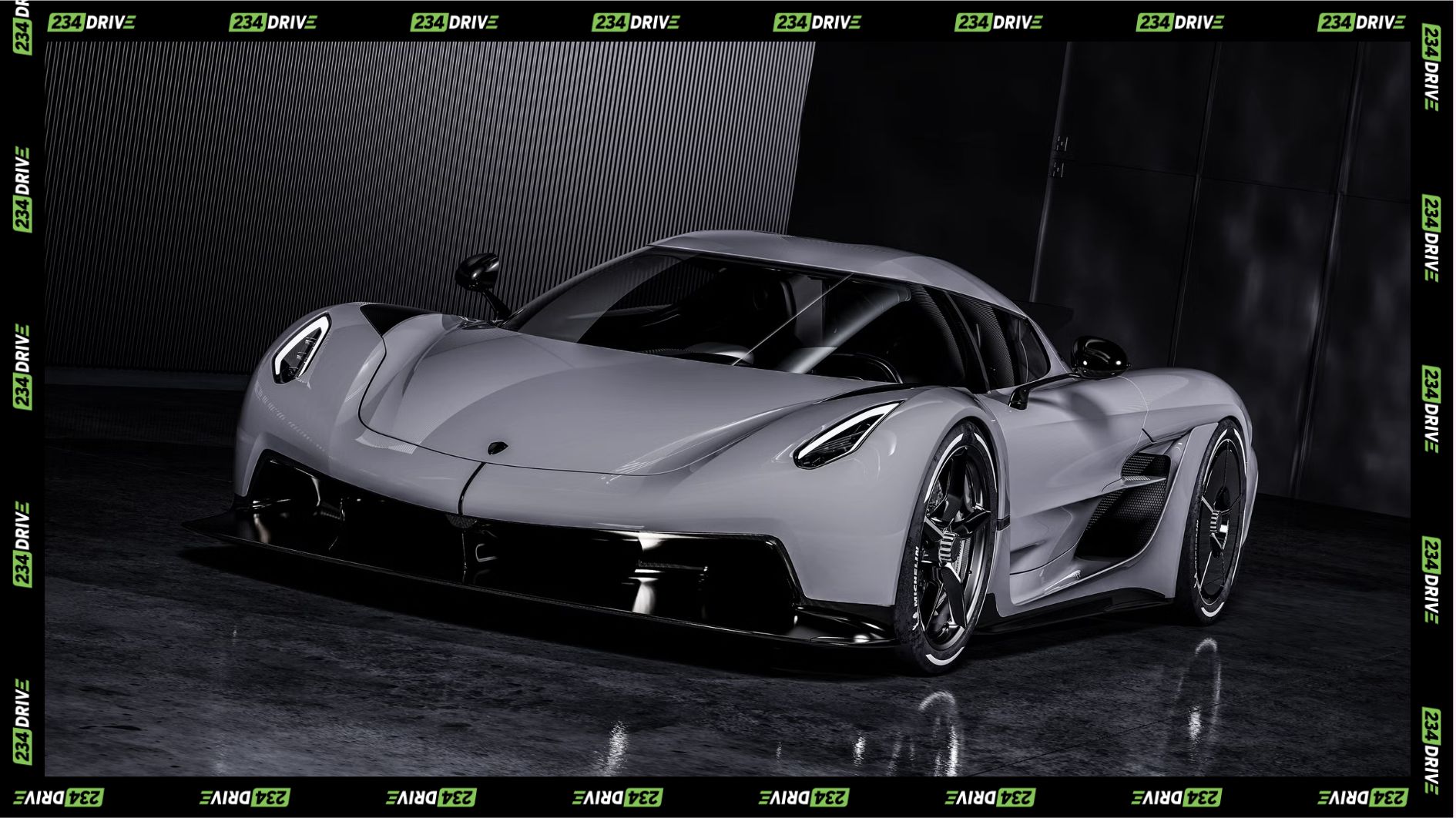
This philosophy is most potently realised in his latest creation, the Jesko Absolut. Named as a tribute to his father, Jesko von Koenigsegg, who supported the company during its precarious early years, the car represents the zenith of internal combustion performance. It is a vehicle born from a desire to answer a single, theoretical question: how fast can a road-legal car go before the laws of physics and tyre technology intervene? For Christian, the Jesko Absolut is not just another model in the lineup; it is the “absolute” interpretation of speed, designed to stand as the fastest car Koenigsegg will ever build, marking the culmination of decades of aerodynamic research and powertrain development.
Exterior Design and Road Presence
The visual language of the Jesko Absolut is dictated entirely by the flow of air, resulting in a silhouette that is significantly smoother and more fluid than its track-focused sibling, the Jesko Attack. Where the Attack features a massive, active rear wing designed to crush the car into the tarmac with 1,400 kg of downforce, the Absolut strips this away in favour of two longitudinal fins inspired by the F-15 fighter jet. These fins are not merely aesthetic; they provide critical high-speed stability by cleaning up the turbulent air waking off the rear, keeping the car planted without the drag penalty of a wing. The rear of the car has been extended by 85 millimetres, creating an elongated teardrop shape that allows the air to reattach to the bodywork and leave the vehicle with minimal disturbance. The total effect is a drag coefficient of just 0.278 Cd, a figure that allows the Absolut to slice through the atmosphere with terrifying efficiency.
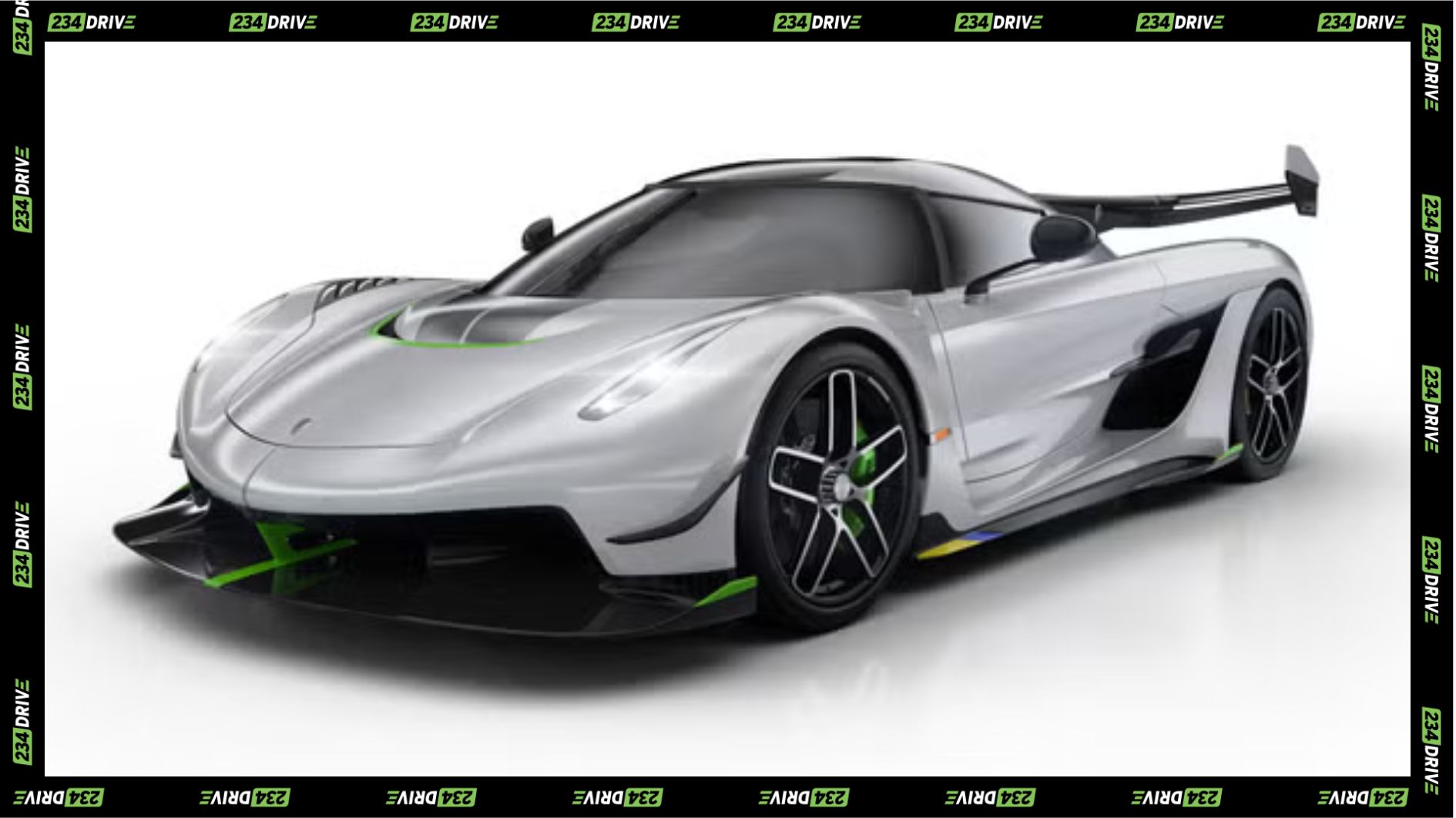
On the road, the car’s presence is alien, a low-slung wedge of carbon fibre that looks fast even when parked. The front fascia lacks the massive canards and aggressive splitters of the track variant, presenting a cleaner, more approachable face that belies its capabilities. It sits on staggered hollow carbon fibre wheels—20 inches at the front and 21 inches at the rear which are shod in Michelin Pilot Sport Cup 2 tyres. To further reduce turbulence, the Absolut can be fitted with aerodynamic wheel covers, smoothing the rotating airflow around the rims. The removal of the massive rear wing also changes the car’s character from a menacing track weapon to a sleek, high-velocity cruiser, often described by onlookers as looking like a “land-based spaceship.” With a price tag often exceeding £3 million (approx. $4 million), it commands attention not just for its beauty, but for the sheer engineering audacity it represents.
Interior Comfort, Technology, and Performance
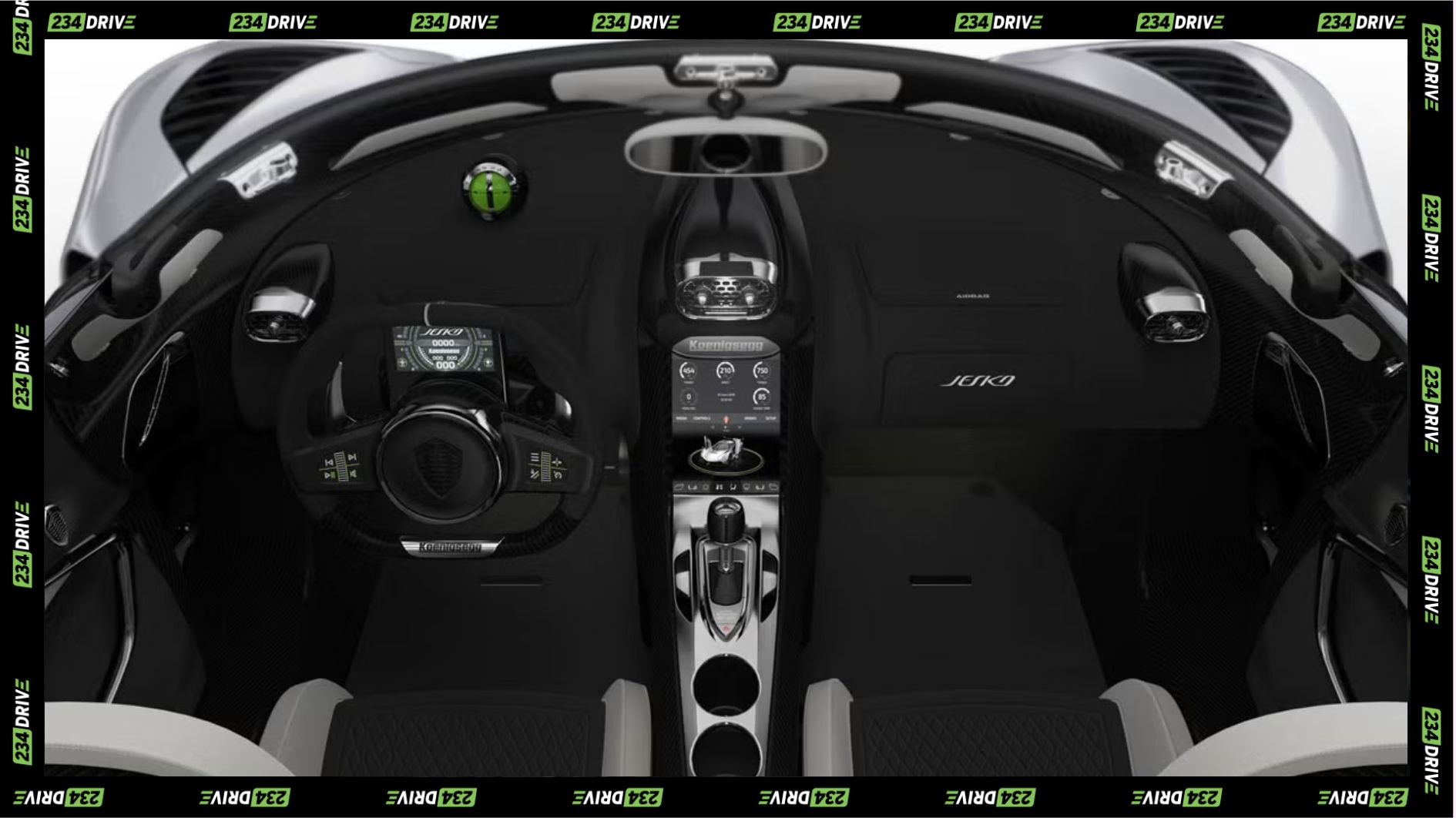
Inside, the Jesko Absolut offers a surprising degree of accommodation for a vehicle capable of 300 mph. The chassis is built around a slightly longer carbon fibre monocoque than previous models, providing occupants with increased legroom and headroom, a direct response to customer feedback. The cockpit is a blend of luxury and futurism, dominated by Koenigsegg’s “SmartCenter” infotainment system and a 5.0-inch “SmartCluster” instrument screen attached directly to the steering wheel. This small display is gyroscopic, meaning the digital dial remains level even as the wheel rotates, a quirky yet brilliant piece of engineering. The materials are exquisite, with leather, Alcantara, and exposed carbon fibre covering every surface. The “Autoskin” system, which uses miniaturised hydraulics to open the dihedral synchro-helix doors and hoods at the touch of a button, adds a sense of theatre that few other manufacturers can match.
However, the luxury is merely a wrapper for the violence contained within the engine bay. The Absolut is powered by a 5.0-litre twin-turbocharged V8 engine that features the world’s lightest V8 crankshaft, weighing just 12.5 kg. This lightweight component allows the engine to rev with the speed of a Formula 1 unit, hitting its 8,500 rpm redline almost instantly. On standard pump petrol, the engine produces a “modest” 1,280 horsepower, but when fuelled with E85 biofuel, the output jumps to a staggering 1,600 horsepower and 1,500 Nm of torque. This power is channelled through the revolutionary 9-speed Light Speed Transmission (LST). Unlike a traditional dual-clutch gearbox, the LST uses seven wet clutches to allow the car to jump directly between gears, for example, from 7th straight to 4th without passing through the intermediate ratios. This “Ultimate Power on Demand” (UPOD) system ensures that maximum acceleration is always just a paddle-click away.
Owning the Absolut in Challenging Environments
Owning a Koenigsegg Jesko Absolut in a region like West Africa presents a unique set of challenges that starkly contrast with the smooth autobahns of Europe. The driving environment here is characterised by extreme heat, variable road surfaces, and aggressive traffic conditions that test the limits of any hypercar. The Absolut, despite its focus on top speed, is surprisingly well-adapted to these realities compared to its peers. The car features an electronically adjustable ride height system, critical for navigating the ubiquitous speed bumps and steep driveway inclines found in affluent districts like Lekki or Maitama. However, the sheer width of the vehicle (almost 2 metres) and its low seating position can make navigating narrow, chaotic streets a nerve-wracking experience, requiring heightened situational awareness from the driver to avoid motorcycle taxis and uneven verges.
Practicality in this region also hinges on maintenance and fuel quality. The Jesko’s ability to generate 1,600 horsepower is dependent on E85 biofuel, which is virtually non-existent at standard filling stations in many developing nations. Owners in these regions will likely be restricted to the 1,280 horsepower output available on standard premium petrol—still an immense figure, but technically a compromise. Furthermore, the tropical climate demands exceptional cooling efficiency. Koenigsegg’s engineering excels here, with massive cooling ducts and robust thermal management systems designed for high-stress tracking, which translates well to surviving the humid, 35°C+ traffic jams of a Lagos afternoon. Maintenance, however, remains a logistical hurdle; while remote diagnostics allow the factory in Ängelholm to monitor the car, physical repairs often require flying in a “flying doctor” technician from Sweden or the UK, a costly and time-consuming necessity for maintaining such a bespoke machine.
Competitive Positioning and Market Rivals
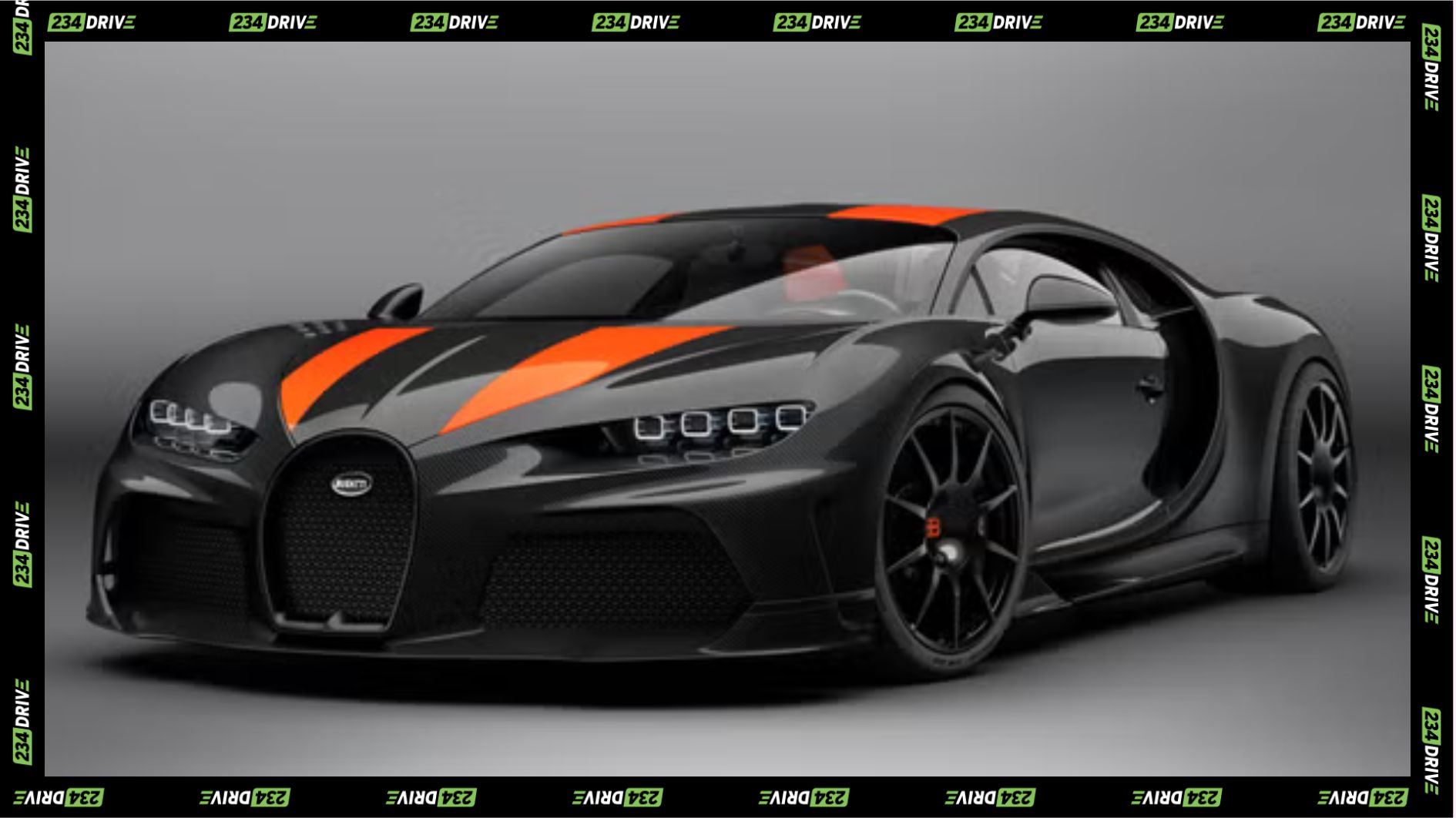
When placed against its primary rival, the Bugatti Chiron Super Sport, the Jesko Absolut represents a fundamentally different philosophy. The Bugatti is a masterpiece of luxury and mass, utilising an 8.0-litre W16 engine to bludgeon the air into submission. It is heavier, more comfortable, and feels more like a grand tourer than a race car. In terms of cost, the Chiron Super Sport commands a similar, if not slightly higher, price point, often exceeding £3.5 million. However, the Bugatti offers a more established service network and a perceived robustness that comes from the backing of the Volkswagen Group. The Jesko, by contrast, is significantly lighter, weighing nearly 600 kg less than the Chiron, making it far more agile and responsive. While the Bugatti relies on sheer torque and all-wheel-drive stability, the rear-wheel-drive Jesko demands more from its driver, offering a purer, albeit more intimidating, connection to the road.
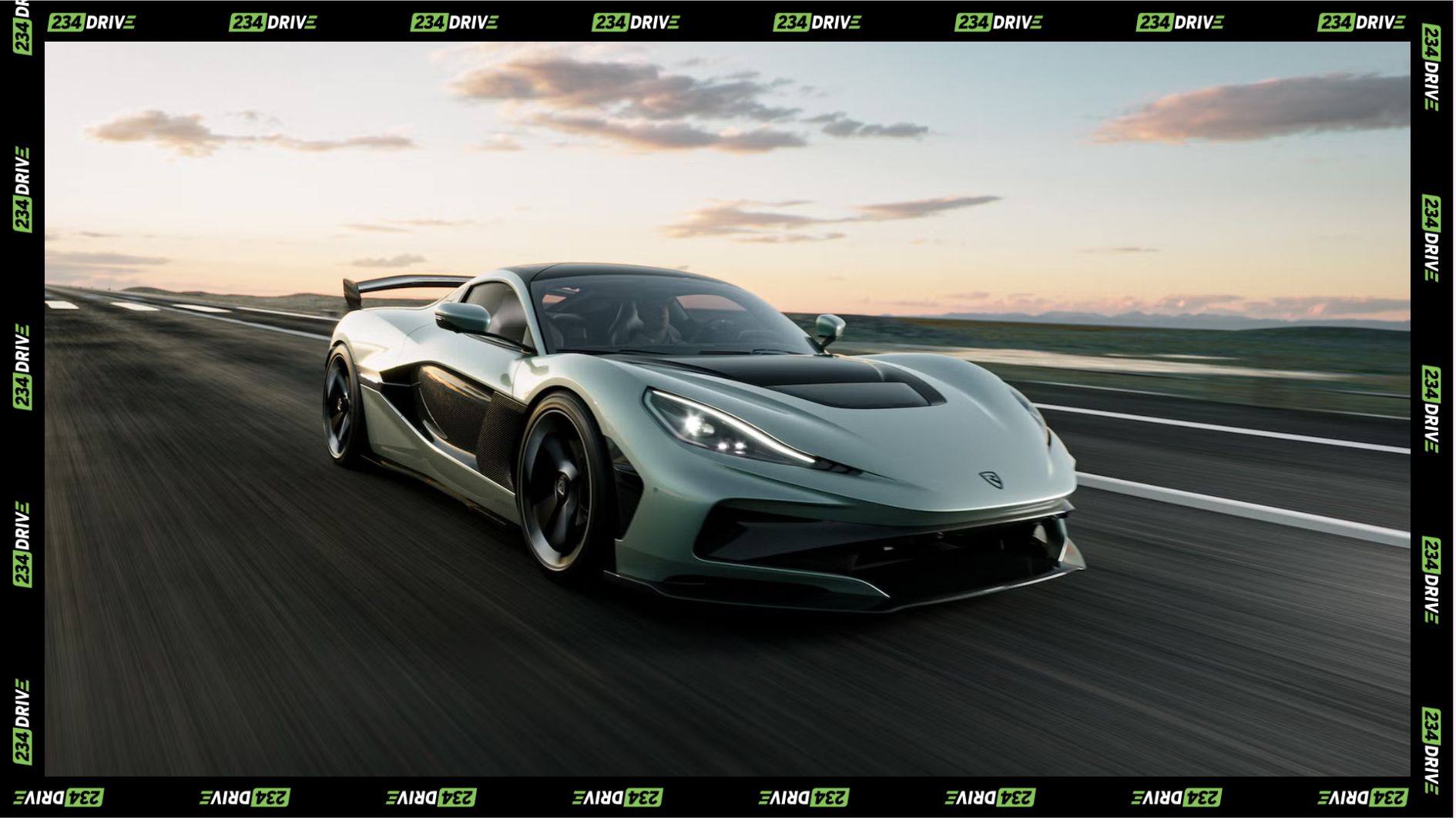
Another contender is the Rimac Nevera, an all-electric hypercar that challenges the Jesko with instantaneous torque and acceleration that internal combustion engines struggle to match. The Nevera holds the crown for 0-60 mph times, often dipping under 2 seconds, whereas the Jesko takes around 2.5 seconds as it fights for traction. However, the Jesko Absolut counters with a higher theoretical top speed and the emotive engagement of a screaming V8 engine, a sensory experience the silent electric Rimac cannot replicate. In terms of resale value, Koenigseggs have historically performed exceptionally well, often appreciating immediately after production ceases due to their extreme scarcity (only 125 Jeskos will be built). While electric hypercars face uncertainty regarding battery longevity and rapid tech obsolescence, the mechanical artistry of the Jesko is likely to ensure it remains a blue-chip investment for decades, potentially outperforming the Nevera in long-term asset value.
Quick Take
The Koenigsegg Jesko Absolut is more than a car; it is a rolling laboratory that pushes the boundaries of what is mechanically possible. Its strengths lie in its obsessive engineering: the featherweight engine, the lightning-fast transmission, and the aerodynamic efficiency that promises speeds over 300 mph. While it faces practical limitations in regions with poor infrastructure and lacks the grand touring comfort of a Bugatti, it offers an unmatched driving experience that is visceral, raw, and terrifyingly fast. It is the ultimate expression of Christian von Koenigsegg’s vision, a machine that doesn’t just chase records but redefines them.
What are your thoughts on the Absolut? Does the pursuit of theoretical top speed justify the price, or would you prefer the track-focused agility of the Attack variant? Share your views in the comments below.