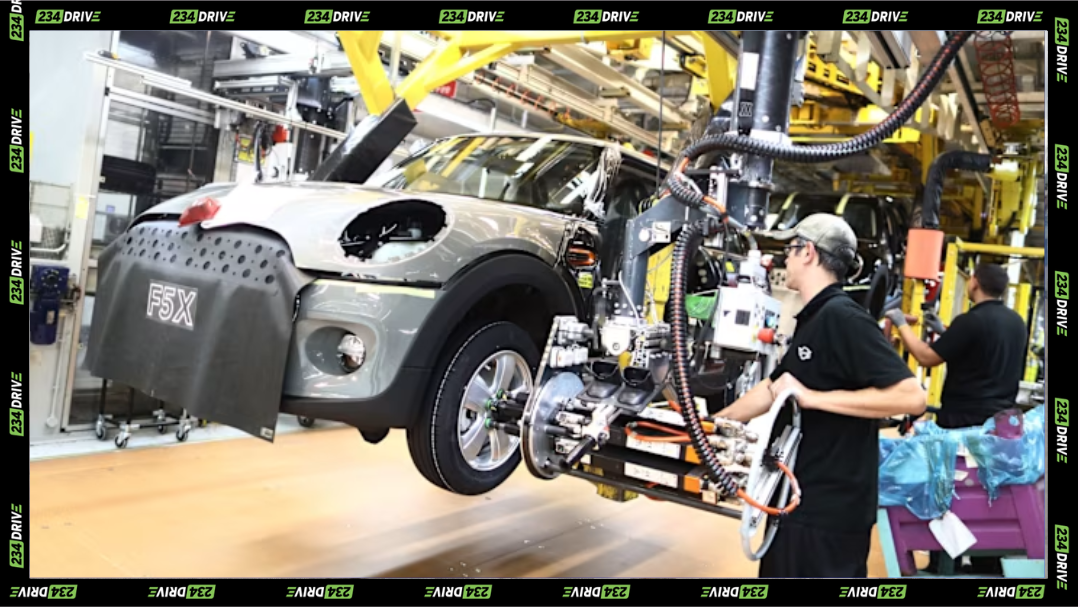


The Education Minister, UNILAG leadership, and student take a first ride in the new electric tricycle. | Source: UNILAG
For innovators looking to test whether their ideas can gain real traction, UNILAG is steadily becoming ground zero in Nigeria. From hosting the country’s first university-based assembly plant to providing cheaper transport services while running on electric buses this year, the institution has turned into a proving ground for mobility solutions before they scale nationwide.
This reputation grew even stronger on December 1 as the Federal Government launched the Renewed Hope Campus Transport Scheme at UNILAG and rolled out 240 electric tricycles plus 12 solar charging stations to 12 universities. According to Education Minister Dr. Tunji Alausa, the plan is built to cut student transport costs by more than 70% and soften the effects of subsidy removal.
The rollout places UNILAG at the centre of the programme, with the Academic Publishing Centre hosting the national flag-off. Each participating institution will receive 20 e-tricycles and a dedicated solar charging hub with storage for off-grid reliability.
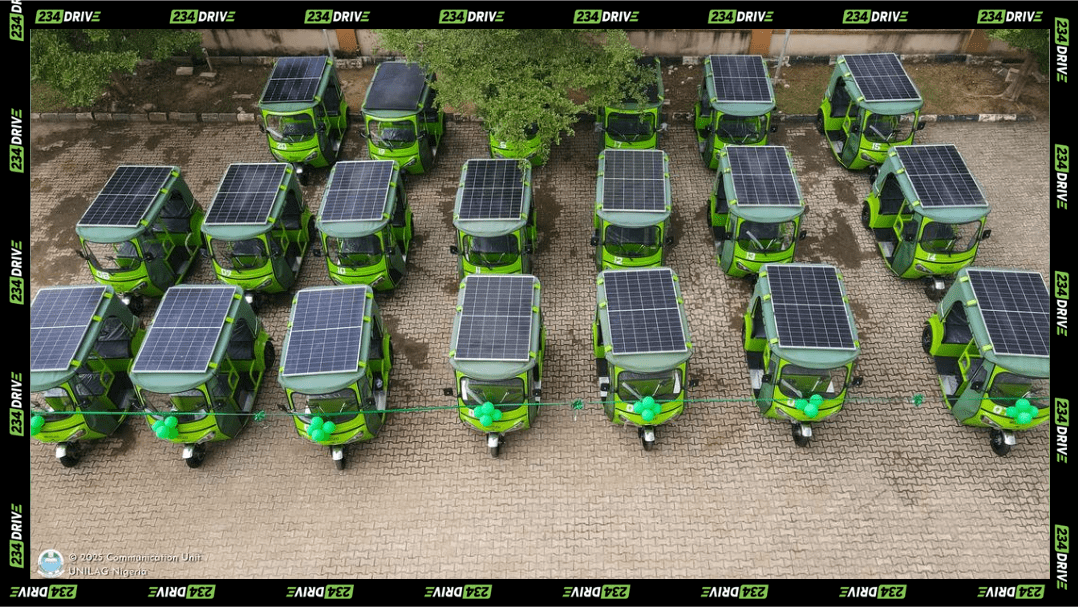
Aerial view of the solar-powered electric tricycles deployed under the Renewed Hope transport scheme. | Source: UNILAG
The handover also came with the announcement of a governance model that gives full ownership and operation of the tricycles to each university’s Student Union. The minister explained that the structure lets students set fair prices while taking full responsibility for daily operations and maintenance. Along with generating revenue in a transparent, student-led system. The goal is practical relief that is able to show measurable results rather than just symbolic policy.
UNILAG Continues to Positions Itself as a Leading Green Campus in Africa

UNILAG Vice-Chancellor Professor Folasade Ogunsola and Education Minister Dr. Tunji Alausa at the launch event. | Source: UNILAG
Furthermore, Dr Alausa confirmed that the Presidential Compressed Natural Gas Initiative (PCNGI) has been approved for deployment to UNILAG. This separate project includes a CNG station and a free conversion centre, offered at no cost to the university.
UNILAG’s Vice-Chancellor, Professor Folasade Ogunsola, described the rollout as aligning with the institution’s “Green UNILAG” agenda. She pointed to the electric buses introduced earlier in 2025, which are already on track to cut an estimated 120 metric tonnes of carbon emissions by year-end. Combined with the NORD assembly facility, these initiatives show a university increasingly functioning as a national demonstration site for clean-energy mobility.
Students at the launch said the initiative is coming at a good time, as getting around the campus in a cost-effective and easy way was becoming a real challenge. The student body assured the Minister that they would manage the e-tricycles responsibly and continue strengthening UNILAG’s role as a launchpad for innovations that can scale nationwide.