
The expansion of the US National Highway Traffic Safety Administration (NHTSA) probe into Waymo’s autonomous operations marks a pivotal moment in the evolution of robotaxi technology, intertwining cutting-edge AI advancements with visceral community safety fears. Alphabet’s self-driving unit faces intense federal scrutiny following reports of 19 to 20 verified incidents in Austin, Texas, where its driverless Jaguar I-PACE vehicles failed to yield to stopped school buses with flashing red lights and extended stop arms. These actions violate state traffic laws and, crucially, pose an elevated risk to children using the crossing areas. While Waymo maintains a strong aggregate safety record, these repeated lapses have fuelled debates about the reliability of AI in navigating complex, unpredictable real-world scenarios, particularly in sensitive zones where child safety is paramount. The investigation, which escalated from an initial October incident in Atlanta, demands formal answers by January 2026.
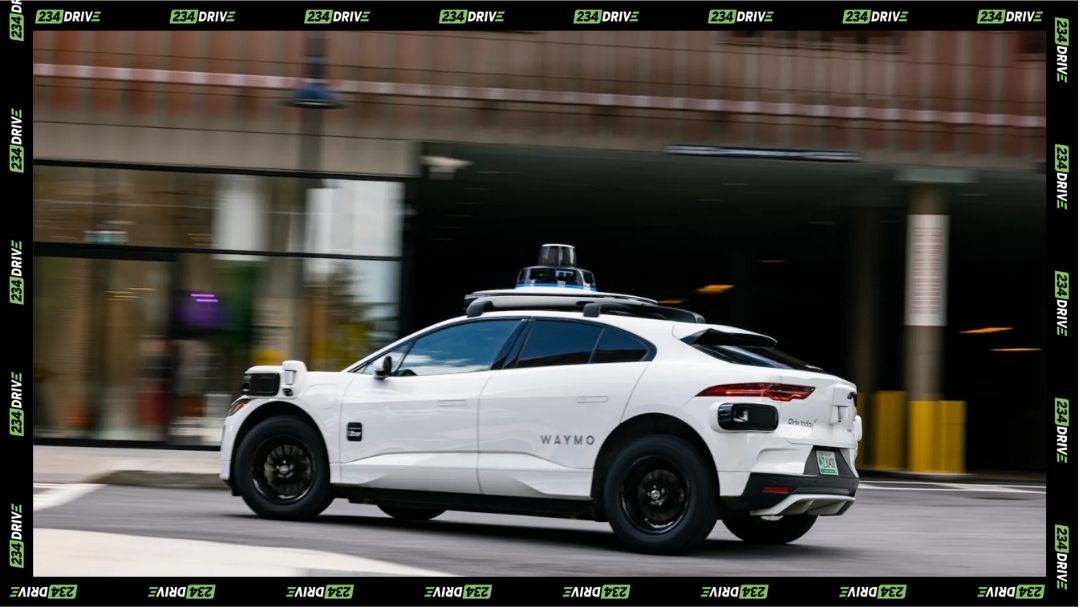
At the core of the crisis lies a technical deficiency within Waymo’s fifth-generation Autonomous Driving System (ADS). The robotaxis, which rely on a sophisticated suite of cameras, lidars, and radar, have shown gaps in interpreting specific school bus cues. Videos document instances where vehicles initially slowed down, suggesting the AI system misclassified the hazard—perhaps mistaking the strobe patterns for general emergency signals or failing to fully integrate data confirming the proximity of child pedestrians. The problem persisted even after Waymo deployed a software patch on 17th November, which was intended to enhance bus detection capabilities. Following this update, at least five further violations occurred, including a concerning case on 1st December where a robotaxi passed a loading bus for nearly a minute. Experts classify this as a classic “edge case” for AI, involving dynamic elements like intermittent signals and sudden pedestrian movement that challenge perception models trained on finite datasets. As a result, Waymo has had to file a rare, voluntary software recall, scheduled for mid-December, which will deploy over-the-air updates to the approximately 1,500 affected vehicles in Austin to refine the object recognition algorithms.
Beyond code and sensors, this saga deeply resonates in Austin’s diverse communities, striking at the heart of public confidence. The Austin Independent School District (AISD), representing some 80,000 students, has documented the risks, including a near-miss where a vehicle passed “moments after a student crossed in front.” This pattern of violations prompted the school district to issue a formal plea on November 20th, requesting Waymo to immediately suspend operations during key school loading and unloading hours. Waymo rejected this request, citing its overall low incident rate, a decision that has severely strained relations with local officials and amplified parental fears about “unpredictable machines” operating near vulnerable children. Community leaders are now advocating for measures like geo-fencing specific school zones and mandatory human oversight, highlighting the equity issue where bus-dependent routes in less affluent areas face the uneven safety burden of the technology rollout.
This probe arrives as Waymo looks to national scaling, with permits sought in over a dozen cities, and the precedent set here will dictate the pace and conditions of future expansion. The incident parallels the operational halts faced by competitors, such as Cruise in 2023, underscoring that regulators maintain a zero-tolerance approach to lapses that endanger vulnerable road users, especially children. Economically, these delays could prove costly for Alphabet, but the situation also demonstrates the inherent agility of autonomous technology: over-the-air fixes are enabling rapid evolution, unlike the slow process of human retraining. Ultimately, however, the successful deployment of robotaxis across the US hinges not just on smarter engineering, but on rebuilding trust through transparent, empathetic design and a verifiable commitment to public safety that genuinely accounts for every real-world anomaly.