
Nigeria’s transition from petrol-powered transport to electric mobility has moved from pilot talk to factory floor reality.
SAGLEV Electromobility, headquartered in Lagos, has delivered the country’s first locally assembled 18-seater fully electric passenger van, marking a defining moment for West Africa’s automotive sector. The vehicle, Dongfeng E Star V9 EV was assembled at SAGLEV’s 5,000-square-metre facility in Imota, Ikorodu, with annual production capacity targeting up to 2,500 units on a single shift. The milestone delivery, detailed in the official announcement, was made to Stanbic IBTC Bank in February 2026 for use as a corporate staff bus, signalling early institutional confidence in locally assembled electric fleets.
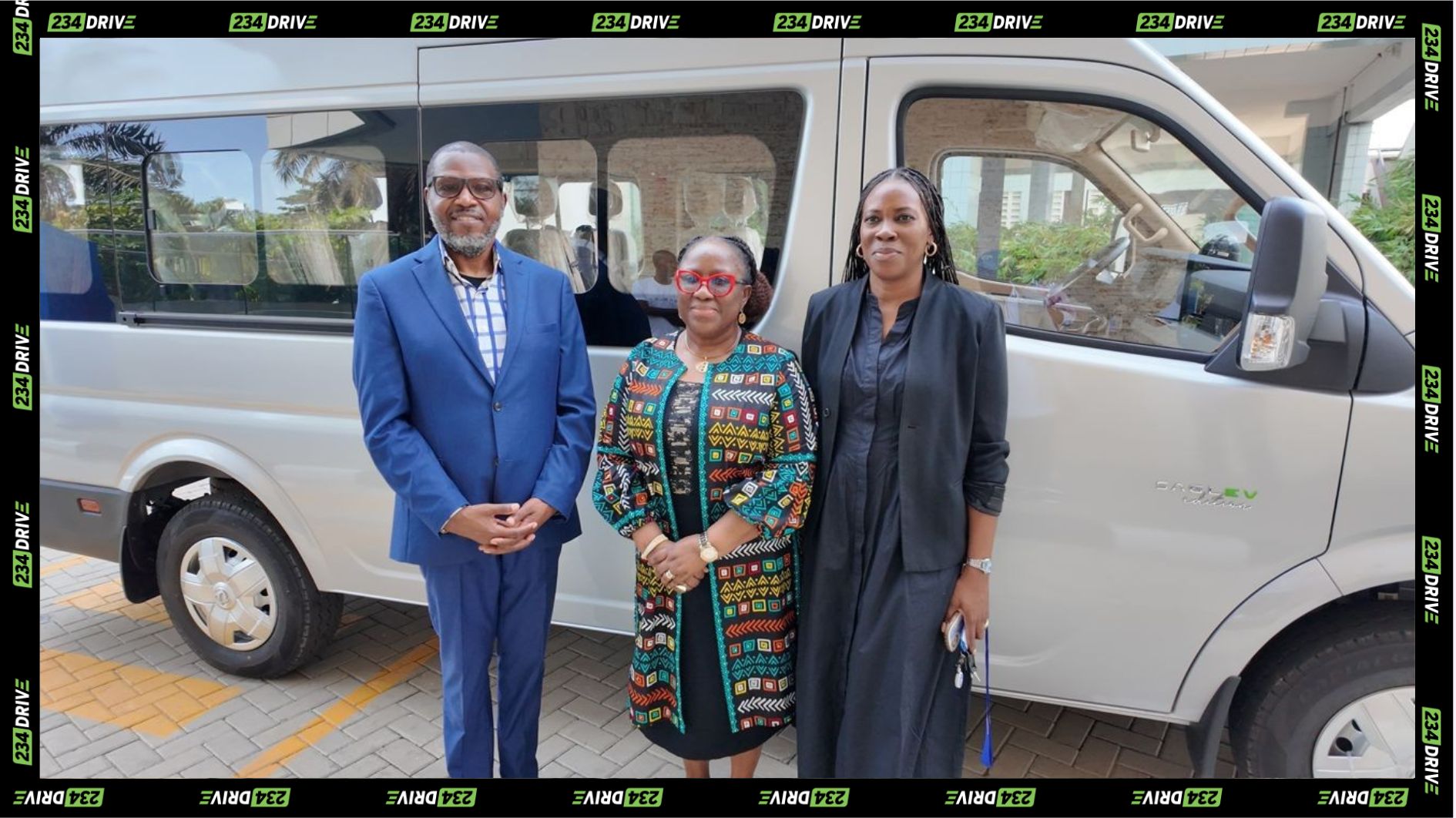
The van itself is positioned for high-volume commercial use. Built from semi-knocked-down and completely-knocked-down kits supplied through SAGLEV’s partnership with China’s Dongfeng ecosystem via Sokon Motor, the 18-passenger E Star V9 EV is designed for corporate shuttles, ride-hailing fleets, school transport and structured mass transit operations. With a driving range of over 300 kilometres per charge, a lithium ion battery pack exceeding 100 kWh, zero tailpipe emissions and significantly lower maintenance requirements than internal combustion vehicles, the model addresses both cost and environmental pressures. Charging costs are estimated to be a fraction of petrol equivalents for similar mileage, strengthening its business case in fuel-sensitive markets like Nigeria.
The operational structure behind the rollout is deliberate. Dongfeng supplies the vehicle kits and technical backbone. Sokon Motor provides ecosystem integration and engineering alignment. SAGLEV manages local assembly, quality control, sales, warranties and after-sales support. Stallion Group’s distribution heritage underpins market access and logistics. The result is a hybrid model: global manufacturing standards combined with local value-chain participation, aligned with its broader mission of accelerating electric transition.
Strategically, this move signals more than a single product launch. It marks Nigeria’s attempt to anchor itself in Africa’s emerging EV supply chain. SAGLEV plans to expand to 17 electric vehicle models targeting West African markets, with ambitions that extend beyond simple assembly into broader electromobility infrastructure including solar-supported charging systems designed to offset Nigeria’s grid reliability challenges. If executed at scale, this could reduce urban transport emissions while lowering fleet operating costs for banks, corporates and ride-hailing operators.
Across the continent, Nigeria is not alone in this push. As reported in Africa’s EV push, Kenya has moved aggressively into electric taxi and minibus assembly using Chinese kits, while Ethiopia and South Africa are building structured EV manufacturing bases. In several of these markets, companies have moved from pilot imports to active assembly lines within months, supported by targeted financing models and policy incentives. Compared to those ecosystems, Nigeria’s success will depend heavily on regulatory clarity, customs policy consistency, and access to structured fleet financing.
Competitors elsewhere in Africa have accelerated deployment by pairing vehicle assembly with charging infrastructure rollouts and pay-as-you-drive financing models. In some cases, certification, homologation and fleet onboarding were completed within a year of launch. The lesson is clear: speed from assembly to fleet integration determines commercial viability.
SAGLEV’s credibility rests on more than this single van delivery. The company has already supplied electric models to corporate institutions, earned industry recognition as Nigeria’s EV Brand of the Year in 2025, and positioned itself as a regional distributor with offices beyond Nigeria. Government agencies such as the National Automotive Design and Development Council have publicly endorsed the localisation effort, reinforcing the narrative of domestic industrial growth.
Still, assembly is only the first rung of the ladder. Full-scale automotive manufacturing including welding, painting and component fabrication remains the longer-term ambition for Nigeria’s auto sector. Infrastructure gaps, battery supply chains and consumer financing frameworks will determine whether EV adoption expands beyond corporate fleets into public mass transit.
What is unfolding now suggests a structural shift rather than a publicity milestone. Nigeria is testing whether it can convert assembly capability into a scalable electric mobility ecosystem. The bigger question is whether policy, infrastructure and private capital will move quickly enough to transform this breakthrough into fleet-scale adoption across West Africa.