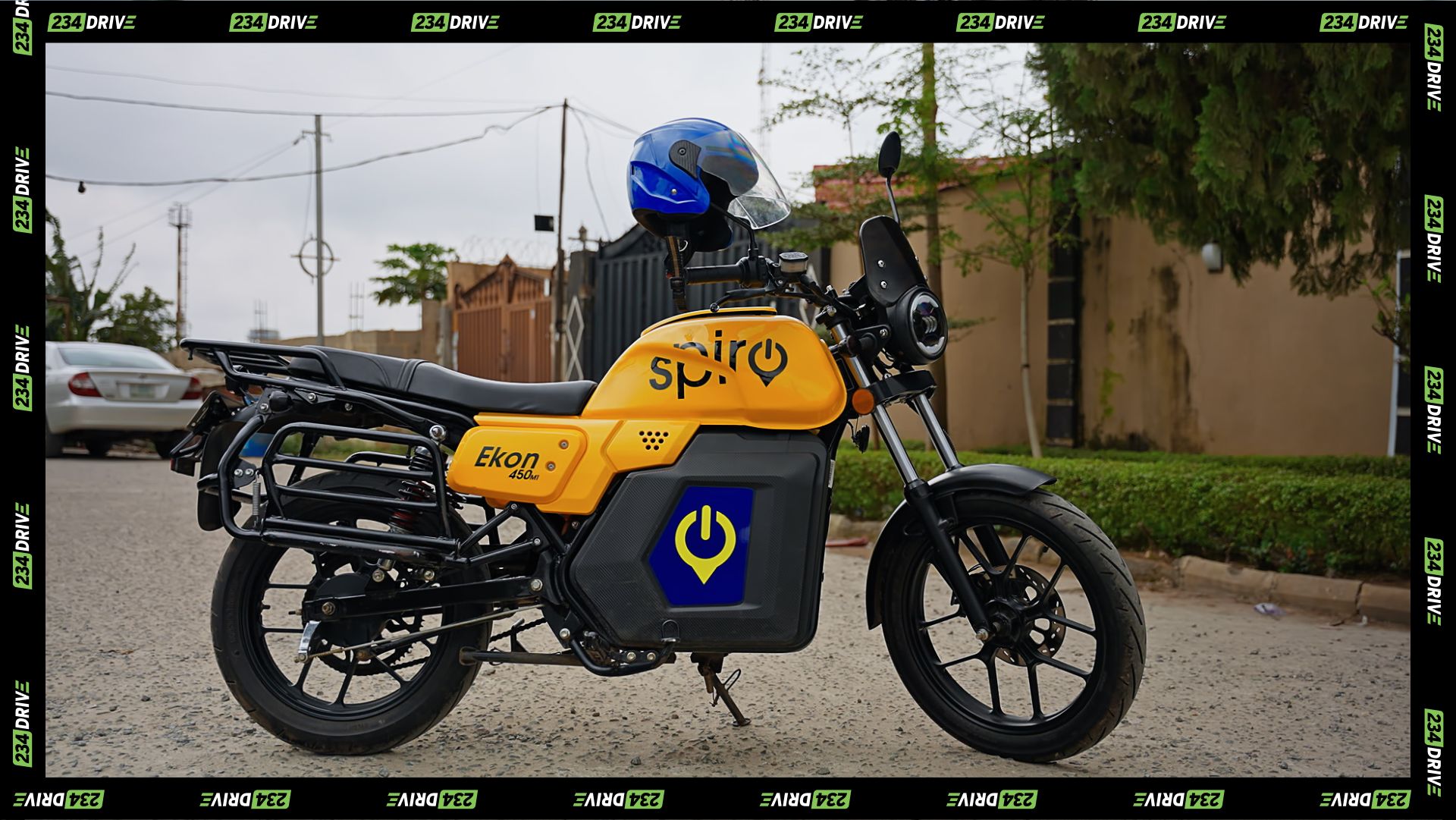
Spiro’s EKON 450M1 reviewed by 234Drive | Source: 234Drive
Africa’s electric motorcycle push just got another major boost. Spiro has secured $50 million to expand its battery-swapping network, doubling down on a model built around keeping riders moving instead of waiting to charge.
What This New Funding Means on the Ground For Spiro
The funding round includes backing from the African Export-Import Bank (Afreximbank), the Africa Go Green Fund (AGG) and climate-finance platform Nithio. AGG, launched by German development bank KfW and managed by Cygnum Capital, focuses on projects that cut greenhouse gas emissions across Africa.
Spiro will use the capital to roll out more battery swap stations in cities and smaller towns, improve its automated swap systems, expand fast-charging capacity, and plug more renewable energy into its network. This will enable drivers to ride in, swap batteries in minutes and get back to work, rather than losing hours to charging.
The company says it has deployed more than 80,000 electric motorcycles, installed over 2,500 swap stations and completed more than 30 million battery swaps. Across its markets, riders have covered more than one billion kilometres using the system. Spiro currently operates in Kenya, Uganda, Rwanda, Nigeria, Benin and Togo, with pilot activity in Cameroon and Tanzania. It also runs assembly plants in Uganda, Kenya, Nigeria, and Rwanda to support local production.
This raise builds on the $100 million Spiro secured in October 2025, led by the Fund for Export Development in Africa (FEDA), Afreximbank’s impact investment arm. That earlier round marked one of the largest investments in Africa’s two-wheel EV space. The new $50 million shows that investors still see and believe the battery swapping strategy as one of the most practical paths for electrifying last-mile transport.
How Did Spiro Grow Into a Major 2-Wheel Player in Africa?
Spiro didn’t become one of Africa’s biggest electric motorcycle names by chance. It grew step by step, solving real problems for everyday riders—high fuel prices, constant engine repairs, and wasted time waiting to refuel or fix bikes. In markets like Nigeria, where petrol brands such as Suzuki already had strong roots, breaking in wasn’t going to be easy.
Instead of trying to compete the same way, Spiro introduced something different: battery swapping, clear daily energy costs, and electric bikes built for commercial riders. That difference needed more than infrastructure — it needed trust and understanding.
As Spiro entered Nigeria and other West African markets, 234Drive followed the journey closely. We rode the EKON 450M1, looked at how much riders could actually save and explained how the swap stations worked in real life. We compared costs, showed the performance to thousands and got to the questions riders were asking.
Over time, that steady exposure helped shift perception. Electric okadas stopped sounding experimental and started looking practical. Riders could see the numbers. They could see the bike on the road. They could see others using it.
Slowly but steadily—through reviews, conversations, and consistent visibility—Spiro carved out space in a two-wheeler market long dominated by petrol bikes. Today, its presence in Nigeria reflects groundwork, real-world testing, and gradual acceptance in one of Africa’s most competitive motorcycle environments.