
The entry of Chinese automotive giants into the high-end segment is fundamentally reshaping global perceptions of luxury and technology. At the forefront of this disruption is the Li Auto L9, an Extended-Range Electric Vehicle (EREV) that has quickly earned a reputation for combining limousine-level comfort, cutting-edge digital integration, and electric performance, all wrapped in a massive, imposing SUV silhouette. Positioned as a direct challenger to established European flagships, the L9 is celebrated for prioritising passenger experience and eliminating range anxiety—a compelling feature for any market, but especially one like Nigeria, where power and fuel stability remain intermittent challenges.
As of late 2025, the L9 has begun trickling into major Nigerian cities, primarily through independent grey market importers in Lagos and Abuja. Its arrival is a significant event in the luxury vehicle space, signaling a shift in consumer confidence towards high-end Chinese manufacturing. While its factory price in China is highly competitive, the logistics of shipping, customs duties (which are notoriously high for luxury imports), and dealer markups mean brand new 2025 models are listed at a steep, yet perhaps negotiable, ₦188,000,000. This makes the L9 an exclusive status symbol, requiring considerable investment, but promising features and comfort few rivals can match at this price point.
Exterior Grandeur and Imposing Road Presence
The Li Auto L9 makes an unequivocal statement through its sheer size and minimalist design philosophy. Measuring a commanding 5,218 mm in length, the L9 is a full-size SUV that stands wheel-to-wheel with global behemoths like the BMW X7 and Mercedes-Benz GLS. Its aesthetic deviates sharply from traditional SUVs, opting for a clean, futuristic look dominated by the signature “Star Ring” LED light bar, which stretches uninterrupted across the front fascia. This design choice removes the need for a conventional grille, lending it a clean, almost electric-only visual identity that speaks to modernity and sophistication.
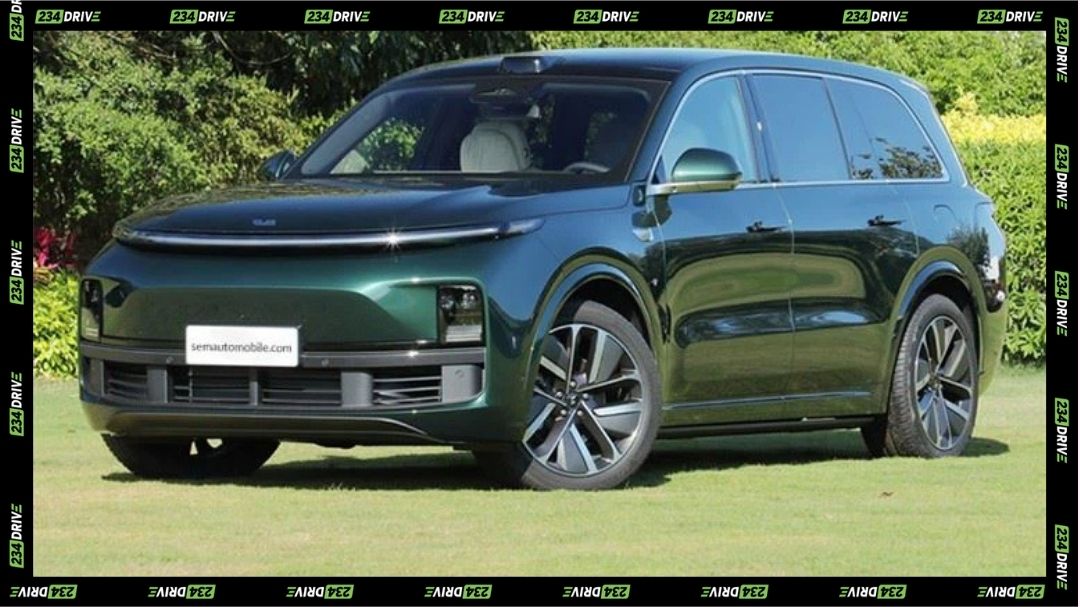
On Nigerian roads, the L9 does not just pass; it commands attention. Its large footprint and high stance contribute to an undeniable road presence, often associated with chauffeured luxury. The detailing, including sleek, hidden door handles and a clean, horizontal taillight design, reinforces the vehicle’s premium positioning. While some critics find the styling conservative, its simplicity is deliberate, allowing the sheer scale and luxury features (like soft-close doors and adaptive matrix LED headlights) to convey the vehicle’s high value. The result is a vehicle that looks and feels substantial, meeting the local demand for vehicles that communicate success and stability.
First-Class Interior and EREV Performance Dynamics
Stepping inside the L9 is akin to entering a private jet cabin, defining the vehicle’s core appeal as a family-focused luxury cruiser. The standard 2+2+2 seating configuration, featuring second-row captain’s chairs, is the highlight. These “queen seats” are furnished with Nappa leather, offering spa-level 10-point massage, heating, ventilation, and calf supports—a feature set often reserved for ultra-luxury brands. Rear passengers enjoy a dedicated control tablet and a fold-down 15.7-inch ceiling cinema screen, complete with a built-in fridge/warmer to ensure drinks are chilled or kept warm on long trips—a truly opulent touch.
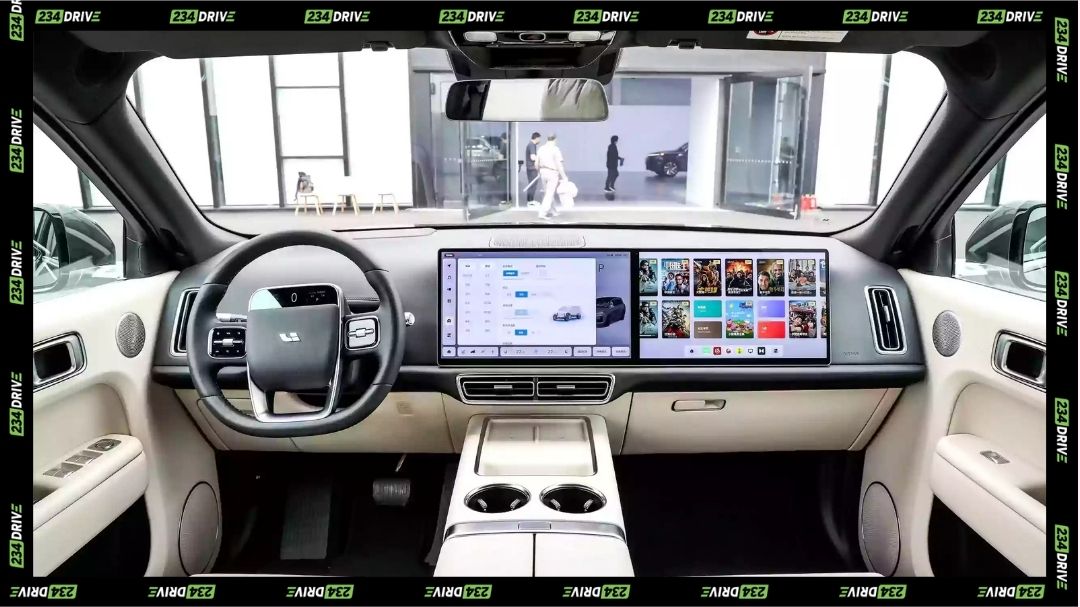
The driver’s cockpit is equally futuristic, replacing traditional gauges with a blend of a Head-Up Display (HUD) and a secondary screen housed in the steering wheel hub, complemented by dual large OLED touchscreens that control everything from infotainment to climate. Underneath this opulence, the L9 delivers formidable performance via its dual electric motors, generating a combined 330 kW (449 hp) and 620 Nm of torque, allowing this heavy SUV to hit 100 km/h in a surprisingly sharp 5.3 seconds. Crucially, the 1.5L turbo engine functions purely as a generator, eliminating range anxiety by offering a massive total claimed range of up to 1,412 km (CLTC), ensuring seamless, quiet electric driving even on the longest Nigerian journeys.
Navigating Nigeria’s Driving Environment and Lifestyle
The Li Auto L9’s design attributes make it remarkably well-suited for the unique challenges and demands of the Nigerian lifestyle. Firstly, the standard air suspension with adaptive damping is not just a comfort feature; it is a necessity for navigating the sometimes unpredictable road conditions across the country, from the gridlocked streets of Lagos to the major inter-state highways. This system allows the L9 to effortlessly absorb potholes and rough patches, delivering the “pillow-like ride” reviewers rave about, crucial for preserving the comfort of V.I.P. passengers and family members.
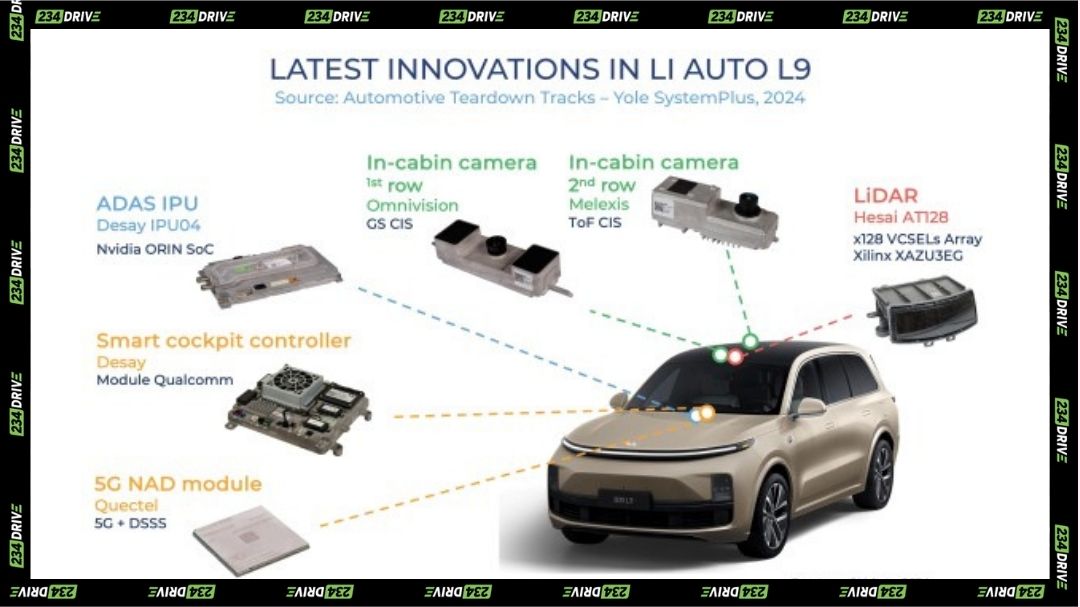
Secondly, the EREV powertrain is a practical masterstroke in a region often affected by erratic fuel supply and power shortages. The ability to complete most daily commutes on pure electric power (up to 280 km CLTC) is cost-efficient, but the on-demand petrol generator ensures the vehicle never becomes stranded due to a lack of charging infrastructure or a sudden surge in fuel price. From a lifestyle perspective, the L9’s lavish interior, including the dual-use refrigerator and rear entertainment system, transforms it into a mobile executive office or relaxation suite, perfect for Nigerian’s long periods of commuting and the culture of travelling with extended family. However, buyers must be aware that purchasing via the grey market (parallel imports) means sacrificing an official local warranty and facing potential headaches with spare parts and software updates, which can default to Chinese language settings for advanced ADAS functions.
Li Auto L9 vs. The European Heavyweights
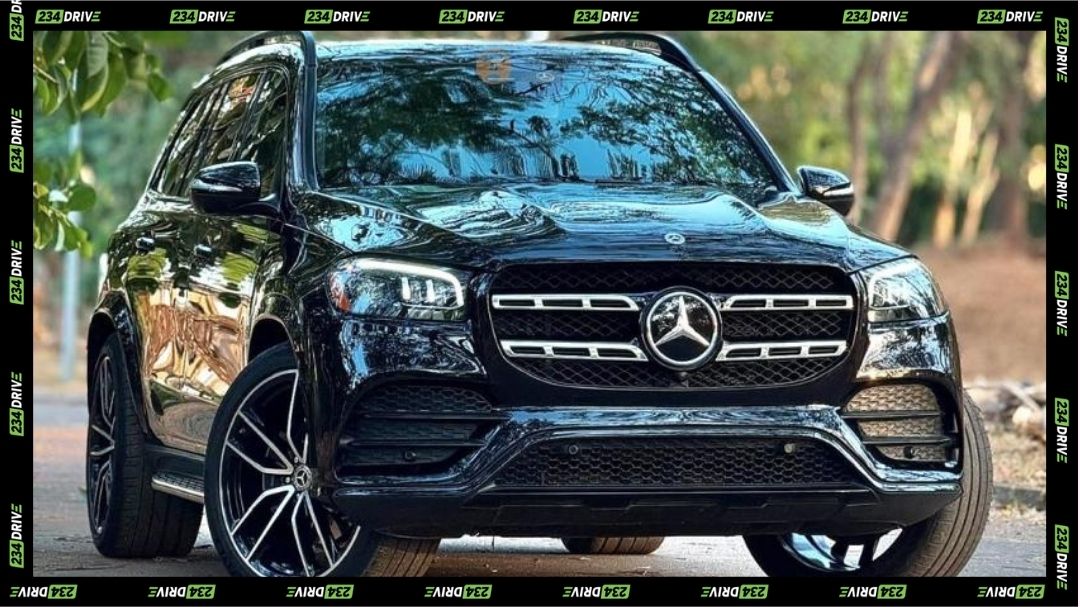
The Li Auto L9 directly targets the segment dominated by established German and British luxury SUVs, primarily the BMW X7 and the Mercedes-Benz GLS. In terms of sheer cost and competitive positioning, the L9 presents a highly disruptive value proposition. While the L9 is listed brand new in Nigeria around ₦188,000,000, a similarly specced brand new BMW X7 M60i or Mercedes-Benz GLS 580, once factoring in high customs duties and luxury tariffs, is likely to exceed ₦250,000,000 to ₦300,000,000 via grey market imports. The L9, therefore, provides a suite of advanced features (like EREV range, standard massage, and the rear cinema screen) that are either costly optional extras or simply unavailable on its European rivals, giving it a strong “more-for-less” appeal.
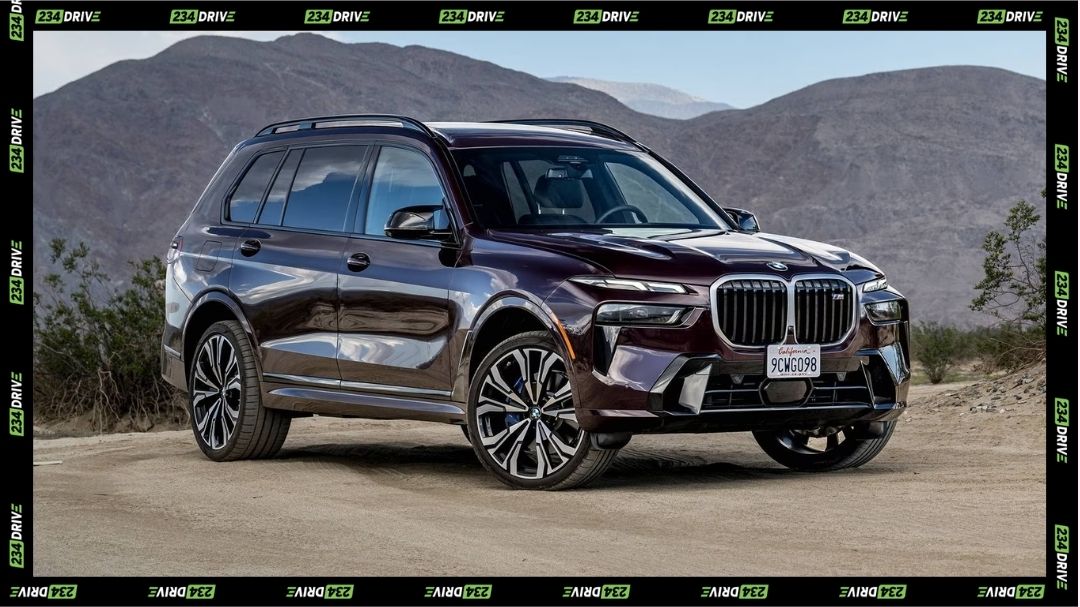
However, the competitive landscape shifts when considering resale value, durability, and maintenance. The German and British marques benefit from decades of established presence in Nigeria, boasting experienced, albeit expensive, local maintenance networks and predictable resale values that are backed by strong brand equity. A “Tokunbo” (foreign-used) BMW X7 or GLS holds its value better than a Chinese import whose brand is still establishing a foothold. The L9’s maintenance, while simpler for the electric drivetrain, depends entirely on specialist independent mechanics for the proprietary EREV generator and complex electronics. Durability is yet to be fully proven over a decade on Nigerian roads, meaning the L9 represents a higher risk for the buyer, though its initial value and feature-rich package make that risk worthwhile for the tech-forward, discerning Nigerian buyer.
A New Standard for Luxury Family Mobility
The Li Auto L9 is a technological powerhouse and a genuine disruptor in the Nigerian luxury SUV market. It expertly fuses the best aspects of electric driving with the practicality of gasoline backup, delivering unmatched comfort, space, and digital innovation. Its strengths lie in its first-class cabin experience, potent acceleration, and the crucial advantage of its extended electric range, making it perhaps the most comfortable long-distance family vehicle money can buy today. While the hefty Nigerian import price of ₦188,000,000 reflects the cost of exclusivity and market entry challenges, it still stands as a highly compelling alternative to its pricier European rivals.
The L9 is a serious contender for any Nigerian who prioritises serenity and passenger luxury over aggressive driving dynamics. What are your thoughts? Given the choice between the established pedigree of a Mercedes-Benz GLS and the sci-fi feature set and value proposition of the Li Auto L9, which would you park in your compound? Let us know in the comments below!