
UK car production drops 17% as exports weaken, energy costs rise, and global trade pressure builds across key markets. | Source: Financial Times
UK car production just took a hit, and it’s not happening in isolation. The drop comes at a time when pressure is building across energy, trade and demand. What looks like a normal slowdown is starting to point to something more serious.
This isn’t just about fewer cars being built. It’s about a wider strain across the industry, where rising costs and weaker demand are beginning to show up in real numbers. And this came before the latest global tensions kicked in.
UK Car Exports Slide Further as the US-Israel-Iran Conflict Adds New Pressure
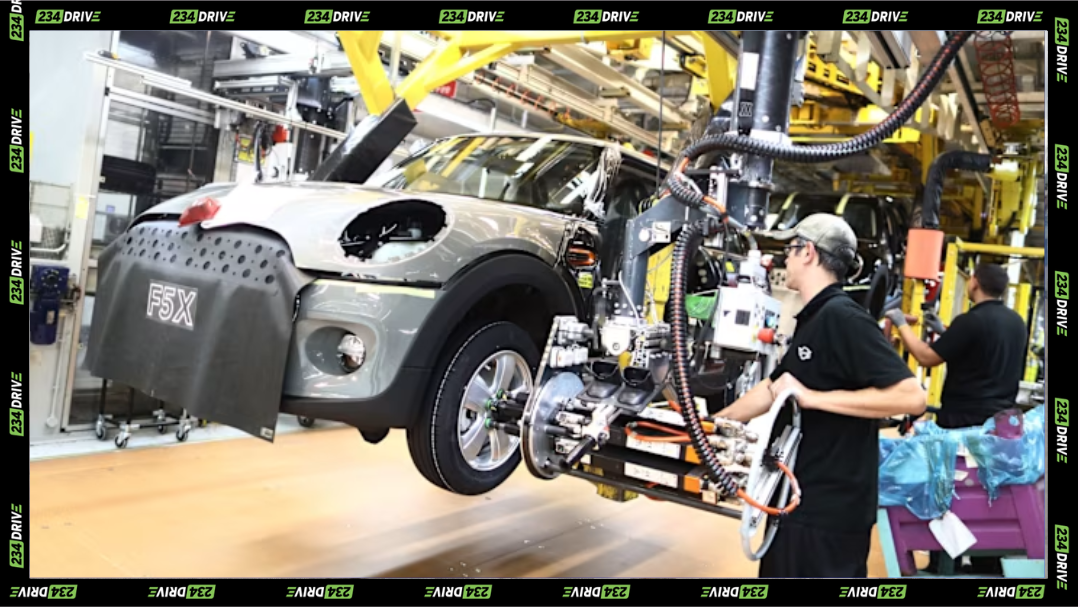
UK vehicle production fell 17% in February compared to the same month in 2025, based on data from the Society of Motor Manufacturers and Traders (SMMT). Exports played a major role in that drop, falling by 12% overall.
Looking at key markets, exports to the United States dropped 34%, while shipments to China fell by 66%. The European Union (EU) held up better, with a 5% increase.
Now, the bigger concern is what comes next. The US-Israel-Iran conflict has already pushed energy prices higher. That raises production costs and makes buyers more cautious at the same time.
Demand in China is shifting toward locally made cars, which is cutting into UK exports. In the US, trade policies linked to Donald Trump have made it harder for foreign-made vehicles to compete. Even electric and hybrid production dipped slightly, down 3%, though they still make up about 40% of total output.
This isn’t a one-off situation. UK vehicle production already dropped to its lowest level since 1952 last year, outside of the pandemic period.
South Africa Beats Expectations in 2025 Despite US Tariff Pressure
While the UK is dealing with a slowdown, South Africa is pushing forward.
In 2025, the country exported 414,268 vehicles, up 5.9% from the previous year, according to the National Association of Automobile Manufacturers of South Africa (NAAMSA). Even with trade pressure, demand held across more than 100 countries.
The US market weakened here too, with exports falling from 25,554 vehicles in 2024 to 6,530 in 2025. But Europe picked up the slack. Exports to the EU and UK rose to 332,695 units and now account for over 80% of total shipments.
Although it might not be a clear one, South Africa’s advantage comes from its manufacturing base. Global brands like BMW, Mercedes-Benz, Toyota, Ford, Volkswagen, Nissan and Isuzu all produce vehicles locally, with Chinese carmakers now acquiring assembly plants in the region.
The sector supports over 115,000 manufacturing jobs and contributes around 5.3% to the country’s GDP.
The government is now looking to push further. It plans to raise local component sourcing to 60% and grow its share of global vehicle production to 1%.