
Nigeria’s luxury automotive landscape underwent a seismic shift on 6 March 2026, as the ultra-premium Zeekr 9X plug-in hybrid SUV officially entered the market, signalling a bold new era for high-end sustainable mobility in West Africa.
The landmark unveiling was hosted by BBA Motors, a prominent mobility solutions provider led by Chief Executive Officer Rebecca Liyuanjia. The event served a dual purpose: the African debut of the Zeekr 9X and the grand opening of BBA Motors’ new intelligent flagship showroom in Lagos. This strategic launch positions Nigeria as a primary hub for advanced new-energy vehicles (NEVs) on the continent, reflecting the rapid expansion of Chinese automotive technology into global luxury segments. In a high-profile demonstration of market entry, the first Zeekr 9X in the country was delivered to the renowned Nigerian musician D’banj (Oladapo Daniel Oyebanjo) during the ceremony. The vehicle carries a significant price tag of approximately ₦350,000,000, reflecting its status as a flagship offering in the ultra-luxury bracket.
The Zeekr 9X is the first plug-in hybrid model from Geely’s premium electric brand, which was originally established in 2021 to focus on tech-forward, high-performance vehicles. Often described as the Chinese Rolls-Royce, the 9X is built on the sophisticated SEA-S (Haohan-S) modular architecture and powered by the ZEEA 3.0 electronics system. It is a full-size, three-row SUV designed to rival established titans such as the Rolls-Royce Cullinan and Range Rover. Its powertrain is a marvel of engineering, combining a 2.0-litre turbocharged petrol engine with high-output electric motors to produce up to 1,030 kW (1,381 hp) in its top-tier trims. This allows the massive SUV to accelerate from 0-100 km/h in a staggering 3.1 seconds. To ensure the vehicle is fit for the local environment, product specialists confirmed that the 9X has undergone specific modifications to handle Nigeria’s unique climate and road infrastructure.
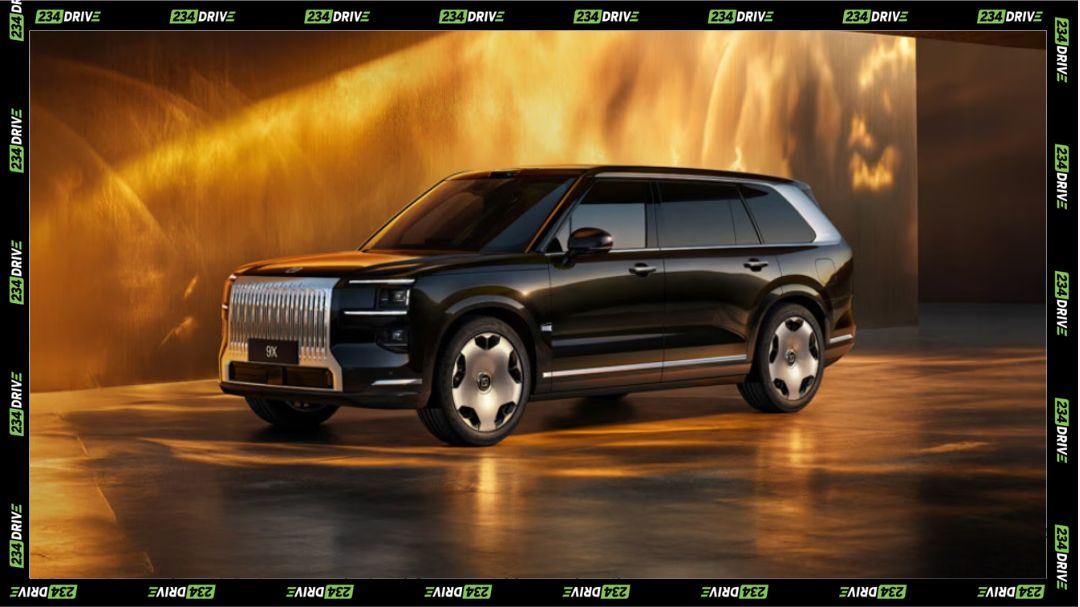
In terms of the operational roles behind this rollout, the ecosystem is a blend of Chinese manufacturing prowess and local distribution expertise. Geely’s Zeekr division provides the core technology and manufacturing, while BBA Motors Nigeria acts as the essential bridge, managing vehicle sales, localised maintenance and fleet operations. The vehicle’s hybrid configuration is particularly well-suited for the Nigerian market, as it addresses “range anxiety” in regions where charging infrastructure is still developing. With a pure electric range of up to 380 km and a total hybrid range of 1,250 km, the 9X offers the flexibility of a traditional petrol engine alongside a dual-motor intelligent all-wheel-drive system.
This move by BBA Motors signals a major strategic pivot from offering standard commuter vehicles to dominating the high-end NEV segment. By establishing a flagship “intelligent” showroom, the company is not just selling cars but is securing a long-term competitive advantage in a market where fuel prices have soared since the removal of government subsidies in 2023. The 9X’s debut at Auto Shanghai 2025 previously saw over 42,000 pre-orders in China within a single hour, and BBA Motors is betting that the same appetite for luxury and cutting-edge tech exists among Nigeria’s elite. This expansion aligns with a broader trend of Chinese firms leveraging trade barriers in Western markets to prioritise emerging regions like Africa.
When compared to global markets, Nigeria’s adoption of EVs is still in its infancy—representing less than 1% of total sales—yet the pace of change is accelerating. While Western manufacturers have been slower to deploy specialised infrastructure in the region, at least ten Chinese dealerships are already active in Nigeria, offering models from brands like Dongfeng and BYD. The Zeekr 9X enters a space where it must compete with the BYD Yangwang U8, another Chinese powerhouse, but it distinguishes itself through its specific adaptations for African conditions and its blend of “supercar” performance with family-oriented luxury.
The speed of execution for this launch has been notable. Following the global introduction of the 9X in late 2025, BBA Motors moved quickly to clear local certifications and establish a dedicated service framework. This efficiency mirrors the broader Chinese automotive strategy in Africa, which includes the establishment of assembly plants in South Africa and Zimbabwe. By early 2025, Nigeria had already exported its first locally manufactured EV to the United States, proving that the country possesses the underlying manufacturing potential to support these high-tech imports.
Ultimately, the arrival of the Zeekr 9X underscores a transition from theoretical interest in green energy to the practical deployment of fleet-scale luxury operations. The vehicle’s “Haohan Safety Armor”—which passed the world’s first four-way 105 km/h crash test—and its Level 3 autonomy features, including five LiDAR sensors, set a new benchmark for safety and technology in the region. As solar integration and battery-swapping models begin to emerge as viable solutions to Nigeria’s energy challenges, the 9X stands as a testament to what is possible when high-end engineering meets an evolving market. This launch raises a critical question for the future of West African transport: should the government now treat EV charging networks as essential public infrastructure to match the rapid influx of high-performance electric vehicles?