
In the sweltering heat of a Nigerian afternoon, whether you are navigating the chaotic traffic of Lagos or driving through the dusty plains of the North, your air conditioning (AC) system is not a fundamental part of your car. For many drivers, the AC system is a mysterious black box: you press a button, and cold air (hopefully) comes out. However, when that cold air stops flowing, most people immediately blame the compressor or assume the “gas has finished.”
While the compressor is indeed the heart of the system, there is another component that is equally vital but often overlooked: the AC Condenser. Without this critical part, the physics required to cool your car simply cannot function.
We believe that understanding your vehicle is the first step to maintaining it. In this deep dive, we will explore exactly what an AC condenser is, the science behind how it works, and why the specific driving conditions in Nigeria make it one of the most vulnerable parts of your vehicle.
What is an AC Condenser?
Technically defined, an AC condenser is a heat exchanger. Its primary purpose is to transfer heat from inside the AC system to the outside air. If you look at the front of your car, directly behind the front grille, you will see a component that looks remarkably like a radiator. That is your condenser.
Structure and Design
The condenser acts as the partner to the evaporator (which sits inside your dashboard). While the evaporator absorbs heat from the cabin, the condenser releases that heat to the atmosphere. It is constructed from a series of tubes usually made of aluminum, which is chosen for its excellent thermal conductivity and lightweight properties.
Attached to these tubes are hundreds of tiny, delicate “fins.” These fins are crucial because they significantly increase the surface area of the condenser, allowing air to pass through and carry heat away more efficiently.
Location matters
The condenser is almost always mounted at the very front of the vehicle, usually in front of the engine radiator. This placement is intentional. To work effectively, the condenser requires a constant, high-volume flow of ambient air. By sitting at the front, it catches the “ram air” generated when the vehicle is moving. When the vehicle is stationary—like in a typical Lagos “go-slow”—it relies on the radiator fan or a dedicated condenser fan to pull air through its fins.
What Does the AC Condenser Do?
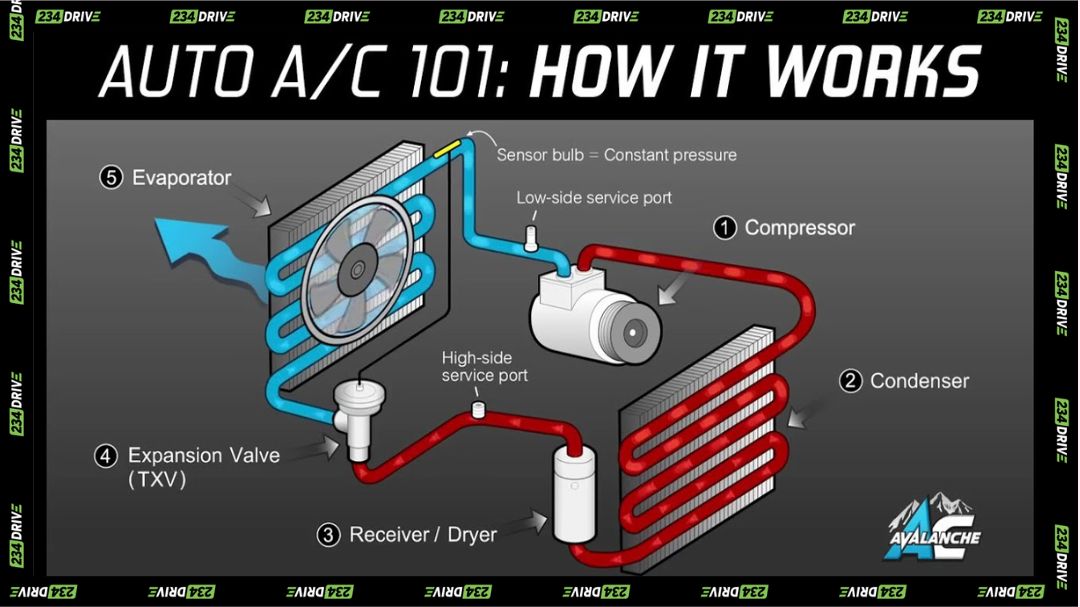
To understand the function of the condenser, we must first understand the basic principle of air conditioning: Heat is not destroyed; it is transferred. The AC system absorbs heat from the passenger cabin and transports it to the front of the car, where it can be dumped outside.
The condenser is the “dumping ground” for this heat. Its specific job is to facilitate a phase change in the refrigerant.
- Reception: It receives hot, high-pressure refrigerant gas from the compressor.
- Rejection: It rejects the heat carried by this gas into the passing air.
- Conversion: As the heat leaves, the refrigerant changes state (condenses) from a gas back into a liquid.
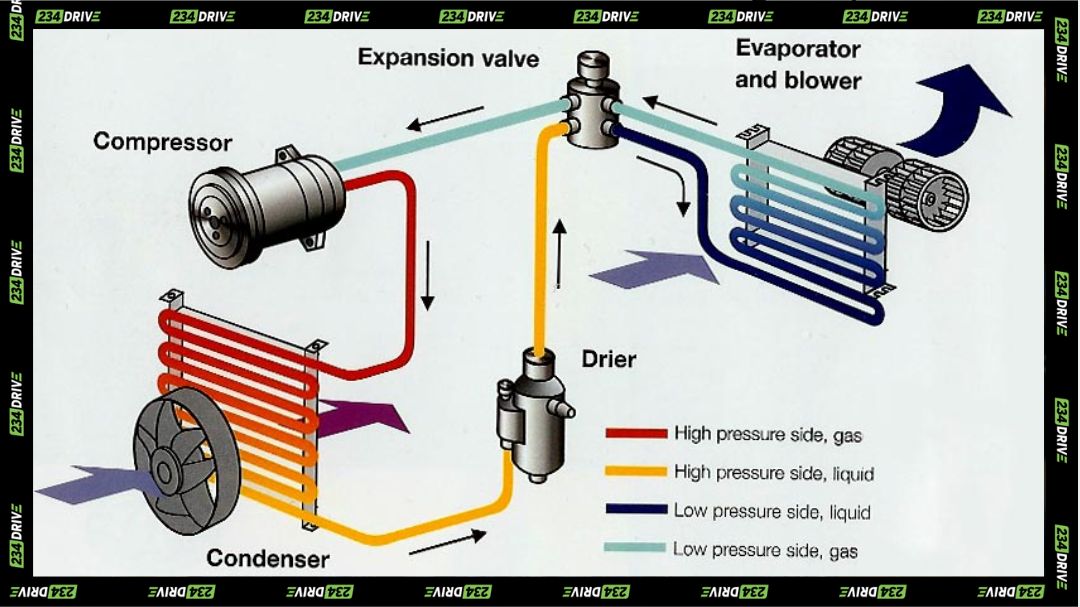
This conversion is non-negotiable. The expansion valve and evaporator (the next parts in the loop) require high-pressure liquid refrigerant to do their jobs. If the condenser fails to turn the gas back into a liquid—perhaps because it is clogged with dirt or damaged—the entire cooling cycle breaks down.
How It Works: The Thermodynamic Cycle
The operation of the condenser can be broken down into a fascinating thermodynamic process. Here is the step-by-step journey of the refrigerant as it passes through this component:
Step 1: Entry of High-Pressure Vapour
The process begins when the AC compressor pumps refrigerant (typically R-134a or the newer R-1234yf) into the top of the condenser. At this stage, the refrigerant is a superheated vapour. It is under high pressure and is extremely hot—often reaching temperatures between 65°C and 90°C (150°F – 200°F). This heat is a combination of the heat absorbed from your car’s interior and the heat generated by the mechanical compression process.
Step 2: Desuperheating and Heat Transfer
As this hot gas travels through the winding tubes of the condenser, ambient air flows across the tubes and fins. Even on a hot day in Abuja with temperatures around 35°C, the outside air is still significantly cooler than the 90°C refrigerant inside the condenser.
Thermodynamics dictates that heat always transfers from a hotter object to a cooler one. Therefore, the heat energy rapidly transfers from the refrigerant, through the aluminum walls of the tubes, into the fins, and finally into the passing air stream.
Step 3: Condensation (The Phase Change)
As the refrigerant loses heat, it reaches its saturation point. This is the critical moment where it stops being a gas and transforms into a liquid. This phase change releases a massive amount of latent heat. By the time the refrigerant reaches the middle to lower section of the condenser, it is a mixture of liquid and vapour, eventually becoming almost entirely liquid.
Step 4: Subcooling
Before the refrigerant exits the bottom of the condenser, it undergoes a final cooling stage called “subcooling.” This ensures that the liquid is cooled below its saturation temperature. Subcooling is vital because it ensures that a pure liquid column is delivered to the expansion valve, maximising the efficiency of the cooling that happens later in the evaporator.
Types of AC Condensers
Not all condensers are created equal. Depending on the age and make of your vehicle, you might encounter different designs:
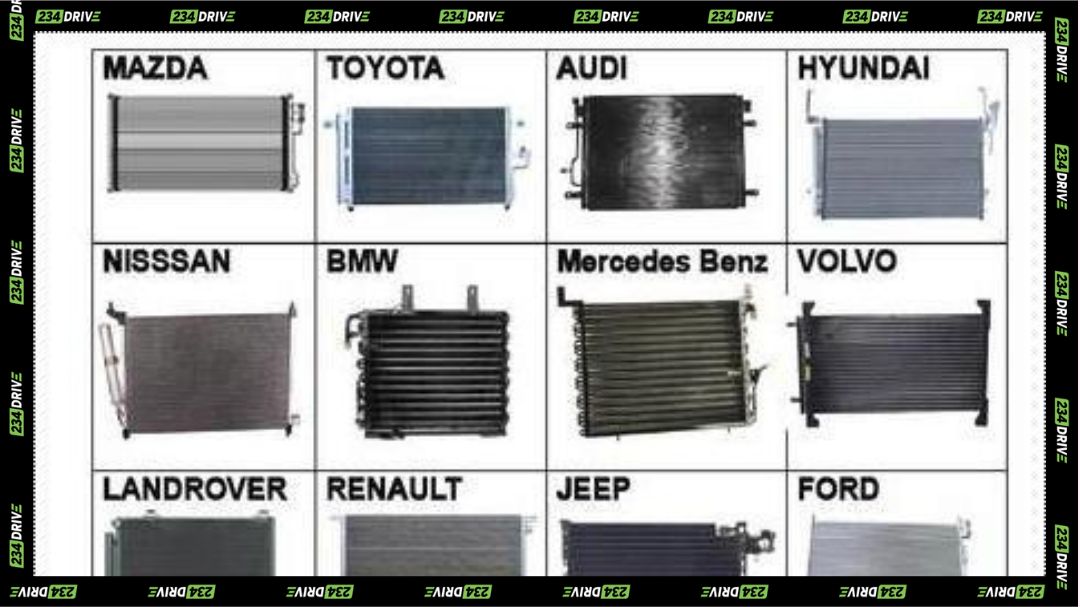
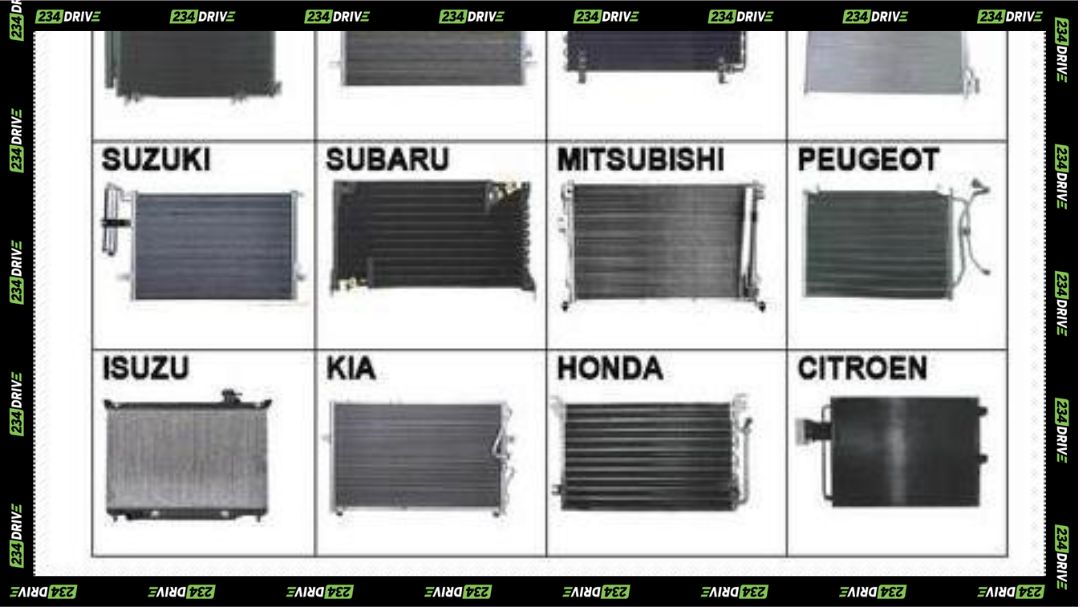
- Serpentine: Found in older vehicles, this design features a single long tube that winds back and forth. It is durable but less efficient.
- Parallel Flow: Common in modern vehicles (Toyota Corolla, Camry, Honda Accord). It has multiple tubes running horizontally connected to vertical headers. This design is highly efficient but the tiny passages clog easily—a major point to note for Nigerian drivers.
- Microchannel: The latest technology, offering superior heat transfer in a smaller, lighter package. However, these are extremely sensitive to debris and are difficult to flush if the compressor fails.
The Nigerian Context: Vulnerabilities and Failure Points
In many parts of the world, a condenser might last the lifetime of the car. In Nigeria, however, the condenser is under constant assault. The environmental conditions here significantly shorten the lifespan of this component.
1. The Dust and Debris Factor
Our roads are dusty. During the dry season or Harmattan, the air is thick with particulate matter. Since the condenser acts as an air intake filter of sorts, its fins act as a net. Over time, a mixture of sand, insects, nylon bags, and road grime builds up on the face of the condenser.
This blockage creates an insulating blanket. If air cannot pass through the fins, heat cannot be removed from the refrigerant. The result is an AC system that blows cold while moving fast (high airflow) but turns warm immediately when you stop in traffic.
2. Physical Road Damage
Because the condenser is mounted at the very front of the car, it is the “first responder” to road debris. Stones kicked up by trailers on the Lagos-Ibadan expressway can strike the condenser with bullet-like force. This susceptibility to damage makes the condenser one of the most vulnerable parts of your vehicle.
- Bent Fins: Small stones crush the delicate fins, blocking airflow.
- Punctures: Larger stones can pierce the tubes, causing the refrigerant to leak out instantly. This is a common cause of sudden AC failure.
3. Corrosion and Humidity
For those living in coastal areas like Lekki, Victoria Island, or Ozuoba, salt air is a silent killer. The aluminum of the condenser can corrode over time, leading to microscopic pinhole leaks that are often difficult to detect without UV dye.
Symptoms of a Failing Condenser
How do you know if your condenser is the culprit behind your sweaty drive? Look for these signs:
- Lukewarm Air at Idle: If the AC is cold when driving but warm when stopped, the condenser is likely dirty or the fan is failing to pull enough air through it.
- Noticeable Leaks: Refrigerant oil looks wet and sticky. If you see a dark, oily patch on the front of your condenser (often covered in dust that has stuck to the oil), you have a leak.
- Overheating Engine: Since the condenser sits in front of the radiator, a severe blockage in the condenser can restrict airflow to the radiator too, causing the engine temperature to rise when the AC is on.
- Physical Distortion: Visible damage to the fins or tubes upon inspection through the front grille.
Maintenance Guidelines for Nigerian Drivers
Maintaining your condenser can save you tens of thousands of naira in repairs.
- Regular Gentle Cleaning: The most effective maintenance is keeping the fins clean. You can rinse the condenser with water from a garden hose to remove loose dust and salt.
- CAUTION: Never use a high-pressure washer (like the ones at commercial car washes) directly on the condenser fins close up. The pressure is too high and will bend the fins flat, permanently ruining the condenser.
- Install a Protective Mesh: If your car has a front grille with large gaps (common in some SUVs and trucks), consider adding a mesh screen behind the grille. This cheap modification can catch stones and bugs before they hit the expensive condenser.
- Check Your Fans: Ensure your radiator/condenser fans are spinning vigorously. In Nigerian traffic, the condenser is 100% reliant on these fans. If they are weak, the system pressure will skyrocket, potentially blowing a hose or damaging the compressor.
Buying Guide: New vs. Tokunbo
When replacement is necessary, you will face the market dilemma: Brand New or Tokunbo?
- Brand New (Aftermarket): These are widely available. However, be wary of extremely cheap “China-spec” condensers. They often have fewer fins per inch than the original, meaning they cannot shed heat fast enough for the Nigerian climate. Always look for reputable aftermarket brands.
- Tokunbo (Used OEM): A clean, original condenser from a foreign-used car is often superior to a cheap new one because of better build quality and material density. However, you must inspect it carefully for bends and, more importantly, have it pressure-tested for leaks before paying.
Conclusion
The AC condenser is a marvel of thermal engineering that works tirelessly to battle the Nigerian heat. It takes high-pressure, superheated gas and transforms it into the liquid that eventually cools your brow. While it is prone to clogging from dust and damage from debris, a little understanding and preventative maintenance can keep it running efficiently.
By keeping your condenser clean and protected, you ensure that your car remains a sanctuary of cool comfort, no matter how chaotic the traffic outside becomes.