
Mercedes-Benz has officially resumed the production and ordering of its EQ-branded electric vehicles for the United States, ending a strategic hiatus that had temporarily sidelined several of its most prominent luxury models. The restart, which aligns with the rollout of the 2026 model year, marks a significant recalibration for the German carmaker as it seeks to regain momentum in a cooling but increasingly competitive electric market. By reintroducing the EQE and EQS series alongside the launch of the all-new electric CLA, Mercedes-Benz is signalling a clear intent to protect its market share through more aggressive pricing and a more flexible manufacturing approach.
The decision to pause production on 1st September 2025 was a calculated manoeuvre designed to bring inventory levels into alignment with shifting consumer demand. This period saw the expiration of significant federal tax incentives, creating a challenging environment for luxury electric vehicles that often sat above the eligibility price thresholds. During this six-month window, Mercedes-Benz maintained its global production flow by prioritising international markets, leveraging its Tuscaloosa, Alabama, plant to supply SUVs for export while sedans continued to roll off lines in Germany. This flexibility allowed the company to weather the U.S. sales slowdown without the burden of overstocked dealership lots, effectively “resetting” the brand for its 2026 campaign as EQ EVs return to the production line.
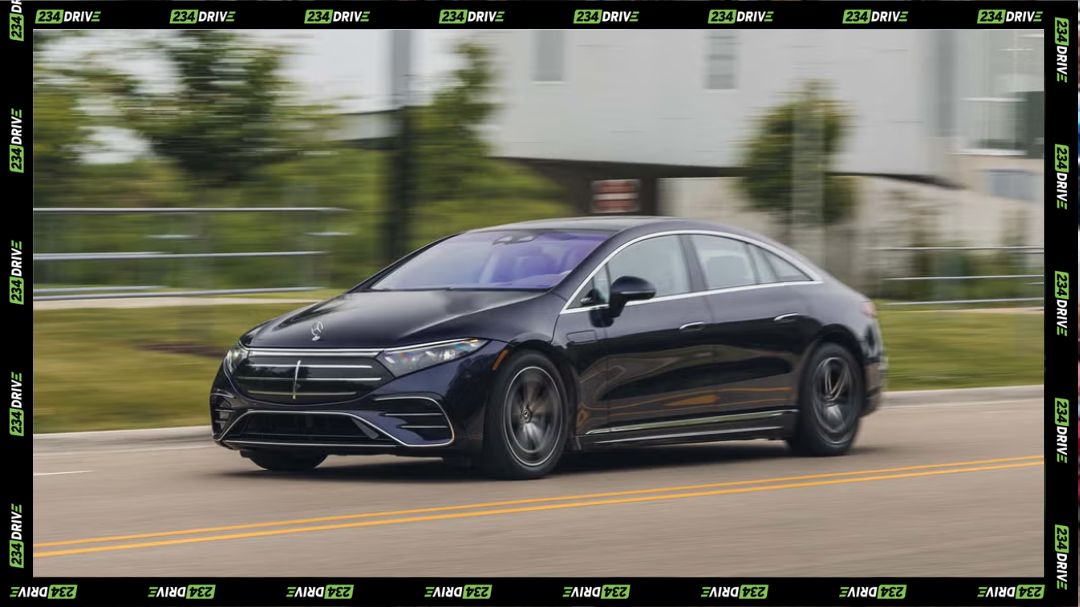
The most striking feature of the return is a substantial downward adjustment in pricing across the core EQ lineup. In an effort to make the vehicles more accessible and to compensate for the loss of government subsidies, Mercedes-Benz has slashed prices dramatically for the 2026 model year, with reductions reaching as high as $15,000 for certain models. For example, the 2026 EQE sedan and SUV variants now start at roughly $66,100, representing a reduction of approximately $10,000 to $13,000 compared to their previous iterations. These pricing pivots are increasingly common as manufacturers navigate the high costs of electrification, a trend recently seen in the pickup market where the F-150 Lightning’s sales highlighted the tension between volume and profitability.
Technological refinements accompany the updated pricing to ensure the 2026 models remain competitive against rivals from Tesla, BMW, and Lucid. Performance enhancements include increased horsepower and improved acceleration times for the EQE range, whilst the entire EQ fleet now benefits from standard NACS (North American Charging Standard) adapters. This move grants Mercedes-Benz owners seamless access to Tesla’s vast Supercharger network, addressing one of the primary concerns for luxury EV buyers—charging infrastructure reliability. These updates are paired with larger battery capacities in select models, pushing the EQS sedan’s range towards 390 miles, according to early estimates, as EQ orders re-open across U.S. dealerships.
The restart coincides with the arrival of the next generation of Mercedes-Benz electric mobility: the CLA with EQ Technology. Starting at approximately $47,250, the electric CLA is the first vehicle built on the company’s new Modular Architecture (MMA) platform. This platform is a cornerstone of the brand’s “Electric First” strategy, supporting 800-volt high-speed charging and delivering a range of up to 374 miles. The CLA’s launch represents a shift in branding; rather than existing as a standalone EQ model, it is integrated into the core CLA-class family. This move reflects a broader industry trend toward radical identity shifts, similar to how Honda’s logo redesign signals its own pivot toward a digital and electric future.
Looking forward, the transition of the GLC—Mercedes’ second-best-selling model globally—to an electric powertrain will be the ultimate test of this renewed strategy. Expected to launch as a 2027 model, the electric GLC SUV will feature an 800-volt architecture capable of regaining 188 miles of range in just ten minutes. As Mercedes refines its luxury crossover offerings, it faces pressure from both traditional rivals and new tech-led entrants, such as the Afeela SUV prototype, which aim to redefine the premium cabin experience. By integrating these electric variants into its traditional model naming conventions and focusing on localised production in Alabama, Mercedes-Benz is moving away from the “EQ” sub-brand experiment and towards a future where electric power is simply another high-performance choice.
This revitalised offensive suggests that Mercedes-Benz has learned from the initial volatility of the EV market. While some brands continue to focus on rugged, niche ICE-based vehicles like the 2027 Ford Bronco RTR, Mercedes is doubling down on a software-defined, electric-first lineup. By combining lower entry costs, better charging access, and a consolidated naming strategy, the automaker is restarting EQ production to position itself not just as a participant in the electric shift, but as a leader capable of adapting its heritage to a new era of sustainable mobility. Whether these price reductions and tech upgrades will be enough to trigger a significant sales surge remains to be seen, but the intent is clear: the three-pointed star is back on the electric offensive.