
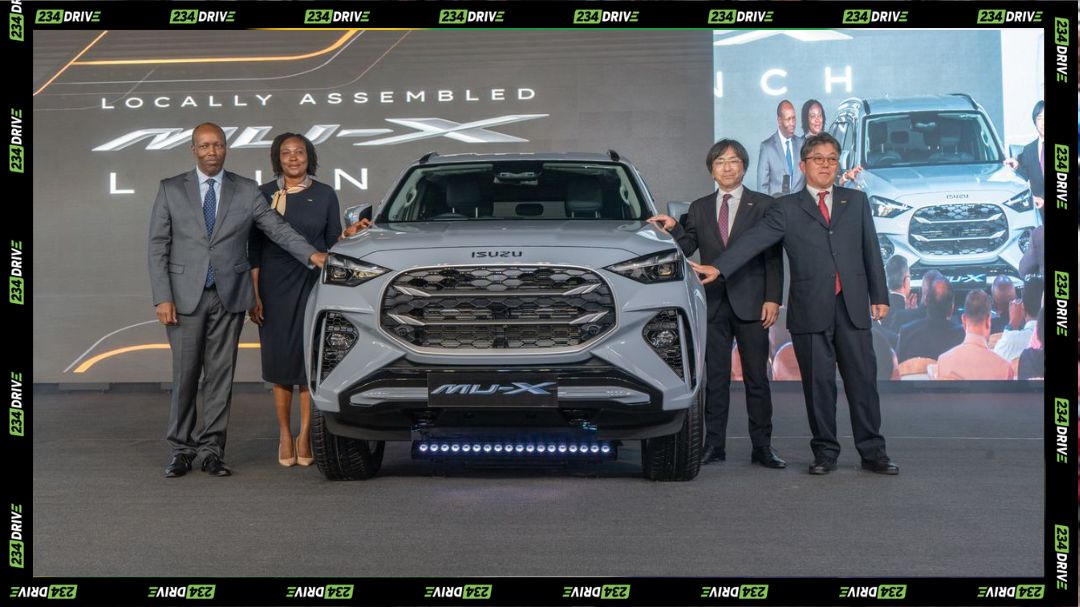
Kenya’s automotive industry has reached a historic turning point with the start of local production for the Isuzu MU-X luxury SUV, a move that shatters the long-standing myth that brand-new vehicles are financially out of reach for the average motorist. In a market historically dominated by second-hand imports, the introduction of a locally assembled, zero-mileage luxury SUV at a price point competitive with eight-year-old imports signals a fundamental shift in the nation’s industrial strategy. This development is not merely about a single vehicle model; it represents the first time the MU-X has been manufactured outside Thailand, positioning Kenya as a sophisticated regional manufacturing hub for the Japanese automaker.
The core of this transformation lies in the significant price reductions made possible by the National Automotive Policy. By leveraging tax incentives designed to reward domestic production, Isuzu East Africa has been able to slash the retail price of the 3.0-litre MU-X variant by 27 per cent, bringing it down from approximately KSh 13.5 million to KSh 9.9 million. Even with these reductions, the MU-X remains a premium offering in a market that features some of Kenya’s most expensive cars, though it now sits at a much more accessible price point for the luxury segment. Furthermore, the introduction of a 1.9-litre engine option at KSh 8.9 million broadens the entry point for luxury SUV ownership. These savings of KSh3.6 million, often amounting to millions of shillings per unit, effectively bridge the price gap that previously forced many buyers into the used car market.
The government’s role in this transition is central, moving beyond rhetoric into active market shaping through initiatives like the “Buy Kenya, Build Kenya” campaign. Trade and Industry Cabinet Secretary Lee Kinyanjui has highlighted that the policy is designed to keep value within the country by encouraging manufacturers to source components domestically. This push for localisation is mirrored in other sectors, such as the Kenyan EV assembly push by Chinese giants looking to undercut traditional rivals. Additionally, upcoming financial instruments such as Samurai Bonds are being prepared to finance the local manufacturing of vehicle parts, which is expected to drive prices even lower. The government’s vehicle leasing programme also prioritises locally assembled units, creating a steady demand that allows manufacturers like Isuzu to achieve a fully localised product portfolio.
This industrial deepening has profound economic implications that extend far beyond the showroom floor. Local assembly fosters a robust ecosystem of small and medium-sized enterprises, creating jobs for specialists ranging from painters and welders to supply chain logisticians. By moving away from a reliance on fully built unit imports, Kenya is effectively “importing” technology and skills while “exporting” its dependency on foreign second-hand markets. This strategy is part of a larger trend where global confidence catalyses the nation’s push for leadership in emerging sectors like e-mobility, aligning with broader regional goals under the African Continental Free Trade Area.
Consumer confidence is further bolstered by the tangible benefits of local assembly, including shorter delivery times and an extensive nationwide after-sales network. Beyond the purchase, manufacturers are focusing on long-term engagement; for example, CFAO Mobility Kenya has recently launched exclusive clubs to enhance the ownership experience for their flagship models. In the case of Isuzu, buyers receive a vehicle built to global standards in a Kenyan assembly plant that matches the quality benchmarks of its parent facility in Thailand. This assurance of quality, combined with three complimentary services and a robust support structure, redefines the ownership experience for Kenyan motorists.
Looking ahead, the success of this initiative will be a barometer for the feasibility of phasing out older vehicle imports. As the Kenya Bureau of Standards prepares to enforce stricter age limits on second-hand cars, the availability of affordable brand-new cars becomes critical. While challenges remain in perfecting a comprehensive local supply chain and overcoming market inertia, the launch of the locally assembled MU-X provides a clear proof of concept. It demonstrates that with the right mix of policy support and international partnership, Kenya can transition from a consumer of the world’s used fleet to a producer of world-class automotive excellence.