
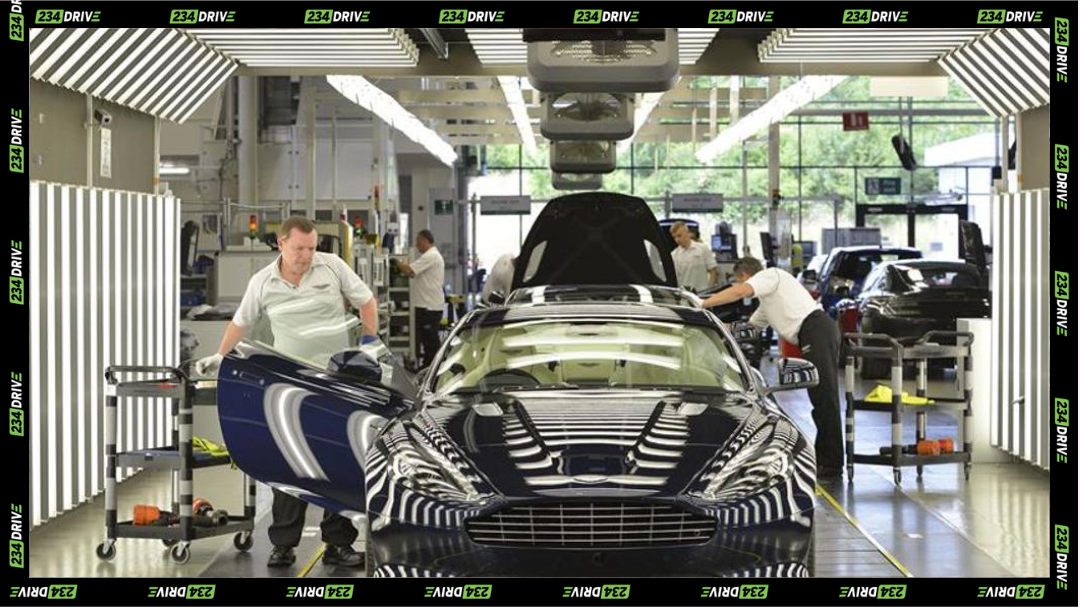
Technicians assemble an Aston Martin sports car inside a modern factory floor. | Source: Manufacturing Management
Aston Martin will cut around 600 jobs—about one-fifth of its workforce—after reporting a £364 million loss for 2025. The luxury carmaker says US and Chinese tariffs drove up costs, cut sales by 10% and deepened financial pressure. It will reduce investment by £300 million over five years, delay its first electric vehicle again and shift focus toward hybrids as it restructures for survival.
Aston Martin Cuts Jobs After Heavy Losses and EV Delays
The British sports carmaker confirmed it will eliminate roughly 20% of roles, targeting £40 million in savings, after losses widened sharply from £100 million the previous year to £364 million in 2025. The company employs about 3,000 people, putting close to 600 jobs at risk.
Chief executive Adrian Hallmark described 2025 as one of the most turbulent years for the global luxury automotive market. Instead of competing primarily on product strength, the company had to navigate trade policy shifts and supply chain disruption that hurt volumes, margins, and operational efficiency.
Tariffs played a central role. US trade measures and higher Chinese taxes on luxury vehicles increased the cost of key Aston Martin models, including the DBX SUV, DB12 grand tourer and Vantage sports car. Some British carmakers paused US shipments between April and June last year while awaiting trade clarity. The pricing pressure reduced competitiveness and weighed directly on demand.
Beyond workforce reductions, Aston Martin will cut £300m in planned investment over five years, largely from electric vehicle development. The company has now pushed back the launch of its first fully electric model twice—first from 2026 to later in the decade, and now further into the late 2020s—as it reassesses its electrification roadmap. Management says it will place greater emphasis on hybrid technology in the near term.
The wider luxury performance market reflects similar caution. Lamborghini has cancelled plans for a fully electric model and pivoted toward plug-in hybrids, while Ferrari continues development of its upcoming EV, known as “Luce.”
Aston Martin expects trading conditions to improve later this year, supported by a refreshed product lineup. Investors initially responded positively, with shares rising in early trading.