
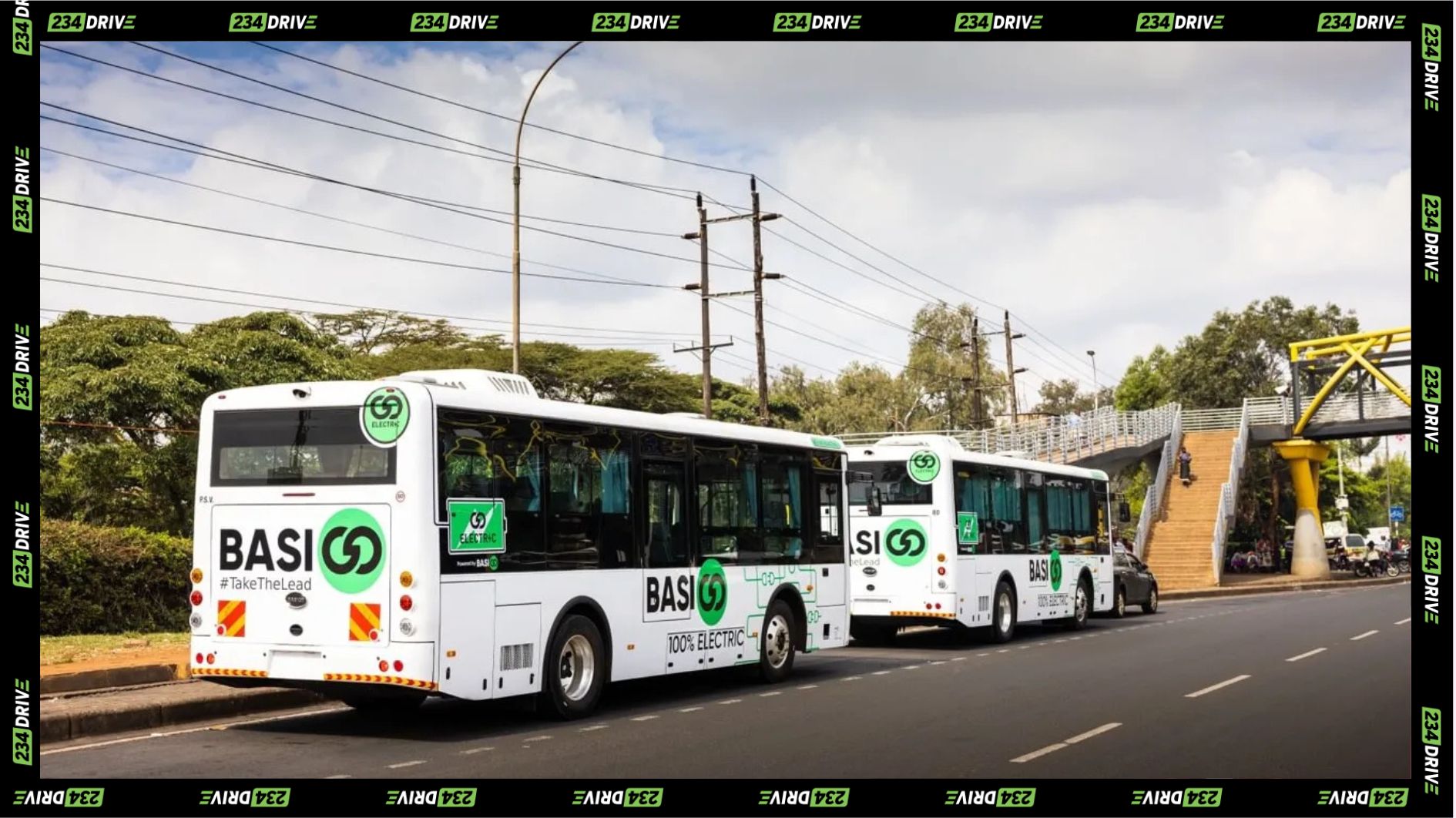
BasiGo, the Kenyan electric mobility startup, has begun piloting its new fixed-route commuter service, Jenga, in partnership with established matatu cooperatives, as first reported in its scheduled electric bus pilot. Rather than attempting to replace the informal system, the company is embedding itself within it supplying mid-sized electric buses, charging infrastructure, and route intelligence software while Saccos handles drivers, labour, and licensing.
The pilot currently operates three electric buses across two high-demand corridors: Nyayo Estate to Westlands via the Nairobi Expressway, and Mwiki to Upper Hill, a move analysed in its bold electric bus bet. Early performance indicators show around 300 unique weekly riders with an average occupancy rate of 80%, signalling early product-market fit. Fares range between KES 150 and KES 200 higher than standard matatus, positioning the service as a premium, time-saving alternative for corporate commuters.
At the heart of Jenga is BasiGo’s Pay-As-You-Drive (PAYD) financing model. Operators purchase the bus chassis at a cost comparable to diesel alternatives, while BasiGo retains ownership of the battery, the most expensive component, leasing it at approximately KES 26 per kilometre. Revenue is shared post-expenses, with operators receiving 75% and BasiGo taking 20%, plus a small allocation for maintenance and contingencies. This structure lowers upfront capital barriers and shields operators from fuel price volatility.
The buses themselves are designed for predictable urban commuting. They feature air conditioning, device charging ports, quiet cabins, and guaranteed seating through pre-booking. Around 80% of payments are processed via M-PESA merchant codes, while the remaining 20% come through advance bookings on the Jani app, which also provides real-time tracking and demand analytics. Data, rather than informal queue systems, determines deployment schedules.
Strategically, the move signals a shift from simply deploying electric buses to reshaping commuter behaviour. By targeting middle-class professionals, many of whom increasingly rely on private cars or ride-hailing apps, BasiGo is attempting to redirect demand toward structured public transport. The idea is to save up to 40 minutes per trip, reduce commuting stress, and lower emissions in the process.
The approach contrasts sharply with Swvl’s earlier expansion into Kenya, which relied on building independent fleets and ultimately exited the market in 2022 amid operational and margin pressures, a shift detailed when BasiGo entered fixed-route commuting. Where Swvl pursued platform disruption, BasiGo is pursuing infrastructure integration, embedding within existing Saccos rather than competing against them.
Scaling, however, will depend on more than demand. Expansion plans include adding up to 10 additional buses within 12 to 24 months, contingent on vehicle supply chains and charging depot growth. The company has already expanded charging infrastructure in areas such as Taj Mall, Komarock, and Riruta, signalling preparation for higher fleet density following its recent charging infrastructure expansion.
This pilot also builds on BasiGo’s broader regional footprint, having already deployed more than 50 electric buses across Kenya and Rwanda, according to information on the company’s official homepage. The Jenga model therefore represents less of an experiment and more of a structured evolution, layering scheduled commuting onto an existing electric fleet strategy.
If early indicators hold, Jenga could mark a transition point in Nairobi’s public transport story from informal volume-driven operations to data-led, electrified commuter corridors. The bigger question is whether policy support and infrastructure expansion can move at the same pace as private-sector ambition.