
Trump’s planned 25% tariff hike could test Europe’s auto trade plans with the U.S. | Source: belgannewsagency
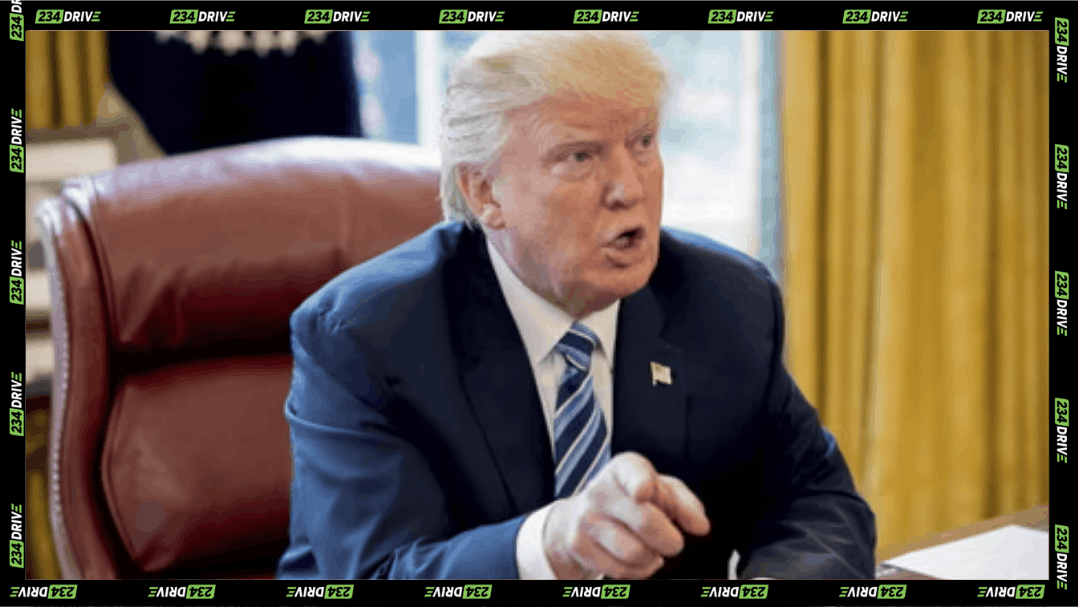
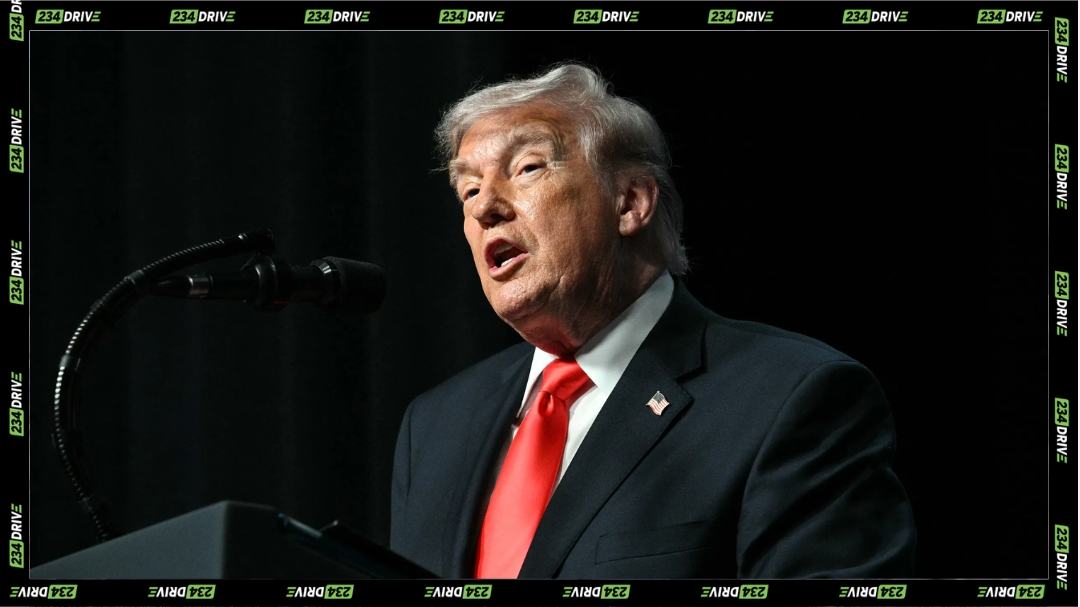
U.S. President Donald Trump says he will raise tariffs on cars and trucks from the European Union to 25% next week, accusing the bloc of not keeping to last year’s trade deal. The move could put fresh pressure on EU carmakers and reopen trade tensions between the U.S. and Europe.
It also comes at a difficult time for the global economy, as higher energy costs and inflation are already squeezing markets. The EU says it is still working through the agreement and will defend its interests if the U.S. breaks from the deal.
Trump’s EV and Auto Tariff Threat Puts EU Trade Deal Under Pressure
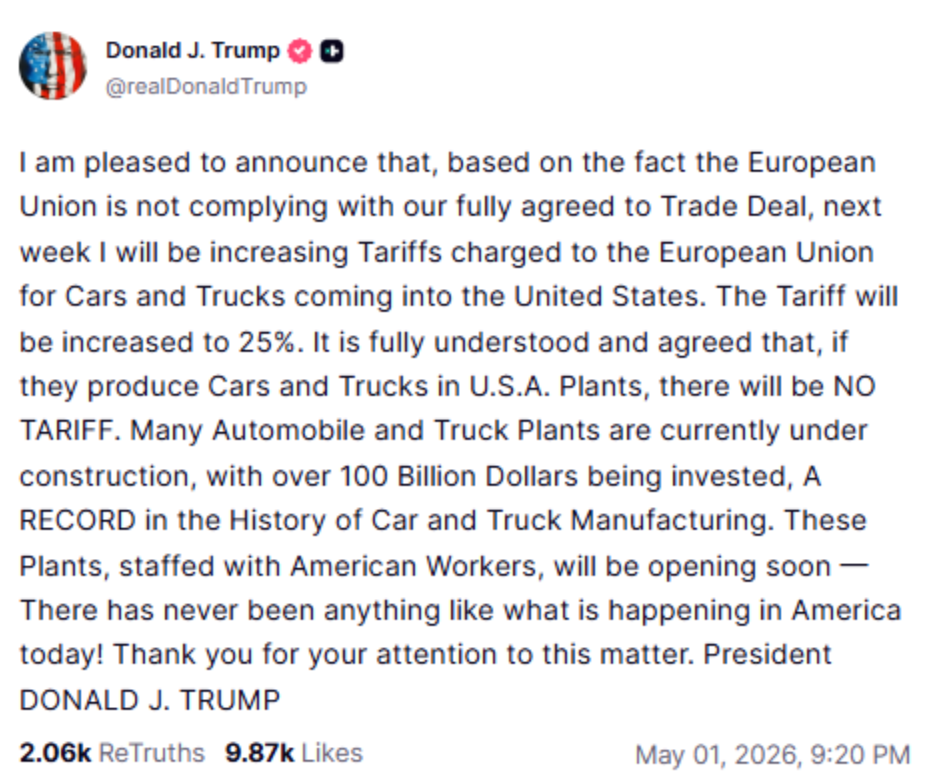
Trump made the announcement in a social media post, where he said the European Union was “not complying” with the trade framework agreed last July. He did not explain exactly what part of the deal the EU had breached. Later, while speaking to reporters, he said the bloc was not following the agreement “as usual.”
He also linked the tariff move to factory production. According to Trump, higher tariffs would push European carmakers to move production to the United States faster.
The dispute is tied to the Turnberry Agreement, a trade framework reached between Trump and European Commission President Ursula von der Leyen. That deal placed a 15% tariff ceiling on most goods, including cars. But the agreement has come under pressure in the U.S. after the Supreme Court ruled against the legal authority Trump had used to impose some tariffs.
Since then, the Trump administration has been looking for other ways to bring back tariff revenue. It has already placed a 10% tax while opening trade investigations into trade imbalances, overproduction claims and national security concerns.
The EU has pushed back. It says it is following the normal process needed to finalise the agreement. Bernd Lange, who chairs the European Parliament’s trade committee, called the planned tariff hike unacceptable and accused the Trump administration of breaking its promises.
The auto industry is also worried. Autos Drive America, which represents foreign carmakers operating in the U.S., said a 25% tariff could hurt the progress already made in opening EU markets and growing the U.S. auto industry.
European carmakers also have money at stake. The EU had said the deal could save them up to 600 million euros a month. If the tariff rises, those expected savings could shrink.
Why Africa Could Help Carmakers Reduce the Pressure From Trump’s Tariffs
Trump’s demand for more U.S.-based production also raises a wider question of how easily can global carmakers move production when they already have major plans elsewhere? For some brands, that move may not be quick or affordable, especially when they already have major manufacturing plans elsewhere.
Renault shows why that shift may not be simple. Its Morocco expansion was agreed in October 2025, months before this tariff threat began.
The deal is expected to create 7,500 jobs, support a new R&D centre and strengthen Morocco’s place as one of Africa’s leading EV manufacturing bases. The country already hosts Renault plants in Tangiers and Casablanca, while its wider EV plan includes battery supply chains and export-focused production.
BYD is taking a similar long-view approach. Executive Vice President Stella Li has said the Chinese EV maker does not need U.S. sales to succeed, because demand is already strong in China, Europe and other markets.
Africa fits right into that wider growth plan, with BYD strengthening its Africa-led strategy and preparing charging infrastructure to support EV adoption across the continent.