
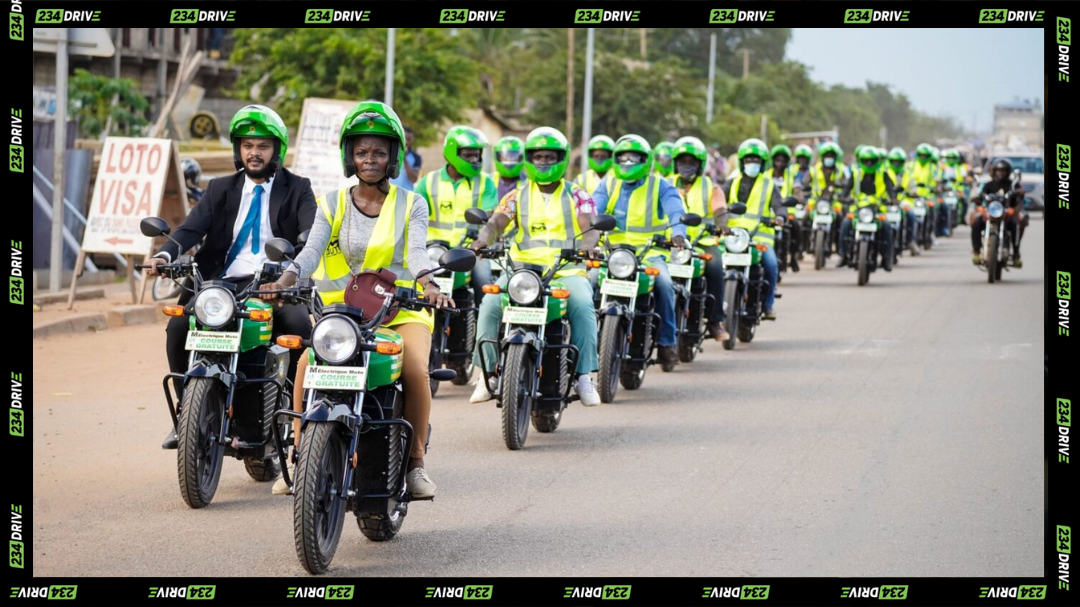
electric motorcycles are gaining ground as everyday urban transport across Africa. | Source: concertopr
Africa’s two-wheel motorcycle market is still expanding fast, filling daily transport gaps in cities where buses and rail fall short. The market is projected to reach $5.55 billion in 2026 and grow to $7.29 billion by 2031, driven by urban growth and informal mobility demand. But that expansion is no longer friction-free. Motorcycle prices are rising in import-heavy markets, and cities are struggling to manage safety, congestion, and public backlash without cutting off livelihoods.
Why Motorcycles Keep Winning In African Cities
Motorcycles keep spreading across African cities because they get people around faster than public transport can keep up. Many cities still don’t have reliable buses or rail, and even when upgrades are planned, they rarely reach every neighbourhood in the last mile. Motorcycles cut through traffic, cost less to get on the road than cars, and go where formal transport doesn’t. For millions of people, motorcycle taxis—okada, boda-boda, or zemidjan—are also a steady way to earn a living.
Governments are starting to catch on. According to concertopr, more than half of African countries have said they want to support electric mobility. Some already offer tax breaks or friendly rules, while others are still putting national plans together. Progress isn’t even across the continent, but the conversation has clearly moved beyond small pilot projects.
Private companies are helping push things forward. Businesses like Spiro are driving the adoption of electric two-wheelers, working with governments, financiers, and trusted media partners across Africa to raise awareness and grow usage. Media platforms such as 234Drive have also worked with Spiro to help tell the two-wheeler story and increase visibility for electric motorcycles.
Costs are still a challenge. Heavy reliance on imports and shaky exchange rates keep pushing prices up, which squeezes riders’ earnings. Safety, congestion, and pollution remain daily concerns for city leaders. What’s changed is momentum. Motorcycles are no longer a backup option—they’re now a core part of how African cities move, and electric bikes are starting to shape what comes next.
Kenya Showing How Fast A Proper Shift To Electric Can Happen
Kenya offers a glimpse of how this market could evolve. Electric motorcycles have moved from niche to mainstream in just a few years. Their share of new motorcycle registrations climbed steadily and reached 15.3% in 2025, with more than 25,000 electric motorcycles registered in a single year. That growth reflects lower running costs, rising fuel prices, and financing models tailored to riders.
Policy is now catching up with the market. Kenya’s National Electric Mobility Policy places electric transport at the centre of long-term planning. The government has rolled out tax exemptions for EV parts and charging equipment, while setting targets to expand electric vehicles across public fleets. With over 90% of Kenya’s electricity generated from renewable sources, electric motorcycles cut emissions while keeping transport spending within the local economy.
The direction is clear. Motorcycles will remain central to African mobility. The real question is whether cities can guide that growth toward safer streets, cleaner air, and stronger local value creation—before rising costs and unmanaged risks start to slow it down.