
The British automotive landscape is undergoing its most radical transformation in decades as China’s leading car exporter prepares to cement its dominance with the introduction of a fourth distinct brand. Chery International has officially confirmed that Lepas will arrive on UK shores during the third quarter of 2026, marking an aggressive acceleration of its expansion strategy following a record-breaking year for its sister marques. This latest move targets the heart of the family car sector with a dedicated “new energy vehicle” (NEV) lineup of plug-in hybrids and electric vehicles, designed specifically to meet European tastes and the shifting regulatory environment in Britain.
The Lepas branda name derived from a portmanteau of “Leopard,” “Leap,” and “Passion”positions itself as the “imaginative” arm of the Chery portfolio. While Omoda focuses on futuristic style and Jaecoo on rugged “off-road” luxury, this Chinese car brand is designed to bridge the gap between mass-market accessibility and premium technology. This positioning is critical as it seeks to disrupt established players like Mini, BYD, and Geely, which recently crashes the UK market with its own competitively priced family SUV.
A Three-Tiered SUV Offensive
The Lepas portfolio is centred on a trio of high-tech SUVs built upon Chery’s versatile LEX architecture. This platform is specifically engineered for global markets, supporting internal combustion, hybrid and battery-electric drivetrains with a focus on European safety standards.
The flagship model, the Lepas L8, is a mid-size SUV that has already drawn comparisons to the Porsche Macan for its sleek rear-end styling. It features a 1.5-litre turbocharged four-cylinder engine paired with a dual-motor Super Hybrid System, delivering a combined output of approximately 315 hp and 365 Nm of torque. For those interested in all details and features, technical specifications reveal a highly efficient 18.3 kWh lithium-ion battery, which supports a 600mm wading depth a rarity for urban crossovers and an impressive combined range of 1,300 kilometres. Inside, the L8 offers a “third-space” concept, including a 13.2-inch vertical infotainment screen and a unique “Christmas bed” seat configuration where front seats fold flat to merge with the rear.
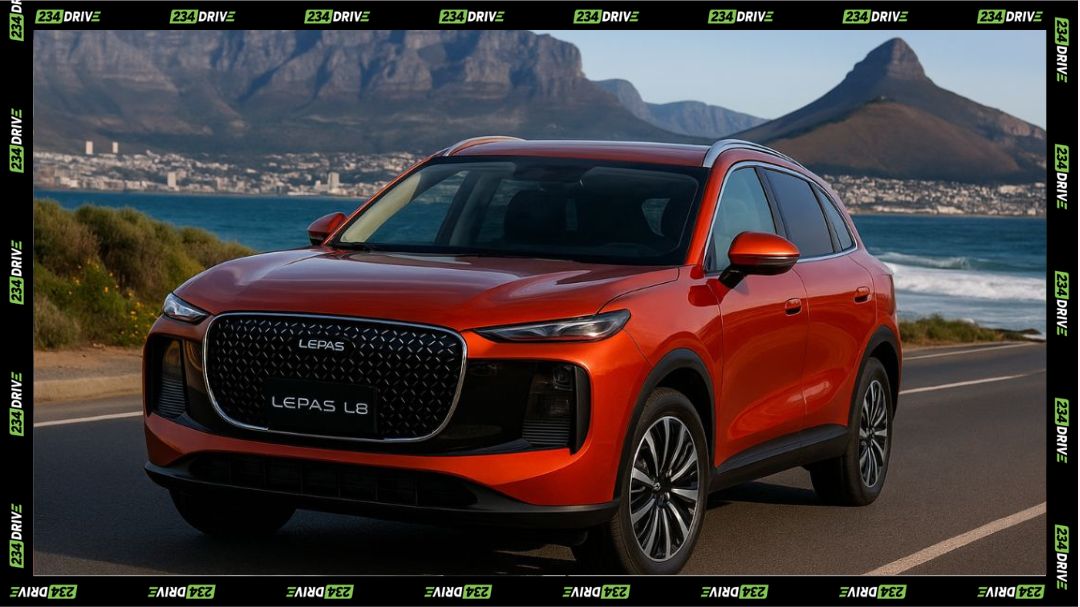
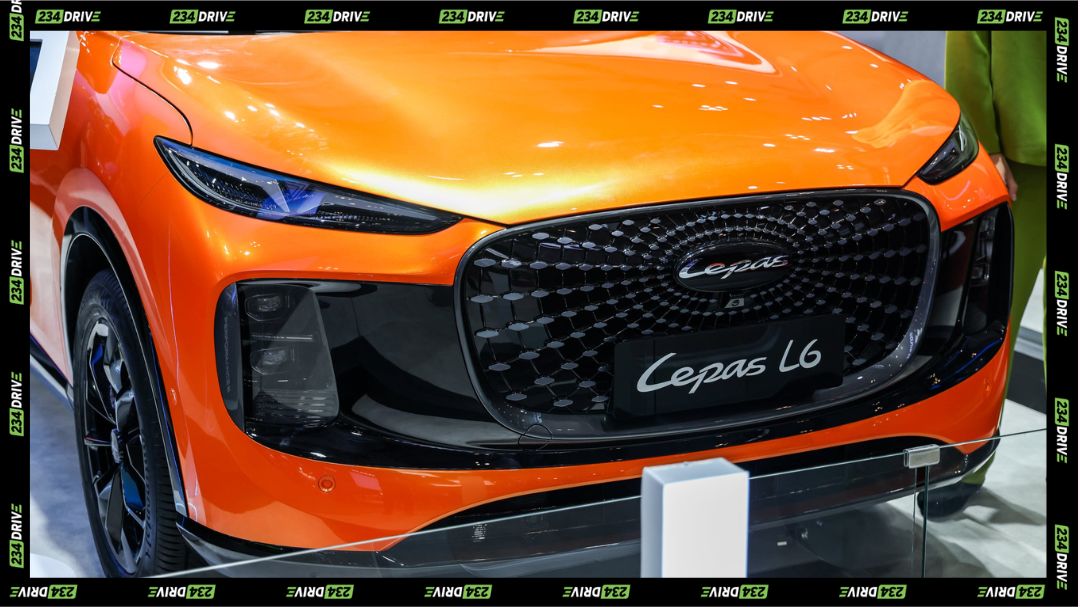
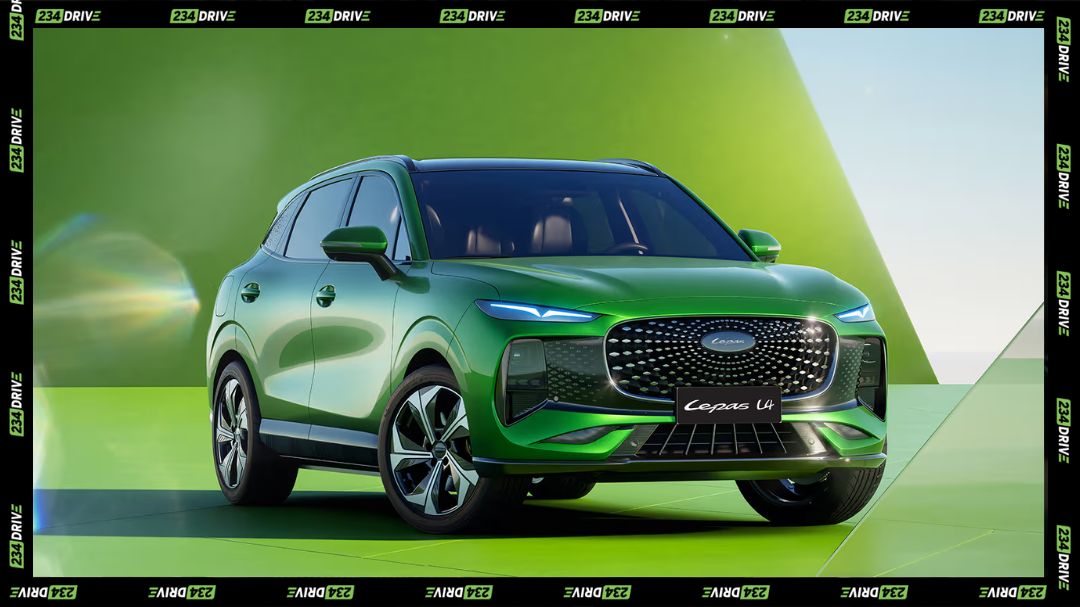
Occupying the mid-size and compact segments are the L6 and L4. The L6 focuses on spaciousness and urban sophistication, while the L4 acts as a compact crossover entry point. These models have already seen successful debuts in other territories, such as Lepas in South Africa, where they have been praised for their premium finishes. Both models will feature similar hybrid technology, with electric-only ranges estimated at up to 95 kilometres (WLTP), allowing the majority of British school runs and commutes to be completed without using a drop of petrol.
Strategic Leadership and Manufacturing Ambitions
Under the leadership of Country Director Farrell Hsu and Lepas UK Managing Director Ray Wang, the brand’s rollout involves a phased introduction that prioritises a robust retailer network. By the time Lepas launches, Chery’s existing UK dealer network is expected to have expanded to 100 locations, with Lepas models initially sharing showroom space with Omoda and Jaecoo to leverage existing customer footfall.
Beyond retail, Chery is actively pursuing an “in UK, for UK, be UK” strategy that could see local manufacturing become a reality. This vision is supported by high-level discussions between the UK government and Jaguar Land Rover (JLR) regarding the potential use of JLR’s Halewood facility. Simultaneously, Chery Commercial Vehicle (CCV) has confirmed it will establish its first European headquarters in Liverpool. This Merseyside hub will focus on research and engineering, similar to how other firms like Mitsubishi Fuso and REE are collaborating to innovate in the commercial vehicle space.
Market Momentum and Economic Context
Chery’s decision to double down on the UK market is strategically timed. Britain remains a unique stronghold for Chinese manufacturers due to the current absence of the heavy tariffs imposed on Chinese-made electric vehicles by the European Union and the United States. This regulatory environment has allowed Chery’s existing brands to scale at a pace never before seen in British history. Within just 18 months of Omoda’s launch in August 2024, the group’s momentum helped its collective market share surge to 5.3 per cent, marking the fastest rise from zero to five per cent in the history of the UK motor trade.
The numbers behind this expansion underscore a massive shift in consumer confidence. In 2025, Chery’s group sales exceeded 53,000 units, with Jaecoo alone accounting for over 28,000 registrations. To compete, traditional giants like Mercedes-Benz bets the farm on high-end software and premium user experiences to retain their market share against these aggressive newcomers.
Forward Outlook
As the number of Chinese automotive brands in the UK continues to climb, the arrival of Lepas signals a shift from novelty to market-defining volume. This expansion raises critical questions for the future: can traditional European manufacturers iterate fast enough to compete with a supply chain and technological pace that sees a new Chery vehicle sold overseas every 29 seconds?
The success of Lepas will likely determine whether the “in UK, for UK” philosophy can truly redefine British car manufacturing for the sustainable era, or if the market will simply become a battleground for international giants. With a planned R&D hub in Liverpool and a lineup designed to undercut premium rivals on price without sacrificing technology, Lepas is set to be the ultimate test of Chery’s global ambitions.