
If you’re a car owner, you’ve likely heard a hundred different opinions on catalytic converters. Some mechanics swear that removing a clogged one will make your car “breathe” better and save you a fortune at the pump. Others warn that the moment you cut it out, your fuel economy will plummet and your dashboard will light up like a Christmas tree.
The truth is, there isn’t a simple “yes” or “no” answer. To understand how your car’s fuel efficiency reacts to a missing or removed catalyst, we have to look at two very different scenarios based on the age of your vehicle and the health of the part itself.
What Does a Catalytic Converter Actually Do?
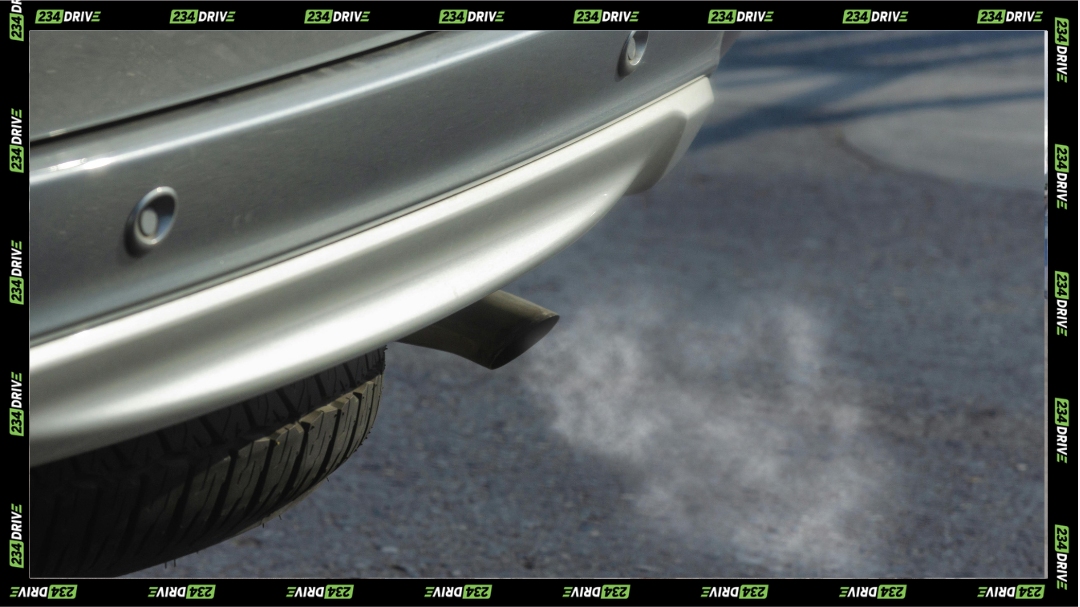
Before we dive into the fuel consumption debate, we need to understand the catalyst’s job. It’s not just a fancy piece of honeycomb metal in your exhaust. Its primary role is environmental: it converts toxic gases like carbon monoxide and nitrogen oxides into less harmful substances like carbon dioxide and water vapor before they exit your tailpipe.

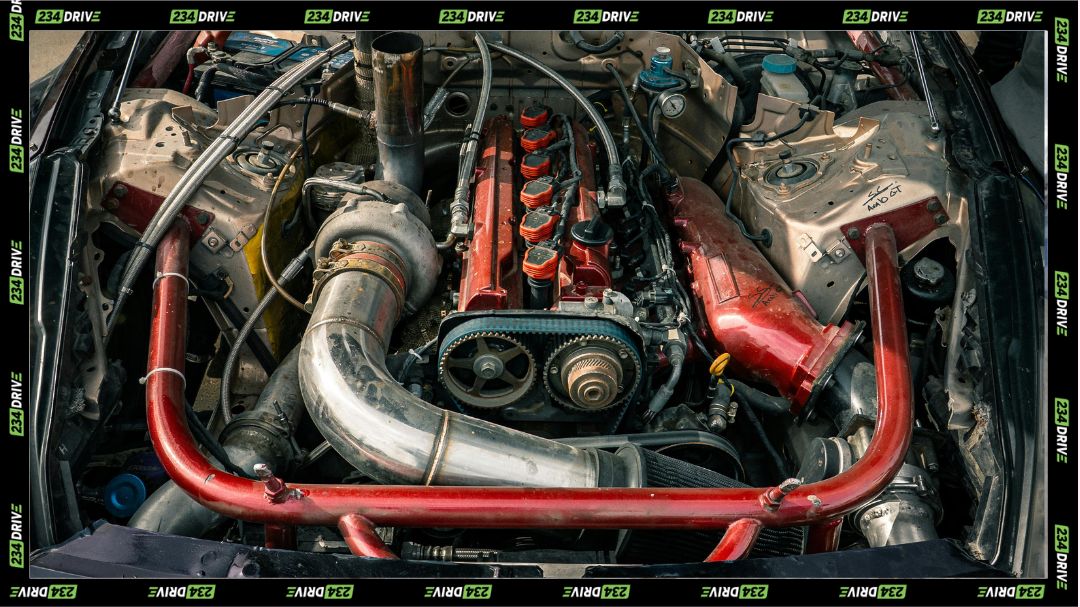
However, because it sits directly in the path of your exhaust flow, it has a physical relationship with your engine’s performance. A healthy catalyst allows the engine to “exhale” efficiently. A bad one? That’s where the trouble starts.
Scenario 1: The “Clogged” Catalyst (Mostly Older Cars)
For cars manufactured before 2006, the relationship between the engine and the exhaust system was relatively straightforward. These vehicles were designed with fewer electronic “handshakes” between the exhaust sensors and the engine control unit (ECU).
The Aging Process
As a car ages, the catalytic converter can become a victim of its own success. Over years of daily usage, carbon deposits, oil blow-by and leaded fuels can physically block the tiny passages in the ceramic honeycomb. This is what we call a clogged catalyst.
The Performance Hit
When a catalyst is blocked, it creates massive “back pressure.” Imagine trying to run a marathon while exhaling through a tiny straw—that is what your engine is doing. To compensate for the lack of airflow and the struggle to push exhaust out, the engine has to work harder, which naturally leads to increased fuel consumption.
The Removal Result
In this specific scenario, if you take out a clogged catalyst from an older car, you are removing a physical obstruction. Suddenly, the engine can breathe again. The back pressure disappears, the engine works less to expel waste, and counter-intuitively, your fuel consumption actually improves. In this case, removing the catalyst makes the car “better” only because the catalyst was already “broken.”
Scenario 2: The “Smart” System (Cars from 2007 and Newer)
Modern engineering changed the game. From roughly 2007 onwards, cars became significantly more “intelligent.” The catalytic converter is no longer just a passive filter; it is now a critical data point for your car’s “brain box” (the ECU).
The In-Sync System
In newer models, your catalyst is flanked by oxygen sensors (O2 sensors). One sensor measures the air-fuel mixture before it hits the catalyst, and another measures it after. The ECU compares these two readings to manage the car’s efficiency in real-time.
The Check Engine Light (CEL)
When you remove a healthy catalyst from a modern car, the sensors immediately detect that the exhaust chemistry is wrong. This triggers the Check Engine Light.
Many drivers think this light is just an annoying reminder about emissions, but it’s much more than that. When that light comes on because of a missing catalyst, the car’s “brain” realises something is fundamentally wrong with the efficiency loop.
The “Limp Mode” and Efficiency Drop
To protect the engine and ensure it keeps running, the ECU often defaults to a “safe” or “rich” fuel map. It stops fine-tuning the air-to-fuel ratio because it can no longer trust the data coming from the exhaust. Efficiency automatically drops, and the car begins to gulp more fuel than it ever did with the catalyst installed. In this scenario, removing a good catalyst increases your fuel consumption.
The Golden Rule: Healthy Catalyst = Healthy Consumption
The most important takeaway from this breakdown is that your car’s fuel efficiency is only as good as its weakest link.
- When you remove a good catalyst that is serving your car properly, you are breaking a synchronised system, causing your fuel consumption to increase.
- When you remove a bad (clogged) catalyst, you are removing a bottleneck, which allows your fuel consumption to return to normal (reduce).
Is Your Catalyst Clogged?
So, the question you should be asking isn’t just “Should I remove it?” but rather, “Is my catalyst healthy?”
Signs of a clogged catalyst include:
- A noticeable loss of power, especially when accelerating or going uphill.
- An engine that feels like it’s “stifled” or sluggish.
- A strange smell, often described as rotten eggs or sulfur, coming from the exhaust.
- The engine, running hotter than usual.
Conclusion
At the end of the day, the catalyst is there for a reason. While removing a clogged one might provide a temporary boost in fuel economy for an older vehicle, it isn’t a “hack” that improves performance for a healthy, modern car. In fact, for anything built in the last 15+ years, removing a functional catalyst is a surefire way to spend more money at the fuel station and deal with constant dashboard errors.
If you are experiencing high fuel consumption, don’t just assume the catalyst is the enemy. It might be trying to tell you something.