
The Jeep Grand Cherokee Trackhawk stands as a monumental achievement in automotive engineering, representing the absolute zenith of the internal combustion era’s obsession with power. Merging the rugged, utilitarian heritage of the Jeep brand with the unbridled ferocity of Dodge’s Hellcat powertrain, the Trackhawk was introduced in 2018 not merely as an SUV, but as a supercar disguised in family-friendly sheet metal. Although production ceased after the 2021 model year due to shifting industry priorities towards electrification, the Trackhawk remains a legend. It is defined by its heart: a supercharged 6.2-litre V8 engine that defied physics to propel a 2.4-tonne vehicle with the agility of a coupe.
In Kenya, the Trackhawk has transcended its status as a mere vehicle to become a cultural icon among automotive enthusiasts and the elite. It represents a specific moment in history—a time when raw horsepower was the primary metric of success. While official 2025 models from Jeep have pivoted towards more conventional V6 and electrified powertrains, the demand for this discontinued behemoth remains fervent in the local secondary market. For the Kenyan buyer, the Trackhawk is not just a mode of transport; it is a statement of dominance, offering a unique blend of daily drivability and earth-shattering performance that few other vehicles, past or present, can replicate.
The Jeep Grand Cherokee Trackhawk (2018-2021)
Exterior Design and Road Presence
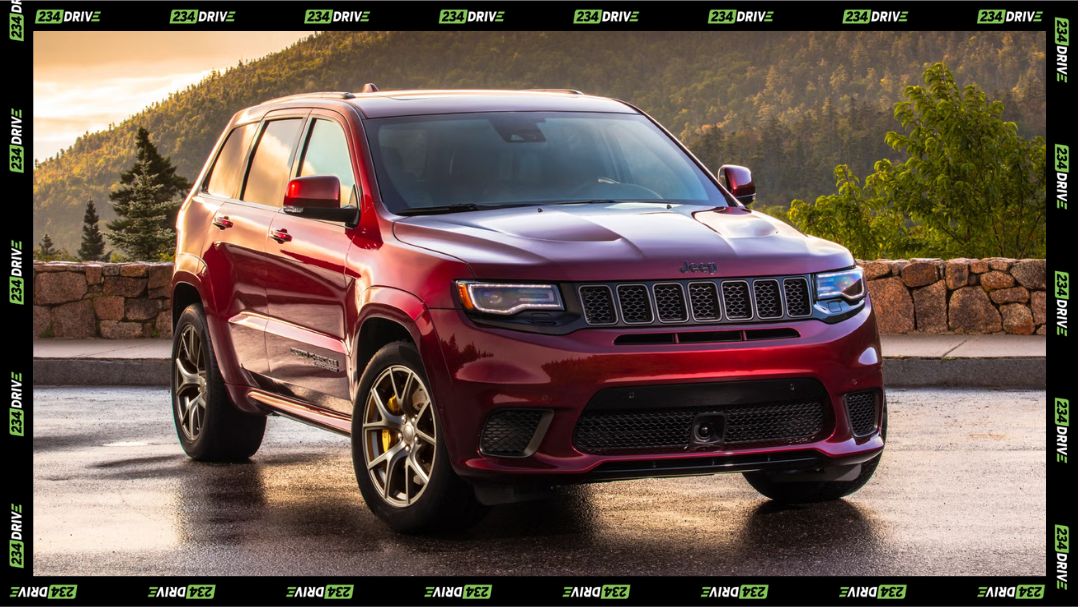
At a glance, the Trackhawk exercises a degree of restraint that belies its capabilities, famously known as a “sleeper” among the uninitiated. However, to the keen eye, the aggressive cues are unmistakable. The exterior is distinguished by the deletion of fog lights to accommodate massive air intakes needed to cool the supercharger, a sculpted bonnet with dual heat extractors, and quad black chrome exhaust tips that announce its arrival long before it comes into view. Sitting on 20-inch alloy wheels wrapped in Pirelli Scorpion Verde tyres, the vehicle commands a muscular stance without resorting to the over-the-top styling sometimes seen in aftermarket modifications.
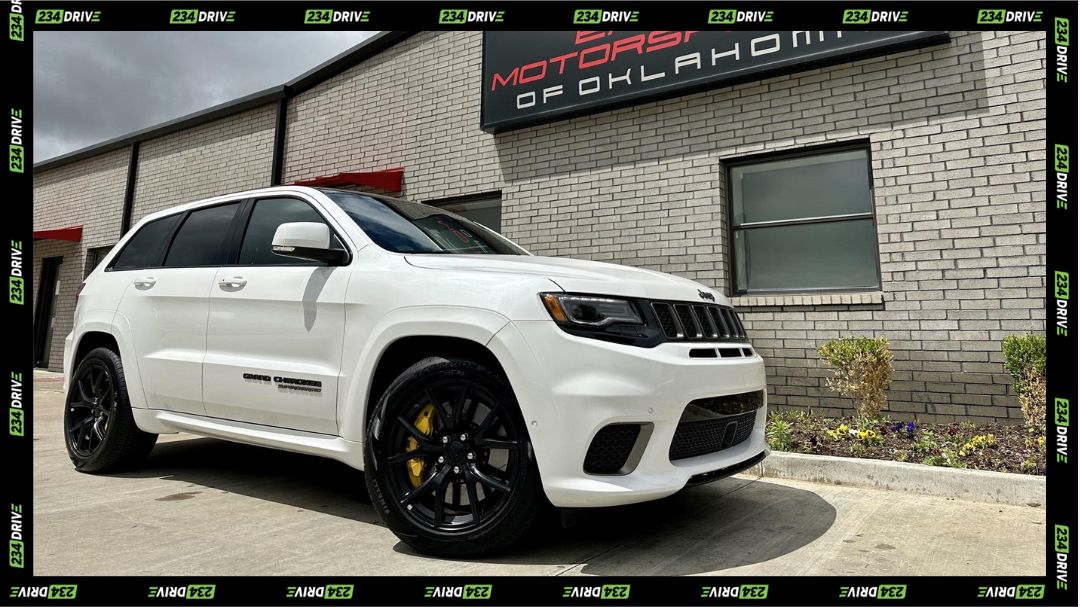
On Kenyan roads, the Trackhawk’s presence is intimidating yet sophisticated. It lacks the flamboyant wings of a Lamborghini Urus, allowing it to blend into the upscale traffic of Nairobi’s Westlands or Karen suburbs, yet it possesses enough menace to clear the fast lane on the Thika Superhighway. The build quality of the exterior, particularly on recent imports from Japan or the UK, typically holds up well, with deep paint finishes and robust panel alignment. For the owner, the car strikes a balance between flying under the radar and earning instant respect from those who understand what the “Supercharged” badge on the door implies.
Interior Comfort, Technology, and Performance
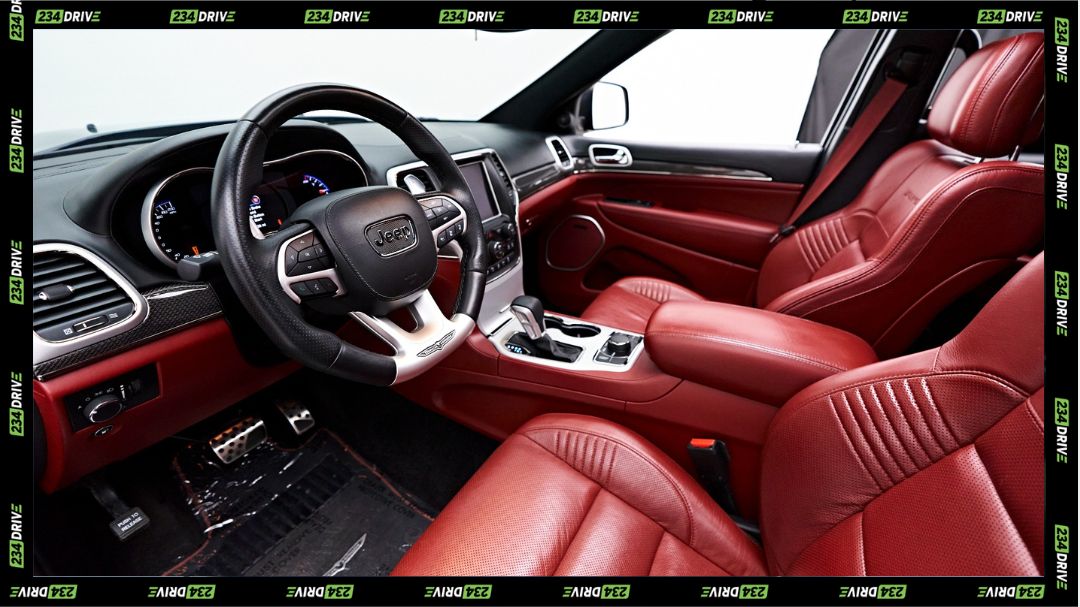
Inside, the Trackhawk attempts to reconcile its blue-collar Dodge roots with its premium price tag. The cabin is driver-focused, featuring a flat-bottomed steering wheel and deeply bolstered Nappa leather and suede seats, which are heated and ventilated to cope with Nairobi’s variable weather. The centrepiece is the 8.4-inch Uconnect infotainment system, widely regarded as one of the most user-friendly interfaces in the industry, supporting Apple CarPlay and Android Auto. While the material quality—specifically some hard plastics on the lower dash—may not rival the bespoke feel of a Bentley, the functionality is undeniable. It remains a practical five-seater with 36 cubic feet of cargo space, ensuring that family duties are never compromised for speed.
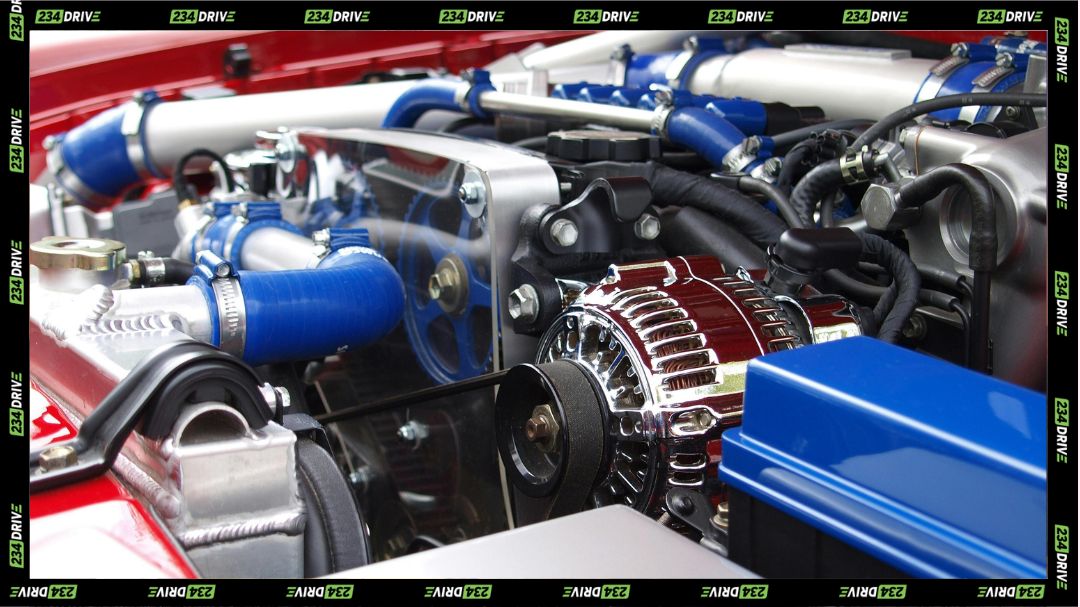
Performance is where the Trackhawk dissolves all logical arguments against it. The 6.2-litre supercharged HEMI V8 generates a staggering 707 horsepower and 645 lb-ft of torque. In testing, this catapults the SUV from 0 to 60 mph in just 3.5 seconds, with a top speed of 180 mph. The experience of full-throttle acceleration in a vehicle of this size is visceral, accompanied by the signature whine of the supercharger. To manage this power, Jeep equipped it with a reinforced 8-speed automatic transmission and a Quadra-Trac on-demand 4WD system. Crucially, massive 15.75-inch Brembo brakes—the largest ever fitted to a Jeep—provide the necessary stopping power, a critical safety feature and spec given the kinetic energy this vehicle generates.
Suitability for the Kenyan Environment
Owning a Trackhawk in Kenya requires a unique tolerance for practical challenges. The vehicle’s suspension, which features adaptive damping, is tuned for performance. While the “Auto” mode offers a semblance of comfort, the ride is undeniably stiffer than a standard Grand Cherokee or a Range Rover, meaning Nairobi’s potholes and speed bumps will be felt more acutely. Ground clearance is lower than standard Jeep models, so off-roading capability is limited to gravel tracks rather than deep mud or rock crawling. However, the all-wheel-drive system provides exceptional traction during the rainy seasons, ensuring safety and stability on slick tarmac.
The most significant consideration for the Kenyan owner is fuel and maintenance. With a fuel economy rating of roughly 11 mpg in the city (approx. 4.7 km/l), the Trackhawk is voracious. Long-distance trips to Mombasa or Kisumu require careful planning around fuel stops, and the engine demands premium octane fuel to prevent knock and maintain performance, which can be inconsistent to find outside major cities. Maintenance is another hurdle; the high-stress components like the supercharger, transmission, and braking system require specialised attention. Owners must rely on high-end service centres with specific experience in Mopar performance vehicles rather than general mechanics. Despite these hurdles, the sheer thrill of ownership often outweighs the logistical costs for the dedicated enthusiast.
Market Comparison and Competitors
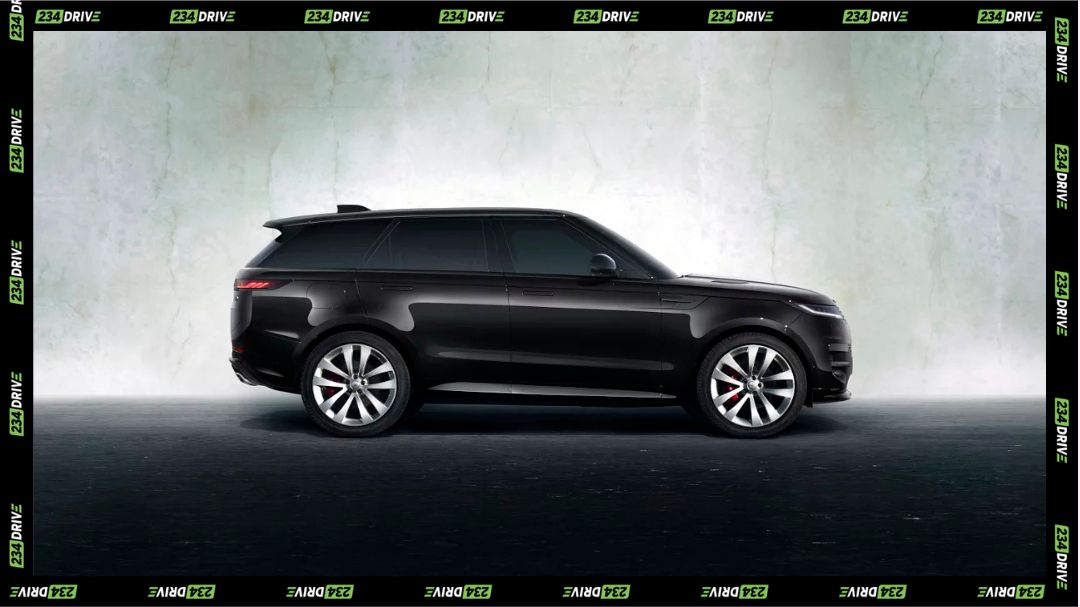
In the high-performance SUV segment, the Trackhawk occupies a unique niche regarding value and brute force. Its primary rivals include the Range Rover Sport SVR, the BMW X5 M, and the Porsche Cayenne Turbo. When comparing online marketplaces, a used Trackhawk (2018-2020) in Kenya typically commands between KES 12 million and KES 20.3 million. In contrast, a similar year Range Rover Sport SVR often trades at a premium due to the brand’s perceived luxury status in Kenya, despite being slower in a straight line. The BMW X5 M offers sharper cornering dynamics and a more luxurious interior, but often comes with higher depreciation rates and equally complex maintenance requirements.
Durability and resale value are surprising strong points for the Jeep. Because the Hellcat engine is over-engineered and widely used in the US, the powertrain is remarkably robust if left unmodified. In the Kenyan market, the Trackhawk has appreciated in desirability since its discontinuation, holding its value better than many European contemporaries that suffer from “planned obsolescence” stigma. While it may lack the badge snobbery of a Porsche, it counters with unmatched straight-line performance per shilling. For buyers looking at the 2025 landscape where new options are increasingly hybridised and muted, the raw, mechanical charisma of the Trackhawk makes it a sought-after collectible rather than just a used car.
Conclusion
The Jeep Grand Cherokee Trackhawk is a dinosaur in the best possible sense—a loud, proud, and unapologetically powerful machine that marks the end of an era. Its strengths lie in its hilarious performance figures, surprising practicality, and the joy it elicits every time the starter button is pressed. While it demands compromise in terms of ride comfort and fuel efficiency, and requires a dedicated budget for maintenance, it rewards the owner with a driving experience that is becoming extinct.
For the Kenyan buyer with the means to feed it, the Trackhawk serves as the ultimate express transport, capable of embarrassing supercars at a set of lights while carrying the family luggage. It is possibly the fastest SUV in the country available on the used market today. As the automotive world turns towards silence and efficiency, the roar of the Trackhawk’s V8 serves as a thunderous reminder of what happens when engineers are allowed to break the rules. It is not a car for everyone, but for the few who understand it, there is simply no substitute.