
The sudden exit of Volvo’s most affordable electric vehicle from the American market signals a significant shift in the automotive landscape, where trade policy and subsidy rollbacks are now dictating product lifecycles more than consumer demand.
Volvo Car USA has officially confirmed that it will discontinue sales of both the EX30 and the EX30 Cross Country in the United States following the 2026 model year. This decision marks one of the shortest lifespans for a modern vehicle in the region, with the compact SUV having only arrived for the 2025 model year. While the vehicle remains a core pillar of Volvo’s strategy in the United Kingdom, Europe, Canada and Mexico, the specific financial and political climate in the United States has rendered the model’s presence there untenable for the Swedish automaker.
The timeline for the withdrawal is aggressive. American retailers were formally notified of the decision on 13 March 2026 and the final window for customer orders closes on 20 March 2026. Volvo intends to fulfil all existing orders and maintain its pipeline until production for the US market winds down completely at the end of the summer of 2026. Although dealer inventory may persist into the latter half of the year, no further units will be allocated to the American market after the current production cycle concludes in Ghent, Belgium.
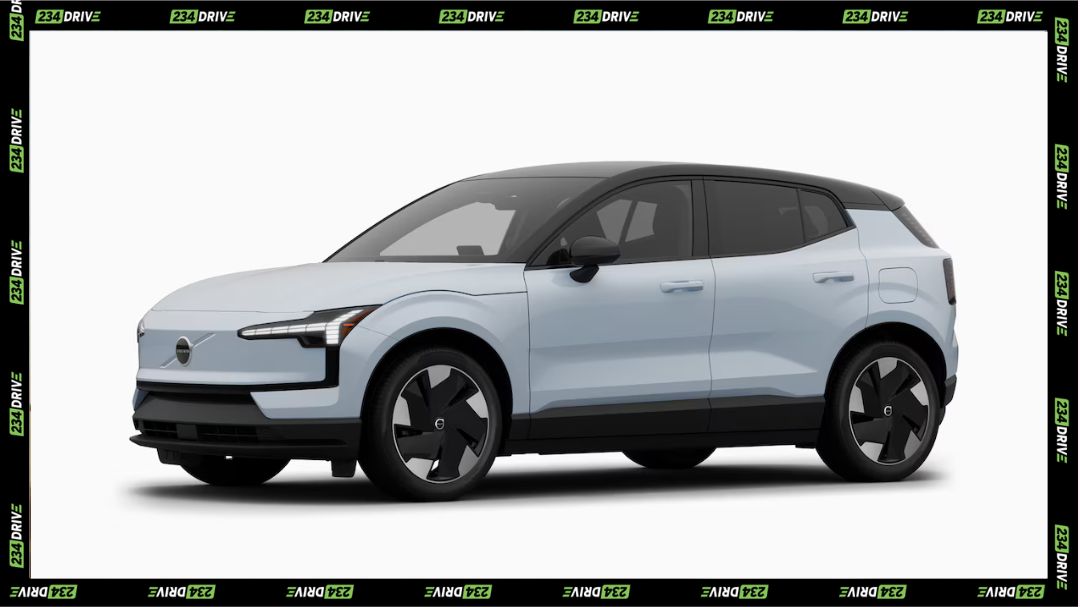
The primary catalyst for this departure is a “perfect storm” of tariff escalations and the loss of critical financial incentives. Originally designed to be built in China to hit a sub-$35,000 price point, the EX30 was immediately hampered by a 100% tariff on Chinese-made electric vehicles. To salvage the US launch, Volvo shifted production to its facility in Ghent, only to be met by a subsequent 25% blanket tariff on all imported vehicles. When combined with the elimination of the tax credit in late 2025, the EX30’s value proposition collapsed; a car intended to democratise luxury electric mobility saw its starting price swell to over $40,000, with higher trims nearing $50,000.
Sales performance data reflects this pricing struggle. Throughout the 2025 calendar year, Volvo sold 5,409 units of the EX30 in the US, representing roughly 4.4% of its total domestic volume. However, the momentum was fragile. In September 2025, the final month the federal tax credit was active, the model moved 542 units. By the following month, sales plummeted to just 184 units and never recovered to their peak levels. This sharp decline underscored that the American compact SUV buyer is highly sensitive to price and incentive availability, particularly when compared to the larger, more established segments.
Structurally, the EX30’s exit creates a notable void in Volvo’s entry-level offering. The gap in the electric lineup now jumps to the EX40, which carries a significantly higher starting price, leaving the brand without a dedicated “gateway” model for younger, urban-focused buyers. Despite this, Volvo remains committed to its goal of a fully electric lineup by 2030. The company is pivoting its US strategy toward higher-margin, domestically produced vehicles like the three-row EX90 and the upcoming mid-size EX60, both of which are manufactured in South Carolina and are better shielded from the volatility of international trade policy.
This move is not an isolated incident but rather part of a broader industry trend within the United States. Other manufacturers have recently scaled back or cancelled entry-level electric initiatives, such as the revised Chevrolet Bolt and Honda’s 0-Series, as they grapple with the same combination of high production costs and shifting regulatory environments. The departure of the EX30 suggests that the “affordable EV” remains an elusive target in the US market, as manufacturers find it increasingly difficult to protect margins on smaller vehicles without the support of stable government subsidies.
Ultimately, the EX30’s short-lived American journey serves as a case study in the risks of global supply chain reliance. While the vehicle earned critical acclaim for its performance and minimalist design, its technical merits could not overcome the financial weight of three separate layers of trade barriers. For now, the model stands as a reminder of a briefly held ambition to bring a premium, compact electric SUV to the American masses—an ambition that has, for the time being, been redirected toward more profitable, larger-scale horizons.