
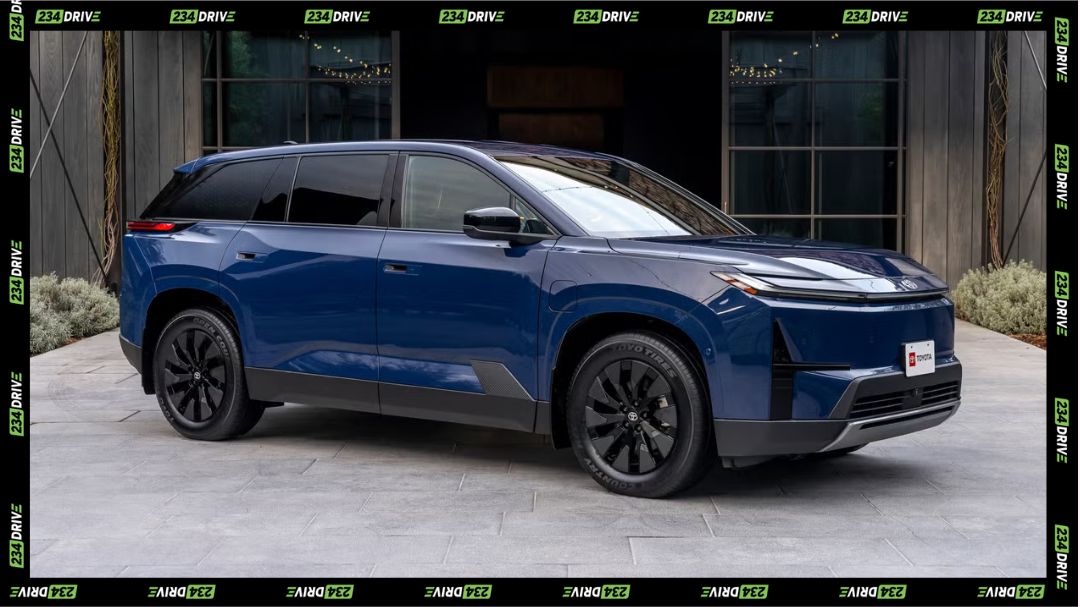
The automotive giant Toyota, long the undisputed champion of the hybrid-first strategy, has officially signalled a seismic shift in its global product hierarchy with the 2027 Highlander EV. This model is a fundamental “reboot” of a nameplate that has defined the mid-size family SUV segment for over two decades. By transitioning the Highlander, a vehicle synonymous with petrol-electric efficiency into a fully electric flagship, Toyota is directly addressing critics who argued the company was lagging in the battery-electric race. This move, spearheaded by CEO Koji Sato, marks the transition of the company’s multi-pathway strategy from a theoretical framework into a high-stakes market reality.
The announcement centres on a vehicle built from the ground up on a dedicated electric architecture, likely an evolved version of the e-TNGA platform or the company’s next-generation modular EV hardware. The 2027 Highlander EV is expected to be a global product, though its primary theatre of operations will be North America and Europe, where demand for three-row family transporters remains insatiable. With a multi-billion-pound investment underpinning the rollout, Toyota is targeting a production timeline that sees the first units rolling off assembly lines in late 2026. This is not a niche experiment like the low-volume bZ4X, but a concentrated effort to secure a dominant share of the family EV market, currently contested by the likes of the Kia EV9 and the Tesla Model Y.
From a technological perspective, the Highlander EV is designed to eliminate the compromises often associated with early-generation electric SUVs. The vehicle is anticipated to feature a dual-motor all-wheel-drive system as standard on higher trims, delivering between 300 and 400 horsepower. Battery technology is another area of intense focus, with Toyota aiming for a competitive range of 300 to 400 miles on a single charge. By utilising a dedicated EV platform, engineers have been able to optimise the interior layout, providing a completely flat floor and significantly more legroom in the third row than the current petrol-hybrid model. Early leaks and specs suggest that the integration of advanced software, including AI-driven safety systems and over-the-air update capabilities, ensures that the vehicle remains technologically relevant long after it leaves the showroom.
Signature Features and Design Philosophy
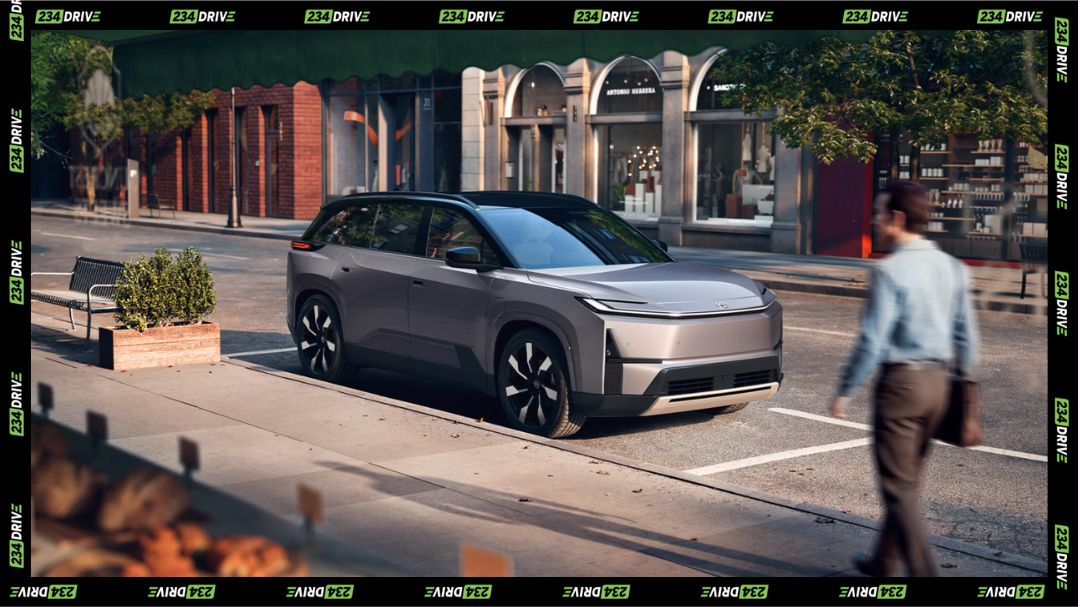
The exterior of the 2027 Highlander EV moves away from the rugged, blocky aesthetic of its predecessors in favour of a sleek, “aero-efficient” silhouette. Key features include a completely closed front fascia to reduce drag, active grille shutters that open only when the battery requires cooling, and flush-mounted door handles. These design choices are not merely aesthetic; they are critical for achieving the vehicle’s targeted drag coefficient, which is expected to be amongst the lowest in the three-row SUV class. The lighting signature has also been reimagined, featuring ultra-slim LED matrix headlights and a full-width rear light bar that serves as a functional indicator of the vehicle’s state of charge during plug-in sessions.
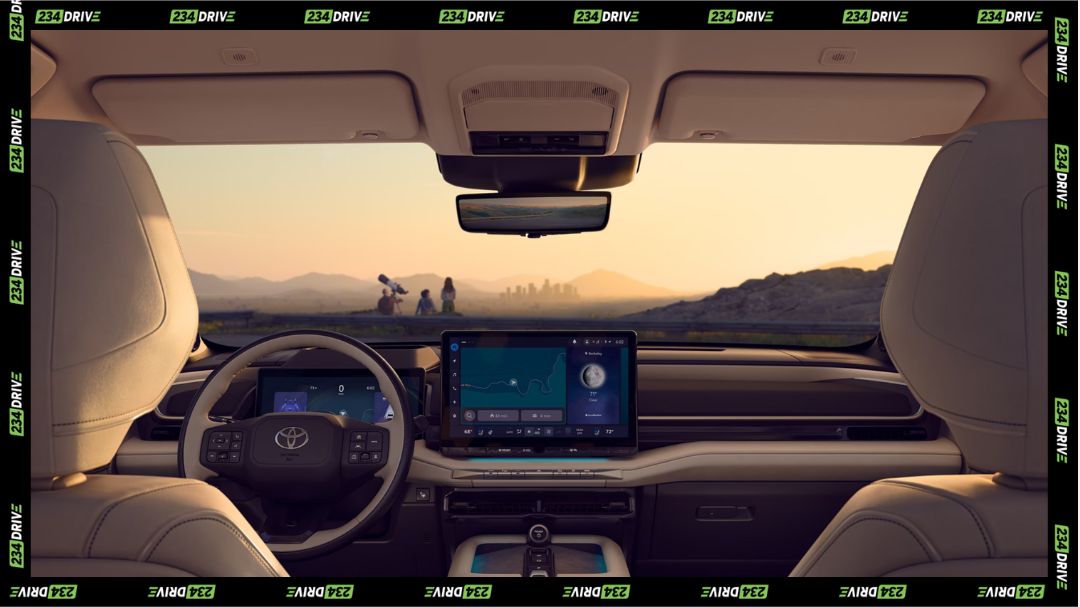
Inside, the “reboot” is even more apparent. The cabin features a revolutionary “Open Sky” panoramic glass roof that stretches across all three rows, creating a sense of airiness rarely found in traditional SUVs. The primary interface is a massive 15-inch landscape-oriented touchscreen that controls everything from the tri-zone climate settings to the cloud-based navigation. For drivers, a customisable 12.3-inch digital instrument cluster is supplemented by an augmented reality head-up display (AR-HUD), which projects navigation prompts and safety warnings directly onto the windscreen. Practicality remains a priority, with the inclusion of a “frunk” (front trunk) for charging cables and small luggage, and a versatile second-row “Executive Lounge” configuration that offers heated, ventilated, and massaging captain’s chairs.
Practical family utility is enhanced by the introduction of Vehicle-to-Load (V2L) technology. This feature allows the Highlander EV to act as a massive mobile power bank, capable of powering external appliances such as electric grills, coffee makers, or even power tools via standard UK and US-style sockets located in the boot and the second row. For safety, the vehicle debuts Toyota Safety Sense 4.0, which incorporates high-resolution LiDAR sensors to provide enhanced semi-autonomous driving capabilities on motorways. This system includes an advanced “Emergency Driving Stop System,” which can safely pull the vehicle to the shoulder and alert emergency services if it detects driver incapacitation.
The roles within this massive industrial undertaking are clearly defined: Toyota’s Japanese headquarters manages the overarching engineering and battery chemistry, while the North American manufacturing hubs handle the high-volume assembly. Much of this is bolstered by significant investments in Indiana, a move that is crucial for securing the supply chain and ensuring the vehicle qualifies for regional green energy incentives. Furthermore, the partnership with Panasonic and Toyota’s own burgeoning battery plants in North Carolina will power these vehicles, creating a vertically integrated ecosystem designed to insulate the company from geopolitical volatility.
This move signals a profound business strategy shift for Toyota. For years, the company’s leadership, including former chairman Akio Toyoda, expressed healthy scepticism regarding a premature total pivot to electric vehicles. However, under Koji Sato, the organisation has adopted an “EV-first” mindset for its development processes without abandoning the hybrid technologies that remain its profit engine. According to Sato’s earnings call, the Highlander EV is the bridge between these two worlds. It allows Toyota to enter the high-margin, large-SUV electric segment while the Grand Highlander and standard hybrid variants continue to serve customers in regions where charging infrastructure remains underdeveloped.
When compared to the global market, the Highlander EV enters a landscape that is both crowded and cooling. In regions like China, local manufacturers have already deployed three-row EVs at aggressive price points, while in Europe, the pace of EV adoption has plateaued. Contrast this with the execution of competitors like Kia, whose EV9 went from concept to full-scale global deployment in less than 24 months, clearing certifications and winning multiple “Car of the Year” awards. Industry experts suggest Toyota’s response is more deliberate, focusing on its peerless reputation for “Quality, Durability, and Reliability” (QDR) to win over pragmatic families who may be wary of the build quality of newer EV startups.
Toyota’s track record provides a formidable foundation for this launch. Having sold over 20 million hybrids globally, the company possesses more real-world data on battery degradation and electric motor longevity than any other carmaker. This expertise is being poured into the Highlander EV’s energy management systems, which are expected to offer industry-leading thermal stability and regenerative braking efficiency. The company’s milestone of reaching carbon neutrality by 2050 hinges on the success of core models like this, which must prove that an electric Toyota can be just as dependable as the petrol-powered Land Cruisers and Corollas that built the brand’s legend.
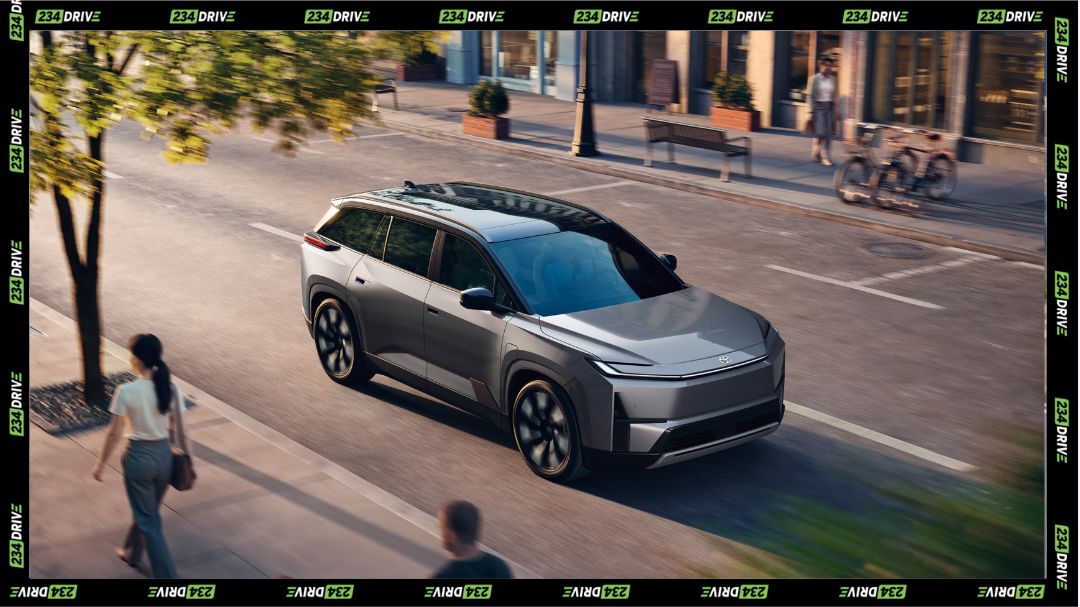
As the industry moves from the initial “hype” phase of electrification into a period of fleet-scale operations and mass-market adoption, the 2027 Highlander EV will be the ultimate test of Toyota’s brand equity. The shift from a hybrid-dominated lineup to a diversified EV offering represents the most significant organisational challenge in the company’s history. It forces a rethink of everything from dealership service bays to the way vehicles are designed for aerodynamics. Ultimately, this launch marks the moment Toyota stops playing defence in the electric vehicle narrative and begins to set the pace for the family SUV of the future.
This transition from a cautious observer to a primary protagonist in the electric sector invites a broader question about the future of family transport. As manufacturers like Toyota successfully solve the range and performance puzzles of the three-row SUV, the focus must inevitably shift toward the surrounding environment. Should regulators and governments now treat the roll-out of high-speed charging networks as essential public infrastructure, similar to motorways and water mains, to match the pace of adoption that models like the Highlander EV are poised to trigger?