
The Toyota C-HR (Coupe High-Rider) has carved a distinct niche in Kenya’s automotive landscape, emerging as a stylish, compact crossover that defies the conservative design language typically associated with the brand. Introduced globally in 2016 and gaining traction locally through the used import market, the C-HR blends the agility of a hatchback with the elevated stance of an SUV. It appeals primarily to urban professionals and young families in Nairobi and Mombasa who prioritize aesthetics and fuel efficiency over the sheer utility of larger models like the Land Cruiser Prado. As of early 2026, the model’s reputation for reliability, combined with Toyota’s extensive service network, makes it a compelling choice for those navigating the balance between city traffic and weekend getaways.
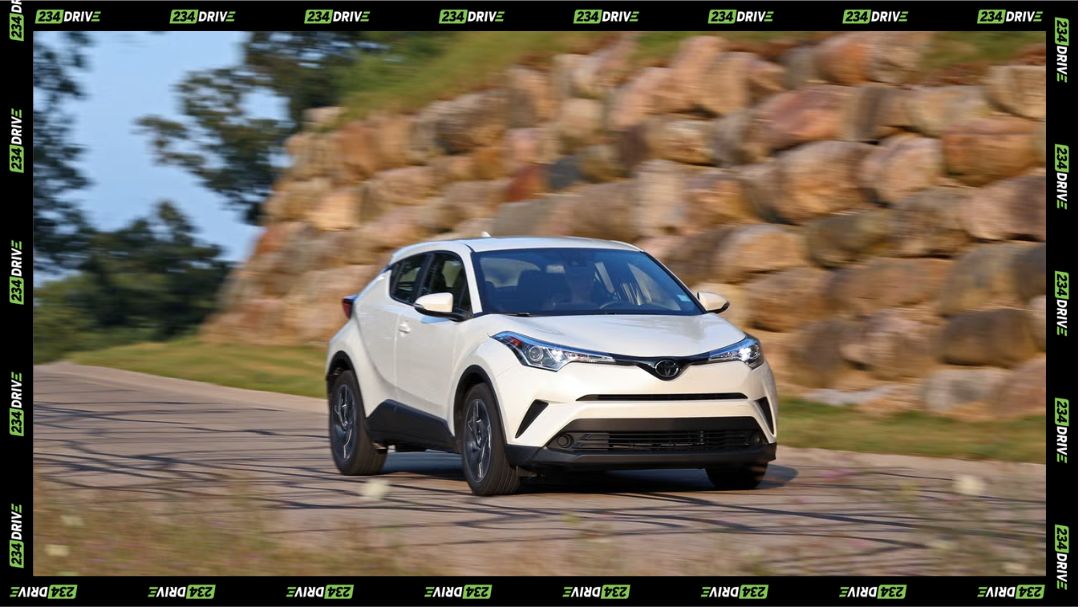
In the Kenyan market, the C-HR is predominantly available as a used import from Japan or the UK, with the 2017 to 2021 model years being the most common. While official new sales through authorised dealers like CFAO Mobility remain sporadic and focused on specific corporate orders, the secondary market is vibrant. The vehicle’s futuristic design—characterised by sharp lines, a coupe-like roofline, and hidden rear door handles—turns heads, but it is the hybrid powertrain that seals the deal for many. With fuel prices fluctuating and the cost of living rising, the C-HR’s promise of economic motoring without sacrificing style has positioned it as a smart, forward-thinking investment.
The Toyota C-HR (2017-2021 and Beyond)
Exterior Design and Road Presence
The Toyota C-HR is arguably one of the most daring designs to come out of the Japanese automaker’s stables in recent decades. Built on the Toyota New Global Architecture (TNGA) platform, it features a “diamond” design motif visible in its faceted bodywork and angular wheel arches. The front fascia is aggressive, with sleek LED headlights that wrap around the corners, while the rear features boomerang-shaped taillights and a roof spoiler that emphasises its sporty intentions. In a sea of boxy SUVs on Kenyan roads, the C-HR stands out as a piece of modern art, often fitted with 17 or 18-inch alloy wheels that enhance its planted stance.
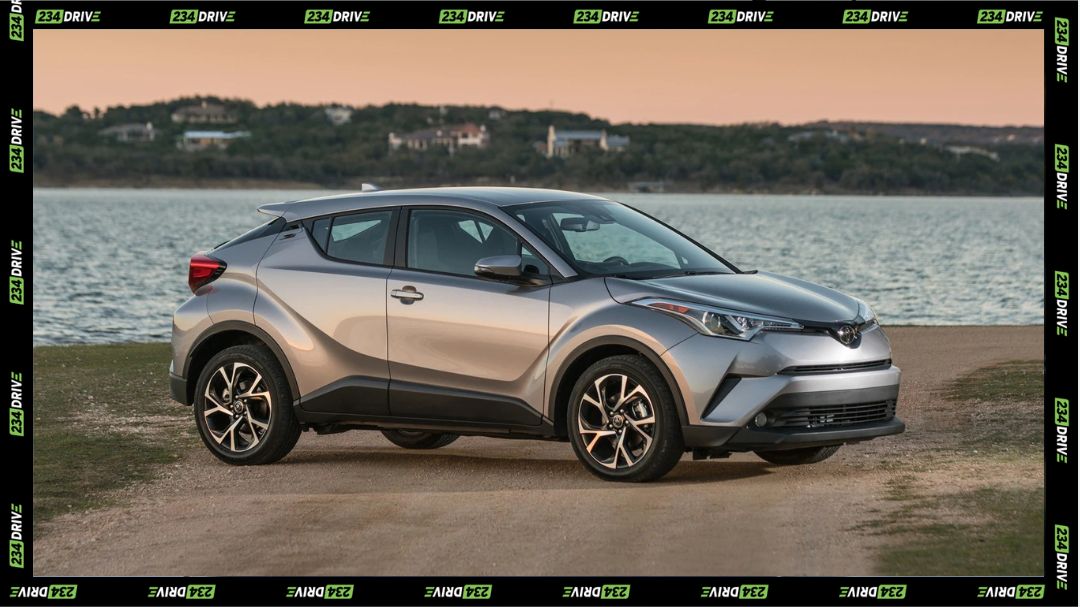
However, this bold design comes with practical trade-offs. The sloping roofline, while visually striking, creates massive C-pillars that can limit rear visibility—a common complaint amongst owners manoeuvring in tight Nairobi parking lots. Despite this, the car’s presence is undeniable. Whether parked outside a Westlands office block or cruising along the Thika Superhighway, the C-HR projects an image of sophistication. For 2026, while a fully electric version exists globally with a 290-mile range, the Kenyan market remains dominated by the facelifted first-generation models, which continue to look fresh and relevant against newer competitors.
Interior Comfort, Technology, and Performance
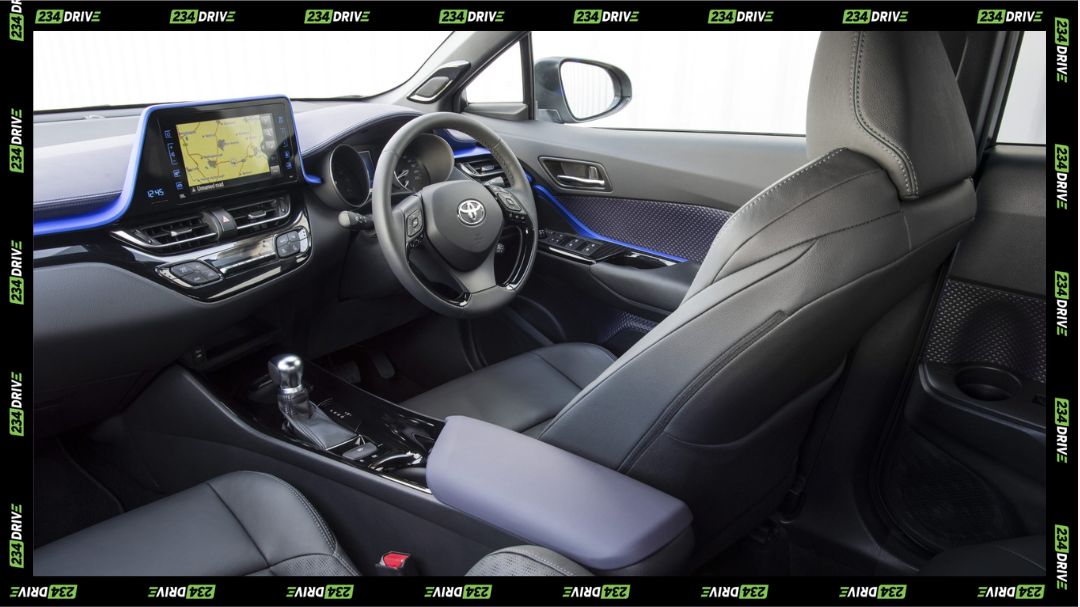
Inside, the C-HR continues the trend of defying Toyota norms with a driver-focused cockpit that feels premium and tech-laden. The dashboard is dominated by an 8-inch touchscreen infotainment system that sits high for easy visibility, supporting Android Auto and Apple CarPlay in later models. Soft-touch materials cover the upper surfaces, and the “diamond” theme repeats on the headliner, door panels, and even the climate control buttons. While the front passengers enjoy ample legroom and supportive seats, the rear quarters can feel slightly claustrophobic due to the high beltline and small windows, making it less ideal for passengers prone to motion sickness or large families.
Under the bonnet, the star of the Kenyan market is undoubtedly the 1.8-litre hybrid powertrain (2ZR-FXE). Generating a combined output of 121 horsepower, it is not built for drag racing but for efficiency, achieving an impressive 24–28 km/l. This is a game-changer for daily commuters dealing with Nairobi’s notorious traffic jams, where the electric motor takes over during crawl speeds, saving fuel and reducing emissions. Alternatively, a 1.2-litre turbo petrol variant is available, offering a punchier drive with 114 hp and 185 Nm of torque, though it sacrifices some fuel economy (averaging 15–18 km/l). Both engines are typically paired with a CVT automatic transmission that prioritises smoothness over sporty shifts.
Suitability for the Kenyan Environment
Owning a Toyota C-HR in Kenya requires a pragmatic assessment of your driving environment. The vehicle offers a ground clearance of approximately 150–160 mm, which is sufficient for urban speed bumps and well-maintained dirt roads but falls short of “true” SUV standards. It is not designed for heavy off-roading in the Mara or navigating deep ruts in rural shags; owners attempting this risk damaging the low-hanging front bumper or undercarriage. However, for the urban jungle, it is perfectly sized—compact enough (4.36 meters long) to squeeze into tight matatu-filled gaps, yet substantial enough to feel safe on the highway.
The economic argument for the C-HR is its strongest suit. With pump prices for Super Petrol hovering around KSh 184 per litre, the hybrid variant’s efficiency essentially halves the fuel bill compared to a standard 2.0L SUV. Maintenance is another pro; despite its complex looks, it shares many mechanical components with the Toyota Prius and Corolla, meaning parts are relatively accessible, and technicians are familiar with the hybrid system. Import duties remain a significant cost factor, adding 60-80% to the vehicle’s value, but the long-term savings on running costs often justify the initial outlay.
Market Comparison and Competitors
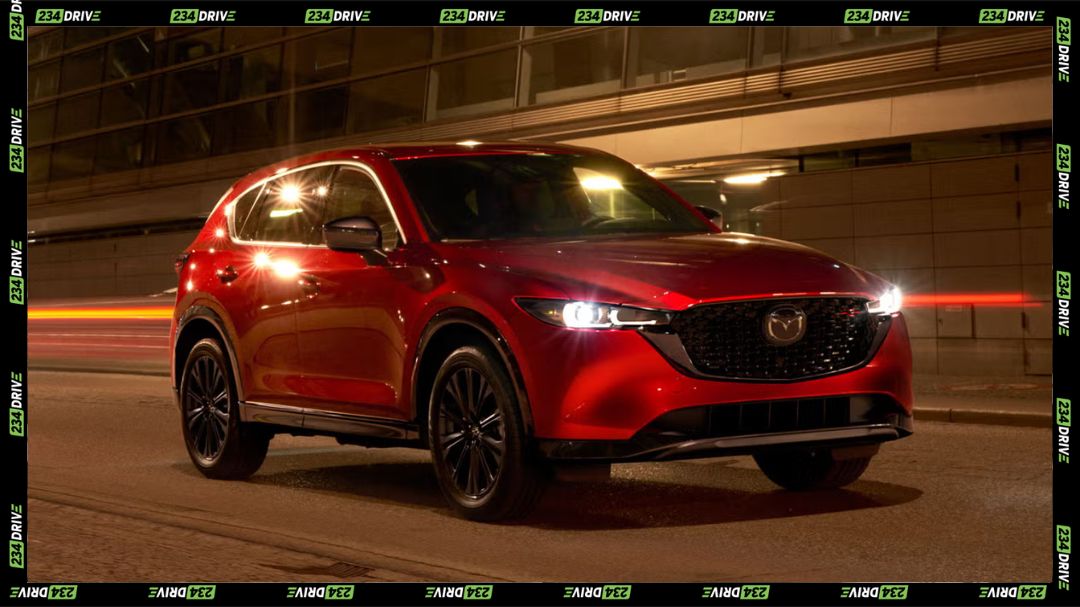
In the subcompact crossover segment, the C-HR faces stiff competition, primarily from the Honda Vezel (HR-V) and the Nissan Juke. The Honda Vezel is its fiercest rival, offering superior interior space and Toyota-rivalling reliability. While the Vezel’s “Magic Seats” make it more practical for hauling cargo, the C-HR wins on driving dynamics and exterior styling. The Nissan Juke is often cheaper and sportier to drive but lacks the refined hybrid efficiency and resale value retention of the Toyota. Other contenders like the Mazda CX-5 offer a more premium interior feel but suffer from an even more cramped rear seat and smaller boot space (377 litres in the C-HR vs. roughly 350 litres in the CX-5).

Pricing for the C-HR reflects its desirability. Used models from 2017 to 2018 typically range between KSh 2.9 million and KSh 3.2 million, while newer 2021+ imports can fetch upwards of KSh 4.2 million. This places it at a premium compared to a locally used Nissan Juke but on par with a high-spec Honda Vezel. For buyers looking to verify the current Toyota C-HR price in Kenya, it is advisable to compare across multiple dealers, as mileage and trim levels (such as the G-LED edition) can drastically affect the asking price.
Conclusion
The Toyota C-HR represents a shift in consumer preference in Kenya, proving that a car does not need to be a massive 4×4 to be desirable. It successfully bridges the gap between the efficiency of a hatchback and the style of an SUV, making it an ideal companion for the modern Kenyan driver. Its hybrid technology is a perfect match for the current economic climate, offering relief at the pump without the range anxiety associated with pure EVs in a market where charging infrastructure is still developing.
For those considering this futuristic crossover, the key lies in defining your needs. If maximum cargo space and off-road capability are non-negotiable, a Subaru Forester or Toyota RAV4 might be better suited. However, if you seek a reliable, head-turning daily driver that is kind to your wallet, the C-HR is hard to beat. Prospective buyers should browse current listings to find a unit that matches their budget and specification. For financing, many local institutions offer competitive car loan products that can help put you behind the wheel of this hybrid trendsetter.