
Rolls-Royce is preparing to redefine the pinnacle of high-sided luxury once again as its second fully electric model begins to break cover during intensive development phases. Following the global acclaim of the Spectre coupe, the British marque has shifted its focus to a segment it currently dominates with the petrol-powered Cullinan: the ultra-luxury SUV. Recent sightings of a heavily camouflaged prototype undergoing rigorous trials suggest that the Goodwood-based manufacturer is fast-tracking a battery-powered companion—or eventual successor—to its best-selling model, ensuring its presence remains unchallenged as the industry pivots away from the internal combustion engine.
The first glimpse of this significant addition to the fleet came during a series of demanding winter evaluations at the BMW Group’s proving grounds in Scandinavia. This cold-weather testing is critical for any new electric vehicle, particularly one of this scale, as it allows engineers to fine-tune thermal management systems and battery performance in sub-zero conditions. The sighting confirms that Rolls-Royce is moving beyond the niche of luxury coupes and into the high-volume SUV market, a move that is essential for maintaining its commercial lead in the ultra-premium sector while adhering to its public commitment to become a purely electric brand by the end of the decade. This transition builds upon the foundation of models like the Spectre Bailey, which has already begun to redefine what a modern electric Rolls-Royce represents for its clientele.
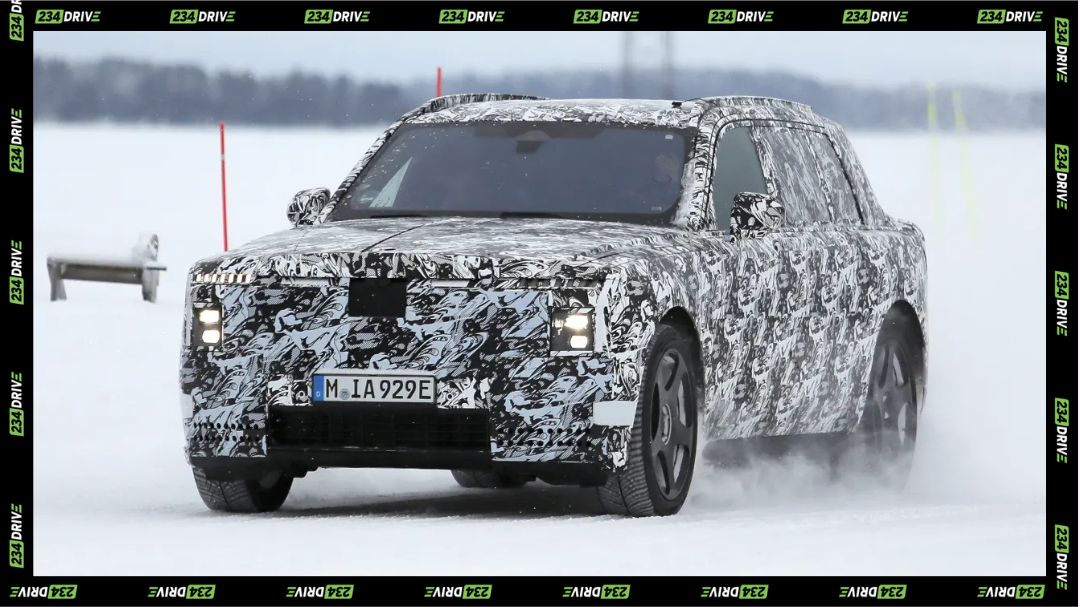
Visually, the prototype exhibits a deliberate evolution of the brand’s design language, blending the stately presence of the Cullinan with the sleeker, more aerodynamic cues debuted on the Spectre. While the silhouette remains boxy and commanding, the overall profile appears lower and more elongated, leaning toward a wagon-like aesthetic that prioritises efficiency without compromising on road presence. The front end is defined by a reimagined Pantheon grille—now potentially serving as a sophisticated housing for various autonomous sensors—and vertically stacked LED headlights. These elements, combined with the signature rear-hinged coach doors, ensure that the second EV spotted in testing is instantly recognisable as a Rolls-Royce, even under layers of disruptive camouflage.
Underpinning this new giant is a sophisticated electric architecture that draws heavily from the lessons learned during the Spectre’s development. Industry analysts expect the SUV to utilise a dual-motor, all-wheel-drive configuration capable of delivering upwards of 570 horsepower in its standard guise, with a more potent Black Badge variant likely exceeding 650 horsepower. To support a vehicle that will undoubtedly weigh over three tonnes, a battery pack exceeding 100 kWh is anticipated, providing a range of between 300 and 400 miles. This powertrain is designed to deliver the “waftability” that Rolls-Royce clients demand—a sensation of effortless, silent progress that is arguably better suited to electric propulsion than the marque’s legendary V12 engines, such as those found in the ultra-exclusive La Rose Noire coachbuild project.
The strategic importance of this vehicle cannot be overstated, as it targets a 2027 market entry ahead of 2027 launch windows for several key competitors. While the current Cullinan remains a sales powerhouse, the introduction of a high-riding electric alternative allows the brand to capture the growing demographic of environmentally conscious high-net-worth individuals. By positioning this new electric Cullinan successor as a distinct, digitally-integrated offering, Rolls-Royce is essentially future-proofing its most lucrative segment. The global appeal of such vehicles is reflected in their market presence, with high demand often influencing the premium Rolls-Royce prices in Nigeria and other emerging luxury hubs.
As development continues, it is clear that Rolls-Royce is following a proven Cullinan formula of combining peerless luxury with immense versatility, only now updated for the zero-emissions era. This model represents more than just a new product; it is a declaration of the brand’s adaptability as it moves toward its next century of operation. This milestone is echoed in recent celebrations like the Phantom Centenary, which honors a century of engineering excellence. By successfully transitioning its most imposing and popular body style to an electric platform, Rolls-Royce is proving that the future of ultra-luxury does not require a compromise on scale or status. As the automotive world watches these prototypes navigate the frozen tracks of Sweden, the message is clear: the most silent and refined SUV in the world is currently on the horizon.