

The arrival of the Tesla Cybertruck on Kenyan soil in early 2026 represents a high-voltage clash between futuristic Silicon Valley ambition and the pragmatic realities of East African infrastructure. This was not merely a vehicle sighting but a cultural phenomenon that signaled a massive shift in how the region perceives the scale and capability of electric mobility. When the angular, stainless-steel silhouette first rolled through the streets of Mombasa, it immediately transformed from a niche tech product into a symbol of a looming transport revolution that is currently grappling with the friction of local economic conditions.
This historic appearance was facilitated by the CyberLocos expedition team, led by international explorers Berni and Alex, rather than an official commercial rollout by Tesla itself. Arriving in Mombasa on 13th January 2026, the vehicle’s presence was part of a rigorous quest to secure a Guinness World Record for the most countries traversed in an electric vehicle. The expedition serves as a high-stakes demonstration of endurance, with the team aiming to prove that electric powertrains can survive the most challenging terrains on Earth, including the expansive savannahs and rugged highlands of Kenya, after already successfully navigating the United States, South America, and Central Asia.
At the heart of the frenzy is a machine that looks more like a low-polygon spacecraft than a traditional utility vehicle. The Cybertruck’s “Cyberbeast” variant boasts a three-tonne, bulletproof exoskeleton and an incredible 845 horsepower, capable of hitting 100 km/h in just 2.6 seconds. These specifications, while impressive on paper, took on a new dimension when witnessed by local crowds, resulting in a shocking public reception at Nyali’s City Mall or Nairobi’s central business district. The design choice to use cold-rolled stainless steel serves a dual purpose: it provides the durability required for a transcontinental trek while acting as a mobile billboard for the viability of clean energy in demanding environments.
The operational roles during this tour were clearly defined, with the CyberLocos team acting as the primary drivers and ambassadors of the technology, while local infrastructure hubs provided the essential charging support. This interaction highlighted the importance of shared infrastructure, much like the recent opening of Tesla’s Supercharger network to other manufacturers globally. In Kenya, explorers relied on the hardware and the vision of local hubs, while Kenya’s e-mobility sector provided the foundation for the mission. It underscored a message that clean energy is now robust enough to facilitate global exploration, not just short city commutes.
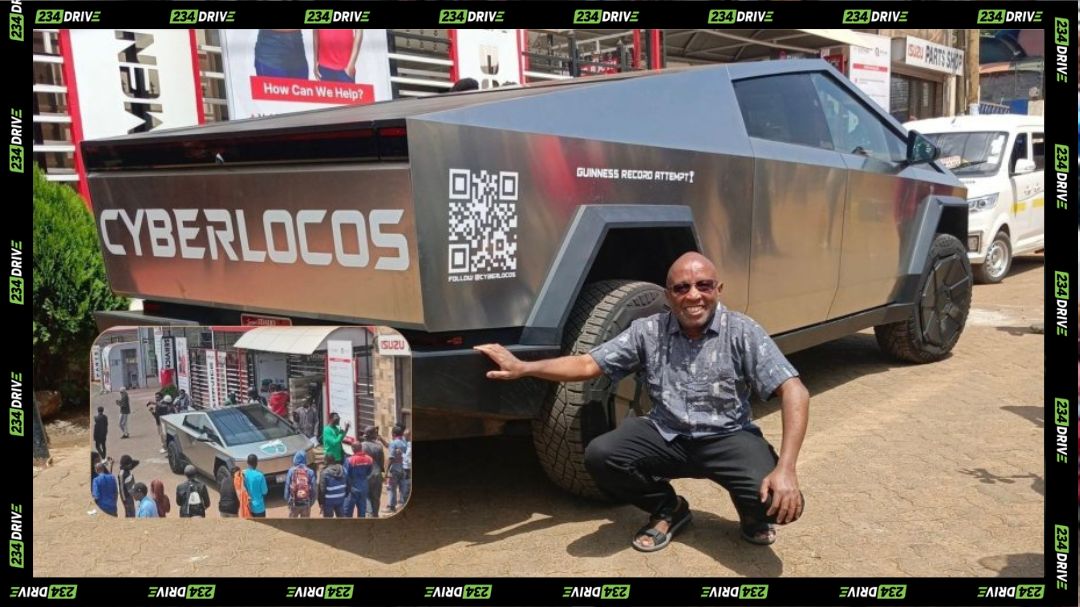
This move signals a significant strategic shift in the global EV narrative, moving away from “range anxiety” towards “expedition capability.” By choosing Kenya as the starting point for their African leg, the team highlighted the country’s position as a regional leader in green energy adoption. While the primary goal was a world record, the underlying business signal is clear: the high-end EV market is no longer confined to the global north. It is beginning to penetrate markets where the appetite for innovation is high, even if the current infrastructure and purchasing power are still catching up to the technology’s steep requirements.
When compared to global markets, the economic contrast remains stark. In the United States, a base Cybertruck starts at approximately $60,000 (Ksh 7.7 million), but the reality of importing such a vehicle to Kenya pushes the price into a different stratosphere. Estimates suggest a local price tag ranging from KSh 9.8 million to as high as KSh 25 million once logistics and import duties are factored in. This places the vehicle firmly in the luxury bracket, costing significantly more than established premium favourites like the Mazda CX-5 in Kenya. This creates a massive gulf between the aspirational allure of the tech and the financial reality for the average Kenyan worker.
While the Cybertruck represents the pinnacle of EV luxury, local competitors are executing a more grounded version of the electric dream. Companies like TAD Motors launched homegrown electric vehicles in late 2025, while the market saw fresh momentum with EV24 Africa’s launch in the region. Furthermore, the commercial sector is leading the charge with initiatives like MojaEV’s delivery of new electric taxis to the capital. These local players have moved from prototype to full-scale deployment in record time, clearing certifications and populating the streets with battery-swapping stations that offer a more immediate solution to urban transport.
The track record of the CyberLocos team provides the necessary credibility to this showcase, as their successful crossing of several continents proves that the hardware is no longer the bottleneck for electric travel. However, the context in Kenya is one of nascent growth. With a government target of 5% EV sales by 2025 and a recently unveiled $47 million plan to roll out 10,000 charging stations nationwide, the framework for success is being built. The Cybertruck’s visit acted as a catalyst for these discussions, proving that the demand for such technology is “insane,” as noted by the explorers during their interactions with crowds from Mombasa to Eldoret.
Ultimately, the spectacle of a Tesla Cybertruck charging at a local mall poses a fundamental question for the future of regional transport: will these advanced machines remain symbols of extreme wealth, or can the technology be democratised to serve the masses? As battery prices continue to plummet and EVs start becoming cost-effective across the continent, the evidence suggests a gradual transition is underway. This event marked the moment the Cybertruck shifted from a YouTube thumbnail to a physical reality in Kenya, forcing a reflection on whether regulators should treat EV charging infrastructure as a public utility to accelerate the transition from fossil fuels to the silent, stainless-steel future.