
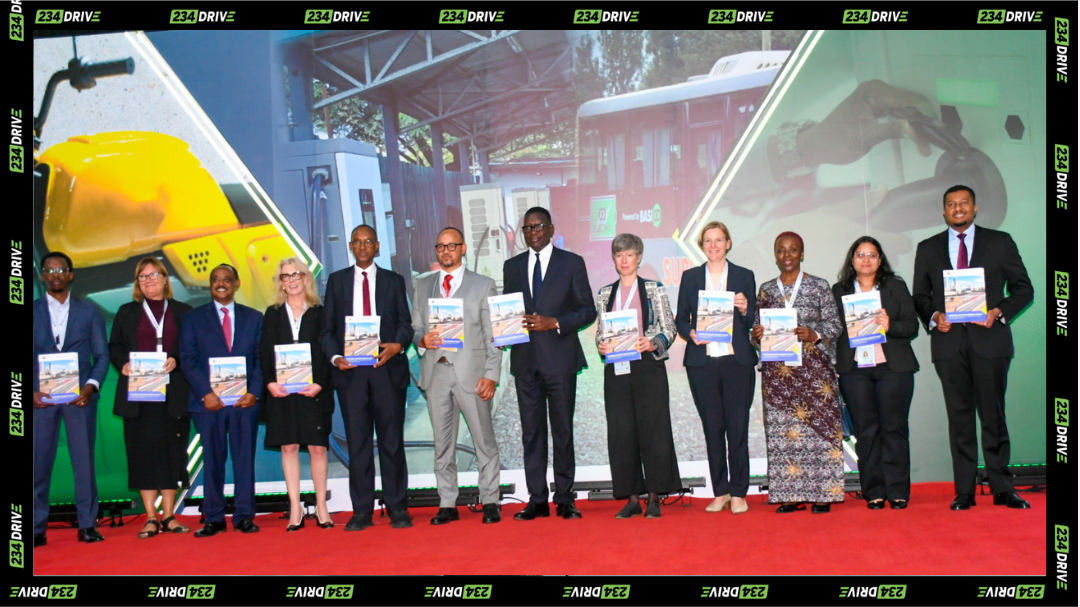
Government officials and partners present Kenya’s electric mobility policy, marking a coordinated push toward cleaner, future-ready transport systems. | Source: transport go ke
Kenya has officially adopted electric mobility as part of its national policy, putting electric vehicles at the central hub of its long-term transport, energy and climate strategy.
Launched in Nairobi by Transport Cabinet Secretary Davis Chirchir, the National Electric Mobility Policy sets out how Kenya plans to reduce fuel imports, cut emissions, and grow a local electric vehicle industry through targeted tax incentives and infrastructure development. The framework moves electric mobility from pilot projects into the core of government planning.
Why the Policy Matters
Transport is one of Kenya’s biggest pressure points. The country spends heavily on imported fuel, which drains foreign exchange and exposes the economy to global oil price swings. In 2023, fuel imports reached about KSh 628.4 billion (roughly $4.9 billion), up sharply from and almost double the KSh 348.3 billion (about $2.7 billion) spent in 2021. That reliance makes transport one of the largest components of Kenya’s import bill and a major source of greenhouse gas emissions.
Electric vehicles offer a way out of that cycle. With more than 90% of Kenya’s electricity already coming from renewable sources, switching vehicles from petrol and diesel to electricity directly reduces emissions while keeping energy spending within the local economy, in what experts are calling a truly green cycle.
What the National Electric Mobility Policy Actually Offers Kenyans
The National Electric Mobility Policy covers all forms of transport, from motorcycles and private cars to buses and commercial fleets. The policy outlines how electric vehicles should be adopted, will be regulated, and then scaled— while also improving coordination between ministries, regulators, power utilities and the private sector. To keep implementation focused, the government plans to follow the policy with a mobility strategy that turns these goals into responsibilities and measurable outcomes.
A Market That is Already Moving
The policy builds on rapid growth already happening on the ground. Kenya’s registered electric vehicles rose from just over 1,300 units in 2022 to more than 39,000 by 2025, an increase of over 2,700% in three years. Much of this growth comes from electric motorcycles used for last-mile transport, supported by cheaper models and financing options. The government sees these figures as proof that demand exists and will increase when costs come down and infrastructure improves.
Lower Costs, Clear Incentives, and With the Government Taking Lead

Officials unveil Kenya’s green reflective number plates, formally identifying fully electric vehicles and signalling their entry into national transportation regulation. | Source: transport go ke
To make electric vehicles more affordable, the government has removed VAT and excise duty on electric buses, bicycles, motorcycles, and lithium-ion batteries. From later this year, similar tax relief will apply to EV parts and charging equipment, with stamp duty on charging stations set to fall from 2027. As part of the rollout, the government also introduced distinctive green reflective number plates for fully electric vehicles, giving EVs a clear visual identity on Kenyan roads and helping with ease of recognition. The state is also leading by example, committing to deploying about 3,000 electric vehicles across government ministries by the end of next year.
The Gaps in Infrastructure and the Trade-Offs Ahead For Kenya
Charging infrastructure is still concentrated around Nairobi, and the policy calls for expansion into other towns alongside common technical standards. It also links electric mobility to skill development by encouraging training programmes and licensing EV technicians. At the same time, the government is open about the trade-offs for its e-mobility pursuit. As fuel use declines, fuel tax revenues are expected to fall, creating a projected gap of about $693 million by 2043. The policy responds by calling for new road-use and electricity-based charges to replace fuel levies over time.