
The Toyota Corolla Axio has established itself as a cornerstone of the Kenyan automotive landscape, particularly for drivers who prioritise utility and longevity. Originally designed for the Japanese Domestic Market, this compact sedan arrived in Kenya as a high-quality import and quickly became a favourite for both private owners and commercial transport providers. Its reputation is built on a foundation of bulletproof reliability, exceptional fuel economy, and a compact footprint that makes it perfectly suited for navigating the congested streets of Nairobi and Mombasa. While it may not carry the flashiness of European luxury brands, its value proposition is unmatched in the used car sector.
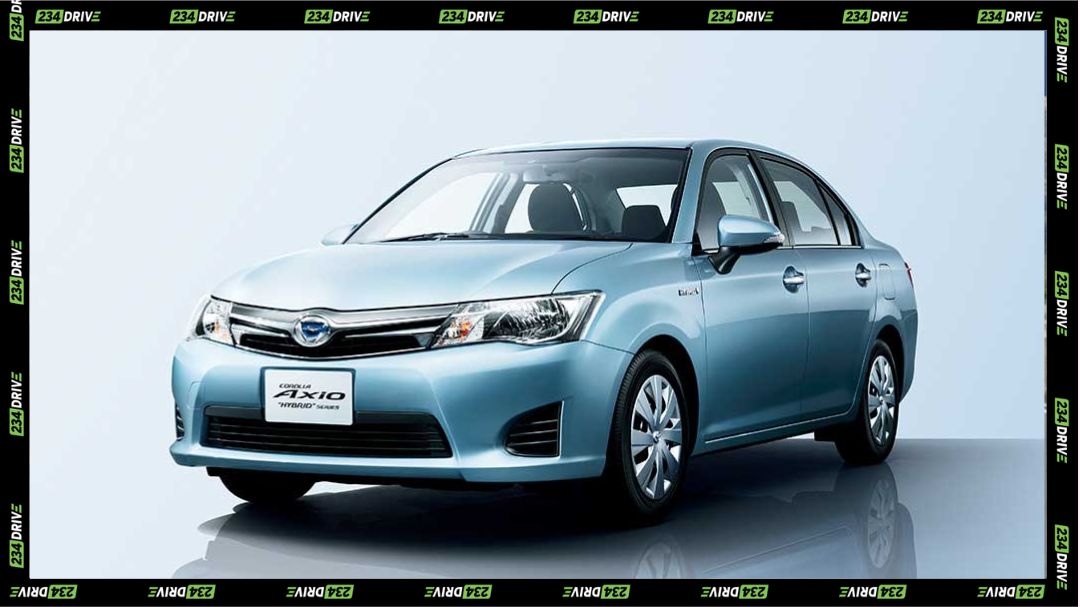
As we look at the market in 2026, the Axio remains a top-tier choice for budget-conscious buyers seeking a vehicle that refuses to quit. Beyond its mechanical simplicity, the Axio offers a surprising level of refinement in its later iterations, incorporating advanced safety features and hybrid technology that caters to the modern, eco-conscious driver. According to technical specifications and history, it represents a pragmatic approach to motoring a vehicle designed not to turn heads, but to ensure that every journey is completed with minimal fuss and maximum efficiency. For those seeking a dependable daily driver that holds its resale value remarkably well, the Axio is frequently the first name on the list.
The Petrol Variants: 1.3L and 1.5L Efficiency
The exterior design of the petrol Toyota Corolla Axio is defined by its conservative yet functional aesthetic. Following the 2015 and 2017 facelifts, the car received a more modern front fascia, featuring sharper LED projector headlamps and a revised grille that gives it a cleaner, more contemporary road presence. Its compact dimensions measuring approximately 4,400 mm in length and 1,695 mm in width allow it to slip through tight traffic gaps where larger sedans might struggle. The build quality is characteristically Toyota, with tight panel gaps and a paint finish designed to withstand the harsh tropical sun of East Africa.
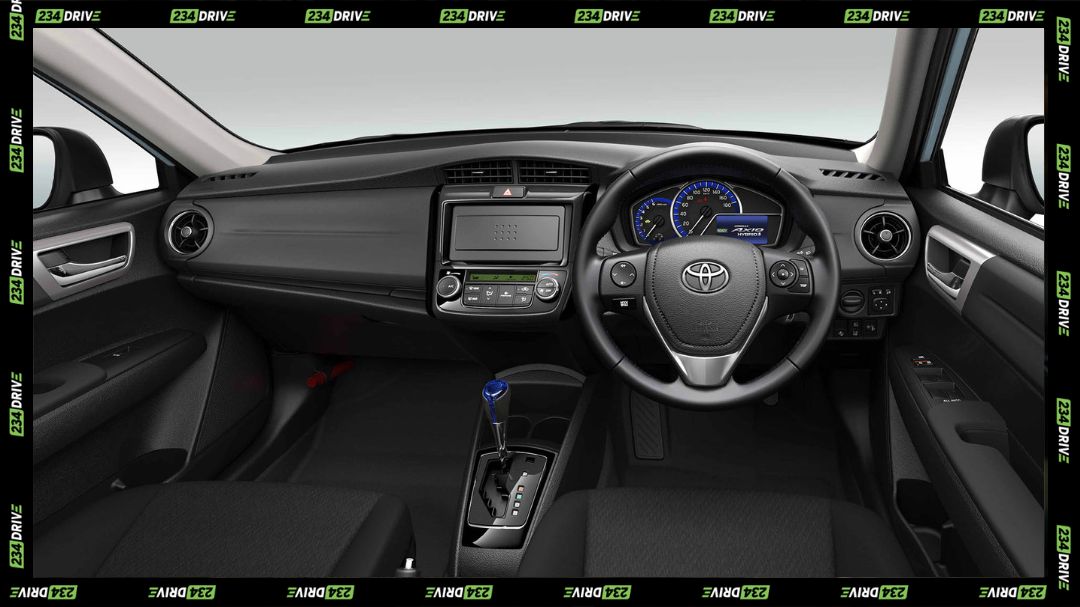
Inside, the petrol Axio focuses on ergonomic simplicity and occupant comfort. The cabin is surprisingly spacious for a compact sedan, offering a wheelbase of 2,600 mm that provides adequate legroom for rear passengers. Higher trims, such as the Luxel or the sporty W×B, feature premium touches like Alcantara-trimmed seats and digital climate control with NANOE air-purifying technology. Under the bonnet, the 1.5L 1NZ-FE engine produces roughly 109 hp and 138 Nm of torque, paired with a Super CVT-i transmission that ensures smooth power delivery. In the Kenyan market, these petrol models typically range from KSh 800,000 for older units (2007-2013) to KSh 1,600,000 for well-maintained 2016 models.
The Hybrid Powerhouse: 1.5L Hybrid (NKE165)
The Hybrid Axio is visually distinguished from its petrol siblings by subtle blue-accented Toyota emblems and ‘Hybrid’ badging on the fenders and boot lid. The sleek, aerodynamic profile remains consistent, designed to minimise wind resistance and maximise fuel savings. Despite its “boring” reputation amongst enthusiasts, the post-2017 models with smoked headlights and alloy wheels offer a smart, professional appearance that fits equally well in a corporate car park or a residential driveway. Many users and enthusiasts note that it is a vehicle that commands respect through its understated efficiency rather than aggressive styling.
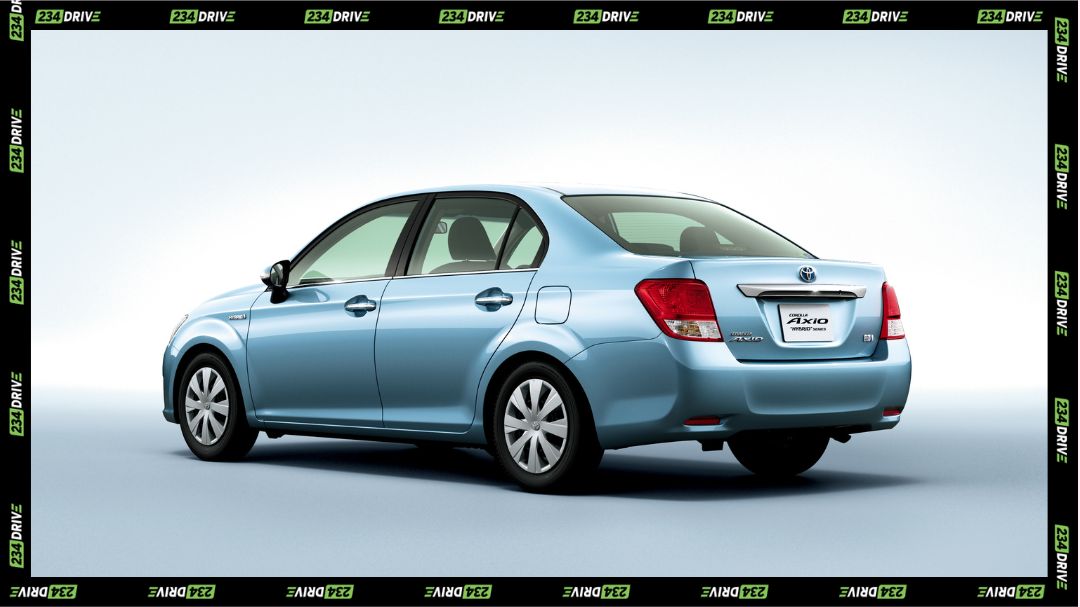
The real magic of the Hybrid Axio lies in its 1NZ-FXE 1.5-litre engine coupled with Toyota’s proven Hybrid Synergy Drive system. This setup delivers a combined output of approximately 100 hp, but more importantly, it achieves real-world fuel consumption of 20–22 km/l in Kenyan traffic. The interior remains practical, with the hybrid battery pack cleverly placed under the rear seats to preserve boot space. Drivers benefit from a seamless transition between electric and petrol power, providing a quiet and refined experience during low-speed city crawling. Prices for the hybrid version are generally 25% higher than petrol equivalents, with 2017–2019 models often found as verified cars for sale fetching between KSh 1,600,000 and KSh 2,100,000.
Suitability for the Kenyan Driving Environment
The Toyota Corolla Axio is uniquely suited to the Kenyan driving environment, where road conditions can vary from pristine tarmac to corrugated gravel paths. Its suspension is tuned for comfort, effectively soaking up the vibrations of uneven surfaces, while its high ground clearance (for a sedan) allows it to navigate speed bumps and minor potholes without the frequent “scraping” associated with lower-slung competitors. Furthermore, Kenya’s tropical climate is well-handled by Toyota’s robust cooling systems and powerful air conditioning, ensuring that the car remains reliable even during the hottest months in the coastal or northern regions.
From a lifestyle perspective, the Axio offers a low-stress ownership experience. The abundance of spare parts in Nairobi’s Kirinyaga Road or industrial areas across the country means that maintenance is both affordable and fast. It is a prestigious choice for the “hustling” middle class offering a step up from hatchbacks without the daunting running costs of a large SUV. Whether used as a reliable family hauler or a high-yielding Uber vehicle, you can browse current listings to see how its ability to maintain a 65% resale value after five years makes it a financially sound asset for any Kenyan household.
Market Comparison and Rivalry
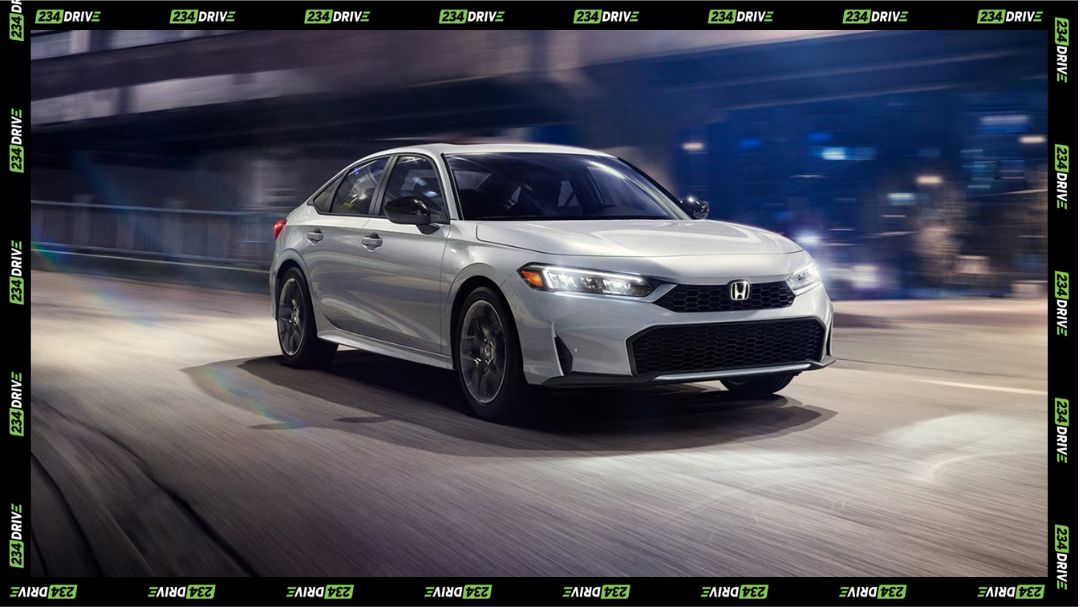
When compared to its primary segment rivals, such as the Honda Civic or the Nissan Sylphy, the Corolla Axio stands out as the champion of durability and maintenance. While the Honda Civic may offer a more engaging driving experience and superior interior materials, it often comes with a higher price tag and more complex suspension components that can be expensive to repair in Kenya. The Nissan Sylphy provides a more “executive” feel and larger cabin, but it historically suffers from lower resale value and a reputation for CVT issues that the Axio simply does not share. The Axio’s simplicity is its greatest weapon in this comparison.
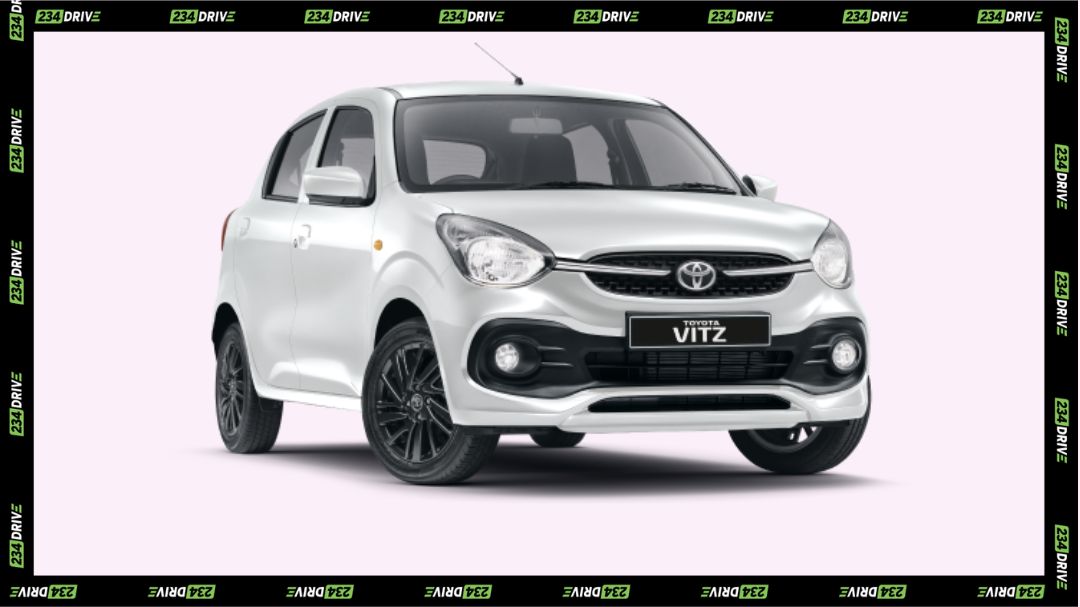
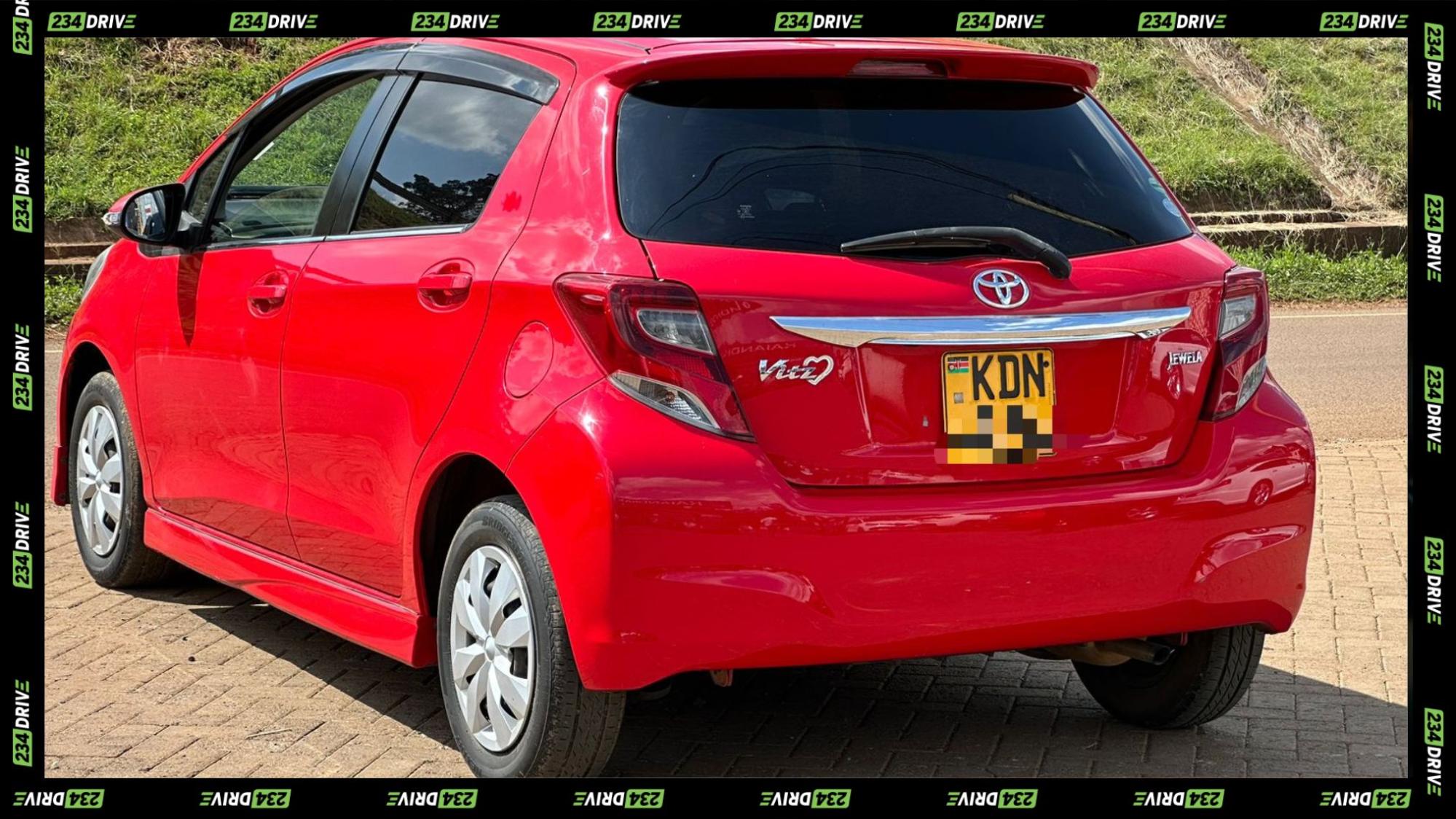
In terms of cost-to-benefit ratio, the Axio hybrid is particularly dominant against non-hybrid rivals like the Mazda Axela. While the Axela is undeniably more stylish and fun to drive, the Axio’s increased fuel savings (potentially by 30–40%) in city traffic quickly offset the initial purchase price. The Axio’s parts are also more interchangeable with other Toyota models like the Vitz or Fielder, ensuring that even in remote towns, a mechanic is likely to have the necessary components and knowledge to perform a repair. This “peace of mind” factor gives the Axio a competitive edge that few other sedans can match in the East African market.
Conclusion
The Toyota Corolla Axio remains the quintessential choice for the pragmatic Kenyan driver. Its blend of legendary Toyota reliability, exceptional fuel economy (especially in the hybrid variant), and strong resale value makes it a formidable contender in the used car market. While some may find its styling conservative, its performance in real-world conditions, navigating traffic, enduring varied road surfaces, and keeping running costs to a minimum is where it truly shines.
Whether you are a first-time car buyer or looking for a secondary vehicle for the family, the Axio offers a level of dependability that few others can provide. With prices ranging from KSh 800,000 to over KSh 2,000,000 depending on the year and trim, there is an Axio for almost every budget.
What are your thoughts on the Axio? Do you prefer the raw efficiency of the Hybrid or the simplicity of the standard petrol engine? Share your experiences in the comments below!