
The Hyundai Veloster remains one of the most distinctive compact hatchbacks to grace Nigerian roads, despite its discontinuation in mid-2022. With its asymmetric door design—featuring one door on the driver’s side and two on the passenger side—this Korean sporty hatchback carved out a unique niche among younger drivers and enthusiasts seeking an alternative to conventional sedans. Whilst it was never officially sold new in Nigeria, the Veloster has established a steady presence through foreign-used (tokunbo) and locally used imports, primarily sourced from the United States and Europe.
For prospective buyers navigating Nigeria’s used car market in 2025, the Veloster presents an intriguing proposition: a stylish, feature-rich compact car with performance credentials at accessible price points ranging from ₦7.7 million to ₦30 million. However, this distinctive vehicle demands careful consideration of maintenance challenges, parts availability, and suitability for Nigerian road conditions. This comprehensive review examines the Veloster’s design, performance, pricing landscape, and practical ownership considerations to help you determine whether this unconventional hatchback deserves a place in your garage.
Design and Exterior Styling
The Hyundai Veloster’s exterior is its most compelling selling point, blending coupe aesthetics with hatchback practicality in a package that turns heads on Lagos expressways and Abuja boulevards alike. The asymmetric door configuration isn’t merely a gimmick—it serves a functional purpose by providing easy rear passenger access on the kerb side whilst maintaining the sleek, pillarless coupe silhouette on the driver’s side. This design choice gives the Veloster a distinctive road presence that stands apart from mainstream competitors like the Honda Civic or Toyota Corolla. The front fascia features aggressive styling with sharp headlamp clusters and a hexagonal grille that’s unmistakably Hyundai, whilst the sloping roofline and pronounced rear haunches create a sporty stance that belies its compact dimensions.
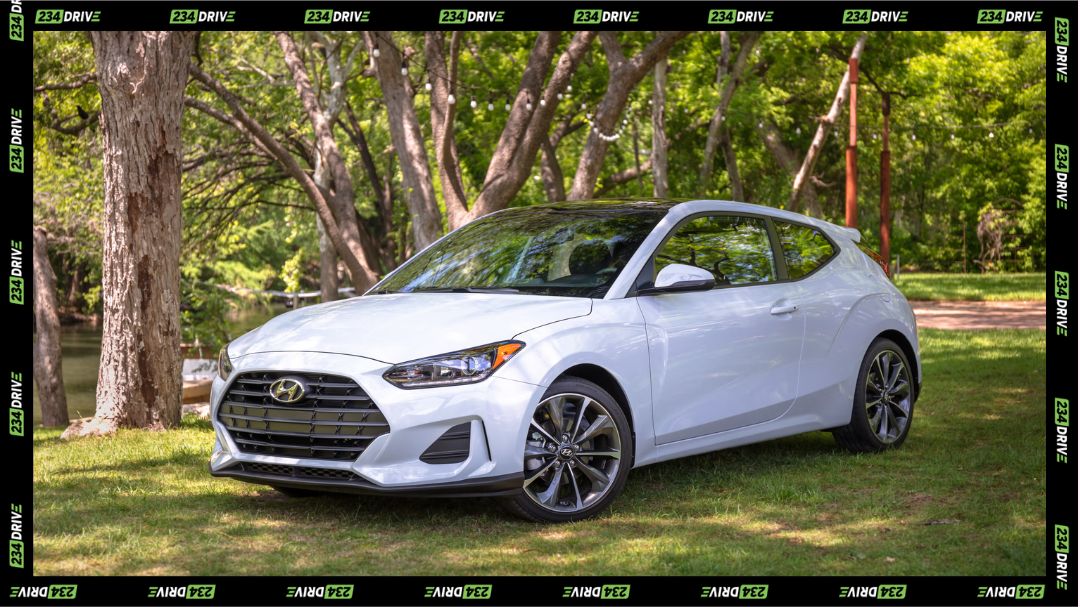
The vehicle’s compact footprint proves advantageous for navigating congested Nigerian urban centres, though its low ground clearance immediately signals this isn’t a car designed for poorly maintained roads. Panel gaps on foreign-used examples generally exhibit good build quality, though locally used vehicles warrant closer inspection for accident damage or substandard repairs. The turbocharged variants, identifiable by their subtle badging and often featuring more aggressive front air intakes, command premium prices in the Nigerian market—typically ₦4–6 million more than naturally aspirated equivalents of the same model year. Colour choice impacts resale value, with neutral tones like black, silver, and white proving most popular among Nigerian buyers, whilst vibrant options like the signature “Vitamin C” orange or electric blue appeal to younger, more adventurous owners willing to sacrifice some resale potential for individuality.
Interior Comfort and Technology
Step inside the Veloster and you’re greeted by a driver-focused cockpit that prioritises sporty ergonomics over luxury appointments. The front seats offer generous headroom and supportive bolstering, making them suitable for extended drives on routes like the Lagos-Ibadan Expressway, though the materials quality varies significantly between base and turbocharged trims. Higher-specification models feature leather or cloth-leather combination upholstery that holds up reasonably well to Nigeria’s tropical climate, provided owners maintain proper cleaning routines to prevent mould accumulation in the rainy season. Rear passenger space proves adequate for children or average-sized adults on short journeys, but the sloping roofline compromises headroom for taller occupants—a limitation exacerbated by the fact that accessing the rear requires passengers on the driver’s side to fold the front seat forward.

The technology suite reflects the Veloster’s era, with 2012–2016 models featuring infotainment systems that feel dated by contemporary standards but remain functional for essential tasks. Bluetooth connectivity issues plague some earlier examples, with owners reporting frozen touchscreens and pairing difficulties that may require software updates or replacement head units. Climate control systems generally perform adequately, though Nigerian buyers should verify that air conditioning operates at full capacity, as recharging or compressor replacement can prove costly. The instrument cluster combines analogue gauges with a digital display that provides trip computer information, though turbo variants feature a boost gauge that adds to the sporting ambience. Storage solutions include a reasonably sized boot accessed via the rear hatch, though the space-saver spare tyre and high load lip can complicate cargo loading—a consideration for buyers who frequently transport goods or luggage.
Performance and Driving Dynamics
Under the bonnet, the Veloster offers two distinct engine personalities that cater to different buyer priorities and budgets. The naturally aspirated 1.6-litre four-cylinder engine produces 138 horsepower, delivering adequate performance for urban commuting and motorway cruising without commanding the premium associated with turbocharged variants. This engine can achieve up to 46 mpg (approximately 5.1 litres per 100 km) with disciplined driving in eco mode, making it economical by Nigerian standards where petrol prices fluctuate significantly. Acceleration from 0–100 km/h takes approximately 9.7 seconds—respectable rather than thrilling—and the engine note becomes coarse and unrefined when pushed beyond 4,500 rpm, revealing its economy-car origins despite the sporting bodywork.

The turbocharged 1.6-litre variant transforms the Veloster’s character, delivering up to 201 horsepower that provides genuinely spirited performance capable of embarrassing some self-proclaimed sports cars in straight-line acceleration. Paired with either a six-speed manual gearbox (increasingly rare in the Nigerian market) or a dual-clutch automatic transmission, the turbo engine offers proper punch for overtaking manoeuvres and motorway merging. However, the dual-clutch transmission presents the most significant reliability concern among Nigerian owners, with reports of slippage, high RPM operation without corresponding acceleration, and unusual noises particularly affecting 2012–2016 models. Handling characteristics lean towards understeer at the limit, and whilst the suspension setup provides composed cornering on smooth surfaces, it translates harshly over Nigeria’s notorious potholes and degraded road surfaces. The steering offers adequate feedback for spirited driving but lacks the precision and communication found in rivals like the Volkswagen Scirocco, positioning the Veloster as a competent rather than exceptional driver’s car.
Pricing Landscape in Nigeria’s Used Market
The Nigerian used car market offers Veloster buyers a broad pricing spectrum that reflects model year, condition, mileage, and specification level. At the entry point, locally used models listed at approximately ₦7.7 million in Lagos represent the most affordable pathway to Veloster ownership, though buyers must exercise due diligence regarding vehicle history and mechanical condition. These early examples have accumulated higher mileage and may exhibit wear consistent with Nigerian operating conditions, making professional pre-purchase inspections essential. Mid-range options cluster around ₦15–19.5 million, encompassing 2013–2016 models that balance relative modernity with reasonable depreciation. A 2013 foreign-used turbocharged variant recently listed at ₦19.5 million exemplifies this segment, offering enhanced performance at a premium over naturally aspirated equivalents.
Higher-specification 2016 models demonstrate pricing variations based on location and seller type, with examples ranging from ₦15 million in Kaduna to ₦15.53 million in Abuja—the latter offering financing arrangements that may appeal to buyers lacking immediate full payment capability. At the premium end, 2020 foreign-used models command ₦23–30 million, with the upper range reflecting low mileage, turbocharged engines, manual transmissions (increasingly valued by enthusiasts), and full customs duty payment documentation. These near-final production year examples offer the most contemporary features and lowest accumulated wear, though they represent poor value when compared to newer mainstream alternatives from Toyota or Honda that offer superior reliability and resale prospects. Buyers should note that some online aggregators incorrectly list hypothetical 2025 model pricing at ₦28 million—an impossibility given production ceased in 2022—underscoring the importance of verifying information through reputable dealers and platforms like Jiji.ng, Autochek, and Cars45.
Ownership Experience in the Nigerian Context
The Veloster’s low ground clearance and firm suspension calibration present the most significant challenges for Nigerian ownership, particularly outside major urban centres where road maintenance remains inconsistent. Owners report accelerated wear on shock absorbers, with replacement intervals sometimes as short as 2–3 months when regularly traversing pothole-riddled routes—a stark contrast to the 12–18 month lifespan typical in markets with superior road infrastructure. This rapid component deterioration directly impacts running costs and should factor prominently in purchase decisions, especially for buyers in secondary cities or rural areas. The vehicle’s compact dimensions aid manoeuvrability in Lagos traffic and tight parking situations, though the low stance makes speed bumps and flooded roads hazardous obstacles requiring cautious navigation.
Climate considerations prove less problematic, as the Veloster’s air conditioning systems generally cope adequately with Nigeria’s tropical heat, provided they receive proper maintenance. Parts availability occupies a middle ground—neither as ubiquitous as Toyota components nor as scarce as some European marques. Lagos and Abuja host several specialist mechanics familiar with Korean vehicles, though owners consistently report higher costs compared to Japanese alternatives, with OEM parts commanding premium prices when sourced through official channels. The Veloster emphatically isn’t suited for commercial ride-hailing services like Bolt or Uber, as the combination of low ground clearance, firm ride quality, limited rear space, and accelerated wear rates make it economically unviable compared to purpose-built options like the Toyota Camry or Corolla. For private ownership by enthusiasts willing to absorb higher maintenance costs in exchange for distinctive styling and engaging driving dynamics, the Veloster proves workable, though realistic expectations regarding running costs and infrastructure limitations remain essential.
Competitive Positioning and Market Alternatives
When positioned against segment rivals, the Veloster occupies an unusual niche that prioritises style and character over outright practicality or value retention. Direct competitors like the Honda Civic coupe (where available in the used market) offer more conservative styling, superior reliability credentials, and significantly better resale values—factors that make them safer choices for risk-averse buyers or those viewing vehicles primarily as transport rather than lifestyle statements. The Volkswagen Scirocco presents a more upmarket European alternative with sharper handling dynamics and premium interior materials, though maintenance costs exceed even the Veloster’s elevated expenses, and parts scarcity in Nigeria can leave owners stranded for weeks awaiting components.


Japanese alternatives from Toyota and Honda dominate Nigeria’s compact car segment for compelling reasons: proven durability, extensive parts networks, abundant mechanical expertise, and strong resale values that protect owner equity. A comparably priced used Toyota Corolla or Honda Accord delivers superior long-term value, lower running costs, and greater peace of mind, albeit wrapped in conservative styling that lacks the Veloster’s visual drama. The Korean contender trades practical superiority for emotional appeal, making it suitable primarily for second-car ownership or buyers who prioritise design distinctiveness over economic rationality. Resale prospects prove modest, as the Veloster’s discontinuation, relatively small owner community, and maintenance reputation limit buyer pools when selling time arrives. Prospective owners should view Veloster purchase as a lifestyle choice rather than investment, accepting moderate depreciation and elevated running costs as the price of driving something genuinely different on Nigerian roads.
Final Verdict
The Hyundai Veloster presents a compelling case for Nigerian buyers seeking to escape compact car conformity without ascending to premium European price points. Its asymmetric door design, sporty styling, and turbocharged performance variants deliver genuine character at used prices spanning ₦7.7–30 million across model years 2012–2020. However, this Korean oddball demands realistic expectations: maintenance costs exceed Japanese alternatives, low ground clearance and firm suspension prove poorly suited to degraded infrastructure, and transmission reliability concerns particularly affect earlier dual-clutch automatic examples.
For the right buyer—typically younger enthusiasts, second-car owners, or those prioritising design distinctiveness—the Veloster offers rewarding ownership despite its compromises. Prospective purchasers should insist on thorough pre-purchase inspections focusing on transmission operation, engine condition, and suspension wear, whilst budgeting for higher-than-average running costs. Visit reputable dealers in Lagos or Abuja, verify vehicle history documentation, and consider whether the Veloster’s undeniable charisma justifies its practical limitations in your specific circumstances.
Have you owned or considered a Hyundai Veloster in Nigeria? Share your experiences, questions, or opinions in the comments below—your insights help fellow enthusiasts make informed decisions about this distinctive Korean hatchback.