
The Nigerian compact crossover market operates on a brutal financial curve in mid-2026. As the acquisition costs for default choices like the Toyota RAV4 and Honda CR-V spiral into the realm of luxury investments, buyers are actively hunting for viable, budget-friendly alternatives. This search inevitably leads to the Blue Oval. Delivering a definitive 2018 Ford Escape price and review in Nigeria requires navigating a vehicle of extreme contradictions.
On paper, the third-generation Escape is an exceptional family SUV. It offers superior driving dynamics, impressive cabin technology and a commanding side profile for a fraction of what its Japanese rivals demand. However, the reality of owning one in Lagos, Abuja or Port Harcourt is entirely dependent on what sits under the bonnet. Buying a 2018 Ford Escape is not a straightforward transaction—it is an exercise in strict mechanical due diligence.
Here is the definitive breakdown of what it costs to buy, maintain and survive this crossover in the Nigerian mobility ecosystem.
Trims, Technology and the Daily Commute
Ford positioned the 2018 Escape as a practical, tech-forward five-seater. Reviewing the core specifications and trim levels of the 2018 Escape reveals a lineup divided into four distinct variants: the base S, the mid-level SE, the premium SEL and the flagship Titanium.
In the Nigerian Tokunbo market, higher trims dominate the import containers. Buyers actively seek out the SEL and Titanium models because they deliver genuine comfort features. You get leather seating, a power liftgate, reverse sensing systems and the highly capable Sync 3 infotainment system with Apple CarPlay and Android Auto.
Physically, the crossover is well-suited to our environment. It provides roughly 200 mm of ground clearance. While it is not a hardcore off-roader, that height is perfectly adequate for gliding over the typical craters of the Lagos-Ibadan expressway or surviving a flooded street in Victoria Island. The cabin is spacious enough for a family of five and the 68 cubic feet of cargo space (with the rear seats folded down) easily handles heavy airport runs or market logistics.
The Engine Trap: EcoBoost vs Naturally Aspirated
This is the most critical section of this review. The lifespan of your 2018 Ford Escape in Nigeria depends entirely on which of the three available engines powers it. They are all paired with a 6-speed automatic transmission, but their reliability profiles are worlds apart.
The entry-level S trim utilises a 2.5-litre naturally aspirated four-cylinder engine producing 168 horsepower. It is technically the least powerful option but it is undeniably the most durable. For the Nigerian environment—where traffic involves hours of brutal idling and fuel quality frequently fluctuates—this simpler, non-turbocharged engine is the absolute smartest choice. It can easily cross 180,000 miles with basic routine maintenance.
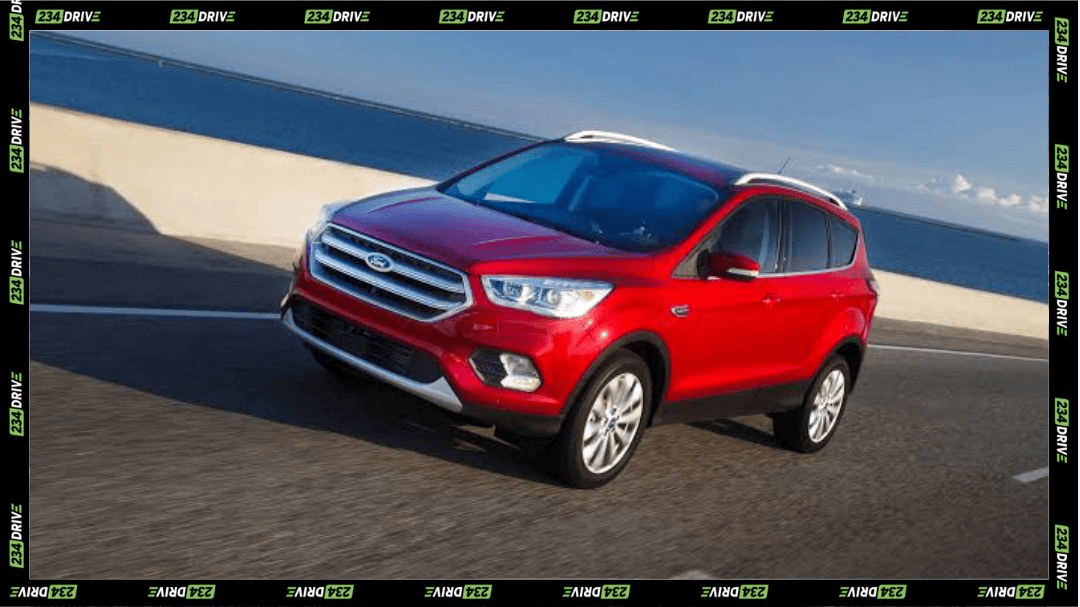
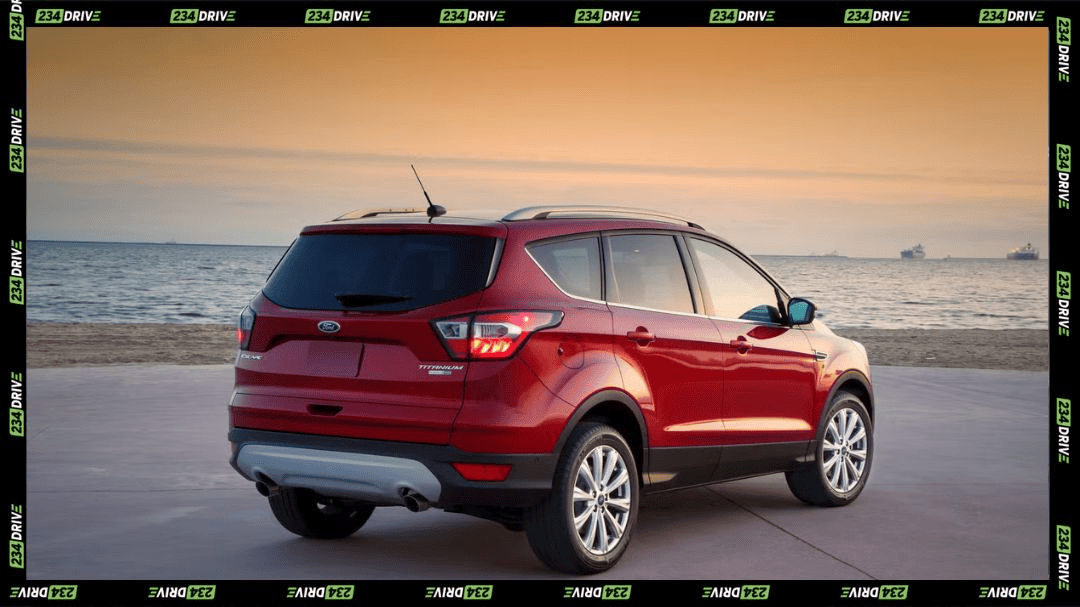
The Titanium trim houses a powerful 2.0-litre EcoBoost turbocharged engine delivering 245 horsepower. It is exceptionally fast for its class but demands high-octane fuel and meticulous servicing to prevent turbo failure in our intense tropical heat.
Then comes the danger zone. The SE and SEL trims are overwhelmingly powered by a 1.5-litre EcoBoost turbocharged engine. This specific powerplant suffers from a catastrophic, well-documented design flaw. Extensive data tracking the most severe 2018 Ford Escape mechanical problems highlights a massive coolant intrusion issue.
A defect in the engine block allows coolant to leak directly into the cylinders. The symptoms start with unexplained coolant loss, progress to white exhaust smoke and misfires, and ultimately end in total engine failure. Repairing this in Nigeria requires a short-block replacement, landing owners with a repair bill ranging from ₦1 million to well over ₦2.5 million. Unless the seller has verifiable dealership documentation proving the engine was replaced under warranty, you must aggressively avoid the 1.5-litre EcoBoost.
The 2018 Ford Escape Price in Nigeria
Automotive pricing in mid-2026 remains highly volatile due to forex fluctuations and crushing import duties. However, the Escape retains a significant price advantage over its direct Japanese competitors.
Tracking the broad spectrum of Ford Escape pricing trends in Nigeria establishes a reliable baseline. If you are willing to settle for a Nigerian-used unit, a clean 2018 model typically sits around ₦11.5 million.
The Tokunbo market commands a massive premium due to lower mileage and the assumption of a cleaner mechanical history. Current live market listings for the 2018 Ford Escape in Lagos place standard foreign-used models between ₦13.7 million and ₦17.5 million.
If you are hunting for an absolute top-tier Titanium trim equipped with All-Wheel Drive (AWD), low mileage and pristine leather, expect dealers to push the asking price anywhere from ₦16 million to ₦22 million. While Lagos typically offers the most competitive pricing due to high dealer volume, buyers in Abuja and Port Harcourt should anticipate a slight logistics markup.
Maintenance Reality and Coscharis Support
A major argument against American vehicles in Nigeria is the supposed lack of spare parts. For the Ford Escape, this is a myth.
The vehicle enjoys robust official backing. Coscharis Motors—the authorised Ford dealer in Nigeria—provides direct access to genuine parts, scheduled servicing and diagnostic support. For buyers who refuse to gamble on aftermarket components, this official footprint is a massive advantage.
Furthermore, the vehicle has been on Nigerian roads long enough to build a solid aftermarket ecosystem. Traders in Ladipo and Apo mechanic villages stock everything from replacement bumpers to suspension bushings.
However, you must budget properly for running costs. Annual maintenance for a healthy 2018 Escape ranges from ₦250,000 to ₦600,000 depending on your mileage. You cannot apply traditional Nigerian maintenance habits to this vehicle. According to the official trim specifications and maintenance schedules, oil changes must be executed every 4,000 to 5,000 kilometres using high-quality synthetic oil. Stretching your service intervals on a turbocharged EcoBoost engine guarantees premature failure.
Fuel economy is respectable but not revolutionary. You can expect roughly 8 to 12 kilometres per litre in heavy city traffic, which improves significantly on open highways.
The Final Verdict
The 2018 Ford Escape is not a blind purchase. It is a highly capable, comfortable and stylish crossover that severely punishes uninformed buyers.
The Pros:
- Excellent interior technology and comfort on SEL and Titanium trims.
- Highly competitive pricing compared to the Toyota RAV4.
- Strong official parts network via Coscharis Motors.
- Adequate ground clearance for Nigerian urban infrastructure.
The Cons:
- The 1.5-litre EcoBoost engine is a ticking financial time bomb.
- Suspension bushings degrade quickly on broken tarmac.
- The 6-speed transmission can develop hard shifts if fluid changes are ignored.
If you are buying this vehicle, pre-purchase inspection is non-negotiable. You must run a full diagnostic scan, conduct a cooling system pressure test and check the transmission fluid.
The ultimate strategy for surviving this vehicle in Nigeria is simple: hunt aggressively for the base 2.5-litre naturally aspirated engine. You will sacrifice some premium interior features found on the higher trims, but you will secure a reliable, durable crossover that will not strand you on the Third Mainland Bridge with a cracked engine block.