
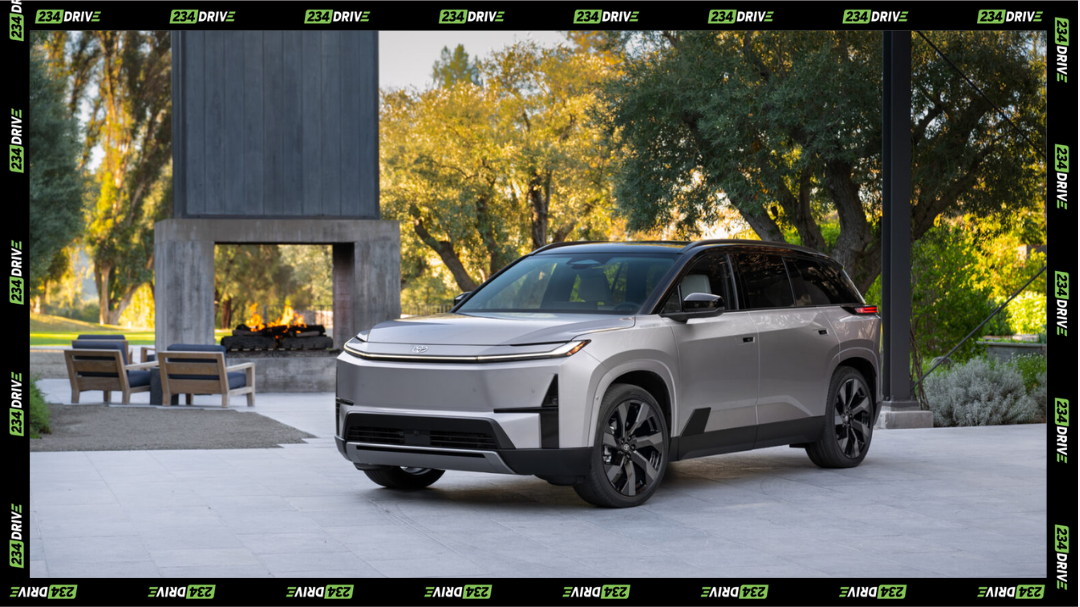
The 2027 Highlander EV sits confidently in a modern driveway, showing its clean front design and flush handles. | Source: Toyota pressroom
Toyota has officially revealed the 2027 Highlander EV, and it marks a turning point for the brand. This is Toyota’s first all-electric, three-row SUV for the U.S., and it will be built in Kentucky with batteries assembled in North Carolina. Sales expected to begin in late 2026.
At a time when some automakers are slowing their electric plans, Toyota seem to be moving in the opposite direction. The company already sells hybrids across most of its lineup, and now it is pushing further into full battery-electric vehicles. The Highlander EV becomes the fourth BEV in its U.S. range and its largest one yet.
From the outside, it still looks like a Highlander—just cleaner and sharper. The grille is sealed, the door handles sit flush with the body, and the stance is wider and lower than before. Inside, the cabin feels modern and open, with a large central screen, digital driver display, and soft-touch materials throughout. It seats up to seven, and when the third row folds flat, cargo space expands to more than 45 cubic feet.
Beyond space, power, and styling, this SUV brings one capability that reshapes what an electric family vehicle can really do—and to understand it properly, let’s break things down even further.
Built Bigger, Built Smarter
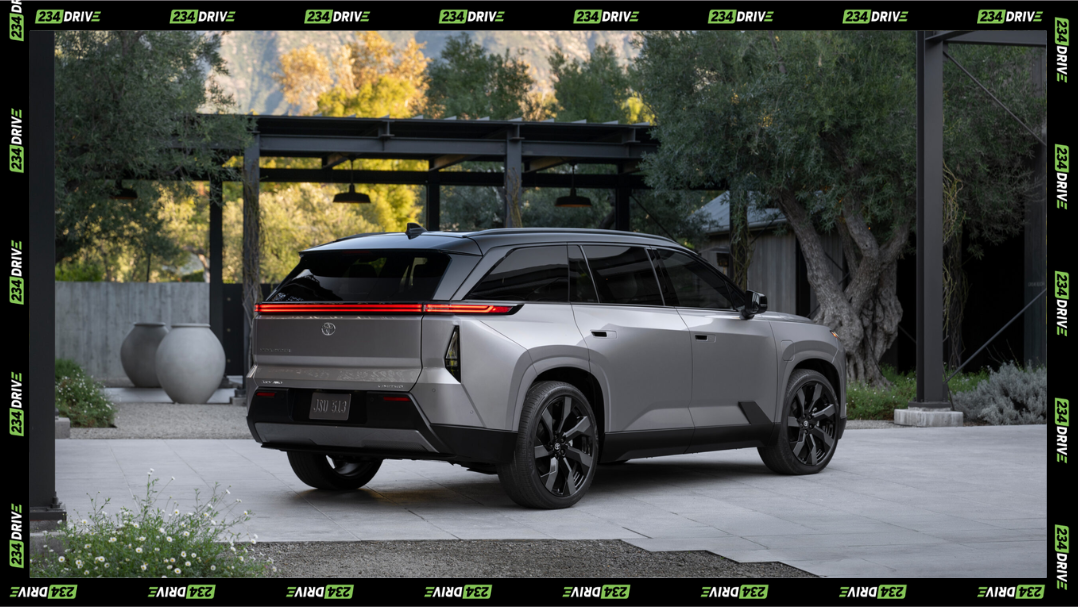
A slim full-width rear light bar stretches across the tailgate, giving the SUV a sharp, futuristic look. | Source: Toyota pressroom
Toyota stretches the wheelbase to 120.1 inches, which is about eight inches longer than the gas version, made to improve interior room and ride stability. The SUV measures 198.8 inches long and 78.3 inches wide, giving it a more planted look without feeling oversized.
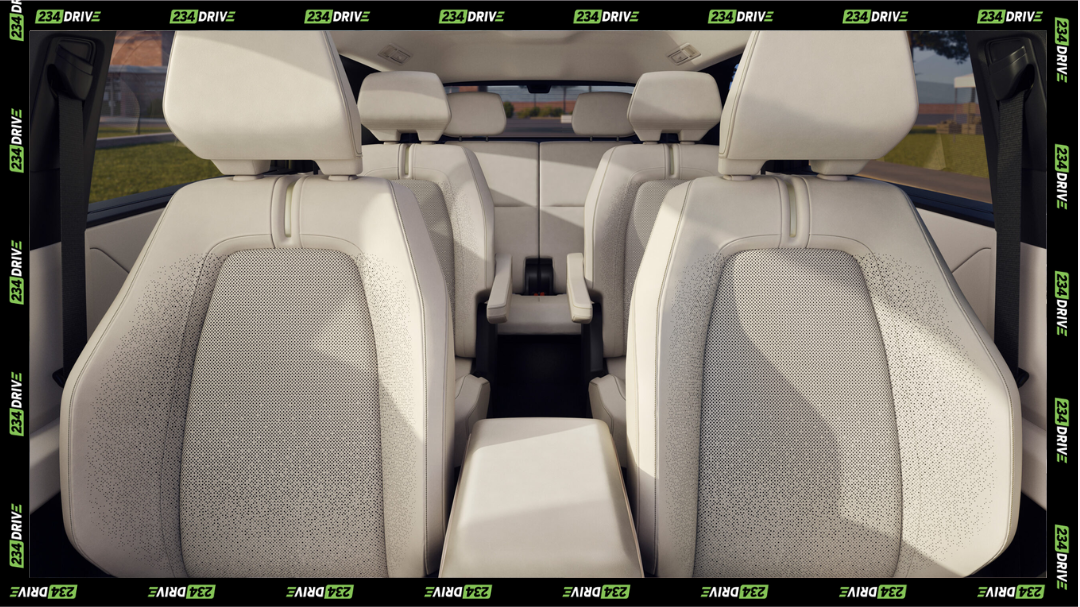
Light-colored seats and a spacious three-row layout create an open, comfortable feel throughout the interior. | Source: Toyota pressroom
The longer platform helps create usable third-row space. Toyota says two adults can sit comfortably in the back. Second-row seats fold forward with a one-touch mechanism to make access easier.
Storage is practical and thoughtful. There are 18 cupholders, tablet slots behind the front seats, layered console storage, and a hands-free power liftgate for quick loading.
Battery Choices and Driving Range
Toyota offers two battery sizes and both front-wheel and all-wheel drive setups:
- XLE FWD with 77.0-kWh battery: estimated 287 miles
- XLE AWD with 77.0-kWh battery: estimated 270 miles
- XLE AWD with 95.8-kWh battery: estimated 320 miles
- Limited AWD with 95.8-kWh battery: estimated 320 miles
The front-wheel-drive version produces 221 horsepower. All-wheel-drive models deliver 338 horsepower and 323 lb.-ft. of torque. Although Toyota has not released acceleration figures, the dual-motor setup matches the powertrain used in the smaller bZ SUV so they are expected to be the same.
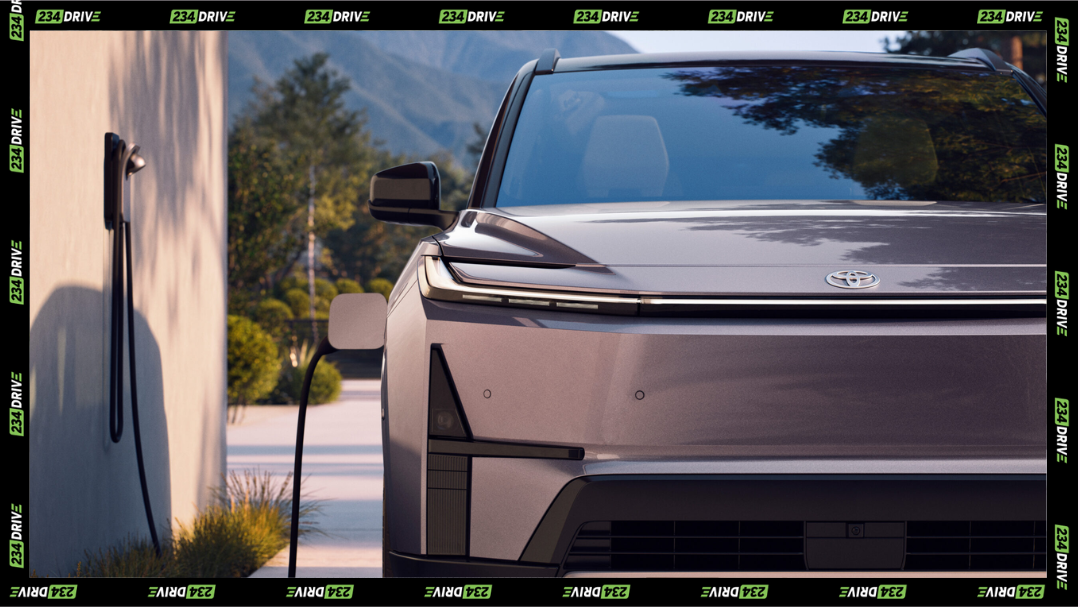
The Highlander EV charges at home, highlighting its sleek front end and smooth, sealed grille. | Source: Toyota pressroom
For charging, the Highlander EV uses the North American Charging System (NACS) port, giving access to thousands of DC fast chargers across the U.S. Under ideal conditions, it can charge from 10% to 80% in about 30 minutes. A dual-voltage cable supports home charging on standard outlets.
Technology That Feels Familiar
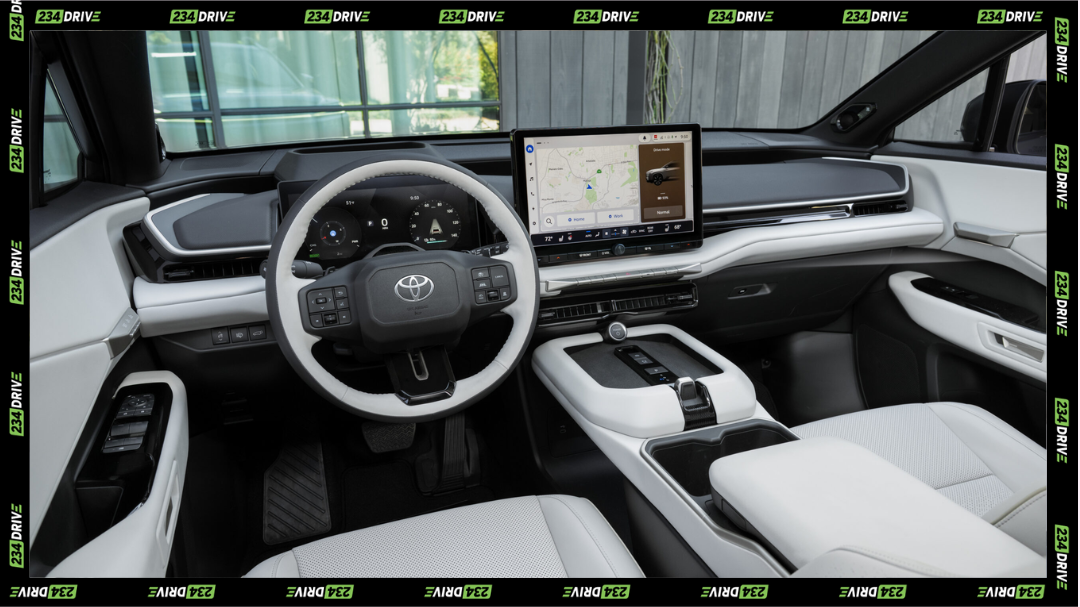
The cabin features a wide touchscreen, digital driver display, and a clean, layered dashboard layout. | Source: Toyota pressroom
Toyota equips the Highlander EV with a 14-inch touchscreen and a 12.3-inch digital instrument cluster. Wireless Apple CarPlay and Android Auto come standard, along with dual wireless phone chargers and multiple USB-C ports throughout the cabin.
Additionally, the infotainment system runs on 5G connectivity and includes an embedded voice assistant. Drivers can use the Toyota app to monitor charging status, adjust schedules, and locate nearby stations. A built-in drive recorder uses the vehicle’s exterior cameras to capture short clips during certain events.
Safety Comes Standard
Toyota Safety Sense 4.0 is included on every trim. It features pre-collision warning with pedestrian detection, adaptive cruise control, lane tracing assist, road sign recognition, and proactive driving assist. Higher trims add features such as Advanced Park and a panoramic view monitor.
More Than Transportation
The 2027 Highlander EV is not just Toyota’s largest electric SUV. It also introduces vehicle-to-load (V2L) capability to a Toyota model sold in the U.S. With the right accessories, the SUV can power external devices—or even serve as backup power during an outage.
That feature moves the Highlander EV beyond daily driving. It positions it as something families can rely on not just for trips and school runs, but for moments when electricity itself becomes the priority.
As the electric market shifts and competitors rethink their pace, the 2027 Highlander EV signals Toyota’s steady bet on bigger, family-ready electric SUVs that offer more than mobility—including emergency backup power when it matters most.