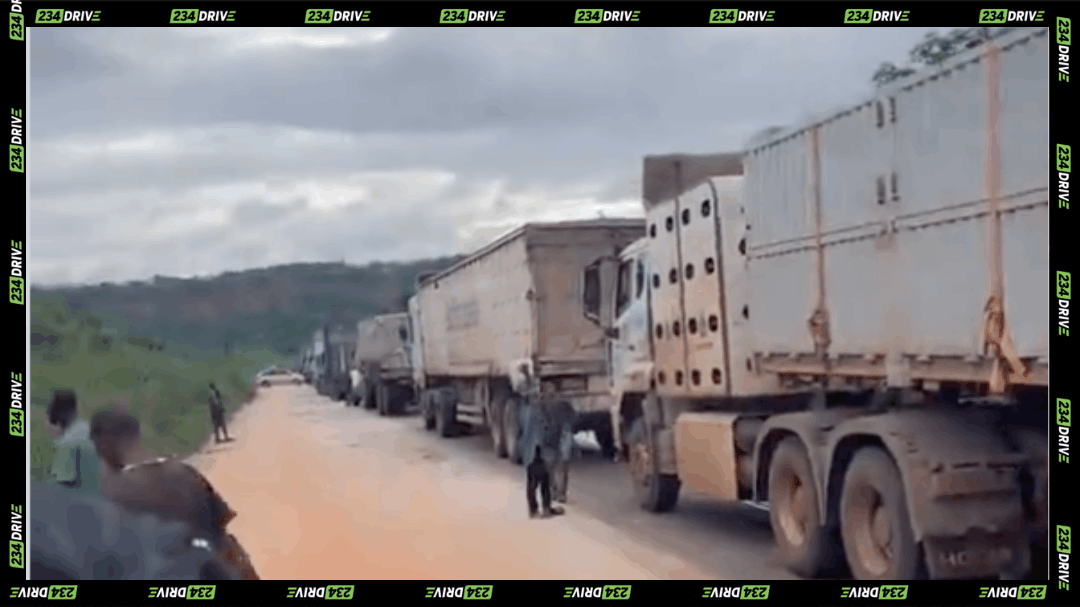

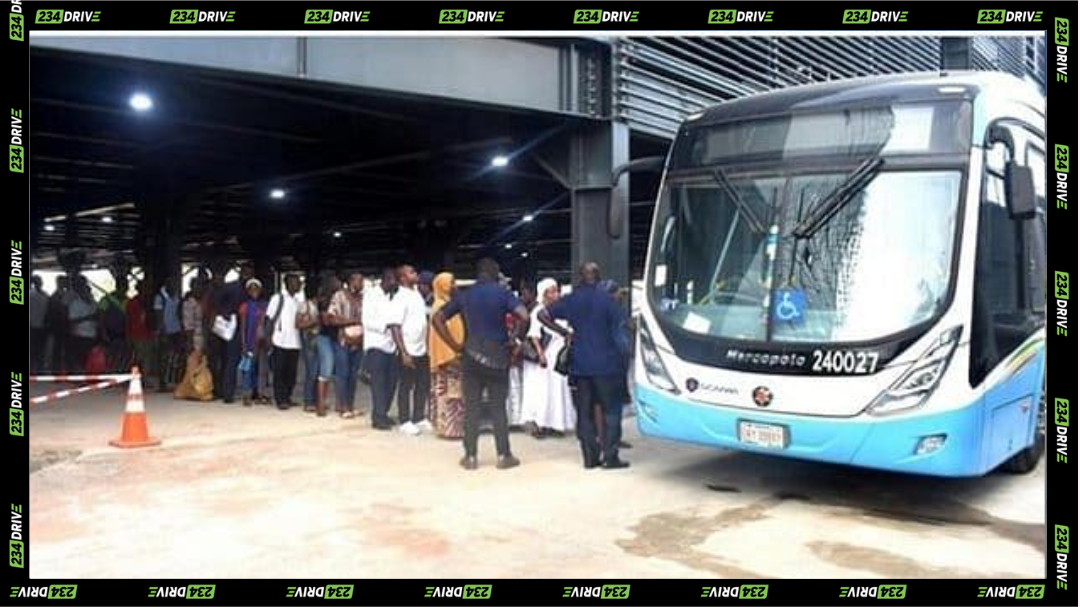
Long queues at Lagos BRT terminals reveal congestion and daily pressure on the city’s strained public transport system. | Source: Businessday
Lagos, Nigeria’s economic capital and a megacity, is a city that is constantly in motion. Millions of residents and non-residents travel across the metropolis each day, trying to reach work, school or business in one of Africa’s busiest economic centres. But the system meant to move those people is under heavy pressure. Public transport has struggled to keep pace with the city’s population and daily travel demand. A comparison with London begins to show how wide the gap has become.
Lagos and London: Similar Pressure, Different Transport Capacity
Lagos and London operate under similar urban pressure. Both cities attract people looking for work and opportunity, which keeps their roads and transport networks busy every day.
Lagos covers about 1,171 square kilometres, while Greater London stretches across roughly 1,572 square kilometres. Now, both cities carry large populations and even with the difference in size, Lagos has an estimated 17.8 million residents, while London’s population is about 9.8 million.
However, one of the biggest differences is seen in how public transport systems operate in these two cities.
Transport for London operates around 9,000 buses across the city’s bus network. Lagos’ Bus Rapid Transit system runs with roughly 434 buses across its corridors.
When those figures are compared with population demand, the numbers involved in the operations would strain any state. Lagos, in its case, has roughly 41,000 people for every BRT bus while London averages about 1,100 people per bus.
This difference shows up every day on Lagos roads. Large numbers of commuters still depend on informal public transport—danfo buses and keke for last-mile transport. Those that can afford ride-hailing services or are lucky enough to get a ride in private cars do so because the formal system does not cover enough routes.
Demand is high, but supply is limited. Nevertheless, Lagos’ transport challenge is not only about how many buses are on the road, and adding more buses alone may not solve the real problem.
Why Adding More Buses Won’t Solve Lagos’ Public Transport Problem
Traffic in Lagos is more than an everyday frustration; it also carries a real economic cost.
A 2018 article by Stears estimated that congestion costs the city about ₦42 billion each year, largely from lost productivity and hours spent in traffic instead of work.
The effects are visible across the state’s highways and major corridors. Every day, millions of commuters attempt to move across Lagos through the same crowded road network.
The Bus Rapid Transit (BRT) system was introduced in 2008 as an attempt to improve this situation. The idea was simple: buses would move through dedicated lanes, allowing them to avoid the worst of Lagos traffic and move commuters faster across the city. For many workers, the system did offer some relief in its early years.
However, the improvement has been minimal.
Lagos now records about 5.2 million registered private vehicles on its roads. That figure does not include danfo buses, korope minibuses or other informal transport vehicles that dominate daily commuting across the state.
Even the BRT corridors face their own challenges. In several sections of Lagos, the so-called dedicated lanes intersect with general traffic. This reduces their ability to function as true rapid transit routes. In practice, BRT buses often get pulled back into the same congestion they were meant to bypass. Because of this, simply adding more buses may not address the deeper problem. More buses placed into the same crowded road network will end up facing the same delays and create even more problems.
What Lagos Needs Instead of Simply Adding More Buses
What Lagos needs is a transport plan that spreads movement across different systems instead of relying almost entirely on roads.
One option that remains underused is the city’s waterways. Lagos is surrounded by lagoons, creeks and coastal channels, yet water transport still plays a near-ignorable role in daily commuting.
A more connected system—where ferries move commuters between water terminals and buses handle the last stretch of their journey—could take pressure off major roads and reduce congestion.
For a city defined by water as much as land, the waterways should not just be used mainly as a scenic experience.