
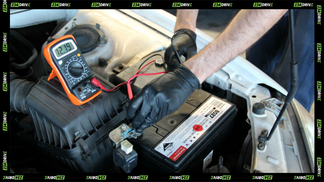
In the middle of a Lagos ‘go-slow’ or an Abuja heatwave, your car battery is fighting a losing battle. While most drivers only think about their battery when the engine refuses to crank, the financial reality of battery replacement has shifted significantly. In 2026, a car battery is no longer a minor ‘tune-up’ expense; it is a strategic purchase influenced by global exchange rates and local climate extremes.
As of early 2026, car battery replacement costs in Nigeria typically range from ₦45,000 to over ₦350,000. While a local mechanic might charge a modest ₦2,000–₦5,000 for labour, the true cost lies in the unit itself—and choosing the wrong one can double your long-term spend.
The 2026 Price Landscape
The Nigerian battery market in 2026 is a complex mix of imported premium brands and more affordable local and regional options. Prices are primarily dictated by three factors: Capacity (measured in Ampere-hours or Ah), Technology (Calcium vs. AGM), and Brand Heritage.
- Budget & Entry-Level (₦45,000–₦70,000): This segment is dominated by local assembly brands and basic flooded lead-acid batteries from Southeast Asia. While they offer the lowest barrier to entry, they are often less resilient to the deep discharges caused by the frequent ‘short-trip’ driving patterns common in Nigerian cities. For the budget-conscious driver, these units are a functional stop-gap but rarely last beyond 18 months.
- The Mid-Range Standard (₦70,000–₦130,000): This is the engine room of the Nigerian automotive market. Brands like Solite, Rocket, Hankook, and Diamond have built significant trust here. A standard 75Ah battery for a mid-sized sedan (like a Toyota Camry or Honda Accord) usually sits around ₦90,000. For SUVs requiring 100Ah units, you can check current battery listings to find prices hovering between ₦110,000 and ₦135,000. These batteries often feature ‘Silver Calcium’ technology, which offers better resistance to the internal corrosion caused by high under-hood temperatures.
- Premium & Luxury AGM (₦150,000–₦350,000): Owners of modern European vehicles or high-end American SUVs with ‘Start-Stop’ technology face a different reality. These cars require AGM (Absorbent Glass Mat) batteries. Unlike traditional batteries, AGM units are sealed and use a glass mat separator to hold the electrolyte. This allows them to handle the rapid-fire charging and discharging cycles of modern engine management systems. While the ₦200,000+ price tag is steep, using a standard battery in an AGM-required car will usually result in a dead battery within six months.
Why the ‘Nigeria Factor’ Shortens Battery Life
In cooler climates, a quality automotive battery might last five to seven years. In Nigeria, the average lifespan is closer to two or three. Understanding why this happens is the first step toward saving money.
The Thermal Catalyst: Automotive batteries rely on a chemical reaction between lead plates and sulfuric acid. Like all chemical reactions, this process accelerates as temperature rises. For every 10°C increase in ambient temperature above the ideal 25°C, the internal chemical reaction speed effectively doubles. In a country where the sun regularly pushes temperatures above 35°C, and under-hood temperatures in traffic can exceed 70°C, the battery is essentially ‘cooking’ its own internal components.
Electrolyte Evaporation: Even in ‘Sealed Maintenance-Free’ (SMF) batteries, extreme heat causes the water in the electrolyte to slowly evaporate. Over time, this increases the acid concentration, which begins to eat away at the lead grids. This process, known as grid corrosion, is the leading cause of sudden battery failure in the Nigerian dry season.
The Vibrational Tax: Our road conditions add a mechanical layer to the problem. Constant vibration from potholes and uneven surfaces can cause the active material on the battery plates to shed and settle at the bottom of the case. If enough material builds up, it can short-circuit the cells, leading to a battery that shows 12 volts on a meter but has zero ‘cranking amps’ to start the engine.
Decoding Battery Technology: What are you paying for?
When you walk into a battery shop in Ladipo or Apo, you aren’t just buying a box of lead; you are choosing a chemistry.
- Flooded Lead-Acid: These are the traditional ‘wet cell’ batteries. They are the most affordable but require the most attention. In Nigeria’s heat, the fluid levels must be checked monthly. Neglecting this leads to dry plates and instant failure.
- Calcium Maintenance-Free: By adding calcium to the lead alloy, manufacturers have reduced the battery’s tendency to lose water. This makes them ‘fit and forget’ units, which is why they are the preferred choice for the average Nigerian commuter. You can browse available battery types to see which brands prioritise this technology.
- AGM (Absorbent Glass Mat): These are essentially the ‘ruggedised’ version of car batteries. They are completely spill-proof, highly resistant to vibration, and can be discharged more deeply without damage. For those who can afford the upfront cost, an AGM battery often pays for itself by lasting 30-50% longer in harsh conditions.
The Hidden Economics: Replacement vs. Repair
There is a common practice in many Nigerian workshops of ‘servicing’ a dead battery by changing the acid or ‘washing’ the plates. While this might give you a few more days of life, it is a false economy. Once the lead plates have sulfated or the internal grids have corroded, the battery’s capacity is permanently lost.
The true financial risk of a failing battery isn’t just the ₦100,000 for a new one; it is the secondary damage. A weak battery forces the alternator to work at 100% capacity constantly to try and charge it. Over time, this burns out the alternator’s voltage regulator—a repair that can cost an additional ₦40,000 to ₦80,000 depending on the vehicle. You can research detailed model prices to ensure you aren’t overpaying for a unit that won’t save you these costs.
Maintenance Recommendations for 2026
In an economy where every Naira counts, maintenance is the only way to protect your investment.
- Avoid Tokunbo Gambles: While imported used batteries are cheaper, they have often sat in shipping containers for months, allowing internal discharge and sulfation to take hold. A new mid-range battery with a 12-month warranty is almost always the more economical choice over a two-year period.
- The 20-Minute Rule: Short trips (under 10 minutes) are battery killers. They drain the power needed to start the car but don’t give the alternator enough time to put that power back. Try to include at least one 20-minute highway drive once a week to ensure the battery reaches a full state of charge.
- Terminal Hygiene: Check your battery terminals every month. If you see white or bluish ‘fur’ (corrosion), clean it with a mixture of baking soda and warm water. That corrosion creates electrical resistance, making it harder for the battery to start the car. For high-performance needs, premium battery specs often highlight better terminal protection.
- Secure the Bracket: Ensure your battery is tightly clamped. A battery that bounces in its tray will die significantly faster due to internal plate damage. If you are looking for local options, manufactured automotive batteries often focus on reinforced casings for local roads.
In the 2026 Nigerian automotive landscape, the car battery has evolved from a simple commodity into a high-value asset. By understanding the science of heat and the tiers of available technology, you can navigate the market with confidence, ensuring that your next purchase is a long-term solution rather than a recurring headache.