
At 5:45pm on a Friday, the traffic at Oshodi is a living, breathing creature. For most drivers, the primary concern is the fuel gauge. But for many, there is a silent killer lurking under the bonnet: the decision to use plain tap water instead of a proper coolant.
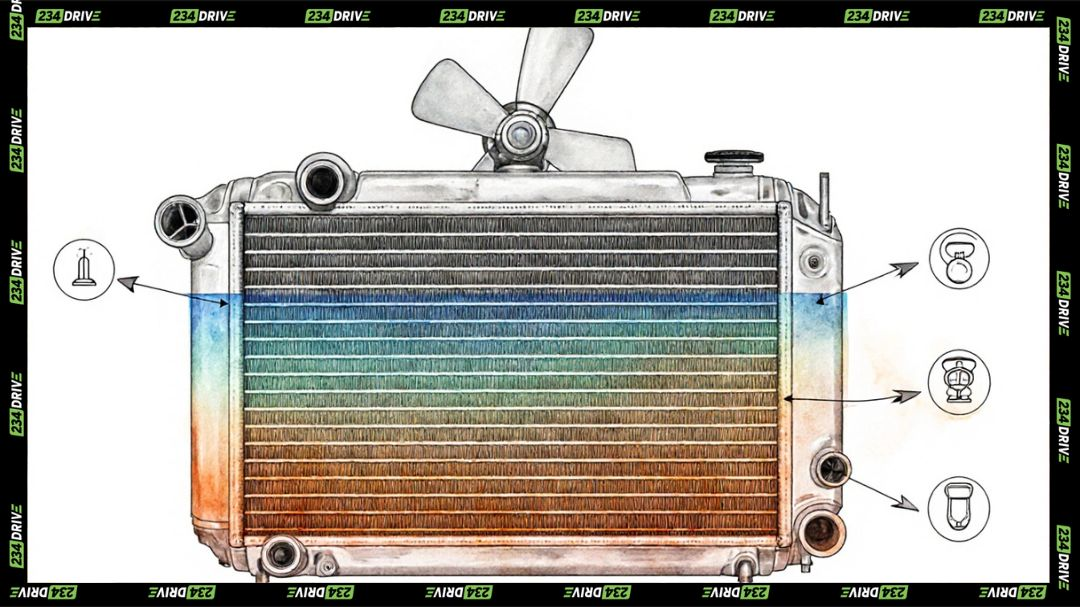
In this environment, using water as a radiator ‘coolant’ is remarkably common. It is cheap, accessible at every borehole or fuel station, and many roadside mechanics will claim ‘water is fine.’ However, the data on engine health shows that water is not a bargain—it is a high-interest loan that your engine will eventually call in.
The Science of the Boil
The Nigerian environment is not kind to cars. Between the 35°C afternoon heat and the stop-and-start misery of city traffic, your engine operates in a constant state of high stress.
Plain water boils at 100°C. Modern engines, especially those with the AC blasting in traffic, often reach or exceed these temperatures. When water boils, it turns into steam, creating air pockets (steam voids) that cannot absorb heat. This is how ‘Stage 1 Overheating‘ begins. Proper coolant, usually a 50/50 ethylene glycol mix, raises that boiling point to 125°C or higher. That 25-degree cushion is essential for hot weather conditions and is often the difference between getting home and being stranded on a bridge with a warped cylinder head.
The Silent Erosion
The danger of water isn’t just about heat; it is also about chemistry. Local tap water is notoriously ‘hard,’ packed with minerals like calcium and magnesium. This leads to frequent debates regarding tap water vs. coolant, as these minerals eventually solidify into scale, clogging the narrow passages like cholesterol in an artery.
More importantly, water lacks rust inhibitors. Without them, the water pump—the heart of your cooling system—begins to corrode. Nationally, premature water pump damage is one of the most common ‘preventable’ repairs. Coolant acts as a lubricant for these pump seals and a shield against the internal rust that eventually eats through your engine block.
The Financial Reality Check
Let’s look at the ‘Mobility Economy’ of this decision and the coolant vs. water trade-offs drivers make daily.
- The Cost of Prevention: A full flush and refill with a reputable brand like Prestone, LubeMax, or genuine manufacturer coolant typically costs between ₦15,000 and ₦40,000.
- The Cost of Failure: If that water boils off and you blow a head gasket, the bill is significant. For a standard sedan, a head gasket job can easily cost ₦250,000. For a premium V6 engine, the complexity can push that figure toward ₦1,000,000.
In an economy where every Naira counts, spending ₦20,000 today to save ₦600,000 tomorrow is not just good maintenance—it is essential financial planning.
When Is Water Okay?
There is only one time you should reach for the tap: an emergency use only scenario. If your radiator is bone-dry in the middle of nowhere, add the cleanest water you can find to reach a mechanic. But the moment you are safe, that system must be flushed and replaced with the correct mixture.
Maintenance Recommendations
- Stop using tap water. If you must dilute concentrate, use distilled water (available at pharmacies or auto shops) to avoid mineral buildup.
- Check your levels every two weeks. The dry season is unforgiving.
- Use the right colour. Check your manual. Modern vehicles usually require OAT (Organic Acid Technology) coolant (often Red/Pink), while older models may take IAT (Green).
- Buy from trusted sources. The market has its share of ‘coloured water’ masquerading as coolant. Buy from established retailers to ensure you’re getting the additives your engine needs.
Whether you are a commercial driver or an urban professional, the goal is the same: to keep moving. Plain water might get you through today, but proper coolant ensures you’re still on the road next year.