Yaw Agyapong had already done the hard work of growing and harvesting his tomatoes. But what came next is a problem many farmers in Akomadan (Akumadan), a small town in southern Ghana, know well.
In Akomadan, buyers do not always arrive when farmers are ready to sell. Agyapong, a farmer and youth leader in the community, said this can leave harvested tomatoes sitting on farms until they begin to spoil.
AkoFresh offered farmers like him another option: keep the produce fresh while they wait.
AkoFresh’s solar-powered cold rooms give farmers more time to find buyers instead of rushing to sell or watching their harvest deteriorate. But AkoFresh does not stop at refrigeration. The company is also working on how that food moves, using refrigerated transport to connect farms, storage points and markets.
That makes its work as much about mobility as preservation. Behind the idea is Mathias Charles Yabe, a Ghanaian entrepreneur trying to solve a simple but costly problem: What happens to food in the crucial stretch between leaving the farm and reaching a willing buyer?
Who Is Mathias Charles Yabe?

Mathias Charles Yabe’s route into agriculture did not begin on a farm. The Ghanaian entrepreneur studied communication design at Kwame Nkrumah University of Science and Technology (KNUST), where his interest in solving social problems was already taking shape.
In 2019, he joined the Millennium Fellowship, a student leadership programme supported by United Nations Academic Impact. During the COVID-19 school closures, he also worked on Project ReL, a virtual learning platform designed to support sign-language learning for hearing-impaired students in Ghana.
In Akomadan, one of Ghana’s major tomato-growing communities, AkoFresh estimated that farmers were losing about 4,200 metric tonnes of tomatoes each year, with seasonal losses worth around US$1 million across a farming population of roughly 7,000 people.
Yabe’s response to that problem soon attracted attention beyond Ghana.
In 2021, the World Economic Forum named him a Top Innovator through its Generation Restoration challenge. He later received the Young Global Changers Recoupling Award, won the TotalEnergies Startupper of the Year global prize and was named among the top 10 finalists for the Global Student Prize.
Agriculture eventually gave that problem-solving instinct a new direction.
Rather than focus on how much farmers could produce, Yabe turned his attention to what happened after harvest. AkoFresh, established in 2020, grew around that gap between farm and market, where poor storage, delayed transport and limited access to buyers can strip value from food farmers have spent months producing.
That became the foundation of Yabe’s work: helping farmers protect the value of what they grow long enough to get it to market.
Where Rural Logistics Breaks Down
Agricultural mobility is not only about getting produce from one place to another. For perishable food, how well it survives the journey matters just as much as the journey itself.
A crate of tomatoes may reach the market and still lose value if heat and delays have already damaged it.
That is a common pressure for smallholder farmers. The World Economic Forum reported that almost 90% of Ghanaian farmers sell close to the farm gate because reaching other markets can be difficult, with inefficient supply chains driving much of that waste.
This is why preservation belongs in the mobility conversation.
Transport moves the food, but cooling protects its value while it moves. Without that protection, delays can force farmers to sell quickly, accept lower offers or risk losing the produce altogether.
Yabe’s approach connects both sides: preserve the harvest, then move it without losing the value that preservation created.
How AkoFresh’s System Works
AkoFresh’s system runs through an off-grid solar-powered cold room placed close to farming communities.
The unit uses solar panels, insulated cold-room panels, sensors, a compressor and an air-cooling system. Solar energy powers it during the day, while batteries keep it running after sunset. The prototype was designed to hold produce between 5°C and 10°C and store about 100 crates of tomatoes weighing 25kg each.
Because the unit runs off-grid, it can bring refrigeration closer to farming communities without depending on a reliable electricity connection.
Farmers pay for the space they use rather than buying the equipment. In 2022, the World Economic Forum reported a fee of about US$0.30 per day for a 20 kg crate, with weekly payments and farmers could also pay with produce instead of cash.
The system now extends beyond storage. AkoFresh has also introduced what it describes as a solar-powered cooling tricycle for moving produce between farms and markets. Public information, however, does not clearly specify whether solar energy powers the vehicle’s propulsion, its refrigeration system or both. ‘Solar-powered cold-chain logistics’ is therefore the safer description of the wider system.
What Changes When Farmers Can Wait?
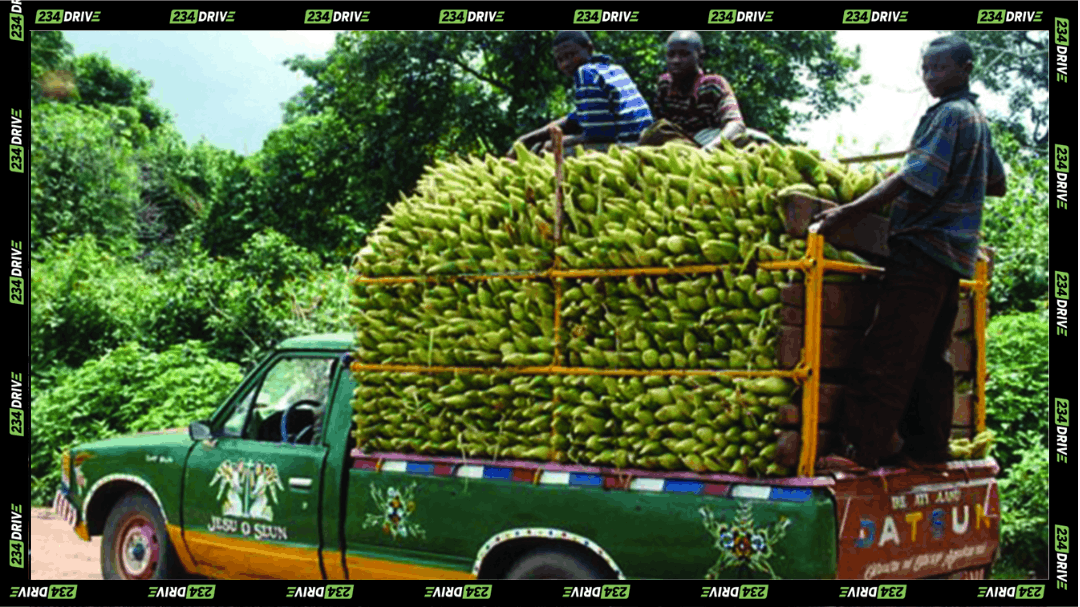
AkoFresh’s clearest reported impact is the extra time it gives farmers to sell their produce.
The company says its cooling system can extend the shelf life of some fruits and vegetables from about five days to as long as 21 days. That longer window reduces the pressure to sell immediately and gives farmers more time to find buyers and negotiate a better price.
If a buyer does not arrive today, the harvest does not automatically lose its value by tomorrow.
AkoFresh says its impact has grown over time, with its website citing more than 10,000 lives reached, 950 tonnes of food saved, over 100 jobs created and a 40% increase in farmer income. The company also reports more than 400 tonnes of food-waste emissions avoided.
Scaling Is the Harder Test
The next question is whether those gains can hold as AkoFresh grows.
Preserving food in one cold room is one thing. Building a reliable network across farming communities is more demanding. Cold rooms need funding, batteries and refrigeration systems need maintenance and refrigerated vehicles have to stay operational.
The farming cycle also affects how the system performs. Tomato volumes can rise sharply during harvest and fall afterwards, even though the equipment still carries running costs.
Then for farmers, affordability remains central. The service only works if the value saved from reduced spoilage is greater than what they spend on storage and transport. That makes the real measure of scale not just how many cold rooms AkoFresh installs, but whether farmers can keep using them profitably.
Sustainable Energy for All points to similar barriers across Ghana’s cooling sector, including access to finance, skilled technicians, supportive policy and wider cold-chain infrastructure.
This means Yabe’s next challenge is not only expansion but also connection. The cold rooms have to link with farms, refrigerated transport has to carry produce onward and buyers or processors need to be waiting at the other end.
That is what turns AkoFresh from a collection of cooling units into a functioning rural logistics network.
What Comes Next for AkoFresh

AkoFresh is already testing how that network could stretch beyond fixed cold rooms.
The cooling tricycle launched in 2025 added a mobile option for last-mile movement. Then in April 2026, AkoFresh launched a mobile cold-storage trailer designed to bring on-demand refrigeration directly to farming areas where permanent storage is limited.
Those additions give a clearer idea of where the company may be heading: taking cooling closer to farmers while connecting it more directly with the journey to market.
The next phase will show how well that approach works across more communities and crops, and whether it can remain affordable as the network expands. More public information on operating costs, active units, farmer usage and returns would also make it easier to measure how the model performs beyond its early deployments.
Mathias Charles Yabe and the AkoFresh team have already moved the idea from a community cold-storage concept into a wider mix of storage and mobile refrigeration.
What they build from here will be worth watching as African food systems look for better ways to protect perishable produce between harvest and sale.
*234Drive reached out directly to Yabe for more insight into his journey and additional details on AkoFresh’s work, but had not received a response at the time of publication.