
The Kia Cerato has built a formidable twenty-year career transitioning from a basic entry-level compact into a sophisticated sedan that commands respect on African roads. Produced globally since 2003 under various global nameplates including the Forte and K3, the Cerato has cultivated a public image anchored in a strong mix of style, practical space and undeniable value. In this Kia Cerato review Nigeria 2026 edition, we examine how it captures the attention of young professionals and families seeking a premium automotive experience without the luxury price tag.
While brand new units are rare due to import duties and volatile forex rates, the locally used markets remain heavily saturated with the Cerato. Kia Motors Nigeria continues to support the lineage, though current dealership emphasis often shifts toward SUVs. For the everyday Nigerian navigating urban commutes, the Cerato represents an established taste for modern aesthetics and feature-rich interiors, presenting a highly compelling alternative to the traditional Japanese dominance.
The Second Generation (2008–2013)
The second-generation Cerato brought a necessary visual overhaul to the lineage, introducing a refined exterior styling that still holds its ground today. This era ditched the forgettable lines of the first generation for a sharper, more assertive road presence. The introduction of the two-door Koup variant added a layer of sportiness, but it is the practical sedan that truly gained traction among buyers who appreciate solid stance and clean proportions. Prices reflect its accessibility. Older 2010 models range from ₦3.5M to ₦6.8M, while clean 2012 options sit in a sweet spot of ₦5M to ₦7.7M on platforms offering used Kia Cerato cars.
Inside, this generation offers a significant leap in comfort and material quality. Powered by durable 1.6-litre to 2.0-litre petrol engines, the vehicle delivers an adequate ride tailored for daily commuting rather than aggressive performance. While it lacks modern infotainment screens, the cabin remains ergonomically sound and surprisingly spacious. The basic safety features and conventional automatic transmissions provide a reliable foundation for drivers who prioritise straightforward mechanical durability over complex digital interfaces.
The Third Generation (2013–2018)
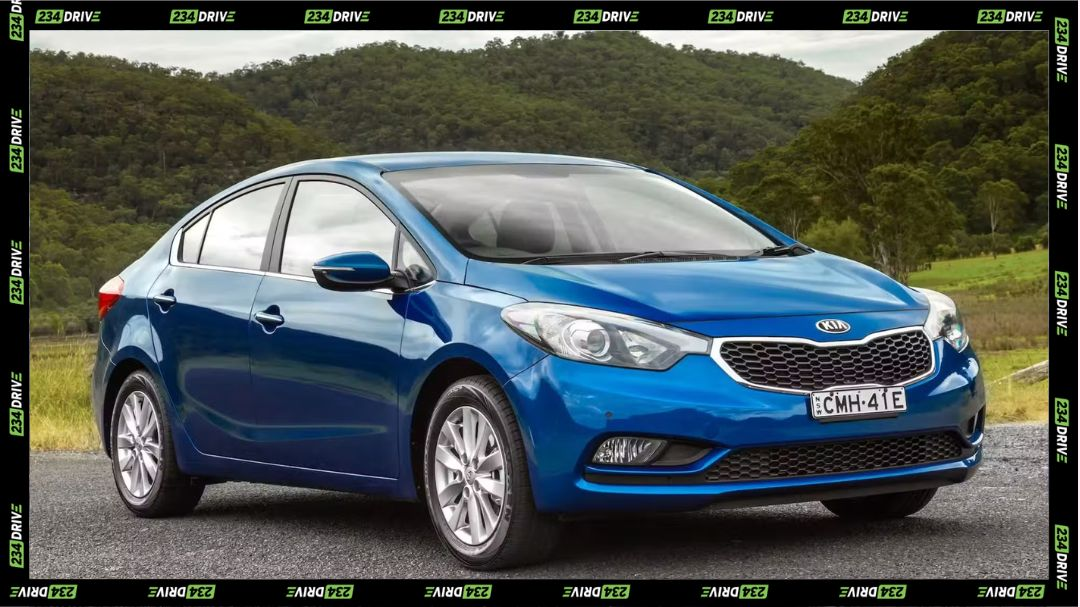
Kia executed a major redesign for the third-generation Cerato, resulting in a lower, wider and longer stance that radically elevated its road presence. This iteration is sought-after in the Nigerian tokunbo market because it mimics the aesthetic of more expensive European saloons. The swept-back headlights, signature tiger-nose grille and sculpted side profiles give the 2013 to 2018 models a distinctly premium feel. It is a design that catches the eye in heavy Lagos traffic, appealing directly to buyers who prioritise visual impact. Clean foreign-used models from this era command between ₦5.5M and ₦13M, depending heavily on mileage and interior condition.
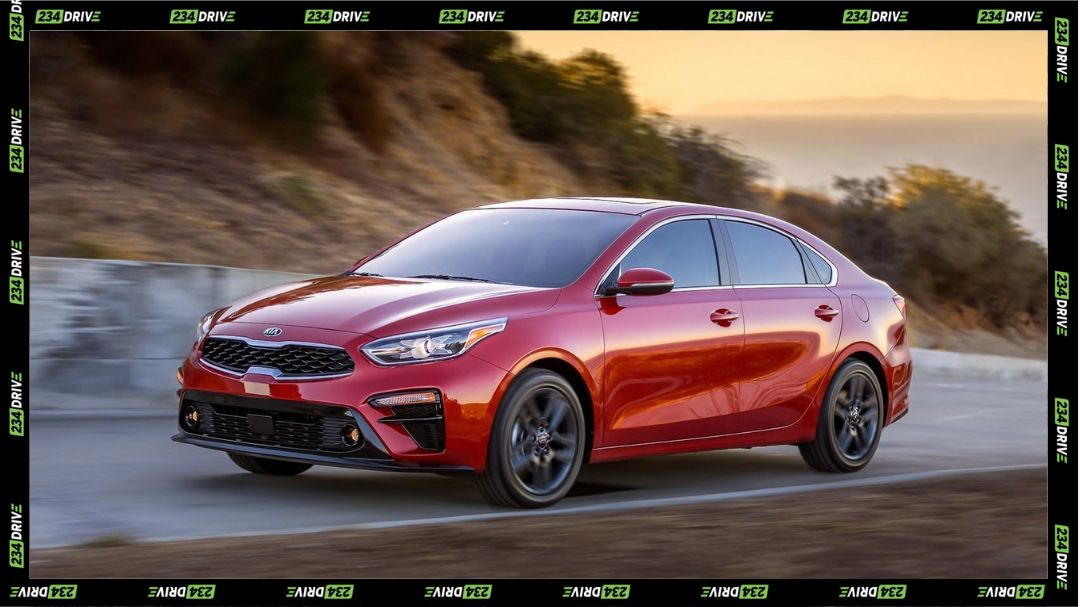
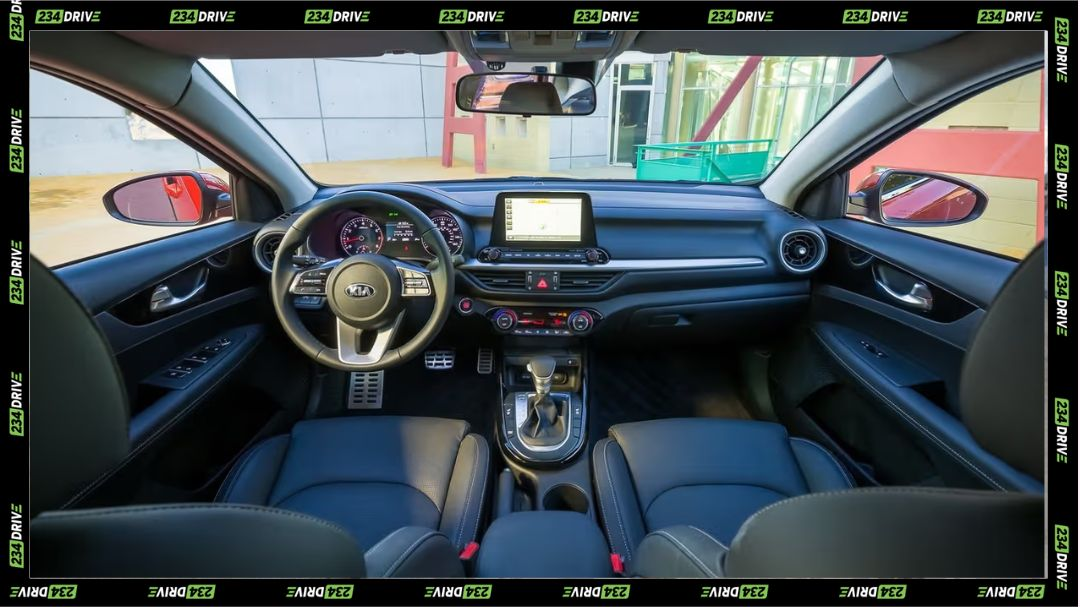
The interior matches the exterior’s ambition, offering improved noise, vibration and harshness levels for a noticeably quieter highway experience. Technology took a forward leap with touchscreen options, cruise control and standard alloy wheels on higher trims. Performance is driven by a reliable 1.6-litre Gamma MPI engine producing roughly 130 horsepower, mated to a smooth six-speed automatic transmission. With a 462-litre boot and real-world fuel economy hovering around 7.4 to 9 litres per 100 kilometres, it serves as a highly functional family hauler.
The Fourth Generation (2018–Present)
The fourth-generation Cerato borrows heavy design inspiration from the high-performance Kia Stinger, resulting in a bold and aggressive exterior. Constructed with 54% advanced high-strength steel, the vehicle boasts a stronger and significantly safer structural foundation. The GT variants push the styling further with sportier accents, dual exhausts and larger wheels that demand attention. Pricing for 2022 and 2023 equivalents in Nigeria is notoriously steep, estimated between ₦18M and ₦36M due to global base pricing scaling aggressively, making a new Kia Cerato price verification essential for serious buyers before committing.
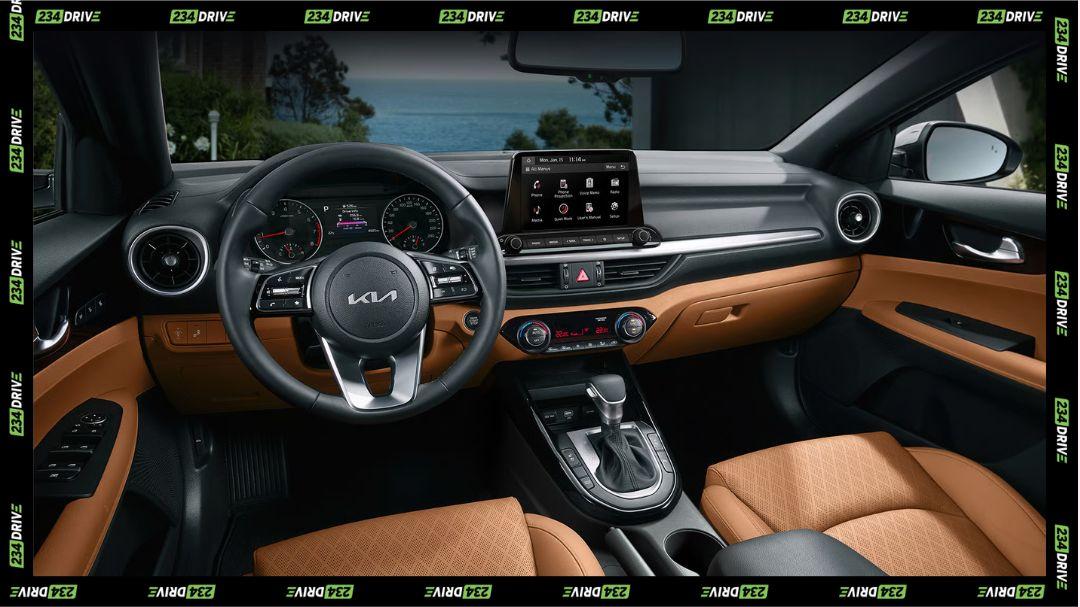
Inside, the cabin is a tech-focused haven featuring a large touchscreen with Apple CarPlay, digital cluster options and premium audio systems. The driving dynamics are significantly refined, an observation echoed in any comprehensive global Kia Cerato review evaluating its on-road behaviour. It offers a base 2.0-litre Nu MPI engine generating 150 horsepower, or a thrilling 1.6-litre turbo in the GT pushing over 200 horsepower through a rapid seven-speed dual-clutch transmission. Safety remains paramount, backed by a five-star ANCAP rating and advanced driver aids like blind-spot monitoring.
Relevance to the Nigerian Environment
Owning a Kia Cerato in Nigeria requires a practical understanding of the local driving environment. The vehicle handles the notoriously chaotic traffic of Lagos and Abuja with commendable fuel efficiency, frequently returning 8 to 10 kilometres per litre in relentless stop-and-go conditions. However, the climate and infrastructure demand proactive maintenance. Older models can develop air conditioning faults if neglected—a critical issue given the unforgiving Nigerian heat. Furthermore, while the ground clearance of 135 millimetres on newer models is adequate for major city roads, the suspension systems on pre-2018 models suffer accelerated wear when repeatedly subjected to severe arterial potholes.
Despite these infrastructure challenges, the Cerato integrates seamlessly into the lifestyle of the modern Nigerian urban professional. Parts are relatively easy to source in major spare parts hubs because the Cerato shares extensive mechanical components with Hyundai vehicles. While it may lack the sheer utilitarian prestige of a Toyota, the Cerato signals a driver who actively values modern aesthetics and tech-forward interiors. For families taking long interstate road trips, the spacious cabin and low issue rate make it a highly suitable companion.
Segment Rivals and Market Positioning
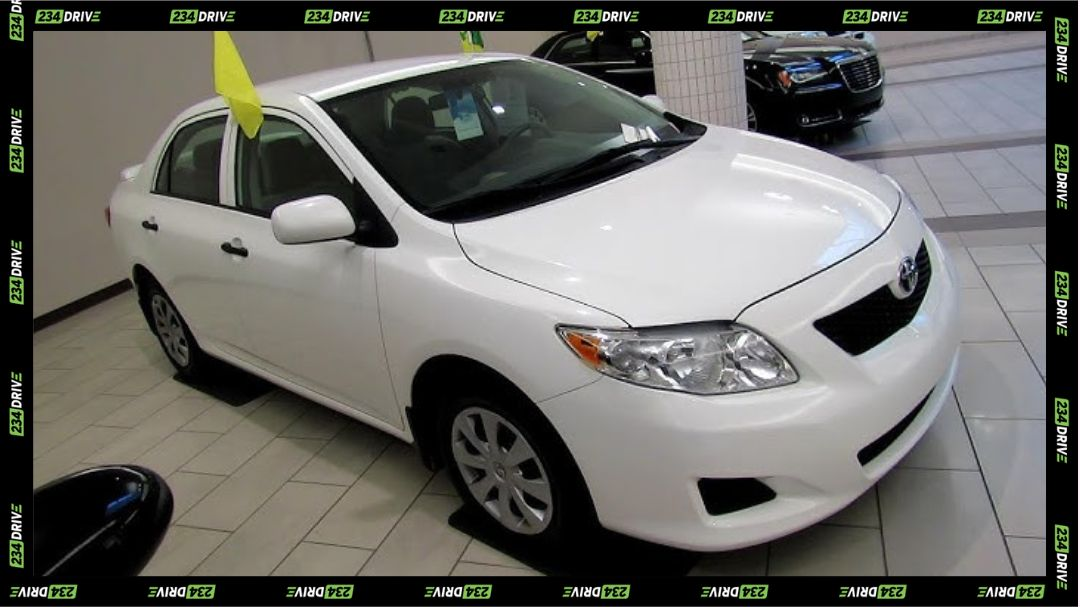
When placed alongside its primary segment rivals—the Toyota Corolla and Honda Civic—the Kia Cerato positions itself as the ultimate value proposition. The Cerato consistently offers more standard features, superior styling and better infotainment technology per Naira spent. However, the Corolla edges out the Cerato when it comes to long-term resale value and a deeply entrenched reputation among local mechanics. Maintenance costs for the Kia are generally reasonable but can be slightly pricier than a comparable Toyota, making a pre-purchase mechanical and body inspection strictly necessary for any used import arriving at the docks.
Against the Hyundai Elantra, the comparison is essentially a battle of aesthetics rather than mechanical superiority. Both vehicles share identical platforms, engines and structural DNA courtesy of their parent group. The choice between an Elantra and a Cerato usually comes down to exterior styling preferences, where the Cerato’s sharp lines frequently win over younger buyers. The introduction of the GT variant also gives Kia a distinct edge for enthusiasts seeking stronger driving dynamics, an area where standard Japanese offerings often feel uninspired.
Final Verdict
The Kia Cerato stands as an outstanding automotive choice for the Nigerian middle class, offering an unmatched blend of striking design, generous cabin space and daily reliability. The 2013 to 2016 models represent the ultimate used-market sweet spot, delivering premium features within a realistic ₦5M to ₦8M budget. While it may yield slightly to Toyota in ultimate resale speed, the Cerato rewards its owners with a far more engaging and stylish daily drive. Have you driven or owned a Cerato on Nigerian roads? Share your maintenance experiences and real-world fuel economy observations in the comments below.