
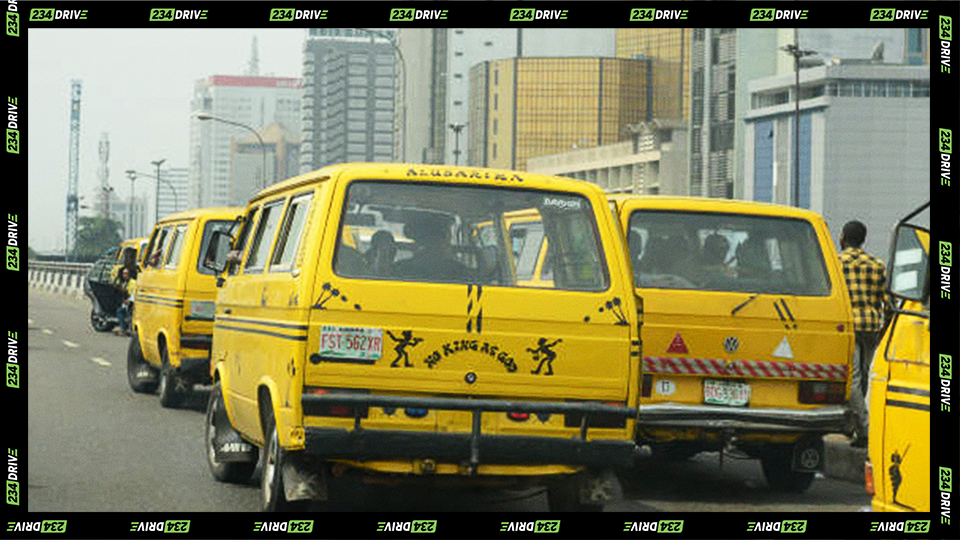
If you’ve been on the road in Lagos these past few days, you probably had a very long and stressful day—more than usual. So many people were, and still are, left stranded trying to get to work or find their way back home. If you are wondering what caused the sudden lack of buses, here is a simple breakdown of everything that happened.
Why The Buses Disappeared
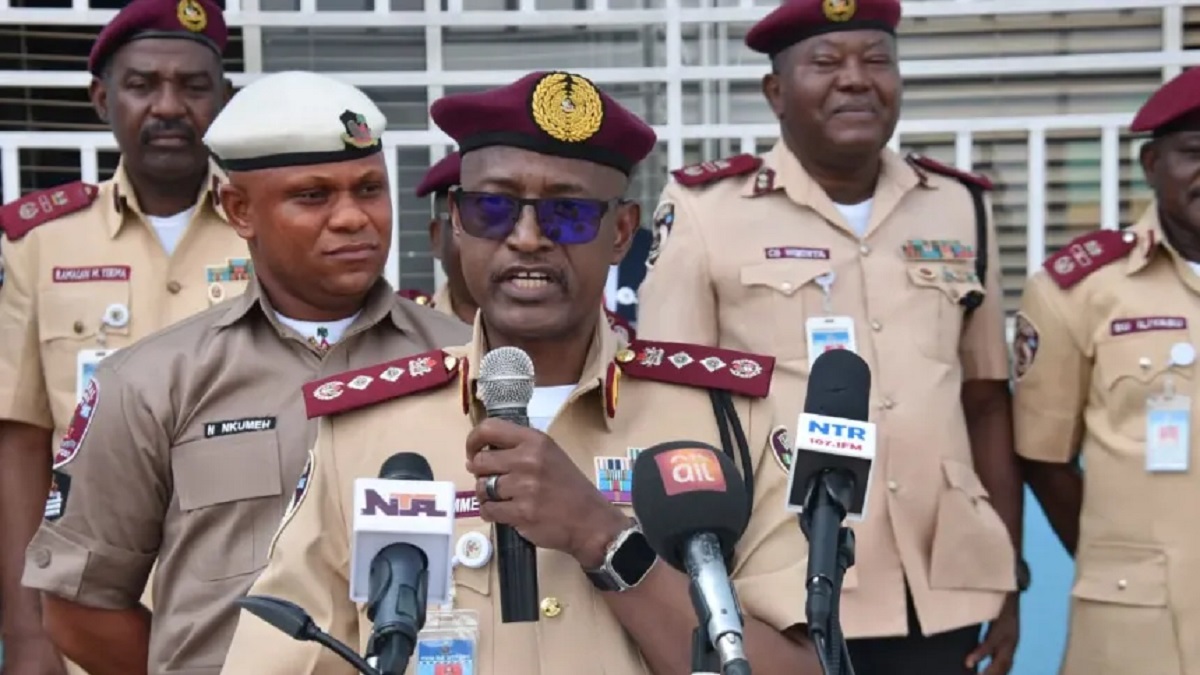
The major reason for the chaos was that commercial bus (Danfo and Korope) drivers mostly along the Iyana-Ipaja and Iyana-Iba axis went on strike. This left a lot of passengers stranded as the drivers protested what they described as persistent extortion from law enforcement and transport regulatory agencies. They accused officials of the Lagos State Traffic Management Authority (LASTMA), the Federal Road Safety Corps (FRSC), and members of the National Union of Road Transport Workers (NURTW), widely known as agberos, of repeatedly demanding money from them.
According to the drivers, they are forced to pay money at multiple bus stops from the start of their trip to the end. For example, drivers complained about paying fees up to five times daily at places like Okokomaiko and Orile. By the time they finish paying all these illegal levies, they have no profit left. To make matters worse, if they refuse to pay or complain, their buses get impounded.
Commuters Are The Ones Who Pay for This
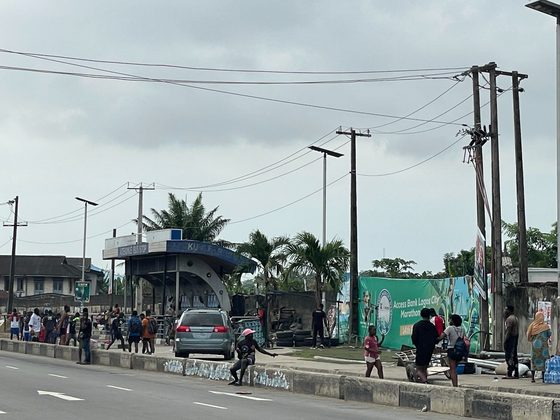
Everyday Lagosians were left to bear the brunt of the strike. Major bus stops from Mile 2, Orile, and Alaba all the way to Iyana-Ipaja were packed with stranded passengers. The very few bus drivers that decided to operate hiked their fares to the roof, forcing many people who couldn’t afford it to simply start trekking under the sun. This situation highlights a critical flaw in Lagos’s transportation network and the city’s overwhelming reliance on commercial buses like Danfos and Koropes to move its massive population. Unlike other major global cities that have diverse mass transit options like extensive tram or train networks to absorb the shock of a bus strike, Lagos’s public transport system is highly restricted. When that layer disappears, even for a few days, there’s no real backup plan waiting underneath it.
There’s Also The Kara Accident
As if the bus strike wasn’t enough, there was another major headache yesterday that made traffic even worse for both those on the mainland and island. Along the Lagos-Ibadan Expressway, a heavy trailer collided with a construction barricade at Kara Bridge. This completely blocked the lanes and caused a massive traffic jam leaving people stuck in one spot for hours.
Same Headache, Different City
A similar situation is also happening in Abuja but that has to do with the recent hike in petrol prices. People were left stranded at bus stops not because drivers were on strike, but because transport fares suddenly shot through the roof. Over the weekend, the price of petrol surged to as high as ₦1,400 to ₦1,600 per litre, leading commercial drivers to hike their fares. Many passengers simply did not have the extra cash. Just like in Lagos, people in Abuja were forced to stand at bus stops for hours trying to negotiate. Drivers, on the other hand, argue that they are not trying to be wicked as they simply cannot run their cabs at a loss when they are buying fuel for as much as ₦1,600.
But this issue of high transport costs brings us right back to Lagos, even before this current strike. Earlier this year, Lagos approved a 13% fare increase across its Bus Reform Initiative services, including BRT and standard routes, after regulated operators raised concerns about rising operating costs.
Not the First Time
The latest strike in Lagos is not the first time Lagos’ commercial drivers have taken their grievances to the streets. In November 2023, commercial bus drivers also went on strike over allegations of extortion involving LASTMA and the Lagos State Task Force. The protest affected areas including Egbeda, Agege, Iyana-Ipaja and Yaba, leaving people stranded.
Where Law Enforcement Stands in All This
Drivers are expected to obey traffic regulations and LASTMA’s job is to enforce those regulations and keep traffic moving. But whenever enforcement becomes associated with allegations of illegal payments, harassment or arbitrary vehicle impoundment, trust between the people enforcing the rules and the people expected to follow them begins to break down.
LASTMA itself says drivers should not pay fines in cash to officers on the road and provides channels for reporting bribery or extortion. The agency also introduced the 3367 toll-free line in 2026 for complaints and other public enquiries. In its first 30 days, LASTMA said the line received 2,843 public engagements, including 163 formal complaints and 468 successfully resolved cases.
Lagos needs its buses as the city has millions of people moving every day, and public transportation remains essential to workers who cannot afford private cars or ride-hailing services. At the same time, Lagos needs traffic enforcement. Without rules, designated stops, vehicle standards and consequences for dangerous driving, the same transport system becomes chaotic and unsafe.
For many residents, transportation is already tied closely to where they can afford to live and where they can afford to work. As our story on Lagos’ commute trap shows, the cost of getting around the city can become part of the calculation people make around rent, work and family life.
So What Actually Fixes This?
This has been a recurring issue in Lagos, in 2022, 2023, and now again in 2026, with the same three complaints about drivers saying they’re being extorted, people being left stranded, and the agencies named in the complaints saying that enforcement is simply doing its job. A toll-free hotline and a physical complaint centre are steps toward accountability, but a hotline only means something if the people calling it trust that a complaint against an official actually goes somewhere.
Until that trust is rebuilt, expect this cycle to keep repeating itself every time drivers decide the daily levies have become unbearable. The people who pay for that standoff first are never the drivers or the agencies negotiating over it. It’s the commuter standing at the bus stop at 7am, watching buses that aren’t coming, doing the same math as everyone on how much more this is going to cost them that day, and how far they’re willing to trek to avoid paying it.