
Every directional correction a driver makes transfers intense kinetic energy directly from the steering wheel to the front tyres. The vital mechanical bridge absorbing and transmitting this continuous rotational force is the steering shaft. Operating out of sight beneath the dashboard and through the engine bulkhead, it serves as the definitive link in vehicular navigation. When a vehicle develops a terrifying looseness in the wheel or emits a harsh metallic clunk over broken tarmac, fleet operators and mechanics inevitably ask the same diagnostic question. What are all the parts on a steering shaft, and which specific component has failed?
Answering this requires looking past the interior cabin aesthetics to examine the raw mechanical components transferring power to the steering rack. Modern automotive engineering divides this system into highly specific sections, each packed with parts designed to handle immense torsion, extreme ambient heat and severe angular misalignment.
To diagnose steering issues accurately, operators must understand exactly how these individual components interact to convert human input into mechanical output.
The Structural Hierarchy
Before identifying individual pieces of hardware, it is essential to understand how the overall assembly is routed through the vehicle. Engine bays are heavily congested spaces and the route from the driver’s hands to the front wheels is rarely a straight, unobstructed line.
It is crucial to note that this rotating mechanical component remains entirely distinct from the column, which is the cabin-side assembly housing the ignition, indicator stalks, clock spring and tilt mechanisms. The shaft itself executes the raw mechanical transfer of power and is divided into three functional zones.
The upper steering shaft sits at the base of the column. It receives direct rotational input from the steering wheel hub. Because it operates largely within the protected, climate-controlled environment of the cabin, it suffers less environmental degradation but requires absolute manufacturing precision to avoid dead spots in driver feedback.
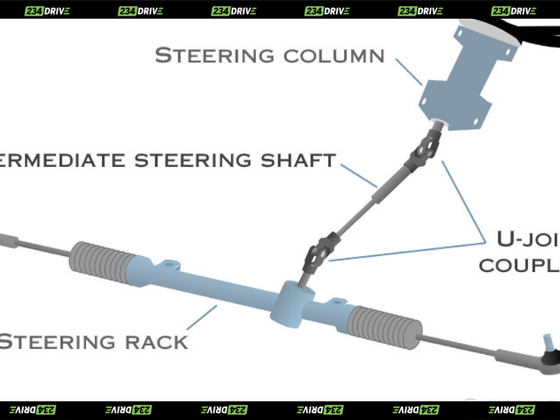
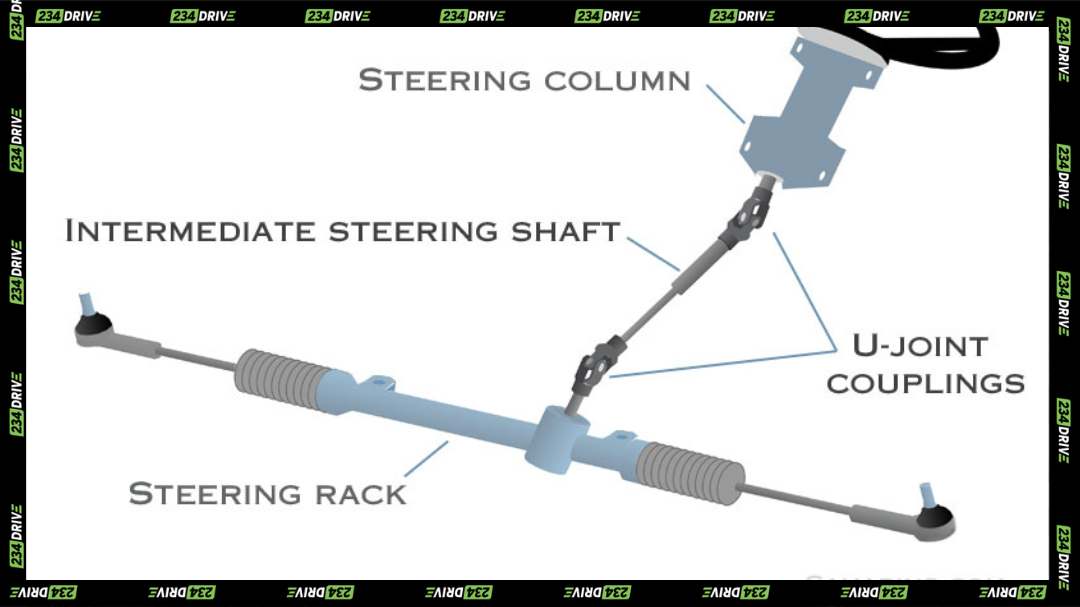
The intermediate steering shaft acts as the primary flexible link. It routes the rotational force around the brake pedals, through the metal firewall and past the exhaust manifolds. This section endures the most complex angles and the harshest temperature fluctuations in the entire system.
Finally, the lower steering shaft connects directly to the input shaft of the steering gear. This section is brutally exposed to road debris, floodwaters and corrosive ambient moisture.
The Core Mechanical Anatomy
To fully grasp how torque reaches the wheels, one must examine the individual steering shaft components that constitute the complete assembly. When technicians dismantle this system, they evaluate a specific sequence of engineered parts.
Splines and Yokes
These are the foundational connectors of the system. Splines are precision-cut, ridged grooves machined into the ends of the shaft sections. They lock the independent pieces of the assembly together, allowing them to transmit rotational force without slipping. Yokes are the heavy-duty, fork-like steel connectors that attach directly to the joints. When high-mileage friction wears down the sharp edges of the splines, drivers immediately feel a distinct, sloppy looseness in the wheel.
Universal Joints (U-joints)
Because the steering path must navigate around the engine block, it operates at a constant angle. Universal joints make this non-linear power transfer possible. Utilising a cross-and-bearing design, U-joints allow the shaft to spin seamlessly even when bent. They are the hardest-working mechanical parts on the entire steering shaft. When the internal needle bearings lose their factory lubrication or suffer water ingress, these joints seize or rust solid, causing the steering to bind and aggressively resist driver input.
Flex Couplers and Rag Joints
While modern high-performance setups rely heavily on U-joints to handle sharp angles, many older vehicles and heavy-duty trucks utilise traditional rubber rag joints to connect specific sections. These are thick, fabric-reinforced rubber discs bolted tightly between two metal flanges. They excel at damping harsh vibrations from corrugated laterite roads before those vibrations can travel up the column and fatigue the driver’s hands. When a rag joint tears due to age and heat exposure, the steering response becomes dangerously vague.
Bearings and Bushings
Precision requires absolute stability. Bearings and polymer bushings support the rotating shaft along its entire length. They ensure smooth, low-friction rotation while preventing any lateral wobble inside the column jacket. If a bearing fails, the shaft will rattle violently against its housing whenever the vehicle navigates uneven terrain.
Dust Boots and Firewall Seals
At the exact point where the intermediate assembly passes through the metal firewall of the vehicle, it is protected by heavy-duty rubber seals and dust boots. These flexible covers serve a dual purpose. They protect the cabin from lethal carbon monoxide exhaust fumes while simultaneously shielding the sensitive lower shaft components from grit, water and road debris. A torn boot accelerates the mechanical death of the lower joints rapidly.
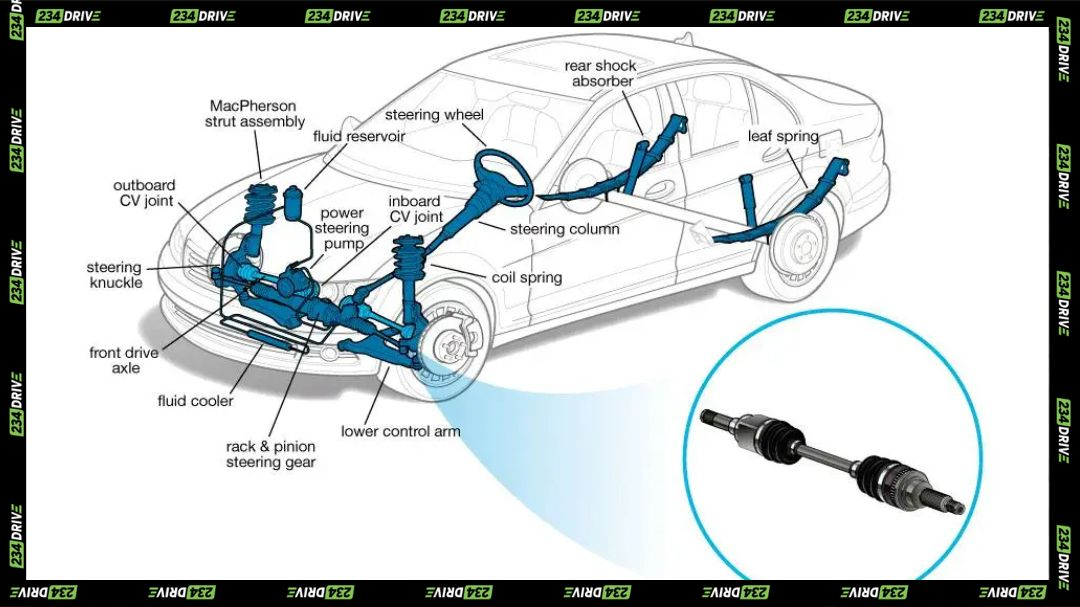
This entire sequence of hardware integrates seamlessly into the overall steering system architecture, converting the driver’s rotational input into the lateral motion required by the tie rods to pivot the front wheels.
The Physics of Passive Safety
Perhaps the most critical, yet least visible, part on a modern steering shaft is the collapsible safety section. This is not a component designed for steering—it is an engineering intervention designed strictly to save the driver’s life.
In the decades before strict automotive safety regulations, a solid, single-piece steering shaft acted as a lethal spear during a severe frontal collision, driving the steering wheel backward into the driver’s chest. Today, engineers utilise a telescopic slip-joint design. The assembly features a solid steel shaft that slides perfectly into a hollow tube, held in place by calibrated shear pins or highly specific corrugated metal profiles.
During a high-speed frontal impact, the immense kinetic energy shears the internal pins, allowing the shaft to collapse in on itself like a telescope. This controlled deformation absorbs the crash energy, preventing the steering column from penetrating the cabin space.
This safety feature dictates an absolute rule in automotive repair. You can never repair a collapsed or bent steering shaft by welding it back together. Once a vehicle suffers a collision severe enough to deploy the airbags and compress the shaft, the entire unit is considered expended.
Diagnosing Component Failure
Steering parts endure massive physical stress on African road networks. While manufacturers engineer these specific components to last upwards of 120,000 miles, continuous exposure to deep potholes, fine dust and intense heat will accelerate joint degradation rapidly.
Identifying the symptoms early prevents catastrophic steering failure at highway speeds. A highly reliable diagnostic procedure involves the engine-off rock test. Park the vehicle, switch off the ignition to disable the power steering assist and rock the steering wheel back and forth slightly. If you hear a rhythmic, metallic clunking or feel mechanical slack while observing the U-joints near the firewall, the intermediate shaft has failed.
Furthermore, if the steering feels stiff in certain positions but loose in others—a tight-loose-tight sensation as you complete a full rotation—the universal joints have likely rusted solid. Acoustic warnings are equally telling. A distinct popping sound during low-speed parking manoeuvres almost always points to a severely worn lower U-joint or a failing flex coupler.
The Economic Reality of Repair
When mechanical symptoms appear, routine maintenance offers limited solutions. Technicians can inspect dust boots for tears and verify the torque specifications on pinch bolts, but the internal bearings of modern automotive U-joints are generally sealed units that cannot be re-greased or repaired.
For commercial vehicles and older trucks, replacing an individual rag joint or lower U-joint is sometimes a viable, cost-effective option. However, for modern passenger cars, seized splines, bent tubes or heavy corrosion will require full replacement shafts to guarantee safety.
In the 2026 Nigerian automotive market, replacing this system presents a significant economic challenge. A brand new original equipment manufacturer (OEM) intermediate shaft for a popular crossover SUV typically costs between ₦225,000 ($150) and ₦450,000 ($300).
While purchasing a used tokunbo shaft from a salvage yard in Ladipo is significantly cheaper—often ranging from ₦45,000 ($30) to ₦90,000 ($60)—it carries immense physical risk. A tokunbo shaft has unknown mileage and may have already suffered micro-fractures or partial collapse from a previous collision in its country of origin. For a component that dictates the fundamental trajectory of a moving vehicle, investing in a verifiable, undamaged replacement is the only logical decision.
The steering shaft operates entirely out of sight, yet its individual parts govern every manoeuvre a vehicle makes. By understanding exactly what these components do, operators can stop replacing suspension parts blindly and address the true mechanical bridge connecting their hands to the road.