
You are driving home from work, navigating the slow-moving gridlock of Lagos or the bypass in Port Harcourt, when the dreaded orange check engine light illuminates your dashboard. When you plug in a diagnostic scanner, a string of letters and numbers appears. If you drive a Corolla, a Camry or a RAV4 in Nigeria, understanding these Toyota error codes is the difference between an affordable fix and a massive, unnecessary mechanic bill.
These alphanumeric codes are not random noise. They are the exact diagnostic trouble codes (DTCs) generated by your vehicle’s Engine Control Module (ECM) when it detects a fault.
While your Toyota is legendary for its durability, Nigeria’s unique environmental challenges—namely dust-laden harmattan winds, counterfeit engine oil and high-sulphur fuel—trigger sensors in predictable ways, meaning that learning to decode these specific faults is your only line of defence against predatory roadside mechanics.
How to Understand a Toyota Fault Code
Every modern Toyota built after 1996 uses the standardised OBD-II system. The five-character code on your scanner screen follows a simple, logical structure:
- P (Powertrain): Covers your engine, transmission, fuel system and emissions. This is where you will find the vast majority of your codes.
- B (Body): Covers airbags, seatbelts, climate control and central locking.
- C (Chassis): Covers brakes, suspension, steering and anti-lock braking.
- U (Network): Covers the communication wiring harnesses that connect different computers in the car.
The second digit tells you if the code is generic across all car brands (usually ‘0’) or manufacturer-specific to Toyota (usually ‘1’). The third digit narrows down the affected subsystem—such as fuel metering, ignition misfires or auxiliary emissions control—while the final two digits pinpoint the exact fault.
How to Read and Clear Toyota OBD-II Codes
Reading your codes requires a physical connection to your vehicle’s diagnostic port, known as the Data Link Connector 3 (DLC3) port. In almost every post-1996 Toyota, you will find this port directly under the driver-side dashboard, just above the brake pedal.
To get an accurate reading, plug in your scanner, turn your ignition key to the ‘ON’ position (or press your push-start button twice without touching the brake) but do not start the engine. This allows the scanner to communicate directly with the ECM.
Always note the difference between active codes—which represent current faults—and stored history codes. Disconnecting your battery to clear codes is highly unreliable. Doing so can reset your throttle body adaptations, causing your car to idle roughly or stall at traffic lights. Instead, always use your scan tool to clear the code after completing the physical repair.
Common Toyota Error Codes and How to Fix Them
Camshaft and Timing Issues (P0011, P0012 and P0016)
Toyota’s Variable Valve Timing-intelligent (VVT-i) system keeps your engine responsive and fuel-efficient. However, it relies heavily on clean engine oil and correct oil pressure to function properly.
The codes P0011 and P0012 indicate that your camshaft timing is either over-advanced or over-retarded. P0016 points to a crank-cam correlation error.
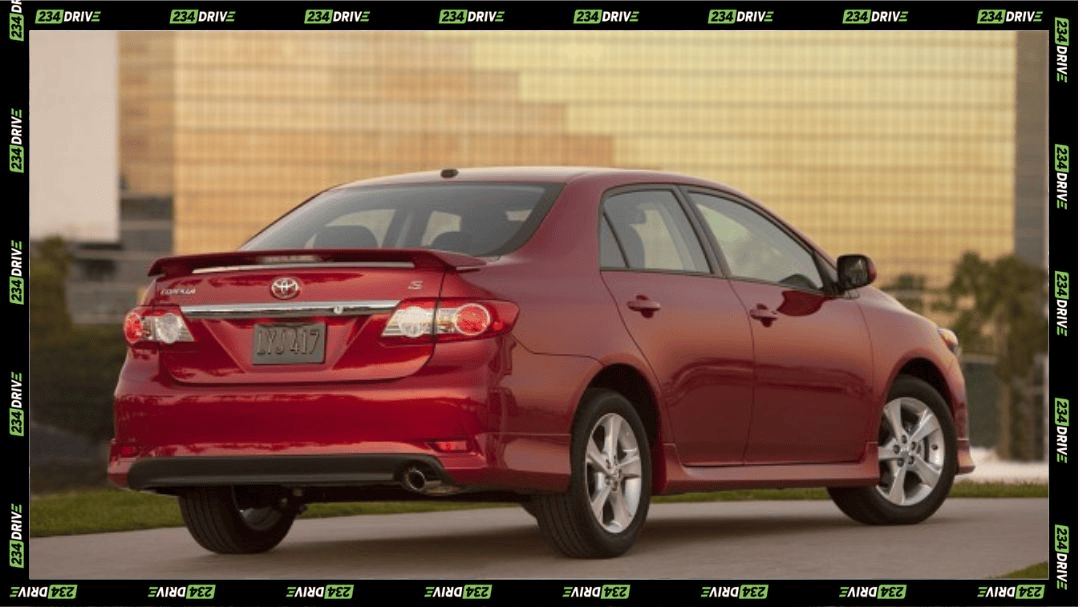
One of the Toyota cars that have the VVT-i engine. Source: Edmunds
Roadside oil vendors in Nigeria frequently sell counterfeit, low-quality engine oil that quickly turns to thick black sludge. This sludge clogs the tiny mesh screen protecting your Oil Control Valve (OCV) solenoid. On older engines like the 2AZ-FE—found in the ‘muscle’ Camry and early RAV4s—P0016 often indicates a stretched timing chain caused by running the engine on low oil.
To resolve this, remove and clean your VVT-i solenoid and its microscopic mesh filter with carburettor cleaner. If the solenoid is dead, expect to pay between ₦45,000 and ₦85,000 for a quality replacement. Never skip your scheduled oil changes.
Lean Fuel Mixture Faults (P0171 and P0174)
These codes mean your engine’s air-to-fuel ratio is running ‘too lean’, meaning there is too much air and not enough petrol entering the cylinders.
The codes involved are P0171 (Bank 1) and P0174 (Bank 2).
Our extremely dusty harmattan wind quickly coats the delicate hot wire inside your Mass Airflow (MAF) sensor with dirt. Another highly common culprit on older Corollas and Camrys is a degraded intake manifold gasket, which leaks extra air into the engine. Low-quality fuel can also clog fuel injectors or weaken your fuel pump.
Spray your MAF sensor with a dedicated MAF cleaner—never use petrol or WD-40, which will instantly ruin the sensor. If the code persists, perform a smoke test to check for vacuum leaks and replace your intake manifold gasket if necessary.
Evaporative Emissions System Leaks (P0440, P0442 and P0456)
These codes point to a leak in your Evaporative Emission Control (EVAP) system, which prevents raw petrol vapours from escaping into the atmosphere.
The scanner will display P0440, P0442 or P0456 (very small leak).
The most common culprit is incredibly simple: a loose or faulty fuel cap. If a fuel attendant did not tighten your fuel cap properly after your last fill-up, or if the rubber O-ring seal on the cap has dry-rotted under our intense tropical sun, the system will detect a pressure drop.
Inspect your fuel cap first. If the rubber seal is cracked, buy an affordable replacement cap. Do not let a mechanic charge you ₦150,000 to replace your fuel canister or exhaust parts until you have ruled out this basic fix. Refer to your official owners manual for model-specific EVAP reset procedures.
Engine Misfire Alerts (P0300 to P0308)
An engine misfire means the air-fuel mixture inside a specific cylinder did not ignite properly, leading to a rough idle and a severe loss of power.
The codes range from P0300 (random multiple misfires) to P0301 (Cylinder 1), P0302 (Cylinder 2) and so on.
Worn spark plugs, failing ignition coils or bad fuel are the usual suspects. Modern Dynamic Force engines (like the A25A-FKS engine in newer RAV4s and Camrys) are highly sensitive to carbon buildup on the valves and have specific factory bulletins regarding cold-start misfires.
If you see a flashing check engine light, stop driving immediately. Continuing to drive with a flashing light dumps raw fuel directly onto your exhaust system, which will quickly melt your catalytic converter—costing you upwards of ₦350,000 to replace. Swap the ignition coil of the misfiring cylinder with a working cylinder to see if the code moves. If it does, replace that coil.
Catalytic Converter Efficiency (P0420)
This is arguably the most common and frustrating fault code seen on Nigerian dashboards.
The scanner will return code P0420 (Catalyst System Efficiency Below Threshold).
High-sulphur petrol and leaded additives sold at local filling stations quickly contaminate the precious metal catalyst inside your catalytic converter. Many roadside mechanics will advise you to ‘cancel’ the exhaust—meaning they physically smash out the ceramic honeycomb structure (often called ‘Indomie’ due to its resemblance to dried noodles) and sell the precious metal dust. While this removes the restriction, it leaves you with a permanent check engine light, toxic exhaust fumes and terrible fuel economy.
Avoid roadside guesswork. Ensure your oxygen sensors are reading correctly using live data on a scanner before condemning your converter. If you must replace the converter, buy a high-quality aftermarket unit rather than simply removing it.
Troubleshooting Toyota Codes: DIY vs Professional Repair
Equipping yourself with a basic Bluetooth OBD-II scanner is a fantastic way to understand what your vehicle is experiencing. Reading your own Toyota warning lights keeps you informed and prevents mechanics from exploiting your lack of technical knowledge.
However, you should draw the line at safety-critical systems and highly complex diagnostics. If you pull codes relating to your Supplemental Restraint System (SRS) airbags, your Electric Power Steering (EPS) or hybrid battery pack issues (such as P0A80 on a Camry Hybrid), head straight to a specialised workshop with professional diagnostic computers.
Take charge of your Toyota’s health by addressing codes as soon as they appear. Regular oil changes, quality fuel and clean sensors will keep your engine running smoothly for hundreds of thousands of kilometres.
Have you ever had a persistent error code that drove you crazy? Let us know the code and how you finally resolved it in the comments below!