
The Nigerian climate is actively hostile to automotive batteries. While a driver in Europe might expect a standard lead-acid unit to last up to five years, a vehicle navigating the daily realities of Lagos, Abuja or Kano will routinely consume a battery in half that time.
Understanding exactly how to test a car battery at home is not just a technical skill for mechanics. For the everyday Nigerian driver and fleet operator, it is a necessary economic defence. Automotive batteries rarely fail without warning, but drivers frequently ignore the symptoms until they are completely stranded. In a post-subsidy economy where replacing a premium battery requires a significant capital outlay, diagnosing electrical issues early prevents unnecessary spending and disastrous roadside breakdowns.
The Brutal Reality of the Nigerian Climate
To understand why batteries fail so rapidly in Nigeria, one must look at the under-hood operating environment. Automotive lead-acid batteries are engineered to operate optimally at roughly 25 degrees Celsius. In Nigerian cities, daytime temperatures frequently sit between 32 and 35 degrees, pushing the ambient temperature under the bonnet far beyond the manufacturer’s baseline.
This extreme heat fundamentally alters the chemistry inside the plastic casing. High temperatures accelerate the internal chemical reactions and cause the electrolyte fluid to evaporate at a rapid rate. Industry data detailing how hot temperatures reduce the lifespan of batteries reveals a punishing metric: for every eight degrees Celsius the ambient temperature rises above 25 degrees, the overall lifespan of a standard battery is effectively cut in half.
Consequently, the functional lifespan of a car battery in Nigeria is generally two to four years. When you factor in the reality of our infrastructure deficit—specifically the hours spent idling in gridlock traffic where the alternator struggles to adequately charge the battery, combined with frequent short trips and dusty roads—the degradation accelerates even further.
Reading the Early Warning Signs
Your vehicle communicates its electrical health every time you turn the ignition. Recognising a failing battery simply requires paying attention to the start-up sequence and the electrical accessories.
The most obvious symptom is a slow engine crank. When you attempt to start the car, the starter motor sounds sluggish, producing a heavy ‘rurr, rurr’ noise rather than a sharp, immediate turnover. This indicates the battery lacks the Cold Cranking Amps (CCA) required to spin the engine efficiently.
Electrical anomalies provide another clear warning. If you notice your headlights dimming when you turn on the air conditioning or your dashboard lights flickering when you use the power windows, your battery is struggling to maintain voltage under a load.
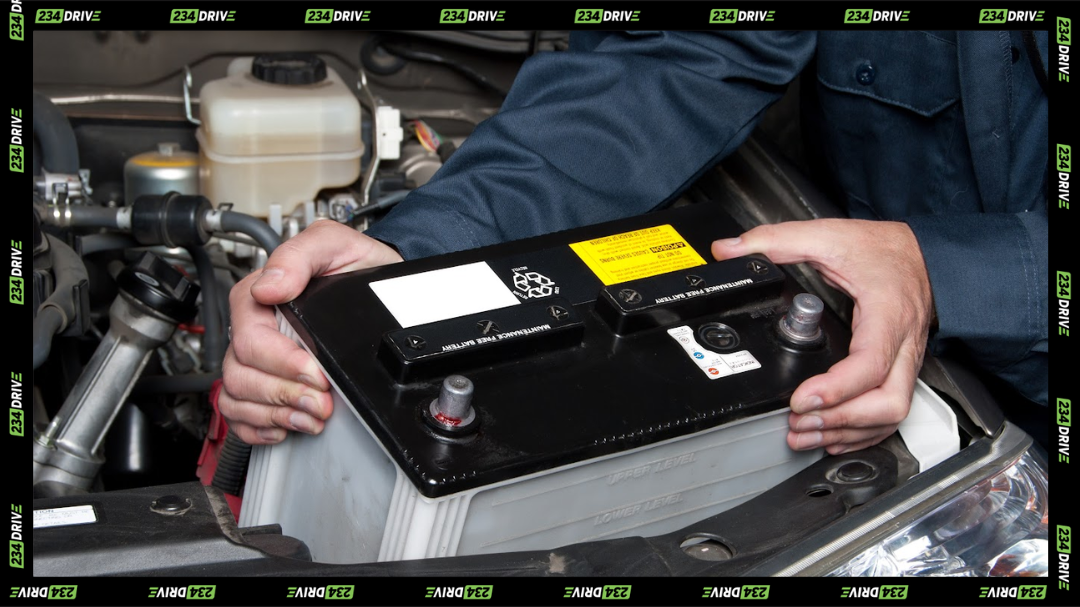
Visual inspection of the unit itself is equally vital. Open your bonnet and look at the plastic casing. If the battery looks swollen or bloated, it has been subjected to severe heat damage and overcharging. Furthermore, a heavy buildup of white or green corrosive powder on the metal terminals restricts electrical flow and frequently mimics a dead battery. If you detect a sharp, rotten-egg smell resembling sulfur, the battery is venting explosive gas and requires immediate replacement.
Before replacing parts, it is crucial to understand the signs of a bad battery versus a failing alternator. If your car starts fine but dies while you are driving, the alternator is likely failing to sustain the electrical system. If the car will not start at all but runs perfectly after a jump-start, the battery is the primary culprit.
The Essential Toolkit and Safety Protocols
Testing a battery does not require an expensive diagnostic computer. The most important tool you need is a digital multimeter.
A digital multimeter is arguably the most valuable DIY instrument a car owner can possess. They are widely available across major electronics markets like Alaba or online retailers like Jumia, with reliable basic models starting between ₦7,000 and ₦15,000.
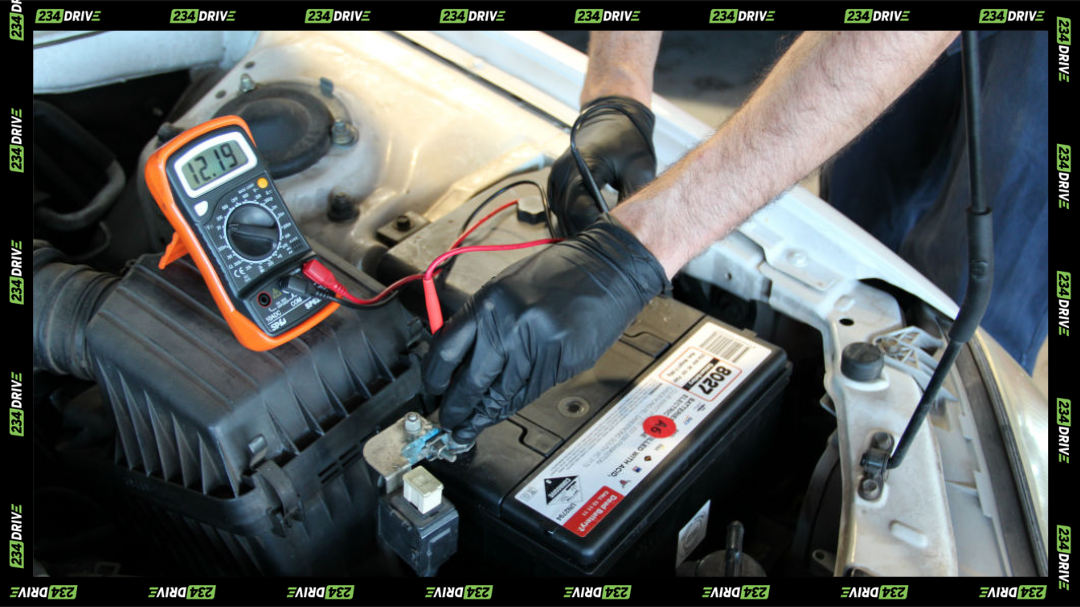
Before testing, safety is paramount. Car batteries house highly corrosive sulfuric acid and emit explosive hydrogen gas. Always wear protective rubber gloves and safety glasses. Remove any metal jewellery such as rings or watches, as an accidental short circuit across the terminals will cause severe burns. Ensure you are working in a well-ventilated area away from open flames or sparks.
If your terminals are heavily corroded, you must clean them before testing to ensure an accurate reading. Create a paste of baking soda and water, scrub the terminals with a wire brush, rinse carefully and dry them completely.
Method 1: The Resting Voltage Test
The most straightforward way to gauge battery health is a direct voltage test using your multimeter. This measures the state of charge when the vehicle is dormant.
- Prepare the vehicle: Turn off the engine, the headlights, the radio and all interior accessories. For the truest reading, let the car sit idle for one to two hours to dissipate any ‘surface charge’ left over from the alternator.
- Set the multimeter: Turn the dial on your multimeter to the DC volts setting. Set the range to 20 volts.
- Connect the probes: Touch the red probe to the positive (+) battery terminal and the black probe to the negative (-) terminal. Never lean directly over the battery while doing this.
- Read the display: Look at the digital readout.
Understanding how to test a car battery with a multimeter requires knowing the specific voltage benchmarks:
- 12.6V or higher: The battery is fully charged and healthy.
- 12.4V to 12.5V: The battery is at roughly 75% capacity. It is acceptable but should be monitored.
- 12.2V to 12.3V: The battery is sitting at 50% capacity. It requires a proper charge.
- Below 12.0V to 12.2V: The battery is deeply discharged. It must be charged with a dedicated battery charger and retested.
- Below 12.0V: The battery is actively failing or completely dead.
Method 2: The Charging System Test
A battery relies entirely on the alternator to keep it alive. If your alternator is failing, it will drain and destroy a brand-new battery in a matter of days. You must test the system while the engine is running.
Leave your multimeter connected to the battery terminals exactly as you did for the resting test. Start the engine.
Once the engine is idling, the voltage reading should immediately rise and stabilise between 13.7V and 14.7V. This indicates the alternator is actively pushing power back into the battery.
To ensure the alternator can handle a heavy load, turn on your headlights and blast the air conditioning. The voltage will dip momentarily but should recover and stay comfortably above 13.0V. If the reading drops below 13.0V under load, your alternator is failing to keep up. Conversely, if the reading spikes above 15.0V, the alternator’s voltage regulator is broken and it is aggressively overcharging your battery.
Method 3: The Load Test
Voltage only tells you the state of charge. It does not tell you if the battery has the physical strength to crank a heavy engine. This requires a load test.
While professional auto-electric shops possess dedicated load testers, you can perform a rudimentary check in your driveway. Connect your multimeter and watch the voltage display closely while a helper turns the ignition key to start the car.
When the starter motor engages, it pulls a massive amount of electricity. The voltage reading will instantly drop. However, it should not drop below 9.6V. If the reading plummets below this threshold during cranking before the engine catches, the battery’s internal cells are severely degraded. Following proper battery replacement procedures and load testing protocols ensures you do not replace parts that are still functional.
If you lack a multimeter, look for the built-in hydrometer ‘magic eye’ on modern sealed batteries. A green circle indicates a good charge, a dark or black circle means it requires charging and a white or clear circle means the internal fluid is perilously low and the unit must be discarded. Most battery sellers and auto-electric shops across major Nigerian cities will perform a professional load and conductance test for free or a nominal fee.
Navigating the Replacement Market
If your battery fails the voltage or load test consistently after being fully charged, or if it is over three years old and showing physical signs of stress, it is time to face the replacement market.
The local spare parts market contains substandard, counterfeit ‘Aba-made’ batteries packaged to look like premium imports. These fake units utilise inferior lead plates and will rarely survive six months of use. When searching for highly recommended car battery brands, the consensus among Nigerian fleet operators and experienced mechanics points toward established names like Bosch, Amaron, Solite, Rocket, Global and Varta.
Always check the manufacturing date code stamped on the plastic casing before purchasing. A battery degrades as it sits on a shelf. You should refuse any battery that is more than six months old, regardless of the brand. Furthermore, ensure the new battery matches the exact Amp-Hour (AH) and Cold Cranking Amps (CCA) rating specified in your vehicle’s owner manual.
Taking 10 minutes to test your car battery with a cheap multimeter eliminates the guesswork of automotive electrical issues. It is a simple diagnostic habit that keeps your vehicle moving and your money in your pocket.