
Scion, Toyota’s ambitious youth-oriented subsidiary established in 2003 and retired in 2016, holds a surprisingly strong position within the Nigerian used-car market. The brand was engineered to appeal to younger consumers through bold, distinctive styling, aggressive standard features, and a simplified ‘pure price’ sales model. Although official brand support ceased globally several years ago, the discontinuation has proven largely irrelevant to Nigerian owners, who receive these vehicles primarily as foreign-used imports, known locally as tokunbo. The success of the marque in West Africa is firmly rooted in its parent company’s reputation, delivering Toyota’s legendary reliability and low cost of ownership wrapped in a more charismatic package.
These cars—chiefly the xB, xD, tC, and the late-model iM—are currently sought after by buyers prioritising value, fuel efficiency, and a touch of unique style that distinguishes them from the ubiquity of the mainstream Toyota line-up. Their shared mechanical platforms with models like the Corolla and Camry mean that the maintenance landscape remains entirely manageable. Feedback from local owners confirms high durability, particularly regarding the power units and gearboxes, making the Scion brand a highly practical and often overlooked smart buy in the competitive Nigerian automotive landscape.
Featured Scion Models in the Nigerian Market
Scion xB (2007–2010): The Boxy Workhorse
The second-generation Scion xB, often described as a ‘toaster on wheels’ due to its ultra-boxy profile, is perhaps the most practical and recognisable model in Nigeria. Its defining exterior characteristics are the high roofline and squared-off dimensions, which translate directly into superb utility. This upright stance grants the xB unexpectedly good ground clearance, making it resilient against the deep speed bumps and variable road surfaces common across the country. The design, intended to be edgy and customisable for the American market, remains distinctive and often catches the eye among the more conventional sedans. Clean, first-body examples of the 2007–2010 model years currently retail in Nigeria within the competitive range of ₦5.9 million to ₦10.5 million (late 2025 figures), offering exceptional space for the price point.

Inside, the xB is famed for its generous proportions, frequently described by local owners as feeling “like a small bus” due to the enormous headroom and ample passenger space, making it a favourite for both family transport and light commercial use. Performance is derived from the robust 2.4-litre 2AZ-FE engine, a staple shared with the larger Toyota Camry and RAV4. This engine offers a sturdy 158 horsepower, providing adequate performance while maintaining highly economical fuel consumption—a critical factor in Nigeria. The driving experience is comfortable and slightly soft, designed to prioritise soaking up bumps, and its mechanical simplicity ensures that any necessary servicing, particularly related to the engine or automatic gearbox, is straightforward and affordable for local mechanics.
Scion tC (2008–2014): The Sporty Coupe
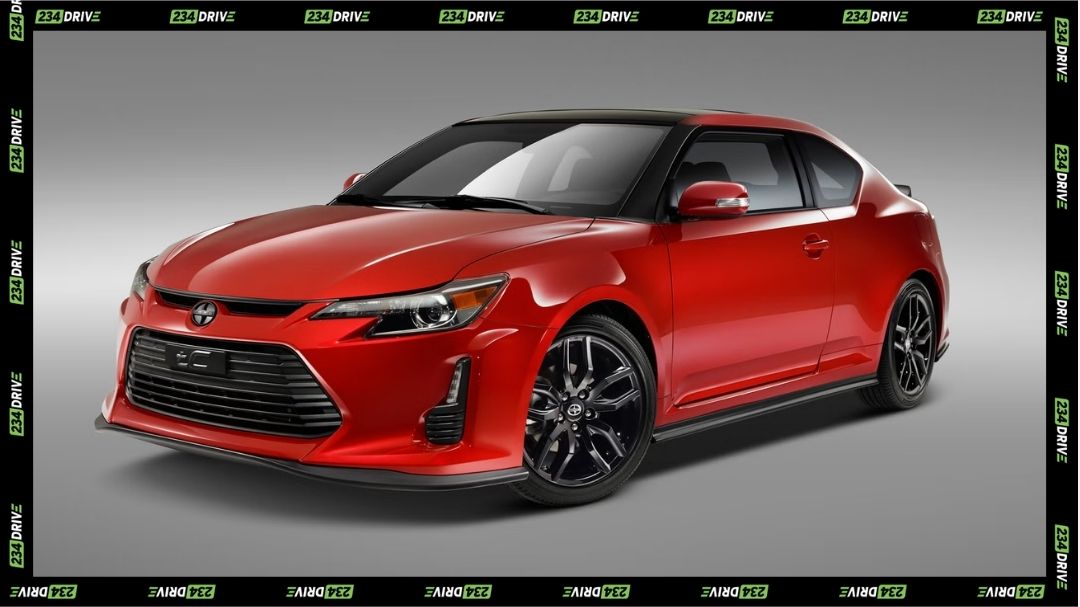
The Scion tC is the brand’s entry into the sporty coupe segment, appealing directly to younger buyers seeking a vehicle with performance aspirations and bold aesthetic flair. Its exterior is sleek and low-slung, presenting a distinctly aggressive road presence that contrasts sharply with the utilitarian xB. A key feature often highlighted in Nigerian listings is the optional panoramic glass roof, which adds a premium, open-air feel to the cabin. While the low profile means ground clearance is not as generous as the xB, the tC’s inherent durability and the shared mechanical toughness of its Toyota ancestry mean it handles challenging roads remarkably well for a coupe. Prices for well-maintained tokunbo tC models from 2008–2014 generally sit between ₦4.0 – ₦6.3 Million.
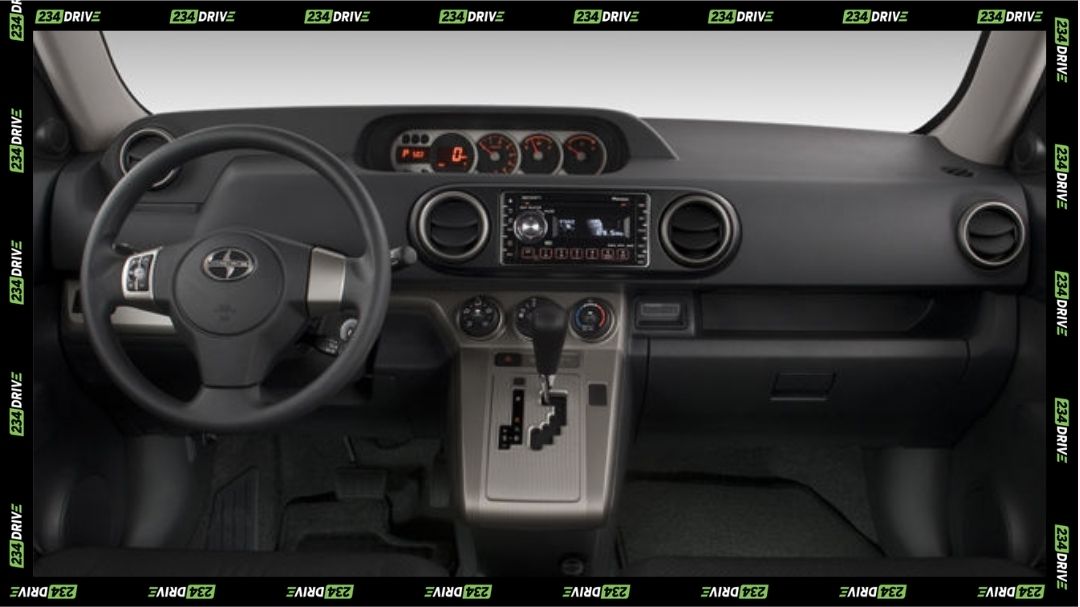
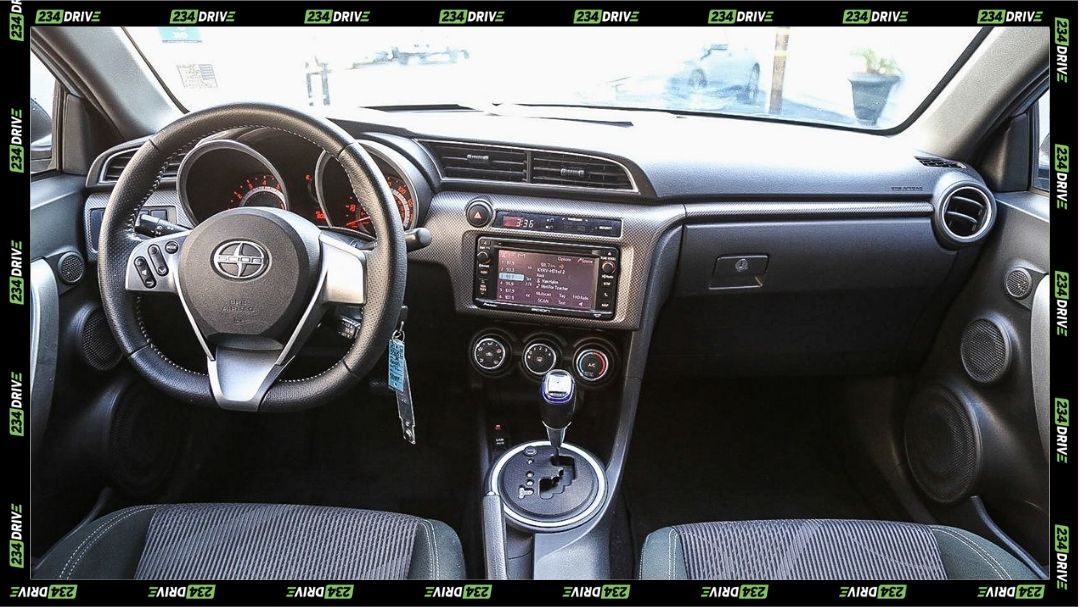
The interior of the tC is configured like a sporty cockpit, featuring firmer seats and a driver-focused layout. Standard features often include a high-quality Pioneer sound system with auxiliary and USB connectivity, which was a significant selling point during its initial launch and remains relevant today. Power is typically supplied by a 2.4-litre or 2.5-litre four-cylinder engine (2AZ-FE or 2AR-FE), delivering between 160 and 179 horsepower. This power output provides brisk acceleration and engaging driving dynamics that satisfy those looking for a bit more enthusiasm on open roads. Critically, these engine platforms are highly regarded for their resilience, ensuring that while the car looks and feels sporty, ownership costs remain comparable to a conventional Toyota saloon.
Scion xD and iM: Compact Utility and Modernity
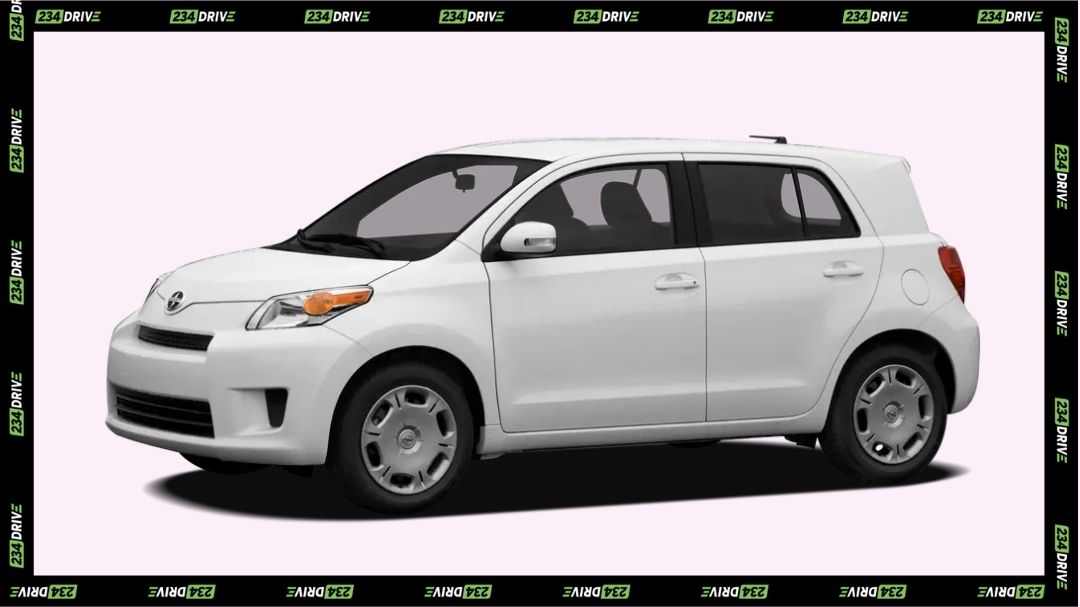
The Scion xD (commonly seen 2010–2012) is positioned as the brand’s compact hatchback, replacing the earlier xA. It features a more rounded, youthful exterior design compared to the sharp edges of the xB, making it an ideal vehicle for navigating congested urban environments such as Lagos and Port Harcourt. It retains a respectable level of ground clearance for its class. The xD is highly praised for its fuel efficiency, powered by a 1.8-litre engine (often the 2ZR-FE) that is robust and simple. Its typical price range is ₦6 million to ₦12 million, reflecting its value as an economical daily driver.
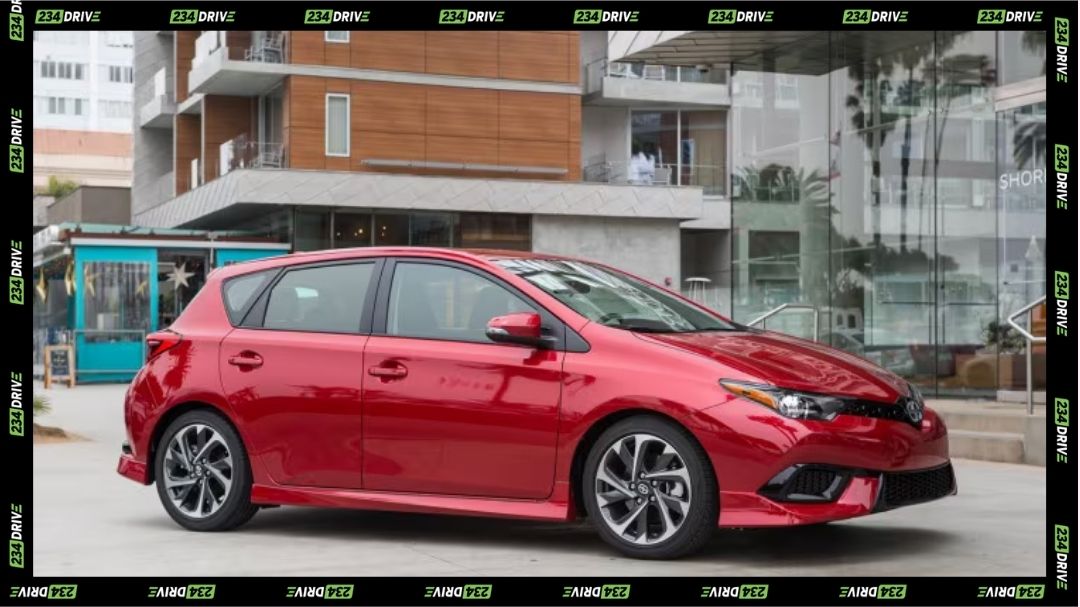
Representing the last of the brand’s output, the Scion iM (2016 model year) offers the most modern specifications and styling. This model was essentially a rebadged version of the European Toyota Auris, built on the reliable Corolla platform. The iM provides a contemporary hatchback look with refined driving characteristics and enhanced comfort and technology compared to its predecessors. Due to its newer vintage and superior features, the iM commands a higher price bracket, ranging from ₦16 million to ₦20.5 million, placing it in direct competition with late-model Corolla Hatchbacks and other newer imports.
Scion’s Place in Nigeria’s Automotive Landscape
The operational suitability of the Scion line-up in Nigeria is remarkably high, primarily due to the core principles of Toyota engineering. Road conditions across Nigeria are notoriously variable, featuring everything from well-maintained highways to deeply rutted, unpaved urban access roads. The Scion xB, with its elevated driving position and relatively high ground clearance, handles these conditions with greater aplomb than many low-slung competitors. Even the sportier tC, while lower, benefits from robust suspension components. Owner feedback repeatedly mentions the need for only minor maintenance items like replacing rubber suspension bushings—a cheap and common fix—to ensure a smooth ride, rather than chronic structural failures. The vehicles are also well-suited to the high temperatures and frequent stop-start traffic, with both the engine cooling systems and the factory air conditioning units proving durable and effective, provided routine servicing is carried out.
From a social and lifestyle perspective, the Scion brand offers a distinct advantage: style without excessive ostentation. While many Nigerians value the prestige associated with Lexus or Mercedes-Benz, the majority seek reliable, cost-effective transport. Scion fills the niche for the young professional or small family who desires a vehicle that stands out—the xB’s unique shape or the tC’s sporty silhouette—without incurring the exorbitant maintenance costs of European luxury rivals. The brand’s demise in the US, which might be seen as a disadvantage elsewhere, works in the buyer’s favour here, as it results in a lower resale price compared to an equivalent Toyota-badged model, securing a reliable vehicle at a relative discount.
Comparison to Segment Rivals
When assessed against its primary segment competitors in the Nigerian used-car market, the Scion brand provides a compelling value proposition. The most direct rivals are the Toyota Corolla, the Honda Civic, and the Mazda 3—all similarly sized compact vehicles highly praised for reliability. Comparing a 2010 Scion xB to a contemporary 2011 Toyota Corolla, the Scion often offers a richer standard feature set and significantly more internal volume for a lower entry price. This competitive positioning is crucial: the buyer gains Toyota mechanical durability and economy but pays a small “brand tax” discount because the Scion name lacks the market familiarity of the Corolla. This pricing difference represents an excellent saving for the informed buyer, providing higher inherent value despite the perceived marketing disadvantage.
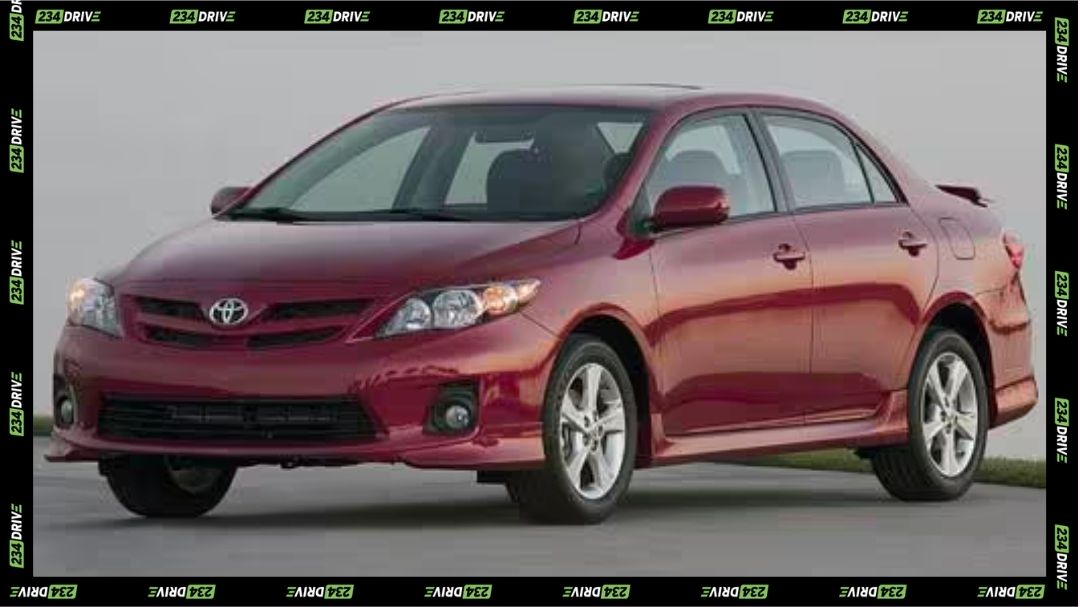
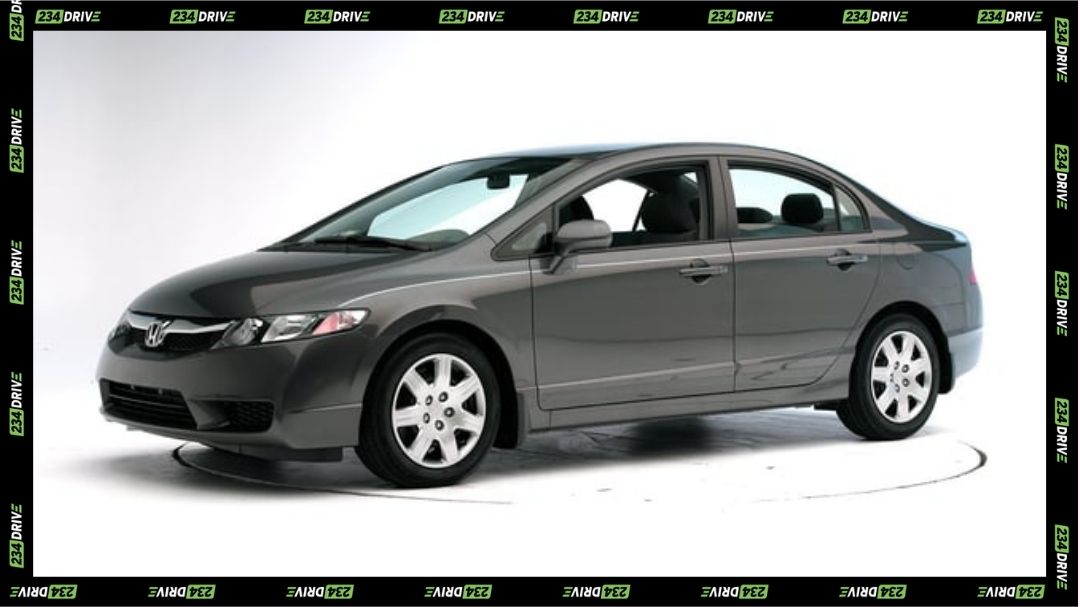
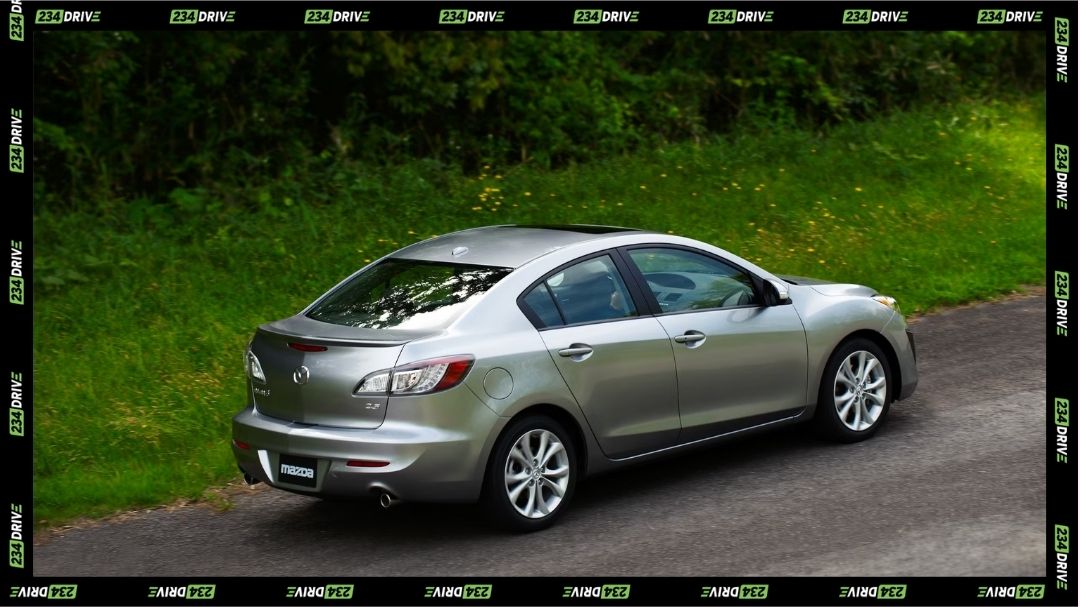
In terms of durability, maintenance, and resale value, the differences are nuanced. Durability is fundamentally identical, as the engines (2AZ-FE, 2ZR-FE) are shared with the most common and robust Toyota models in Nigeria. This interchangeability ensures spare parts are ubiquitously available and competitively priced, placing Scion on par with the Corolla and giving it a distinct advantage over more expensive rivals like certain Honda or Volkswagen models, which can require more specialised parts or expertise. The only real trade-off is often in resale value; while Scions maintain a solid value due to their Toyota foundation, they typically depreciate slightly faster than the universally liquid Toyota Corolla. However, as the initial purchase price is lower, the net financial impact on the owner remains highly favourable throughout the ownership cycle.
Conclusion
The Scion brand, though retired internationally, has cemented its place in Nigeria as a savvy, value-driven choice for the used-car buyer. The four key models—the spacious xB, the stylish tC, the nimble xD, and the modern iM—all deliver the non-negotiable pillars of Toyota reliability and superb fuel consumption. Coupled with the advantage of distinctive styling and lower initial prices compared to their mainstream counterparts, Scion vehicles prove to be a highly practical, dependable, and charismatic option for tackling the demanding Nigerian driving environment. They represent an excellent opportunity to acquire a mechanically solid vehicle that offers low running costs without blending into the crowd.
What are your experiences with Scion in Nigeria? Have you found the parts sharing with Toyota to be as seamless as reported, or do you find the unique styling features difficult to maintain? Share your thoughts below.