
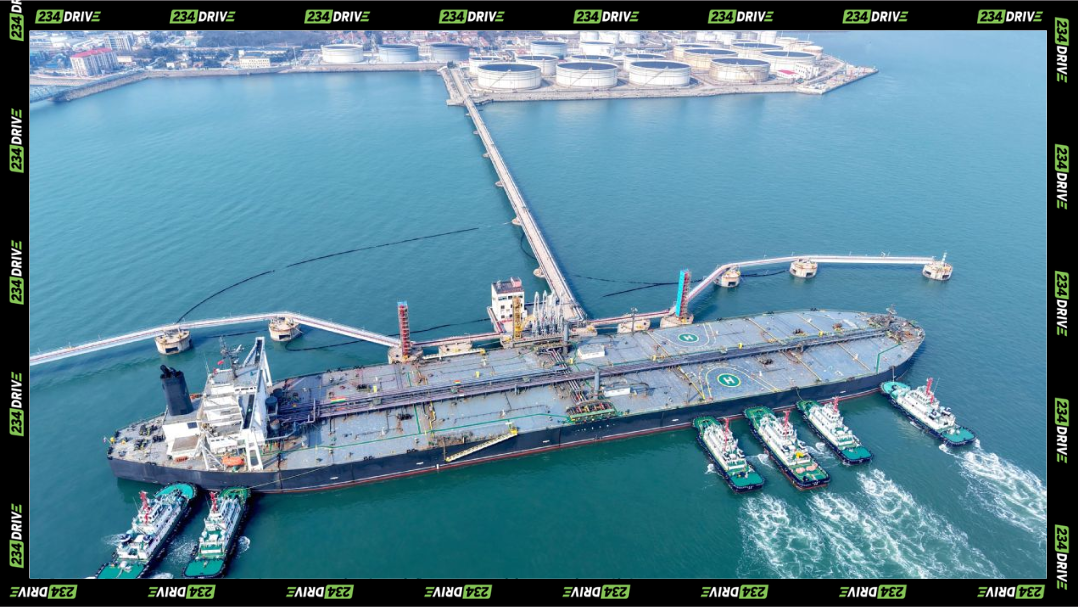
Massive oil tanker offloads crude at a coastal terminal in China while tugboats assist with docking and cargo transfer. |Source: Chiandaily
The conflict between the United States, Israel and Iran has once again captured the world’s attention. Beyond the tragic human cost, another quiet worry has been spreading across governments and markets: energy. Oil keeps economies moving, from factories and freight to aviation and everyday transport, so any instability in the Middle East quickly raises alarms. The region remains central to global oil supply, and disruptions around key routes like the Strait of Hormuz can ripple through energy markets. That is why many analysts expected countries heavily dependent on imported oil, especially China—one of the most oil-dependent major economies—to feel the pressure first.
But while many expected China to face major energy pressure, something different happened.
China’s Oil Demand and Import Dependence
China has been the world’s largest importer of crude oil for several years now. The country first became the largest net importer of petroleum and other liquid fuels in 2013, before officially surpassing the United States in gross crude oil imports in 2017, a position it has largely held since then. This status summarises the enormous energy demand required to keep China’s manufacturing, logistics and urban systems running.
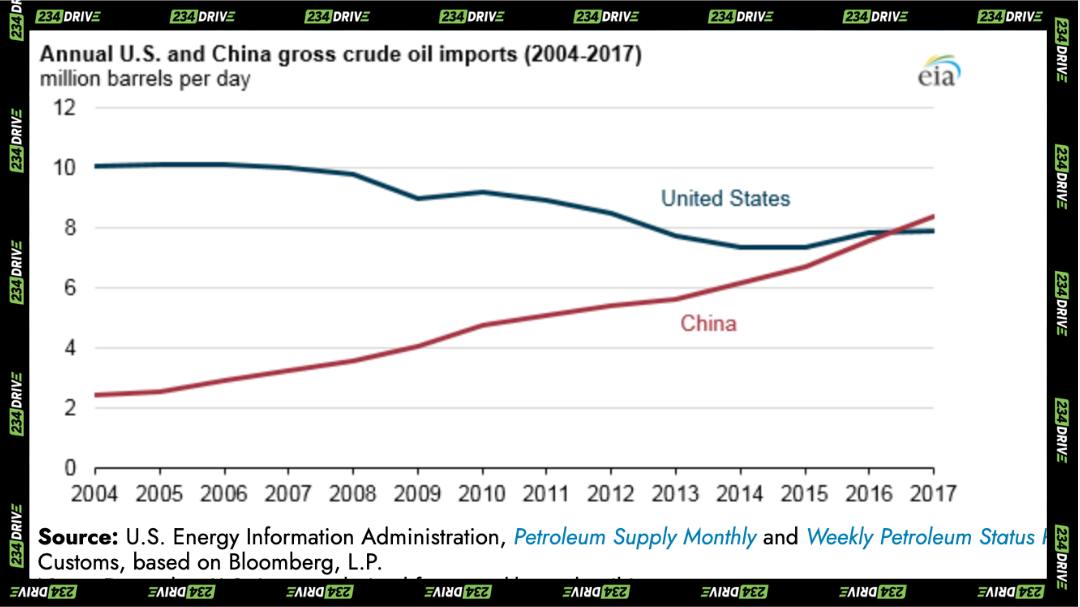
Chart Showing China Overtaking the U.S in Oil Imports in 2017 | Source: eia
China’s oil consumption reached about 16.6 million barrels per day in 2023, before easing slightly to around 16.37 million barrels per day in 2024—still among the highest levels ever recorded globally. To meet this demand, the country imports most of its crude from major suppliers such as Russia, Saudi Arabia, Iraq, Oman and Malaysia, creating supply lines that stretch across key global shipping routes.
Despite this scale of consumption, China still produces a portion of its own supply. In 2024, the country imported roughly 11.1 million barrels per day, meaning close to 75% of its oil consumption came from imports while domestic production covered the remaining share.
With demand at this scale, any disruption to global oil flows would normally place enormous pressure on the Chinese economy.
Yet over the past few years, China has quietly begun adjusting part of its energy equation, especially in transportation. The country has expanded alternatives that slow the growth of oil demand. The world’s second largest economy has become the largest electric-vehicle market in the world, with adoption rising quickly. In 2023 alone, around 9.5 million electric vehicles were sold in China, accounting for roughly 60% of global EV sales, according to the International Energy Agency.
One company that clearly embodies this shift is BYD. The automaker sold more than 3 million vehicles in 2023, most of them electric or plug-in hybrids. In April 2022, BYD also stopped producing purely gasoline-powered cars, focusing entirely on electrified vehicles.
This shift does not remove China’s need for oil, but it helps slow gasoline demand growth as more drivers move from fuel pumps to charging stations.
China’s Three Main Buffers Against Short-Term Oil Supply Shocks
Despite efforts to gradually reduce its reliance on oil imports and slow the growth of fuel consumption, China still uses more oil than most countries in the world. That naturally raises a question: if global oil prices rise or supply routes face disruption, why doesn’t the Chinese economy immediately feel the full impact?
Part of the answer lies in a few buffers the country has built over time to protect itself from short-term supply shocks.
Domestic Oil Production
China still produces a meaningful share of the oil it consumes. In its latest five-year energy plan, the government set a target to keep production around 200 million metric tonnea per year (about 4 million barrels per day). The country already exceeded that level in 2024, producing roughly 216 million metric tonnes after several years of efforts to stabilise output from domestic fields.
Strategic Petroleum Reserves
China has also spent years building large strategic petroleum reserves. Analysts estimate these reserves hold around 900 million barrels of oil, which is roughly close to three months of import supply. Beijing does not publicly disclose the exact size of these reserves, but the purpose is clear: maintain enough oil in storage to cushion temporary disruptions in global supply.
Floating Oil Storage Near Ports
Another short-term buffer exists offshore. In recent years, several oil tankers—especially those carrying Iranian crude—have remained anchored near Chinese waters while waiting to unload. This effectively creates floating storage, that keeps the oil nearby and available if supply becomes tight.
China May Be Buffered for Now, But Only for the Short to Medium Term
Global oil markets are already reacting to tensions in the Middle East. Brent crude recently moved above $100 per barrel, with some short-term forecasts suggesting prices could climb much higher if the conflict expands. Some forecasts suggest extreme scenarios where crude could climb toward $150–$200 per barrel, although analysts caution that such spikes would depend heavily on how long supply routes remain disrupted.
Oil prices influence far more than fuel costs. Higher crude prices can push up transportation costs, manufacturing expenses, shipping rates and everyday goods across the global economy.
China may be better prepared than many expected, but in a prolonged conflict, even the best energy strategies face limits.