
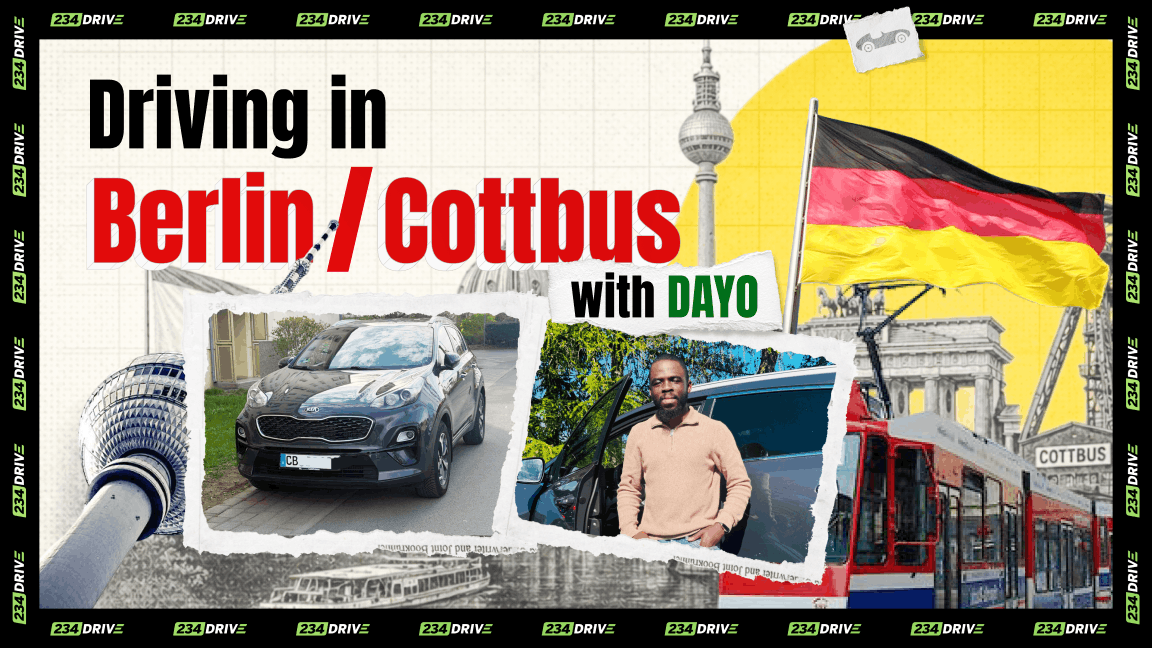
Securing a driver’s licence as an expat can easily escalate from a routine administrative task into an exhausting bureaucratic test of endurance. When Dayo, a medical professional, relocated to Germany, he discovered that trying to convert driving licence in Germany was not just a matter of filing paperwork — it was a two-year legal battle that went all the way to the district court of Cottbus.
Based on his historic victory against the Brandenburg criminal division, this guide outlines the rigorous documentation checks, mandatory first aid requirements and practical testing steps you must navigate to secure your German driving credentials (Führerschein).
Quick-Start Checklist: Converting Your Driving Licence
Transitioning to German roads requires a strict understanding of both federal transit laws and regional administrative requirements. Use this quick-start checklist to ensure you are legally and practically prepared:
- Verify Original Credentials Early: To successfully convert your foreign licence, you must submit a valid, original national card. Laminated photocopies or coloured prints will be immediately flagged for fraud investigations.
- Complete the Nine-Hour First Aid Course: Attendance at a weekend first aid class (Erste Hilfe) is a strict legal requirement. Expect a full nine-hour session conducted in German, covering emergency scene management and stable side positioning.
- Pass the Standardised Eye Screening: You must undergo a vision test (Sehtest) at a registered optician. This screening is usually cheap or free and remains valid for exactly two years.
- Prepare for the Full Theoretical Exam: Because many non-EU countries do not share a reciprocal licence-exchange treaty with Germany, you must register with a driving school (Fahrschule) and pass a rigorous 30-question theoretical test.
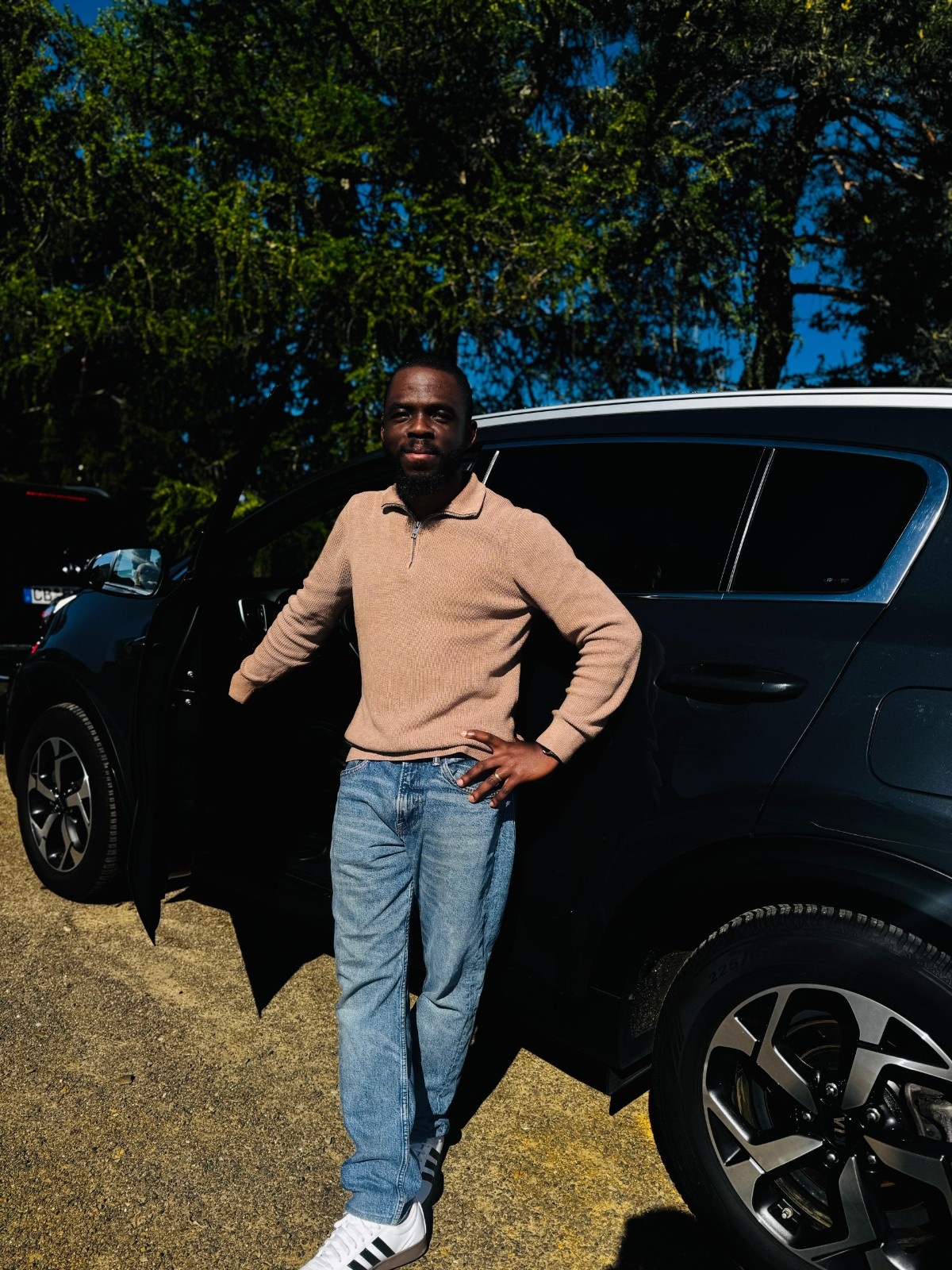
Dayo, a medical professional based in Cottbus, Germany, started driving in Lagos at 15. He was taught in his father’s Mercedes-Benz 230E, by the family mechanic, Baba Kemi, who wasn’t exactly thorough with the instructions. Thirteen years later in Germany, he tried to convert his Nigerian licence to a German one, but that triggered an uphill battle. Dayo had lost his actual licence back in Nigeria and had managed with a laminated photocopy, but in Germany? That did not fly. The authorities suspected fraud, sent his documents to Berlin for investigation, then to the criminal division in Brandenburg. The ‘experts’ took almost two years to declare it fake. Dayo took them to court, won and finally got his licence in 2024.
Describe your first driving experience
It was with my father’s 230E Benz, the ‘Lagos man’ car back in the day. I was about 15. Our family mechanic, Baba Kemi taught me and my brother how to drive. He just gave us the basics. He would put you in the car and first of all, congratulate you for being ready to drive. Then he would tell you, this is the clutch—because it was a manual car, brake, accelerator. You press this one to change gears. You press this one to move. You press this one to slam the brake. And nobody should need to teach you how to turn left and right. That one is something inherent in one’s brain.
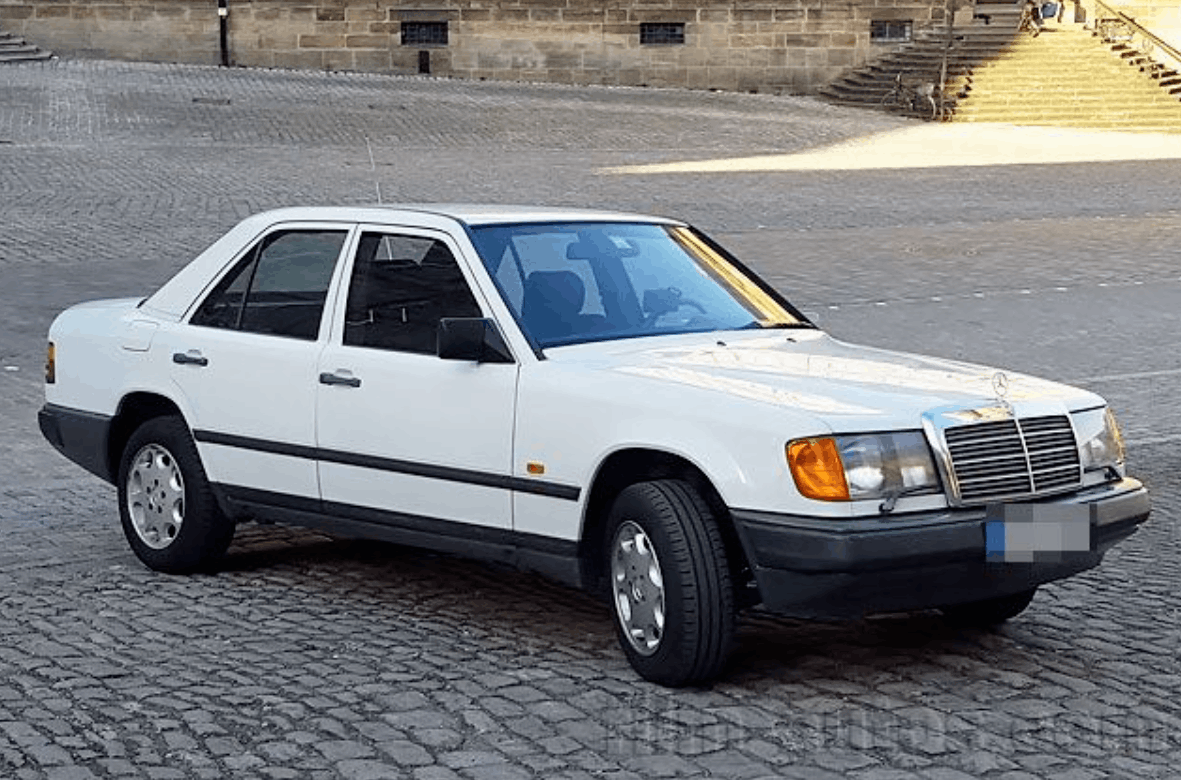
So Baba Kemi just gives you the key, opens the gates from our compound and tells you,’Oya, move ẹ’. And that’s where the car’s jerking starts, from not releasing one’s leg as quickly as possible or not switching from the clutch to the accelerator.
The idea was always: don’t let it go off in your hands. Most of the time, once one has gotten past the first into second gear, the car almost never gives up, because that was always the difficult point where the car could go off. We would drive around the Ogba area until I finally got the hang of it.
What was your first experience with an automatic car?
My first automatic was my mother’s RAV4, around 2006, 2007. I drove my mum’s RAV4, then I drove my dad’s Land Cruiser, but my mother’s RAV4 first because that was the compact-sized car back then. I think that was in 2006, 2007.
Life was good. Number one, the back of my shirt was not drenched in sweat and I was more relaxed. When you’re driving a manual car, there’s this constant need to be attentive. Your full attention is on the car. In fact, if somebody sitting beside you is talking, you can’t pay attention to what they’re saying because you’re always thinking: please don’t go off, please don’t go off, please don’t go off. Which gear should I prepare for—upwards or downwards? When should I brake? When can I not brake?
And especially in Lagos stop-and-go traffic, the car will easily go off. So it was a huge relief not having to worry about doing mathematics and plotting graphs while driving. The car is just doing its thing and you just use one leg. It was a huge relief.
What year did you move to Germany and for how long did you move around without driving?
I moved to Goslar, Germany, where my brother was staying, in 2017. My brother had told me that I should quickly start the conversion of my Nigerian licence to a German licence before it expires. Although that info, as I later found out, was half correct. What was important was that you should have had a valid licence before entering Germany. But in my case, I misunderstood it a step further that even though the licence was valid on entering, it should not have expired before you apply to change it.
Was this a normal licence or an international licence?
An international driver’s licence. But my case was very ridiculously funny because I had lost my actual physical licence before leaving Nigeria. So I printed a coloured copy that was laminated. And that was what I could always use to drive in Nigeria. Even if they stopped me, they checked the number on their database and everything was fine. I could have delays here and there, but it always worked because the licence itself was valid. It was just the physical card that was not ideal—it was a laminated piece of paper.
I needed to bring something on coming to Germany because I couldn’t wait. So I applied in Goslar to start. And I did the first aid class, did the translation of the licence. Those are the first two steps.
First aid class?
Yes. In Germany, you must attend the first aid class. It usually happens on weekends, Saturdays or Sundays. It’s about a nine-hour class with one hour break. So it goes from morning around 9:30am to like 5pm. Just know that your Saturday for that thing is just gone. You spend it there learning all the first aid techniques for when there is an accident on the road and you’re the first responder.
And that was in German?
Yeah, of course it was in German. And my German was very rusty. I came to Germany with B1 level German, but having the B1 certificate from the Goethe-Institut in Lagos didn’t really translate to fluency. So you have to sit there for about 9 hours—you’re running Deep L translation in your brain in real time. It’s stressful.
And then you learn first aid techniques. The W questions: who is calling, what happened, where are you, who are the people involved, what’s the current situation. How to position people in the stable side position. The number to call. All these basic things that we should know. The important things you should have in your car like the warning triangle, a blanket, a bag of snacks in your glove box.
If you were a doctor, a nurse or an emergency service member, you were exempted. But looking back now, I should have been in my current position before doing it. But anyway, we thank God.
Do you remember how much that cost?
It cost me about €20 something then, but now it’s about €50 for the first aid. Almost €80 for the translation.
What else did you need to do?
You do your eye test. You go to just one of these regular places where they sell glasses and let them know you want to do your eye test for your driver’s licence. Then they take you to the back room where you look into this microscope-looking thing. They’ll be turning the letter C in different directions. You’ll be calling out what direction the open space of the letter C is facing—upwards, 2 o’clock, 3 o’clock. Once you’ve called enough that they’re satisfied with it, they’ll issue you a small certificate saying you are fit to drive. That’s usually free.
Then just head off to your chosen driving school. For me, I just went with what my brother was using in Goslar and I submitted everything there. I was registered. Then shortly after, my wife—then girlfriend—landed in Cottbus, another city. So I just cancelled everything there and planned to start in Cottbus.
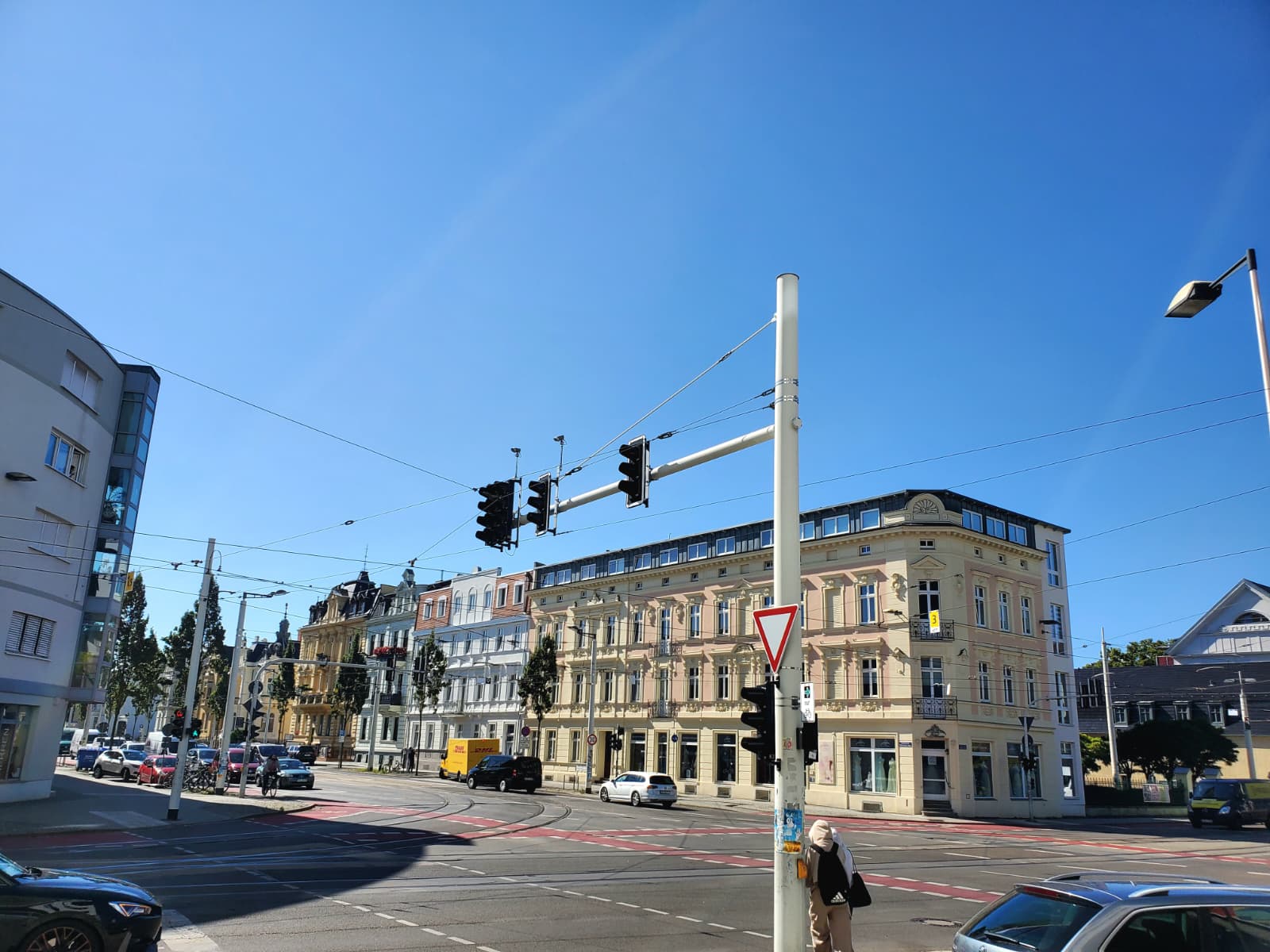
But arriving in Cottbus, after settling down and learning the language, priorities changed. We had our son. I think it was in 2021 that I finished learning the language properly for a whole year, Monday to Friday, at the university here in Cottbus.
When I was ready to start the licence process again, it was around the end of 2022. I had already spent over four years in Germany. I was ready now; we had a son and thought it was the right time to get a car.
I then submitted here in Cottbus the same set of documents I had submitted in Goslar, except for the eye test which is only valid for two years, so I had to get a new one done.
This is where the story gets interesting.
What happened?
I picked out my driving school and I submitted all the documents through the driving school to the city driving authority.
Usually, people always get their response within like two, three weeks that everything is okay and they can go and resume their theory classes. But I didn’t get any response.
I submitted at the end of November, December—no response. I felt, okay, Christmas period. Everybody has gone to their houses. January came and went. Nothing. February. Middle of February, I then reached out to the driving school. The driving school said that’s unusual and I should contact the driving authorities.
Then I contacted them and that’s when the bomb came.
They said my licence and all my documents are in Berlin because they suspect that I submitted a fake document for my driver’s licence.
Because of the laminated paper?
Yes. I was like, if that was the case, why didn’t you just tell me? I’ve just been waiting unnecessarily. The usual process is when you submit documents, they check to see that the document is original before everything enters the system. But I don’t know why they didn’t do their check. Everything was just, ‘Yeah, we’ll get back to you,’ and then I can start.
So that was the beginning of 2023 and for months, there was just silence. In November of 2023, I started thinking: come please, what’s going on? It’s almost a year already. I should by now have been done with my licence.
I started writing them to ask what’s going on. After a lot of back and forth, they said they forwarded it to the criminal office here in Brandenburg—the central criminal office in Eberswalde.
They said the ‘expert’ review would take about two months. They gave me the number of the expert’s office in Eberswalde. I started calling them too. The first day, they said he’s not around, I should call back. I call back, he hasn’t gotten to mine, they’re still checking some other documents.
January 2024, February, March, April—I started bugging them and disturbing them. ‘No, we can’t continue like this. You are wasting my time.’
Then I started reading—because I already learnt the language, I was more versed in German law. I could read and understand legal jargon in German. So I initiated what you call a ‘refusal to act’ complaint—basically saying, you’ve had ample time to react and you’ve not provided a reaction.
While I was preparing that, I got this so-called response from the man in the office here letting me know that the expert already responded and said that it’s fake.
At that point, I was ready to take it to court.
How did that go?
The man told me they would be forwarding the remaining paperwork to the district attorney of Cottbus. Then they set a date for somewhere in September.
I realised these people still didn’t understand that just because what I had was a laminated paper didn’t mean it was fake, so I reached out to a family member in Nigeria for help. He reached out to someone that works in the FRSC to help me get documentation that shows that my licence is actually what it is in the system and if possible, issue me a renewal. Thankfully, I was able to do that and I got the current valid licence from Nigeria, middle of 2024.
How did you get it from Nigeria?
The FRSC contact helped send the documents directly from the FRSC to the courts—so that no middle hand has touched it and the authority here can certify that it actually came from an authority in another country.
You just pay for a shipping label and they seal it with a label that says, if this document has been tampered or opened with, then the document inside is probably no more what it should be.
Do you remember how much that cost?
It was around €110 to send. But the actual process of doing those things in Nigeria cost me about ₦40,000 or ₦50,000.
Everything arrived there shortly before the court hearing. So I went there on that day and represented myself because I didn’t learn all that German for nothing. The court provided an interpreter just in case —they definitely didn’t expect I’d be able to keep up with the German, because lawyers are not speaking German and waiting for you.
We had back and forth conversations.. The judge was there listening and asking questions.
Towards the end, I was just like: let me save everybody’s time. I said to the judge, please take a look at the documents that were sent directly from the authority in charge of the licence in Nigeria. As you can see there, it is clearly written—including the copy of my renewed licence—that the licence and that number and all the details on that piece of paper that is laminated is actually my existing and my real licence.
And the authority in Nigeria saying it is original supersedes every authority, even to the highest authority in Germany, because the issuing authority is the only authority that has the last say in stating whether a document is original or false.
And that was where the judge took a while, looked, called the other lawyer to the front to come and look at the documents. They were looking for quite some time. By the time they went back and sat down, the judge said we could just resolve the matter and I should start the licence process.
Did you ask for compensation for the time wasted?
I did, but the judge said I should please just chuck it down to the system happening to me. There was really not much she could do from her end because she did not have the authority to make anyone do something. She could only say that everybody should just be done with it and I could proceed with my licence.
So I wasted about 18 months just waiting.
In that period, in mid-2024, my wife had already started. I was like please, quickly go and register and start your own theory classes. At least one of us should drive. She had done her theory exam in late August, passed and was waiting for an appointment for practical classes.
I was able to start in September too with my own theory. We did a perfect licence. She did not repeat anything. She did not fail any exam. She passed the theory once, she passed the practical once and she spent about €2,500.
Wow. How many classes do you do for the theory and how many for the practical?
Theory is 14 theory hours where you sit there and listen to stuff that you might not be interested in. Because they’ll give you an app whereby you should practise a set of 1,300 questions. Out of these 1,300 questions, 30 will come out. And out of this 30, you must not fail more than two. That’s why people fail the theory exams a lot. But Nigerians, you know, we’re sharp. She went once, she came out. I went once, I came out.
Why did you need to do both classes even though you had your Nigerian licence?
Unfortunately, because Nigeria is not a partner country for Germany. I think it’s mostly the European countries. Then if you’re coming maybe from America or Canada. Let’s just call it the Western world being Western world friends. But anybody that is outside them, no, your own is not good enough. You should go and do everything again.
How much did it all cost?
I should have spent about €1,600, but I ended up spending €2,000 because I had to do a new exam fee and take three more classes before repeating the exam. So everything cost about €2,000.
And for my wife, about €2,500 because she did everything from scratch, she had never driven before. Hers was the perfect textbook situation.
Just goes to show you how ridiculously expensive licences are. Because for most of the people around, the norm was spending €3,000, €4,000. In fact, I had heard of people that spent €7,000.
What car do you drive and why did you choose it?
It’s the Kia Sportage 2020. I would say: man did not buy something for himself. He just bought what his wife approved of. Well, on one hand, there was obviously the consideration of finances. I did not plan to buy any car for more than €25,000 and I paid upfront. I’m Nigerian; I find it hard to buy things on credit.
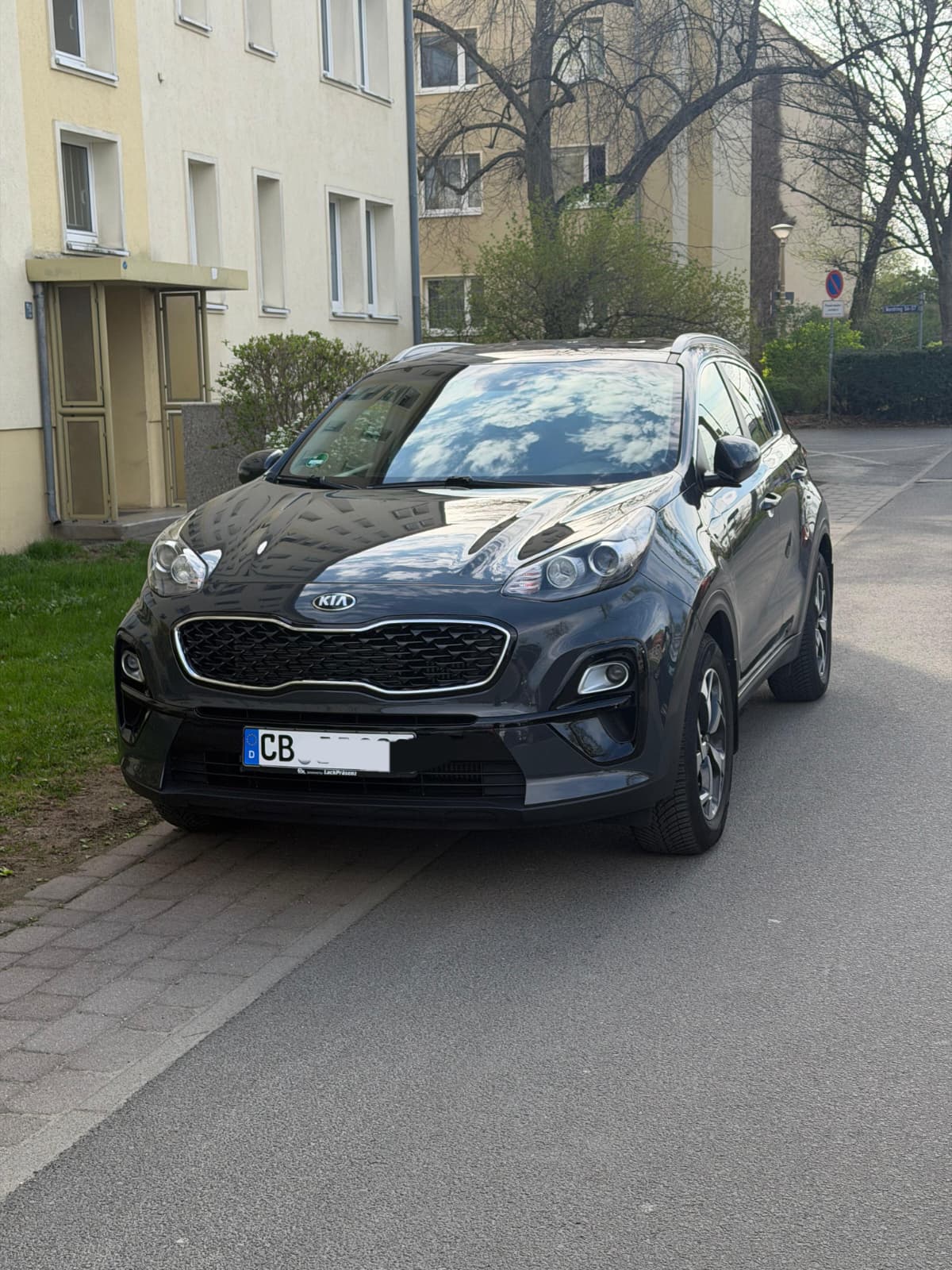
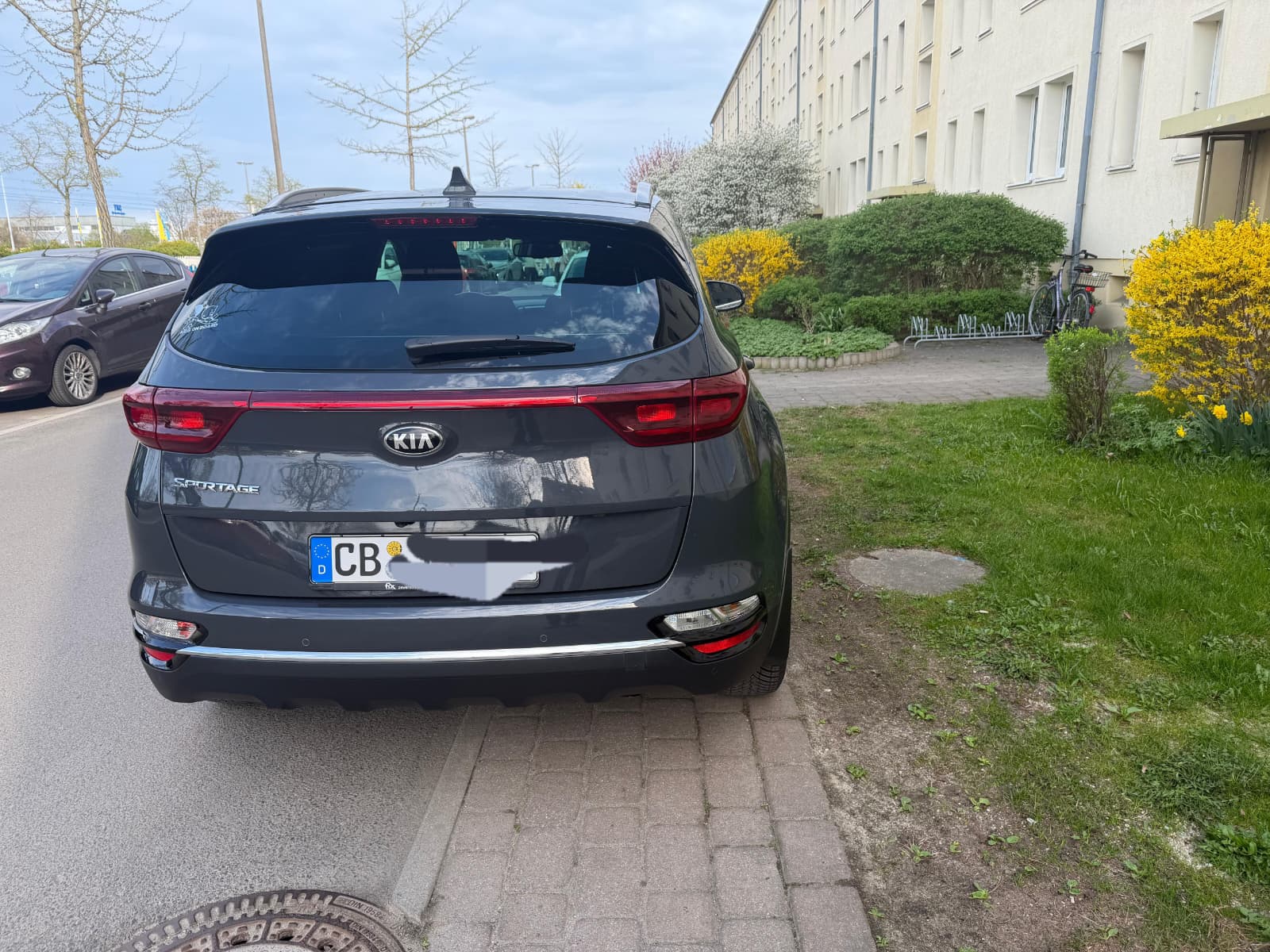
The car I was originally eyeing was what they call Mercedes-Benz Shooting Brake, a low hatchback. But my wife saw it and she said, ‘Nope, never. The car is too low.’ As a woman, she wants to step up into a car. She does not want to step down into the car. I agreed with the decision to pick an SUV because I felt: happy wife, happy life. The only two options we had were the RAV4 or Kia Sportage. I was not a fan of the other German brands of cars.
Why were you buying Asian brands when you have solid cars locally?
I was not a fan of the reliability of buying a secondhand German car. I’m of this personal school of thought that a German car is only enjoyed as the first driver. I can probably enjoy the car as the first owner for maybe six or seven years, and then I give it to the next person that should be managing whatever problem comes.
I believe the cost of servicing and all those things are ridiculously high. The reliability index, at least from the automobile websites I read, is usually not so great.
German cars are more luxury brands. Either you’re a rich person that just wants to drive it and you don’t care about prices of things—you’re never interested in seeing the price, they come and pick it and go and service it for you—or you drive it first and leave the stress for the next person.
Whereas with the Asian brands, you can be sure of durability. Back then in Nigeria, there was this saying for the Toyota Corolla of 2005, 2006: it’s not the car that will stop, it’s you that will stop. The car will just keep going and you are the one who’ll decide when to put the car aside.
I also wanted a car that was not more than five to seven years old, still driven by only one person and properly driven. And as my wife wanted, she wanted to step up into the car, not downwards to the ground. So those were my two options: the RAV4 or the Kia Sportage.
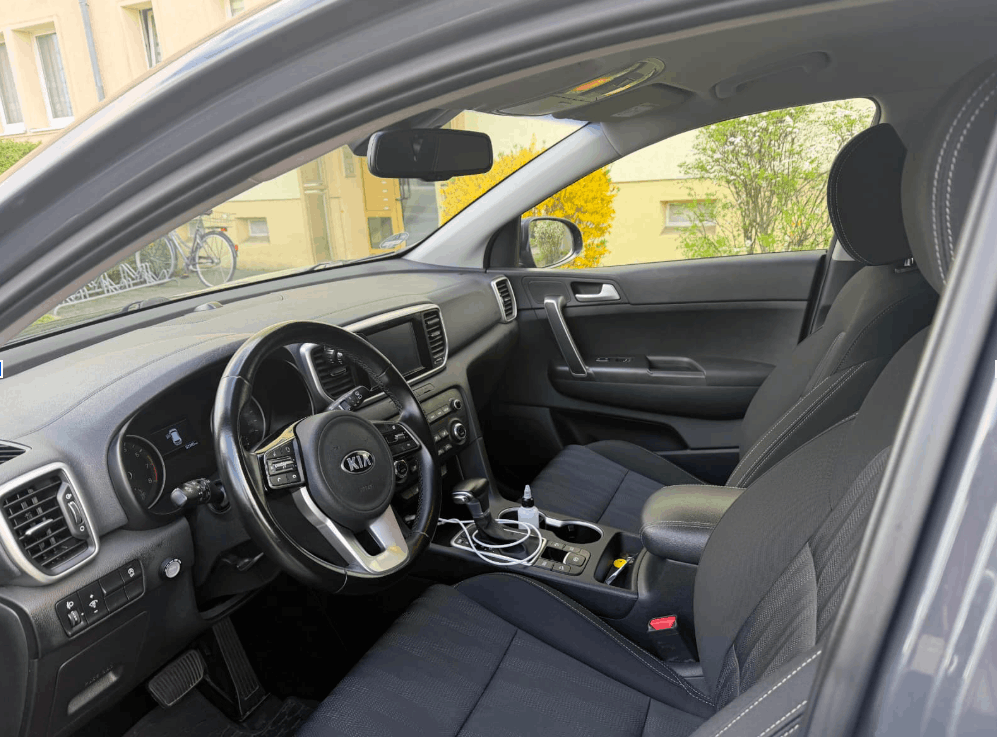
I ended up choosing the Kia over the Toyota because Kia had this seven-year warranty on their car. Generally, car companies give you two years. So for a company to confidently tell you seven years, it means they’re sure of its reliability.
What about parts availability? Do German mechanics frown when you bring a foreign car?
That was one wonderful thing too. After buying the car, immediately after purchasing, I took it to Kia’s partner in Cottbus for the first servicing. They did the servicing checks and everything and it cost about €500.
Afterwards, I did my research and checked for independent workshops. Independent workshops usually have on their website—or at least when you go there to inquire—the range of cars they service. There might be five or six different brands they service. Some might service just two brands, some might service 10 different brands. It’s just basically what brands they have expertise in.
Before coming, they’ll let you know. They usually have this option to service your car according to manufacturer specification, or they just service your car as a normal car service.
I found one where I actually did my services after a year that cost a lot less—about half the price. The partner or the company’s offices, they cost an arm and a leg. You are basically paying for the cup of coffee and cake they will give you while they are battering your car at the back. It’s the difference between going to eat in a restaurant in VI and going to eat proper amala at Oshodi.
Have you ever had an accident?
Yes. On this wonderful day, I drove to my wife’s place of work in Berlin. In the evening, we started heading back home to Cottbus. That was around 5:30pm. It was winter, so it was already dark.
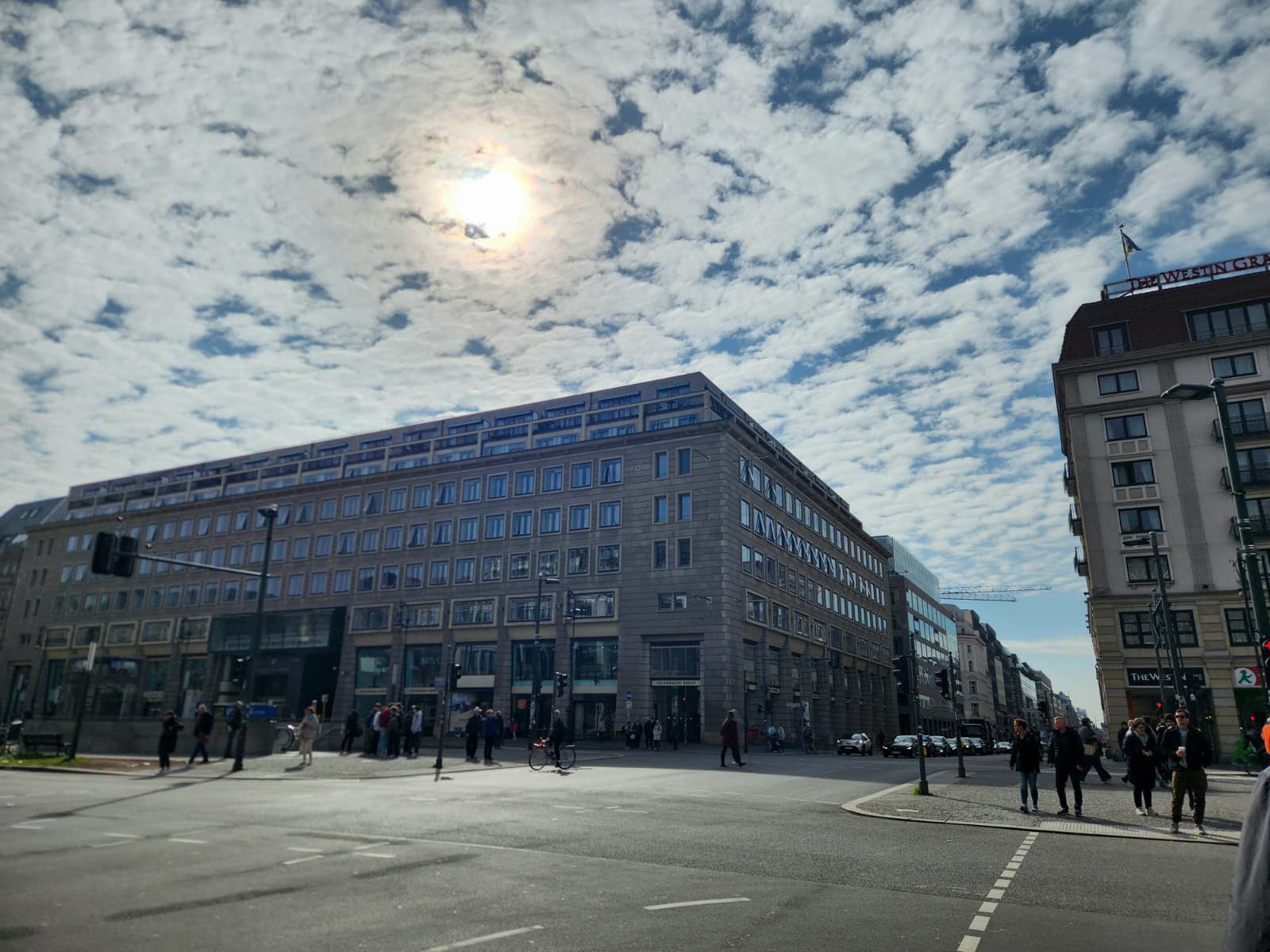
Getting through the Berlin traffic in the evening like that—I think that was my first time actually being in Berlin that dark and during the week in the rush hour period. Everyone was just jam-packed, bumper to bumper. Lights everywhere. You could almost not even differentiate between the traffic light and a car light or a bike light.
Then I had my first experience with something that was a roundabout with traffic lights to exit the roundabout. Normally, roundabouts are a constant flowing traffic place. When entering, you observe that nobody is coming, you quickly jump in. And then exiting, you indicate to let people behind you know you’re about to take this next exit.
But in this case, instead of jumping in and jumping out, there were traffic lights at each exit of the roundabouts directing traffic. And this traffic light also meant that cyclists were using the traffic lights as well.
Berlin is always under construction. And people don’t indicate. People use their horn like they are in Lagos—even though legally, the horn should only be used for specific situations.
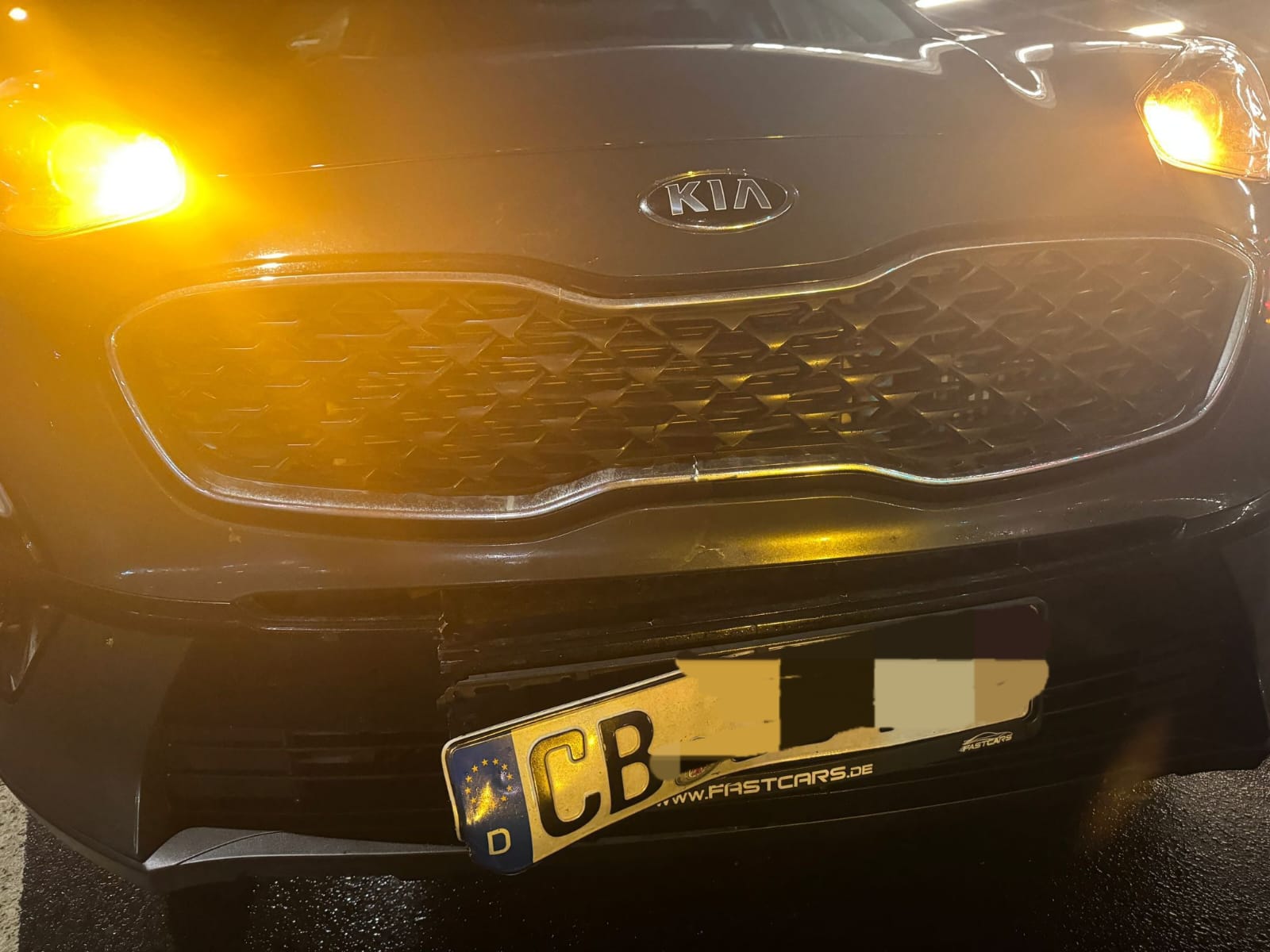
In my case, it was a scenario whereby the lights changed to green for us, which meant for the bikers, it became red. But a biker ran through. The driver in front had to slam brakes. The second driver ran into the first driver from the back. And then I ran into the second driver from the back.So it was a three-car accident.
We had to call the police. Everybody came down. Everybody started taking pictures. I was just confused. I was instantly depressed. But my wife was the calm person. In fact, I was shocked. She came down, took her pictures, spoke to the other person then she came back and said, ‘Everything’s okay, it’s not your fault, we have insurance.’
What’s funny is, the Nigerian in me, I was already complaining to her two weeks prior about the price of the insurance and thinking of switching to a cheaper one. Because we have the full comprehensive insurance. In the first year, it cost about €1,480 because of new driving. She insisted that we shouldn’t, considering the value of the car and the fact that the premium would go down the next year. We shouldn’t be pound-wise, penny foolish.
Luckily, that’s what saved us. Because after the accident, after details were exchanged, my insurance would pay the back damage I caused to the car in front of me and the damage to the front of my own car.
When I received the bill, it was €3,900 for the repair to my own car, but I only had to pay €500. Then as for the damage caused to the other driver’s car, it was not my business. They settled it with my insurance company.
My insurance now for this year became €915. That’s a drop of about €500-plus. But it will stay that way next year. It won’t go down further because I had an accident already. Otherwise, it would drop to about €800. Still, for me, it’s completely worth it. You can pay the premium annually (the cheapest), biannually or quarterly.
Which other cities in Germany have you driven in?
I’ve driven from here (Cottbus) outwards towards Berlin, to Hanover, to my brother’s side in Nordhorn—that’s just at the border of the Netherlands. And then I drove into the Netherlands with him to do a check with him because my car is bivalent; it uses both petrol and LPG, that’s liquefied petroleum gas. Now that the price of petrol has gone up, I buy only LPG. I just leave the tank of petrol half-full because the LPG is ridiculously cheap.
Have you experienced traffic congestion in any of these cities?
In Berlin, yeah. And on the highway when you are travelling at the wrong time, there could be traffic. But I’ve experienced traffic on the actual Autobahn, I think, just twice because we had to create the ambulance freeway.
What does that mean?
If it’s a two-lane highway, the person on the left moves to the extreme left and the person on the right moves to the extreme right, so the middle of the road is free. If it’s a three-lane road, the person on the left moves to the extreme left while the person in the middle moves to the right a little, so that the almost extreme left lane is free as well for the ambulance or fire service to dash in between.
The way common sense just activates is something. In traffic, we all turn on our caution light and we already start creating that space. We just start moving.
The first time I did it, it was so subconscious because it was just common sense. That’s why I say, truly, German driver’s licences being one of the most expensive in the world makes sense because 90% of the time, you have this sense of security that the person driving behind you, in front of you or beside you knows what they are doing. There may be one or two random young boys in BMWs that don’t like life. Or maybe they are done with life, some of them. But over all, people drive sensibly in Germany.
Would you say driving on the Autobahn excites you?
Yes, of course. Somewhere between 40% and 60% of the Autobahn does not have speed limits, while the other part has speed limits here and there due to maybe construction or just some very dangerous areas where the road is not so perfect.
Personally, it’s more fun driving when I’m driving alone or with my brother or my wife’s brother. But never driving with my wife, because once we get to 160 km/h, she starts shouting, ‘Slow down!’
Whereas when I drove with my brother at 180, he was telling me I should check whether I can press it more. The highest I’ve done with my brother was 198. And it was fun. The car was just swimming. It was peaceful.
But the only thing there is that your senses get heightened. The hair on your body is up. You can’t hear your radio or the music you are playing because it’s like you are listening to the car only. And your two hands are on the steering. You’re driving responsibly. Your back is upright. You are properly seated because you know that the difference between life and death is one slight misstep away. At 200 km/h, if anything goes wrong, the car will somersault after maybe two kilometres.
And you know what’s funny? At that 198 speed, I still had to give way to someone on the road. Because the left lane is the fast lane. The rule of the left lane is that nobody should permanently be there except you are faster than everybody else on the road. If somebody else is faster than you, leave the lane, let the person pass, then you can go back.
This Dodge Challenger was coming behind me. The guy just kept getting closer to my rear, to my mirror. I was just like, ‘No, no, no. I have a family. Abeg, it’s not me and you.’ So I left the lane. I just removed my leg from the gas and left the lane. He blew past. The guy must have been doing some 220, 230, 240—which is already Formula One range.
For me, what I see as normal will probably be where I still feel like I’m driving relaxed—let’s up to 180, 185.
Have you ever had a traffic fine?
Nope. My God is always fighting for me. Actually, it’s not just my God, but number one, just being normal. If you pay that much to learn driving, there are some things you should not just do—except somebody is just a goat.
Above all, the only place where people usually get caught for traffic fines are not signs in the sense of it, but for mobile cameras that monitor your adherence to the speed limit.
There are the 30-speed-range areas, usually in residential areas where a lot of cars are parked. There are zones where they draw this blue sign of children playing football. When you’re entering the zone, that means you should drive between 4 and 7 km/h
For instance, on our street, it’s a residential zone where children could play ball in the streets. So it’s 4 to 7. But human beings do not walk at 4 km/h. We are faster than that, so it’s not very realistic for a car to drive at that speed.
The idea is: before you drive your normal 20 or 20-something, you should obviously be on high alert, pay attention that there is no child or anything on the road.
Within cities, you shouldn’t drive faster than 50. Outside cities, you can drive up to 100—except there is a speed limit that overrides that general rule.
Personally, for me, I’ve not been caught speeding. Partly because of common sense—having learned driving in Germany—and partly because I have an app that I paid for.
What’s the name of the app?
Blitzer Pro. It costs about €11.
It informs you ahead of time because it’s like a community. At every point in time, you can see how many people are currently driving—usually around half a million people. And everybody’s putting in info: Blitzer (speed camera) out there.
So it informs me: a thousand metres ahead, there’s a mobile camera catching people. Or in the next 500 metres, there’s another one. Even if you’ve forgotten, you quickly slow down, start driving orderly.
On one or two occasions, I’ve actually played one or two persons into a Blitzer. There was one guy trying to overtake me. I kept wondering why he was trying to overtake me. Then I kept inching him to overtake, accelerating while he was accelerating. When they told me 300 metres to the Blitzer, I slammed on brakes and then he blew past. Then he got into the Blitzer and he tried to slam on the brake.
Ah, sorry. You can be fast, but the picture is faster than you. You’ll meet your picture at home because they’ll send you a bill to your house.
FAQs on Navigating Germany’s Road Systems
Transitioning to the highly regulated roads of Germany involves unique legal steps. We have compiled the most common questions expats face when getting behind the wheel.
Can You Convert a Driving Licence in Germany Without an Original Card?
No. To successfully convert a driving licence in Germany, the local driving office (Führerscheinstelle) requires you to present your valid, physical original licence along with a certified German translation. If you have lost your physical card and only possess a laminated copy or a digital printout, the authorities will reject your application and likely forward the documents for a fraud investigation. If you are in this position, you must secure an official renewal card directly from your home country’s issuing authority before applying.
What is the First Aid Course Requirement for a German Licence?
All applicants converting a foreign driving licence from a non-treaty country must complete a mandatory nine-hour first aid course (Erste Hilfe). This course is typically held over a single Saturday or Sunday and covers life-saving techniques, accident scene securing and emergency calling protocols. The sessions are conducted entirely in German, so having a working understanding of the language is highly beneficial. Certified medical professionals (such as doctors and nurses) are legally exempt from this requirement.
How Do Speed Camera (Blitzer) Apps Work Under German Law?
Using active radar detectors or real-time speed camera warning applications (like Blitzer Pro) while operating a vehicle is technically illegal under Germany’s Road Traffic Act (StVO). If a driver is caught by the police actively using a speed camera warning app on their dashboard, they can face a €75 fine and a point deduction in the central register in Flensburg. However, using these apps to check routes before starting your journey or having a passenger check the alerts remains a common legal loophole.